Apparent Sovereignty
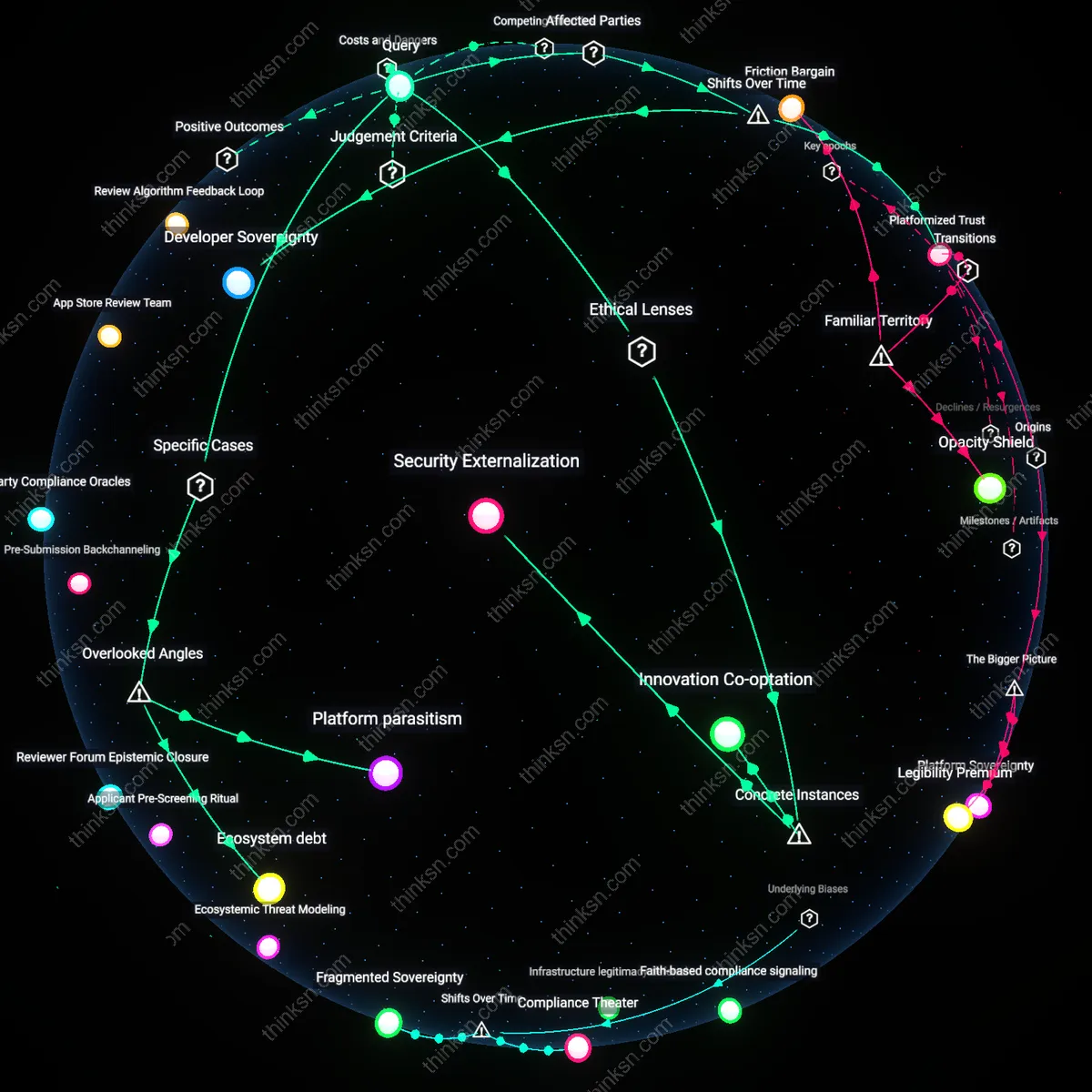
In India after 2014, state-backed digital platforms like the National Election Tracking System (NETS) displaced independent election monitors by centralizing real-time polling data, privileging government-certified updates over civil society verification. This shift—from dispersed civic observation to centralized algorithmic reporting—reconfigured public trust in election integrity around digital state transparency, masking local data suppression under the aura of technological neutrality. The non-obvious outcome is not just information control but the temporal illusion that immediacy equals reliability, thereby discrediting slower, grassroots verification.
Fractured Epistemic Zones
In Brazil between 2018 and 2022, messaging apps like WhatsApp became dominant election information vectors not by replacing official sources but by absorbing and distorting them through hyperlocal forwarding networks, particularly in peripheral urban zones like São Paulo’s favelas. The shift—from broadcast media as a shared reference point to privatized, encrypted chains—fractured the epistemic geography of election truth, where reliability became contingent on network topology rather than institutional authority. This reveals how the temporal compression of viral messaging undermined not only accuracy but the very possibility of a common electoral timeline.
Shadow Certification
In U.S. swing states like Michigan and Georgia after 2020, informal third-party apps such as VoterGather and BallotReady filled information voids left by underfunded election boards, but their credibility emerged retroactively through post-election validation rather than pre-distribution certification. The shift—from reliance on state-issued guidance to after-the-fact community ratification of app data—created a shadow legitimacy ecosystem where reliability is backdated through partisan recognition, not verified in real time. The overlooked consequence is that trust now hinges on retrospective political endorsement, not transparent sourcing.
Urban Data Saturation
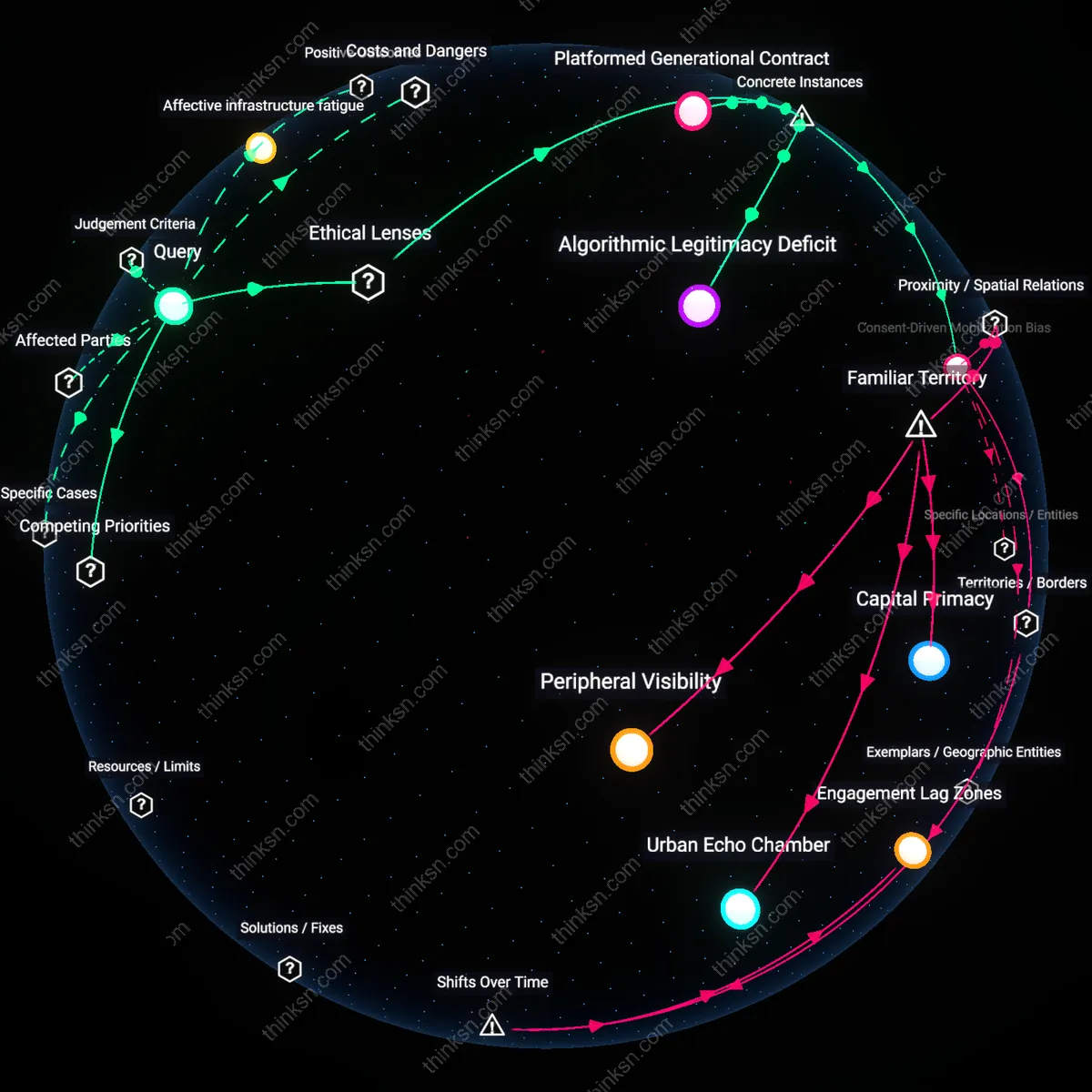
People in high-density urban centers are systematically over-supplied with real-time election data via mobile apps, creating an illusion of universal accessibility that masks systemic gaps. Tech infrastructure, including cellular bandwidth and app development investment, clusters in cities like Atlanta, Seattle, and Boston—where political engagement is already high—amplifying data visibility through platforms like BallotReady and TurboVote, which prioritize ZIP codes with proven voter turnout. This produces a spatial skew where information density mirrors population density, falsely implying equitable coverage while leaving low-population regions information-poor—an effect obscured because dominant evaluation metrics track adoption rates, not distribution equity. The non-obvious outcome is that information abundance in cities paradoxically hides rural data deserts, making invisibility of the gap part of the system’s design.
Partisan App Cartography
Election information apps are not neutrally distributed but follow partisan infrastructure footprints, with Republican-leaning counties more likely to lack access to app-based data due to disproportionate reliance on decentralized, non-digital information systems. Platforms like VoteHelper and Democracy Works integrate with Democratic-aligned voter protection networks and city election offices, which are concentrated in blue jurisdictions—thus, the app ecosystem maps onto the partisan geography of governance capacity, not population need. This creates a silent red-state deficit where voters are systematically steered toward SMS-based or call-center systems rather than smartphone tools, not due to demand but institutional alignment. The counterintuitive result is that technological availability reinforces political marginalization, contradicting the assumption that apps democratize access.
Language Firewall
Reliable election app access is fracturing along linguistic geography, where Spanish-dominant regions like the Rio Grande Valley or Central Florida are served by poorly maintained, English-first apps that fail to function reliably in daily use despite nominal bilingual support. Platforms such as VoteShield rely on machine-translated interfaces that degrade navigability, and local election bodies often lack funding to support dynamic non-English updates—so even when apps are downloaded, their utility collapses during actual voting. This produces a dense belt of 'shadow inaccessibility' where Spanish-speaking populations experience app-based information as unreliable, forcing reliance on community networks instead. The overlooked truth is that app reliability is not binary but probabilistic, varying by language context in ways invisible to standard usability metrics.
Digital Consulate Effect
People in overseas territories like American Samoa or U.S. citizens in militarized zones such as Guantanamo Bay receive election information not through public media ecosystems but via U.S.-run digital consulates embedded in secure apps like State Department portals or military networks, which function as extraterritorial information pipelines. These systems bypass local infrastructure and deliver curated, standardized voting updates through diplomatic IT architectures, creating a jurisdictional bypass where sovereignty—not geography—determines access. This reveals that reliable election information flows follow political enclaves rather than national borders, a mechanism typically absent from media access maps that assume contiguous coverage. The overlooked dynamic is that digital access is sometimes more tightly coupled to diplomatic jurisdiction than to internet penetration or civic infrastructure.
Election App Cartography
Residents in contested border regions, such as the Gaza Envelope in Israel or the Donbas in Ukraine, are systematically excluded from official election apps because cartographic authority—the state’s power to define whose residence qualifies for remote voting—is suspended in zones deemed legally ambiguous. App developers and election bodies avoid provisioning services in areas where residency is politically disputed, even if connectivity exists, because inclusion could imply sovereignty recognition. This produces a 'digital cartographic gap' where technically capable populations are left offline not due to poor infrastructure but due to unresolved territorial claims, exposing how app-based information access is silently governed by geopolitical risk calculus rather than technical capacity.
Urban Information Corridors
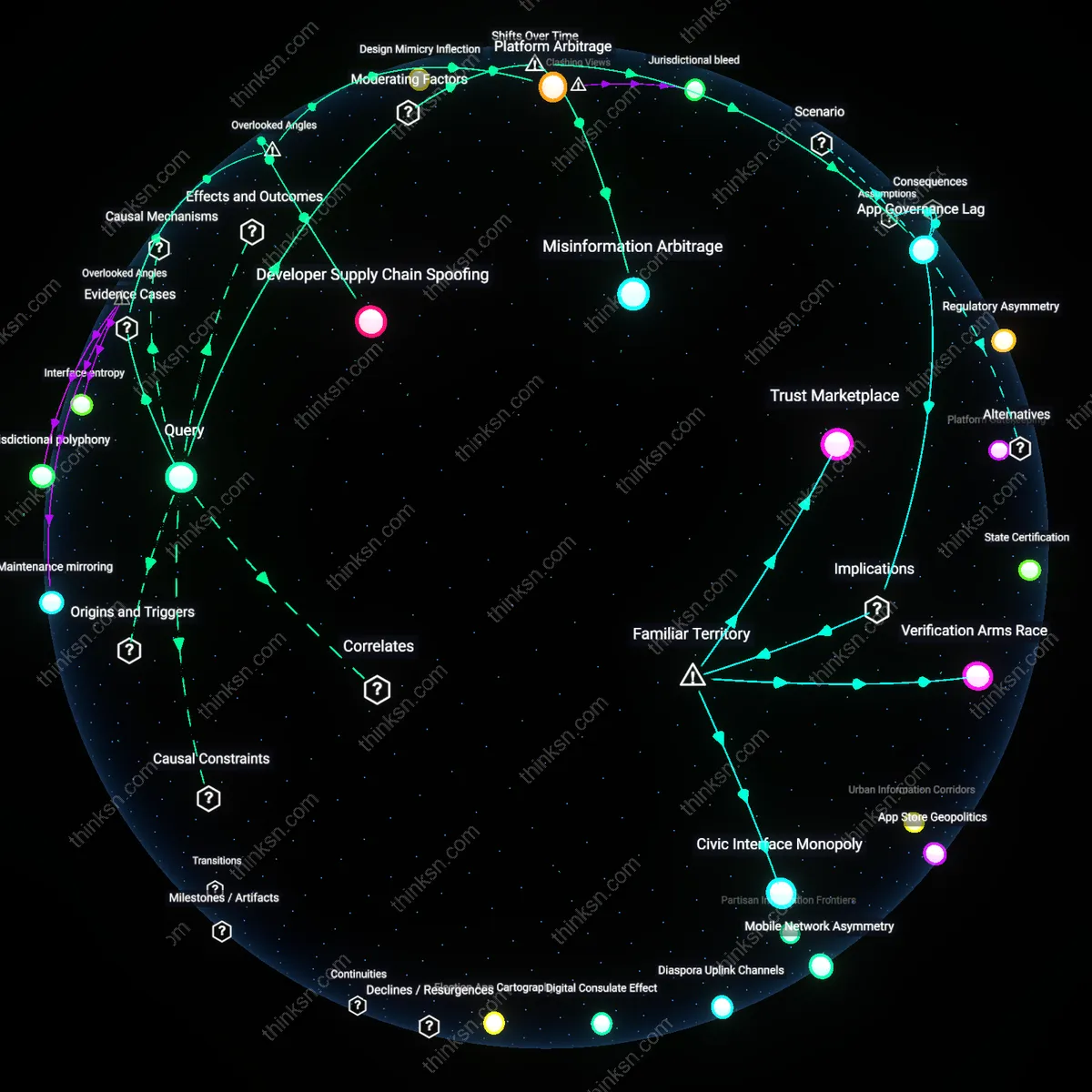
People in major metropolitan areas access reliable election information through apps because proximity to tech infrastructure and civic institutions enables direct integration between official election authorities and digital platforms. Municipal election offices in cities like Atlanta, Denver, and Seattle partner with app developers such as BallotReady and Vote.org, feeding real-time data into user-facing tools through APIs—connections made feasible by co-location with tech hubs, fiber networks, and funding streams from local civic innovation grants. This clustering creates feedback loops where data accuracy improves with proximity to both digital infrastructure and institutional oversight, making reliability a function of geographic centrality rather than universal design. The non-obvious insight is that digital access to trustworthy election data is not uniformly technological but spatially tiered—urban cores become information 'corridors' while peripheries are filtered out systematically.
Partisan Information Frontiers
Residents in politically contested suburban counties such as Maricopa (AZ), Gwinnett (GA), and Kenosha (WI) receive contradictory or delayed election information through apps due to deliberate obstruction by local election officials who weaponize data access as a tool of partisan control. In these jurisdictions, GOP-led boards have suspended data-sharing agreements with nonpartisan platforms, restricted access to ballot tracking systems, or disseminated misleading updates through unofficial channels, directly interfering with app developers' ability to provide accurate information. This occurs within a national ecosystem where decentralized election administration allows local actors to disrupt digital information flows without federal consequence, turning the geographic distribution of app-based reliability into a reflection of political conflict rather than technical capacity. The overlooked reality is that spatial disparities in election app reliability are not just about infrastructure or distance but are actively produced by localized political power struggles over information control.
App Store Geopolitics
In Belarus during the 2020 post-election protests, independent election monitoring apps like 'Honest Belarus' were blocked domestically but remained accessible via Polish-based servers and Apple’s and Google’s app stores hosted in the EU, revealing that access to reliable election information through apps is routed through global tech platforms’ jurisdictional choices. The availability of these apps depended not on local demand or development capacity, but on whether Apple and Google chose to maintain listings despite pressure from the Belarusian government—a decision ultimately shaped by their EU regulatory exposure and corporate risk calculus. This demonstrates that the flow of election information apps is less a function of national infrastructure and more of transnational platform governance, where app distribution becomes a geopolitical chokepoint controlled by Silicon Valley’s regional policy enforcement. The non-obvious insight is that citizens in authoritarian contexts often access election integrity tools not through domestic networks but via extraterritorial digital supply chains governed by private firms’ legal domiciles.
Mobile Network Asymmetry
During Nigeria’s 2023 elections, users in rural areas of Borno State attempting to access INEC’s official election results app were systematically unable to do so due to deliberate 3G network throttling by MTN and Airtel at the instruction of federal forces, while urban centers like Lagos experienced uninterrupted connectivity to the same app. The flow of reliable election information through apps was thus fractured by state-telecom collusion that selectively disrupted downlink transmission in conflict-affected regions where dissent was anticipated. This spatial disparity in data delivery—engineered through mobile carrier infrastructure rather than app design—reveals how physical telecom networks act as subnational gateways that can enable or suppress election transparency on a granular, geolocated basis. The underappreciated reality is that even a technically sound election app can be neutralized not by hacking its code, but by manipulating the bandwidth conduits through which it travels.
Diaspora Uplink Channels
In Venezuela’s 2020 parliamentary elections, citizens inside the country received distorted results through state-controlled platforms, while Telegram bots like 'La Canilla Info'—run by a Miami-based tech collective—pulled real-time data from opposition monitoring groups on the ground, processed it through encrypted channels to Argentina, and redistributed verified updates back into Venezuela via bot relays and mesh-linked WiFi nodes in border zones. The reliable app-based election information flowed not from centralized domestic sources but through an informal, transnational digital smurfing network that used geographic dispersal to evade censorship. This circuitous route depended on exile communities acting as technical intermediaries, converting local observations into secure data packets that reentered the country from outside. The overlooked mechanism is that spatially disconnected diaspora actors can become critical infrastructure for reliable election information, effectively rerouting information sovereignty through extra-national digital enclaves.
Platform Gatekeeping
Social media platforms like Facebook and X (formerly Twitter) are the primary source of election information for users in the U.S. and Brazil, where algorithmic content distribution amplifies state-verified accounts and official voting updates while suppressing known disinformation networks. This mechanism works through centralized content moderation policies that prioritize government-authenticated sources during election windows, particularly in high-conflict democracies where misinformation spreads rapidly. What’s underappreciated in this familiar role of social media as an information conduit is that these platforms now function not just as distributors but as arbiters—deciding which information qualifies as 'reliable' through opaque enforcement of civic integrity policies.
State Certification
In Germany and South Korea, citizens receive verified election information through government-integrated apps like the Bundeswahlleiter portal or the Central Election Commission’s mobile service, which are embedded within broader national digital ID ecosystems and trusted public service infrastructures. These systems operate through institutional legitimacy—where the state acts as both publisher and validator of election data, leveraging pre-existing public trust in civil administration. While users commonly associate reliability with technology or design, what remains unseen is how deeply this trust is rooted not in the app itself but in the perceived neutrality and competence of the state institution behind it.