Screen-Free Classrooms: Equity for ADHD vs Neurotypical Students?
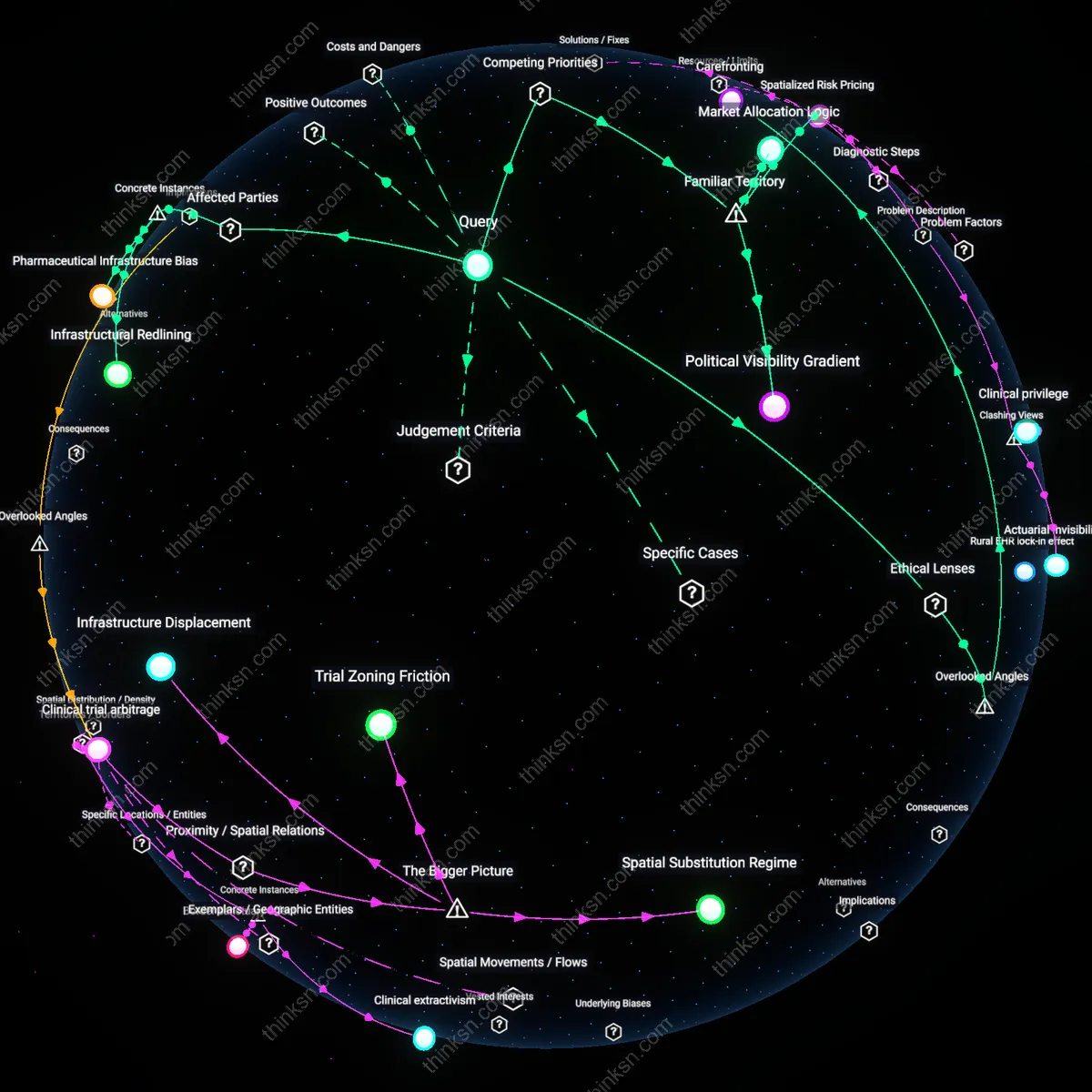
Analysis reveals 9 key thematic connections.
Key Findings
Digital Divide Reversal
The push for screen-free classrooms since the 2010s reveals a reversal in the digital equity paradigm, where historically marginalized neurotypical students from low-income backgrounds—who previously lacked technological access—now benefit from reduced screen mandates, while ADHD students, predominantly diagnosed in middle-class institutions, lose access to assistive digital tools that mitigate attentional barriers. This shift reframes the equity struggle from bridging technological access to allocating cognitive accommodations, exposing how closing one gap can widen another. The non-obvious consequence is that equity progress in one domain (broad digital inclusion) generates new disparities in specialized educational responsiveness.
Pedagogical Temporality Gap
Since the late 1990s, the medicalization of ADHD has placed affected students on synchronized pharmacological and behavioral schedules—aligned with standardized school timetables—while the 2020s resurgence of screen-free pedagogy, rooted in pre-digital romanticism, reifies a neurotypical temporal rhythm resistant to ADHD-aligned pacing; this clash reveals how educational reforms idealizing mid-20th-century classroom norms disadvantage students whose cognitive needs emerged as salient only after those norms had already eroded. The underappreciated dimension is that temporal assumptions in pedagogy function as hidden curricula, privileging students who naturally inhabit the rhythm of a bygone era.
Accommodation Invisibility Cycle
As screen-based accommodations for ADHD students—such as text-to-speech and focus-filtering software—became entrenched in Individualized Education Programs (IEPs) during the 2000s, their normalization rendered them institutionally invisible; the recent debate over screen-free classrooms since 2020 has exposed this invisibility by forcing schools to either visibly rescind accommodations or create parallel instructional tracks, thereby revealing a systemic pattern where accommodations become undetectable until challenged. The critical insight is that the very success of integration can produce subsequent vulnerability, as equity measures fade from administrative salience until disruption occurs.
Policy Feedback Loop
Banning screens in classrooms improves equity by enabling students with ADHD to engage more consistently with structured instructional routines, reducing cognitive overload from self-regulating technology use and allowing targeted teacher support to reach them more effectively. This occurs because school-level technology restrictions shift instructional design toward predictable, low-distraction formats that align with clinical recommendations for ADHD management—activating a responsiveness in public education policy that mirrors therapeutic best practices. The non-obvious systemic consequence is that classroom policies treating technology as a behavioral variable, not just a pedagogical tool, generate feedback that reshapes how schools accommodate neurodiversity at scale.
Differential Access Infrastructure
Screen-free classrooms enhance equity by neutralizing disparities in digital environment quality between students with ADHD and neurotypical peers, whose focus is less compromised by chaotic or stimulating home tech setups. Because students with ADHD are disproportionately affected by unregulated, algorithm-driven digital environments outside school, a screen-free classroom functions as a corrective infrastructure that equalizes baseline attentional readiness. The key mechanism is the substitution of algorithmically amplified distractions—common on personal devices—with teacher-curated pacing and materials, revealing how schools can act as counterweights to commercial digital ecosystems that exacerbate attentional inequity.
Inclusion Tax
The push for screen-free classrooms reveals that neurotypical students, often used as the default for instructional design, indirectly subsidize inclusion by adapting to environments optimized for ADHD needs, thereby normalizing cognitive accommodation as a collective benefit. When classrooms reduce screen-based multitasking, all students gain from lowered cognitive load, but the structural advantage is that neurodivergent students no longer bear the full burden of seeking individualized accommodations. This shift illustrates how universal design choices, triggered by advocacy for marginalized learning profiles, redistribute the labor of inclusion across the student body—exposing an underacknowledged equity mechanism where majority groups absorb minor friction to enable systemic accessibility.
Attention Infrastructure
Banning screens in classrooms privileges neurotypical attention spans by institutionalizing uninterrupted focus as the default learning mode, disadvantaging students with ADHD who rely on digital aids to regulate engagement. This policy embeds a normative timeline of concentration—one that rewards linear, sustained attention—into physical and curricular design, making accommodations like screen-based timers or fidget apps feel disruptive rather than essential. The non-obvious consequence is that what appears to be a universal cognitive enhancement (reducing distractions) actually redistributes access to attention itself, favoring those whose minds already conform to classroom expectations.
Compensatory Access
Students with ADHD often depend on personal devices to run assistive technologies like text-to-speech, task prompts, or noise-filtering apps that help them meet the same academic demands as neurotypical peers; removing screens eliminates these tools while leaving neurotypical students’ unaided strategies intact. This creates a hidden transfer of academic risk—neurodivergent students absorb greater functional loss under policies framed as equitable for all. The underappreciated reality is that 'equal' screen bans are experienced as unequal because they dismantle individually tailored compensations without altering the dominant cognitive standard.
Neurological Tax
Screen-free rules impose a cognitive surcharge on students with ADHD by forcing them to self-regulate through sheer effort rather than permitted technological support, a burden neurotypical students do not face under the same conditions. This tax manifests in depleted executive function, earlier fatigue, and reduced participation—systemic effects that mirror regressive economic policies where compliance costs fall hardest on the least resilient. The overlooked mechanism is that classroom equity is undermined not by intent, but by the invisibility of neurodivergent coping economies in educational policy design.