Collective Advocacy or Individual Litigation for Out-of-Network Denials?
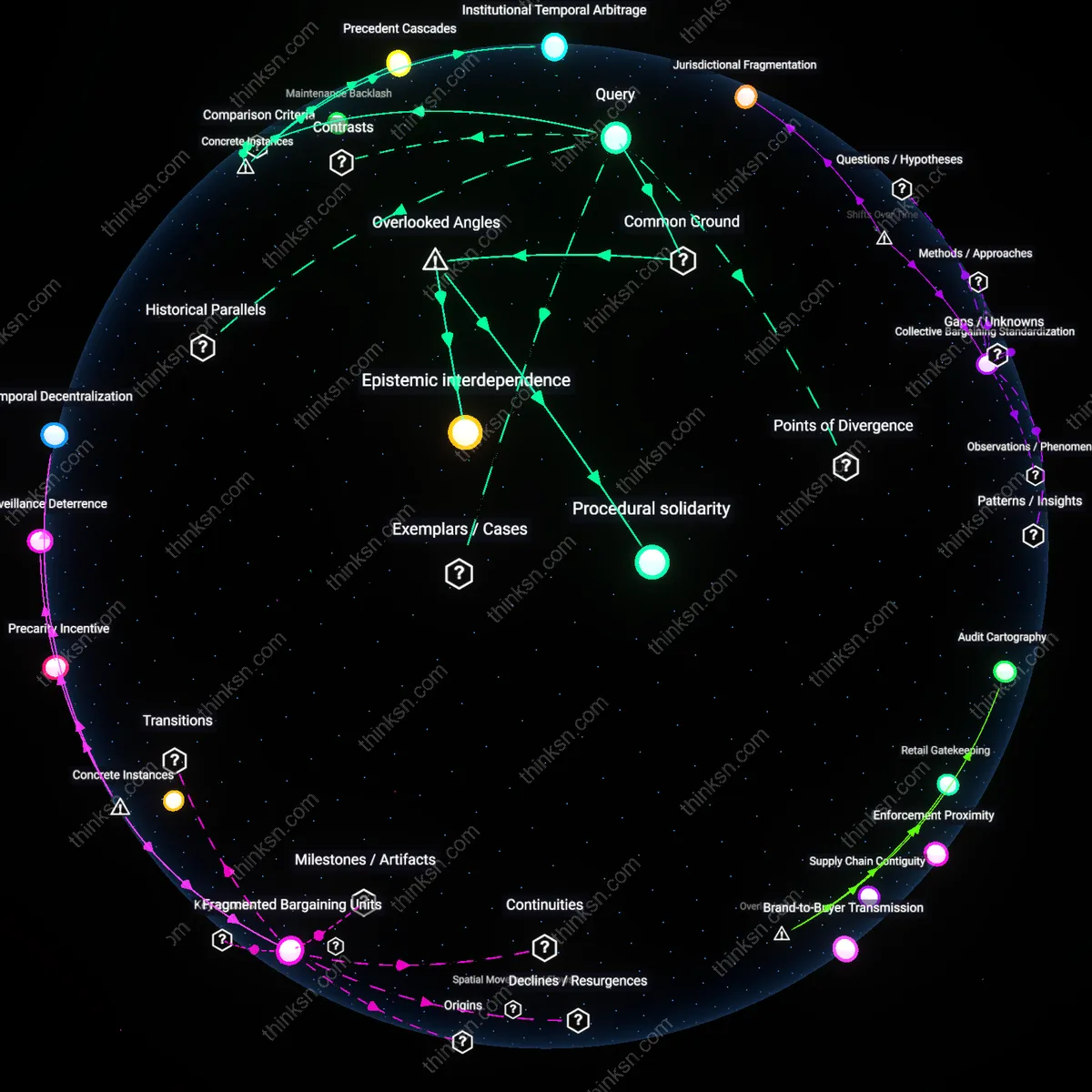
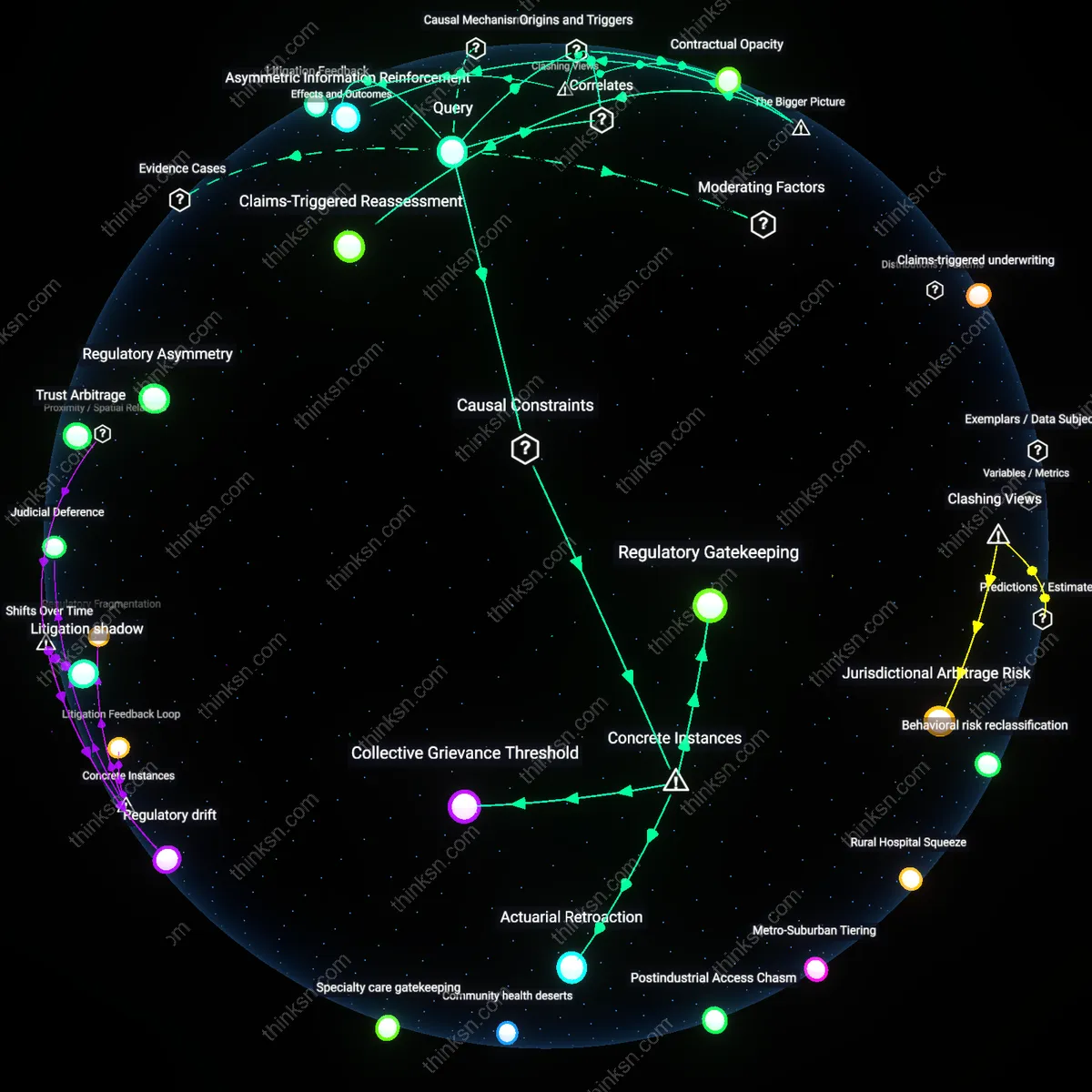
Analysis reveals 12 key thematic connections.
Key Findings
Regulatory Feedback Loop
Collective action through patient advocacy groups is more effective due to the historical shift from individual grievance to systemic lobbying that emerged in the late 20th century, when chronic disease coalitions like the AIDS Clinical Trials Group leveraged coordinated public pressure to alter FDA approval and insurance coverage protocols. This mechanism operates through sustained engagement with regulatory agencies and legislative bodies, transforming episodic complaints into policy feedback, a dynamic underappreciated because it does not rely on legal precedent but on iterative normative adjustment in administrative rule-making.
Litigation Precedent Cascade
Individual litigation is more effective because it exploits a post-1970s transformation in health law where isolated court rulings—such as those in ERISA-covered plans following the 1996 Patients’ Bill of Rights debates—establish binding precedents that force plan-wide changes in claims adjudication. This works through the hierarchical authority of judicial decisions in common law systems, where a single successful challenge in a federal district court can trigger automatic reprocessing of thousands of similar denials, a function often missed because its impact is delayed and jurisdictionally uneven.
Solidarity Infrastructure
Collective action has become more effective since the 2010s due to the emergence of digital advocacy platforms like Patients for Affordable Drugs, which institutionalize patient experiences into structured data campaigns that pressure payers through reputational risk rather than legal obligation. This operates through networked transparency—aggregating denial letters and costs into public scorecards that influence employer-sponsored plan contracting—highlighting a shift from legal redress to market accountability, a transition rarely acknowledged because it bypasses formal legal channels entirely.
Network Amplification
Collective action through patient advocacy groups is more effective than individual litigation in reversing systemic out-of-network denials when public pressure can compel insurer policy change, as demonstrated by the AIDS Treatment Activism movement in New York during the late 1980s and 1990s, where ACT UP and allied groups leveraged media-saturated direct action to force Medicaid and private insurers to reclassify experimental treatments as medically necessary. This approach succeeded not by winning individual reimbursement cases but by altering adjudication standards across the network, revealing that collective advocacy can shift insurer behavior at scale through reputational risk rather than legal precedent. The non-obvious insight is that systemic denial patterns are often maintained by administrative inertia rather than legal justification, making public accountability more effective than judicial appeals.
Precedent Leverage
Individual litigation is more effective than collective action in challenging out-of-network denials when a legally novel issue can be escalated to appellate courts, as seen in the 2018 case *Waknine v. Guardian Life Insurance Company of America* in the Ninth Circuit, where a single plaintiff’s successful claim redefined 'medical necessity' under ERISA plans to include out-of-network cancer treatment unavailable in-network. This victory created binding precedent that automatically invalidated hundreds of similar denials across multiple insurers within the jurisdiction, a result unattainable through advocacy alone. The underappreciated dynamic is that well-chosen litigation can collapse systemic barriers through judicial interpretation, transforming isolated grievances into enforceable rights.
Regulatory Trigger
Collective patient advocacy is more effective than individual litigation in triggering regulatory enforcement against out-of-network denials when systemic patterns attract state oversight, exemplified by the 2020 campaign led by the Alzheimer’s Association and Families USA that documented widespread denials of PET scans for dementia diagnosis, prompting the California Department of Managed Health Care to issue corrective orders to Anthem Blue Cross and revise utilization review protocols. Unlike litigation, which resolves one case at a time, this coordinated data aggregation and public reporting strategy activated statutory enforcement mechanisms that imposed binding operational changes across the insurer’s entire service area. The overlooked mechanism is that advocacy groups can function as de facto regulatory sensors, transforming anecdotal harm into actionable compliance violations.
Institutional accountability pressure
Collective action through patient advocacy groups is more effective than individual litigation at altering payer behavior because it leverages public exposure and political coalition-building to force systemic transparency. Health insurers respond more consistently to campaigns that threaten regulatory scrutiny or brand reputational damage—such as those orchestrated by alliances like the Patient Advocate Foundation in partnership with state attorneys general—than to isolated legal judgments, which lack precedential reach and are easily absorbed as operational costs. This efficacy arises not from legal authority but from the capacity of advocacy networks to activate press, legislative, and bureaucratic actors who share regulatory oversight, a dynamic underapprecined because the legal system is assumed to be the primary corrective mechanism. The non-obvious force here is the insurer’s vulnerability to coordinated external scrutiny, not judicial outcome.
Asymmetric litigation burden
Individual litigation is more effective in securing relief for specific patients because it bypasses the slow inertia of collective organizing and directly compels adjudication under existing contract and ERISA frameworks. When a single insured party sues an insurer for wrongful out-of-network denial, especially in self-funded employer plans governed by federal law, the outcome can yield binding arbitration or settlement without needing mass coordination—exploiting the fact that insurers often prefer paying individual awards over protracted legal defense. This path works through the procedural asymmetry in ERISA litigation, where claimants face high barriers but, once past them, face opponents incentivized to settle narrowly. The overlooked factor is that individual cases, while not changing policy, exploit structural weaknesses in how insurers manage legal risk exposure.
Normative standard displacement
Collective action reshapes what counts as medically necessary by redefining coverage standards through stakeholder consensus rather than legal precedent, making it more effective in the long term than litigation, which reaffirms existing contract language. Groups like Families USA or the AllWays Health Partnership collaboratives convene clinicians, patients, and insurers to co-develop coverage criteria that delegitimize routine denials of high-cost treatments—effectively shifting the baseline of acceptable care. This operates through professional legitimacy and data-sharing infrastructures that litigation cannot access, altering payer behavior not via punishment but through re-framing clinical norms. The critical but invisible mechanism is the erosion of insurer discretion by embedding peer-reviewed guidelines into benefit design, a process insulated from courtroom dynamics.
Regulatory arbitrage
Collective action through patient advocacy groups is more effective than individual litigation at reversing out-of-network denials when state insurance departments are underfunded and reactive, because advocacy groups like the California Chronic Care Coalition can flood regulators with standardized complaints that trigger mandatory audits under technical compliance rules. This mechanism exploits a loophole in how states allocate enforcement resources—where volume of consumer grievances, not severity, determines regulatory response—allowing coordinated patient data to weaponize bureaucratic inertia into corrective action, a dynamic rarely acknowledged in legal strategy debates that assume formal litigation drives change. The overlooked insight is that administrative burden, not legal precedent, often determines outcomes in insurance oversight.
Data asymmetry leverage
Individual litigation is more effective than collective action in challenging out-of-network denials when the insurer relies on opaque internal algorithms to deny claims, as seen in UnitedHealthcare’s use of AI-driven review systems in Texas, because a single plaintiff’s discovery request can force full algorithmic disclosure under state unfair claims practices laws, which advocacy groups cannot trigger en masse due to standing rules. This creates a rare asymmetry where isolated cases generate higher information yield per plaintiff, undermining the assumed efficiency of scale in group efforts. The overlooked reality is that transparency mechanisms in insurance law are individually activated, making solitary legal actions covert probes into otherwise concealed decision systems.
Provider-side enforcement latency
Collective patient advocacy indirectly pressures providers—not payers—to challenge out-of-network denials when hospitals like Montefiore in New York face cascading patient complaints, because systemic denial patterns threaten provider revenue stability more than individual lawsuits do, prompting institutions to independently refile appeals or renegotiate payer contracts. This shift bypasses insurer adjudication entirely by recalibrating provider risk tolerance, a feedback loop that litigation rarely activates since isolated cases do not signal systemic financial threat. The hidden factor is that advocacy groups alter hospital back-end operations first, using patient volume as a leading indicator of reimbursement risk, a causal pathway unseen in payer-centric dispute models.