Why Do Healthcare Workers Fear Retaliation for Reporting Unsafe Conditions?
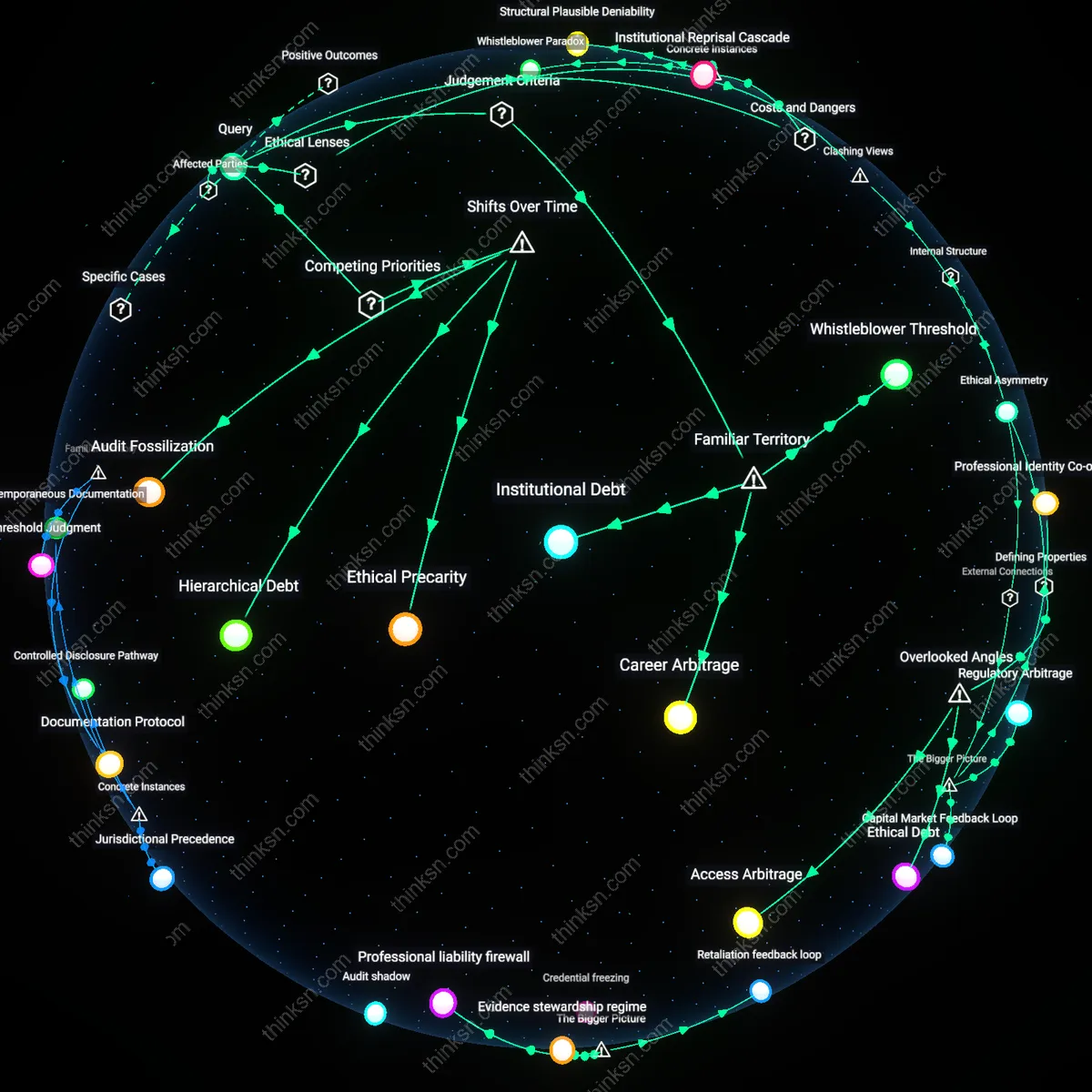
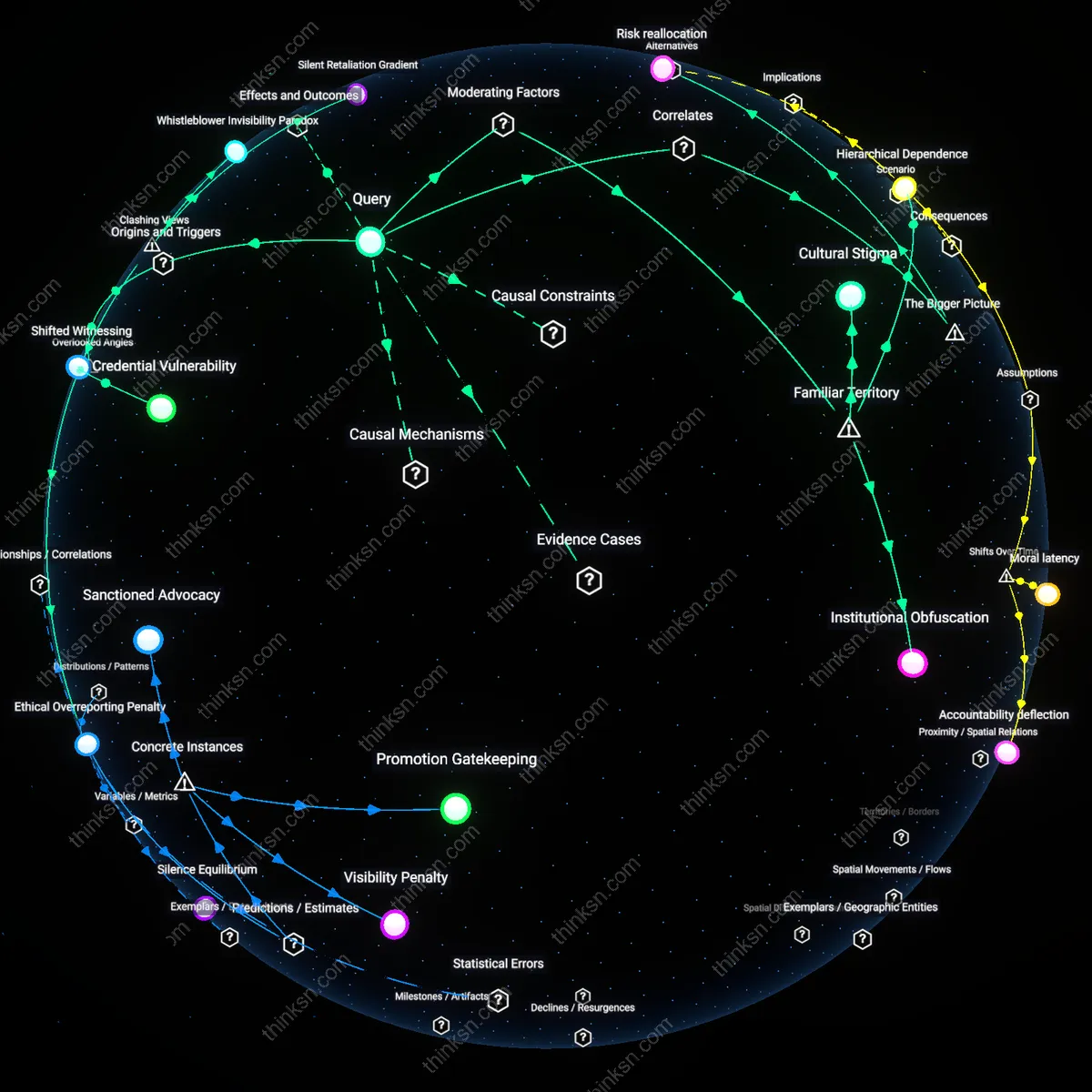
Analysis reveals 8 key thematic connections.
Key Findings
Credential Vulnerability
Healthcare workers avoid retaliation claims because reporting unsafe conditions risks their professional licensure through informal disciplinary pipelines that bypass formal legal channels. State licensing boards often respond to facility-level complaints—not public safety disclosures—with administrative reviews that can suspend or revoke credentials, and managers exploit this by retroactively documenting minor clinical deviations after a worker speaks up. This creates a hidden enforcement axis where legal whistleblower protections do not extend to professional standing, making the threat to livelihood more immediate than job termination. The non-obvious aspect is that retaliation operates not through dismissal but through professional delegitimization—controlled by bodies outside anti-retaliation statutes.
Epistemic Burden
Workers refrain from filing claims because they are expected to document and classify safety hazards using clinical and regulatory taxonomies that require specialized training and access to institutional records they do not control. Nurses or aides reporting medication errors or staffing shortfalls must translate ambiguous, fast-moving events into formally recognizable violations—such as CMS Conditions of Participation or OSHA citation categories—a process that demands time, literacy, and bureaucratic navigation most are untrained for. This epistemic gatekeeping renders their lived experience insufficient as legal evidence, effectively excluding frontline workers from the very processes meant to protect them. The overlooked issue is that retaliation begins not with punishment but with the denial of epistemic authority.
Shifted Witnessing
Reporting unsafe conditions often relocates workers into roles where their observations are systematically invalidated by technological surveillance systems that privilege machine-generated data over human testimony. In hospitals with centralized monitoring, an aide’s report of patient neglect may be dismissed if vital signs logs show 'stable' metrics, even when behavioral deterioration is evident, creating institutional doubt about their perceptual reliability. This erodes their credibility as witnesses to harm, making formal complaints appear subjective or exaggerated. The unexamined mechanism is how digital monitoring environments refract accountability away from management and onto worker perception, quietly disabling their standing to claim retaliation.
Hierarchical Dependence
Healthcare workers avoid retaliation claims because direct supervisors control both clinical workload and professional reputation, creating a dependency that discourages formal reporting. The hospital unit operates through a rigid chain of command where raising concerns can trigger scheduling penalties or exclusion from desirable assignments, and this tacit enforcement persists despite institutional whistleblower policies. What’s underappreciated is that retaliation often arrives not as explicit punishment but as incremental professional marginalization, which feels inseparable from normal workplace dynamics.
Cultural Stigma
Speaking up is reframed as disloyalty within team-based care environments, where cohesion is equated with silence on unsafe conditions. In emergency departments and ICUs, the dominant culture treats questioning peers or superiors as disruptive to patient care rhythms, and reports are seen as betrayals of collective competence. The non-obvious insight is that legal protections fail not due to ignorance but because the moral weight of team solidarity overrides individual rights, turning non-reporting into an act of professional virtue.
Institutional Obfuscation
Reporting systems are embedded in the same administrative structures workers depend on for licensure, scheduling, and credentialing, creating inherent conflicts of interest. When incident portals route complaints through hospital risk management instead of independent bodies, workers perceive—and often experience—delay, trivialization, or recycled documentation that masks inaction. The overlooked reality is that the design of internal reporting channels mimics accountability while structurally absorbing and neutralizing dissent, making legal redress feel redundant.
Institutional dependency
Healthcare workers refrain from filing retaliation claims because their careers depend on maintaining relationships within tightly knit medical hierarchies where upward reporting disrupts unspoken loyalty norms. Clinical environments—such as hospital departments or surgical units—operate through interdependent roles requiring ongoing coordination, so reporting unsafe conditions can be perceived as team betrayal, triggering informal sanctions like exclusion or reduced shift assignments. This dynamic persists despite legal protections because formal anti-retaliation laws do not override the localized power of supervisors to shape work experiences through non-disciplinary means. The underappreciated reality is that legal safeguards assume retaliation is overt and adjudicable, whereas the true deterrent is often subtle, relational, and career-thwarting over time rather than legally actionable at a single point.
Risk reallocation
Filing retaliation claims is avoided because institutional responses reframe the worker’s act of reporting as a personal career risk rather than an organizational failure, shifting moral and professional liability onto the individual. When managers respond to safety disclosures with statements like 'you’re overreacting' or 'this isn’t the right channel,' they invoke cultural scripts that equate loyalty with silence and pathologize concern-raising as disruptive behavior. This redefinition is amplified by peer environments where colleagues, fearing similar exposure, distance themselves from the reporter, reinforcing isolation. The systemic mechanism here is not fear of punishment per se, but the strategic redistribution of professional risk through cultural and linguistic norms that make speaking up feel existentially destabilizing, even in the absence of formal penalties.