Bonus or Integrity? Weighing Finances vs. Ethics in Startup Overtime
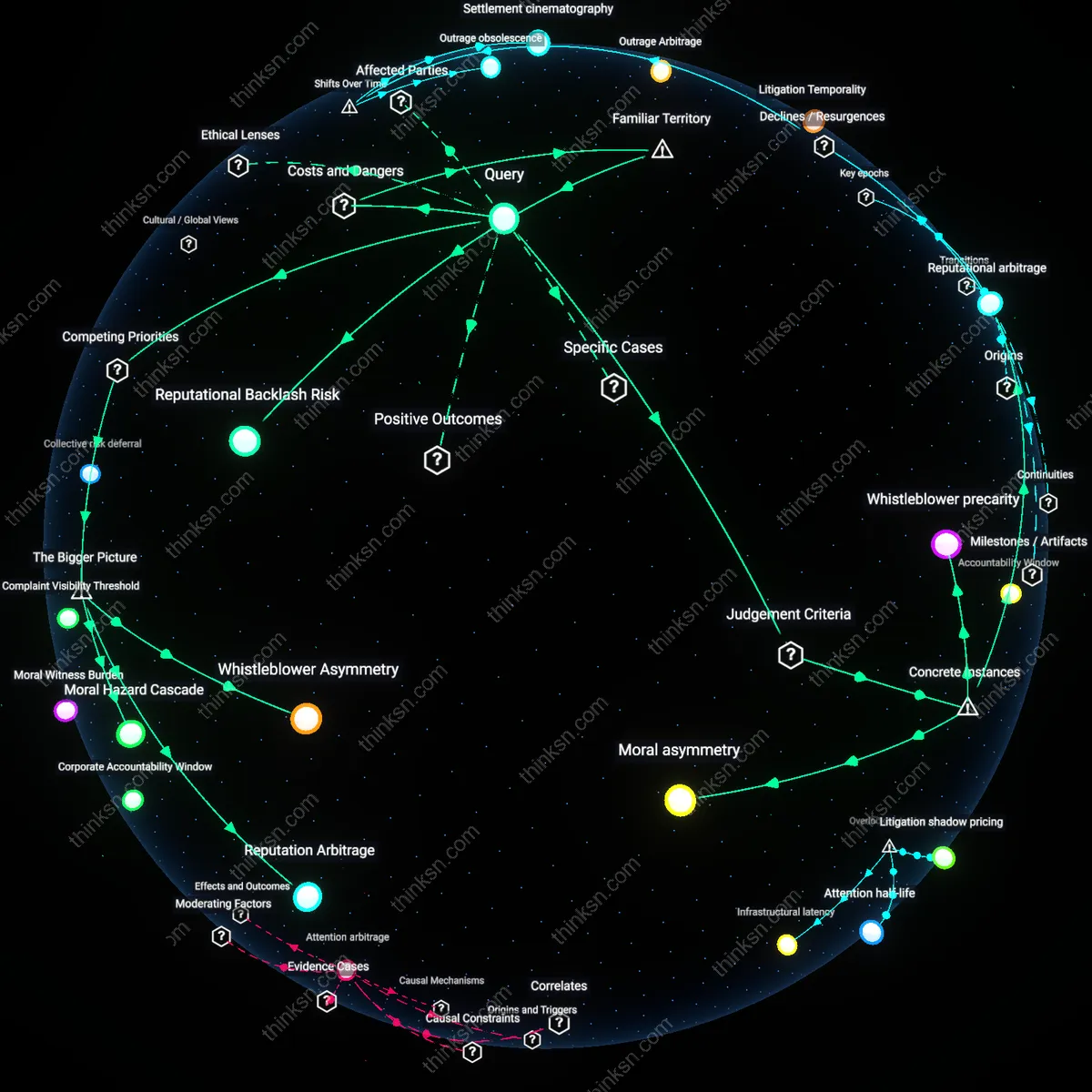
Analysis reveals 6 key thematic connections.
Key Findings
Moral contagion risk
One should prioritize confronting illegal overtime practices because silence becomes an implicit endorsement that erodes ethical norms across the founding team, where early behavioral precedents shape the company’s enduring compliance culture; in startups, where informal oversight dominates, each individual’s inaction signals permissible conduct, allowing illegal practices to embed as operational norms, a dynamic often ignored because bonus-driven calculations focus on personal risk while underestimating how individual decisions propagate as institutional standards.
Investor liability exposure
Employees should consider that reporting illegal overtime may indirectly protect venture capital firms from future regulatory backlash, as investors in high-growth startups are increasingly scrutinized for enabling labor violations through performance-linked funding pressures; since investors rarely monitor internal labor practices but face reputational and legal risk if portfolio companies are exposed, an employee’s confrontation introduces corrective feedback into the capital pipeline—a dimension overlooked because accountability is assumed to reside solely at the managerial level, not in the financial architecture enabling it.
Peer coordination latency
The decision to accept a bonus or confront management hinges critically on whether co-workers are likely to act collectively, because individual whistleblowing triggers disproportionate retaliation while coordinated resistance forces structural change; in distributed startup teams where communication is fragmented and trust is low, the time lag in aligning peer awareness—what can be called 'coordination latency'—determines whether action is suicidal or strategic, a factor rarely considered in ethical decision frameworks that assume either solo heroism or preexisting solidarity.
Salary Equivalence
One should accept the bonus and defer confronting illegal overtime because immediate financial compensation neutralizes exploitation in the short term. The startup leverages cash flow volatility to justify non-compliance, and employees equate bonus receipt with de facto fairness, even when it substitutes for legally mandated pay. This mechanism, common in early-stage tech firms in San Francisco and Austin, treats salary-like rewards as fungible with labor rights adherence, obscuring violations under the guise of performance-based recognition. The non-obvious insight is that employees use bonus acceptance as a psychological offset, mistaking temporary gain for systemic equity.
Whistleblower Tax
One should frame the bonus as a sunk cost and report the overtime practice, because long-term legal exposure disproportionately penalizes low-level employees who remain complicit. In jurisdictions like Delaware-incorporated startups operating in New York, regulators increasingly target individual worker silence as evidence of organizational tolerance, not just managerial malfeasance. The unappreciated dynamic is that bonuses create a retroactive liability shield for executives, converting employee compliance into a tacit liability transfer—making every accepted check a tacit endorsement. This transforms routine payroll into an underreported tax on future accountability.
Burn Culture
One should reject the bonus if it symbolizes normalization of unsustainable work patterns, because in high-growth startups like those in Silicon Valley, bonuses often codify overwork as a cultural rite rather than an exceptional burden. The ritual exchange of money for exhaustion reinforces 'hustle' as identity, making resistance appear disloyal rather than ethical. What’s underappreciated is that the bonus isn’t compensation but a cultural inscription—its acceptance embeds the employee deeper into a deviant norm that trades well-being for belonging. This ritual sustains a self-cannibalizing growth logic.