Do Professors Embrace AI Tutoring or Focus on Mentorship?
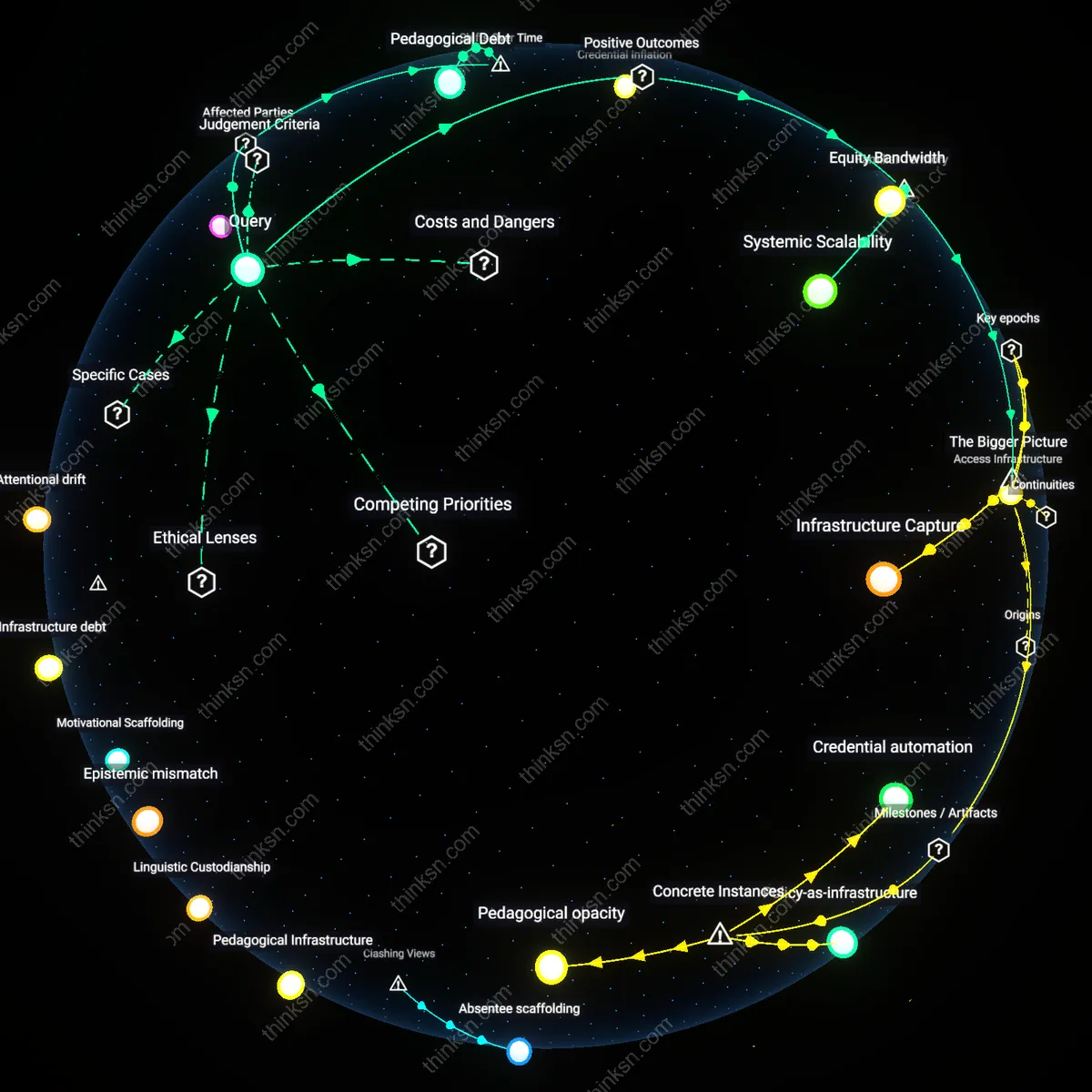
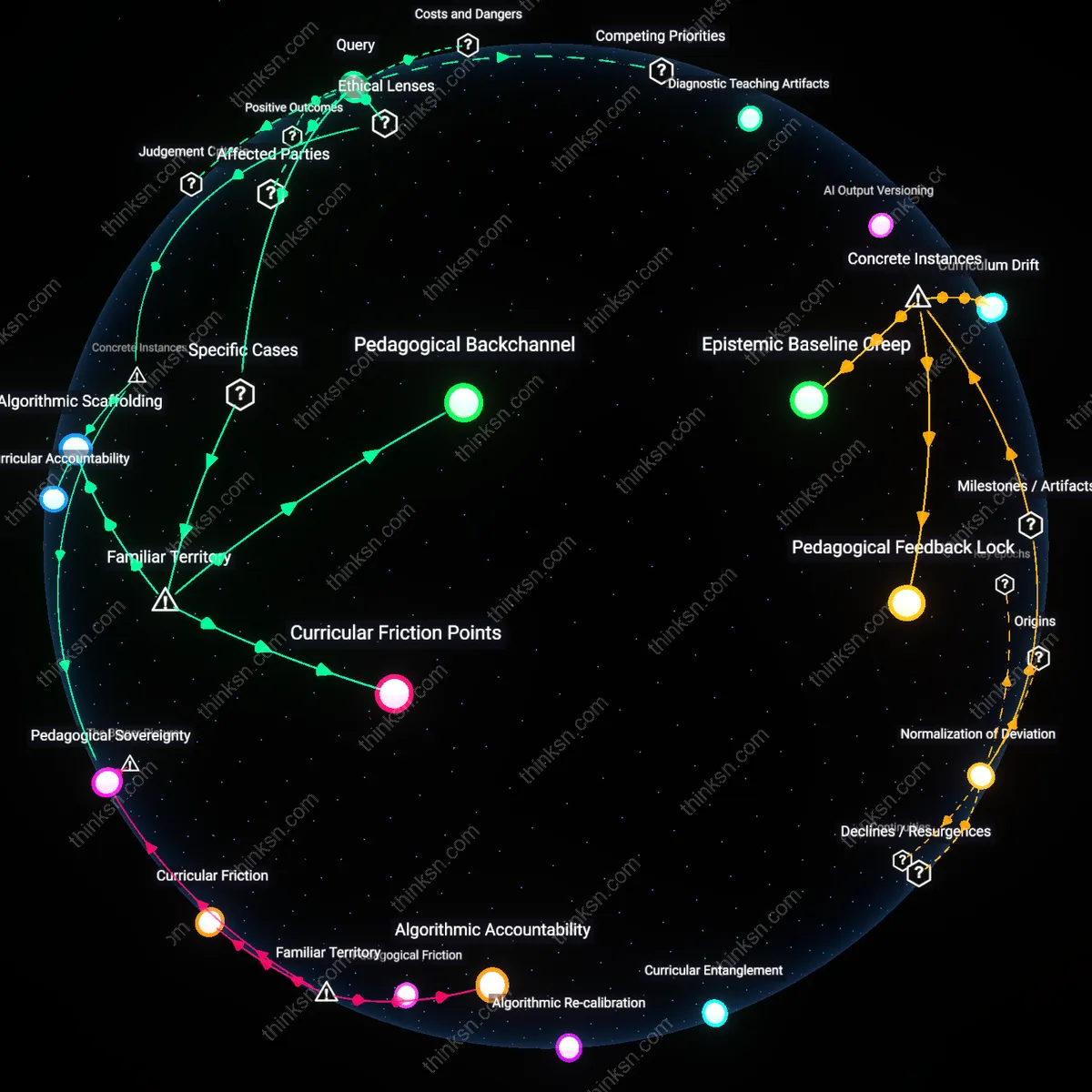
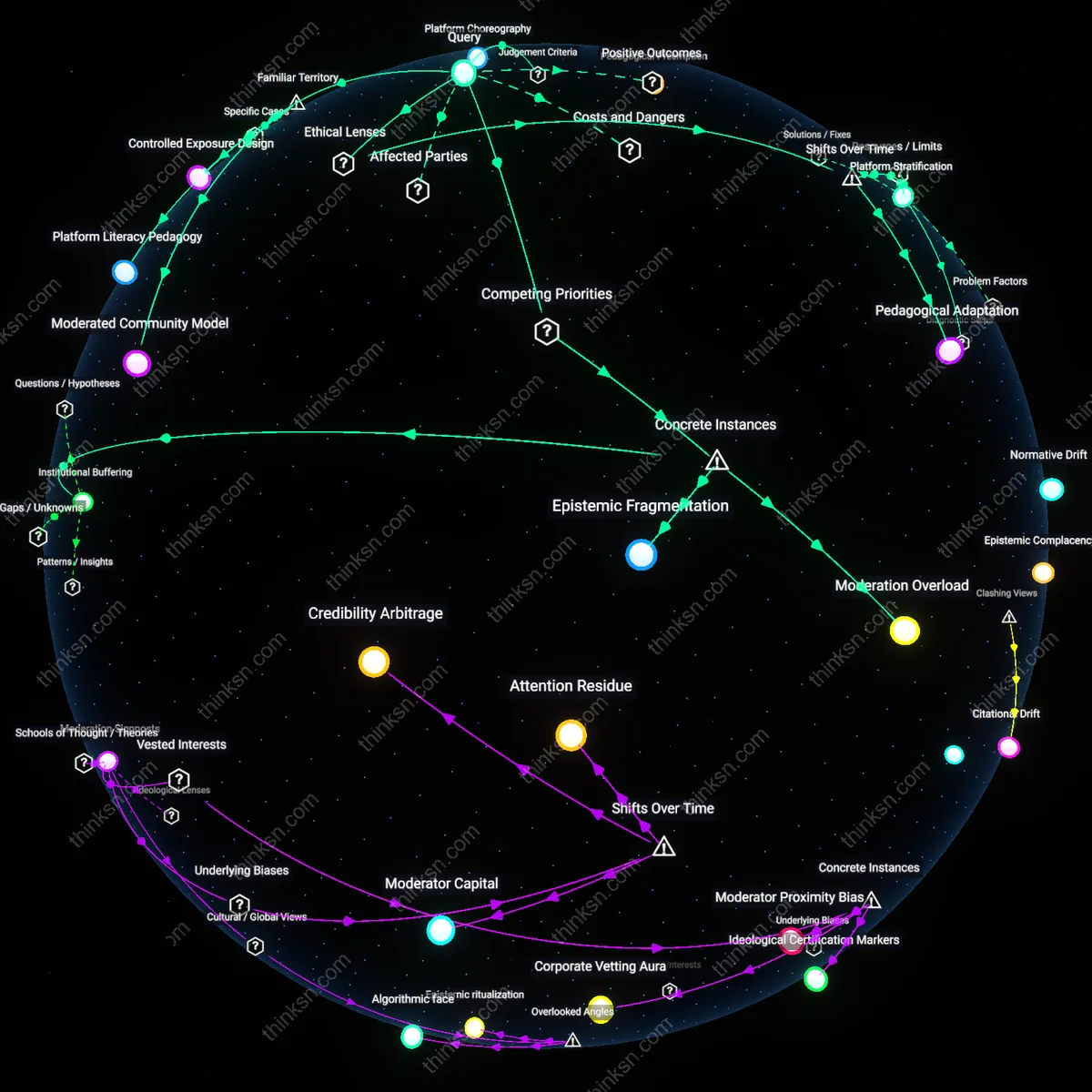
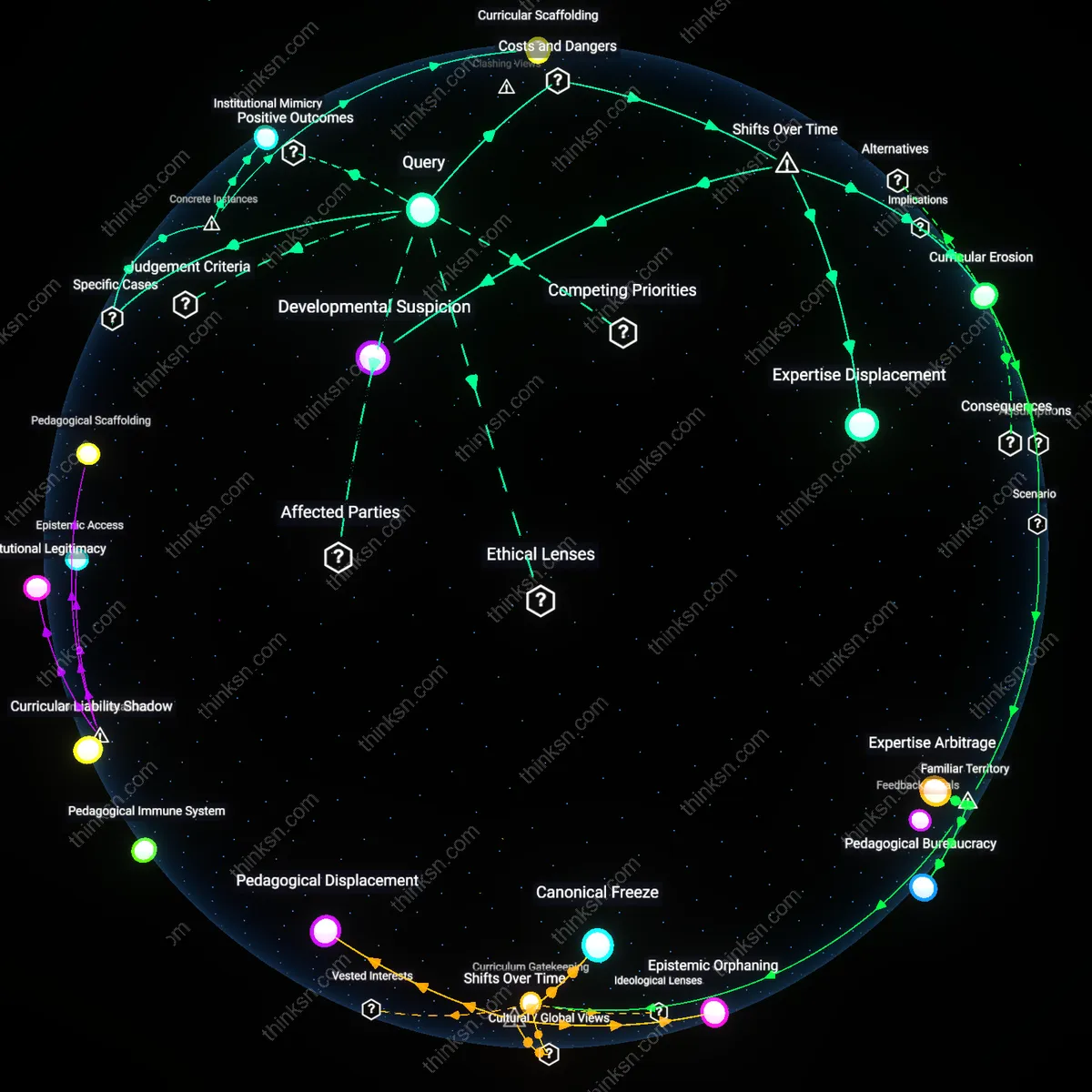
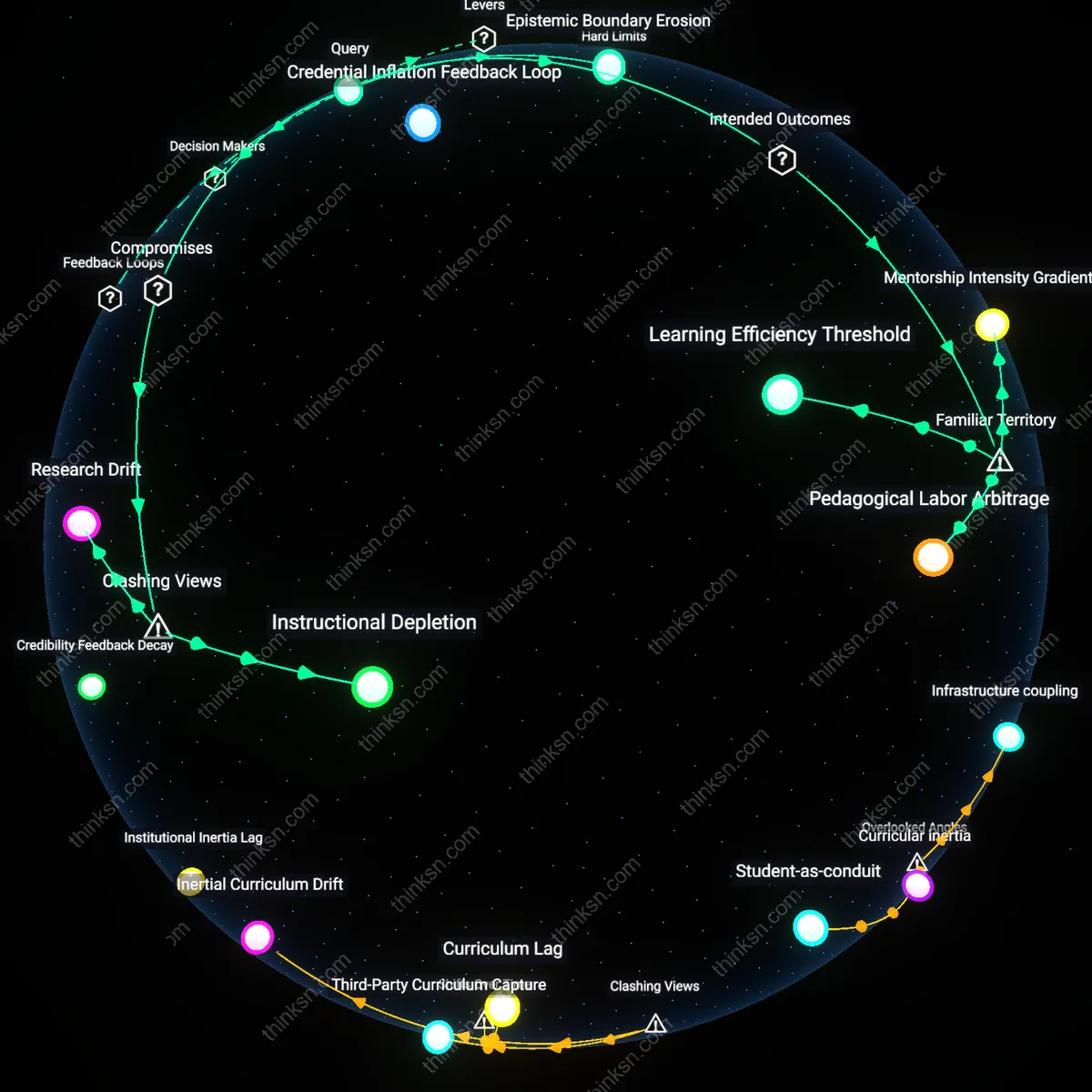
Analysis reveals 8 key thematic connections.
Key Findings
Credential Inflation Feedback Loop
University faculty must adopt AI tutoring tools in hybrid teaching to offload foundational instruction, as rising student-to-faculty ratios and state-level funding formulas tied to course completion rates pressure institutions to maintain academic outputs with fewer teaching-intensive faculty appointments; evidence indicates that AI tools can preserve pass rates in gateway courses while freeing faculty time, enabling continuation of research and mentorship under current budgetary caps—the non-obvious trigger being that AI adoption is less an educational enhancement than a structural compensation for the displacement of tenure-track labor by adjunct-heavy instruction models, a shift driven by public disinvestment and the increasing coupling of institutional survival to throughput metrics.
Epistemic Boundary Erosion
Faculty should resist integrating AI tutoring tools into hybrid teaching because their algorithmic design inherently standardizes explanatory frameworks and cognitive pathways, which undermines the university’s systemic role in cultivating divergent epistemic cultures—particularly in disciplines like critical theory, historiography, or philosophy where interpretive conflict is pedagogical infrastructure; research consistently shows that AI systems trained on dominant disciplinary corpora reproduce consensus norms and marginalize heterodox reasoning, meaning that widespread use reinforces epistemic conformity not through intent but through data saturation dynamics, a condition intensified when tools become default conduits for knowledge access under institutional efficiency pressures.
Research Legitimacy Arbitrage
Faculty should prioritize mentorship and research roles over direct teaching in hybrid models because federal research agencies such as the National Science Foundation and NIH allocate funding based on principal investigator output, creating a systemic incentive to delegate instructional tasks—even symbolically enhanced by AI—so long as graduate student mentorship and publication pipelines remain intact; the non-obvious mechanism is that AI tutoring adoption functions not as a teaching reform but as a legitimizing alibi for faculty and administrators to reclassify time previously spent on undergraduate instruction as ‘capacity-building’ for research missions, effectively arbitraging accountability structures where teaching quality is monitored locally but research prestige determines resource inflows at national and global levels.
Instructional Depletion
University faculty should prioritize AI tutoring tools in hybrid teaching because overreliance on mentorship as a pedagogical model risks exhausting faculty bandwidth, particularly at public universities with rising student-to-faculty ratios; evidence indicates that time-intensive mentoring is increasingly concentrated among a shrinking number of tenured faculty, while contingent instructors are excluded from such roles, making AI integration a structural necessity rather than a technological luxury. This shift reveals that the romanticization of mentorship in higher education masks an uneven distribution of labor that AI can help rebalance—but only if deployed to offload routine instruction, not replace human judgment. The non-obvious truth is that resisting AI in the name of personal mentorship may inadvertently entrench inequity by preserving a model that few can realistically deliver at scale.
Research Drift
University faculty should adopt AI tutoring tools not to enhance teaching but to reclaim time for high-impact research, recognizing that hybrid teaching loads have expanded into cognitive domains once reserved for scholarly work; as institutions demand more instructional presence without reducing research expectations, AI mediation in routine tutoring functions allows faculty to reoccupy their primary identity as knowledge producers rather than pedagogical caretakers. This adjustment challenges the assumption that teaching and mentorship are intrinsically superior academic values, exposing how institutional compromises push faculty toward performative instruction at the expense of disciplinary advancement—especially in research-intensive universities where scholarly output determines funding and status.
Learning Efficiency Threshold
University faculty should adopt AI tutoring tools in hybrid teaching to achieve a learning efficiency threshold where student mastery of foundational course material improves measurably across large cohorts. This works through scalable, real-time feedback systems that respond to individual learning gaps—particularly in introductory STEM and quantitative social science courses at public research universities—freeing faculty to concentrate on advanced instruction and research oversight. While the public commonly associates AI in education with cost-cutting or depersonalization, the underappreciated dynamic is its capacity to standardize baseline competency, ensuring more students reach the minimum proficiency required to benefit from mentorship in later academic stages.
Mentorship Intensity Gradient
University faculty should prioritize mentorship and research roles over adopting AI tutoring tools to steepen the mentorship intensity gradient for high-potential students in disciplines like philosophy, creative writing, and theoretical physics, where epistemic apprenticeship is central to knowledge production. The mechanism is sustained, one-on-one intellectual engagement that cultivates judgment, voice, and innovation—qualities not amenable to algorithmic modeling—operating through tenure-track faculty at liberal arts colleges and elite graduate departments. Although AI tutoring is often framed as a democratizing force in education, the less recognized reality is that human mentorship remains the primary engine for disciplinary innovation, especially in fields where questions are unstable and standards of excellence are contested.
Pedagogical Labor Arbitrage
University faculty should adopt AI tutoring tools in hybrid models to enable pedagogical labor arbitrage, where routine instructional tasks such as grading, concept drills, and attendance tracking are offloaded from tenure-line faculty to automated systems, particularly at underfunded state institutions facing rising enrollments and adjunctification. This shift repurposes human capital toward research productivity and selective student advising by altering the cost structure of teaching without reducing learning outcomes in standardized courses like undergraduate economics or psychology. The familiar narrative casts AI as either a threat or supplement to teachers, but the critical yet overlooked function is its role in reallocating scarce academic labor toward activities that generate institutional prestige and external funding.