Choosing Freedom or Safety in Teen Curriculum Decisions?
Analysis reveals 6 key thematic connections.
Key Findings
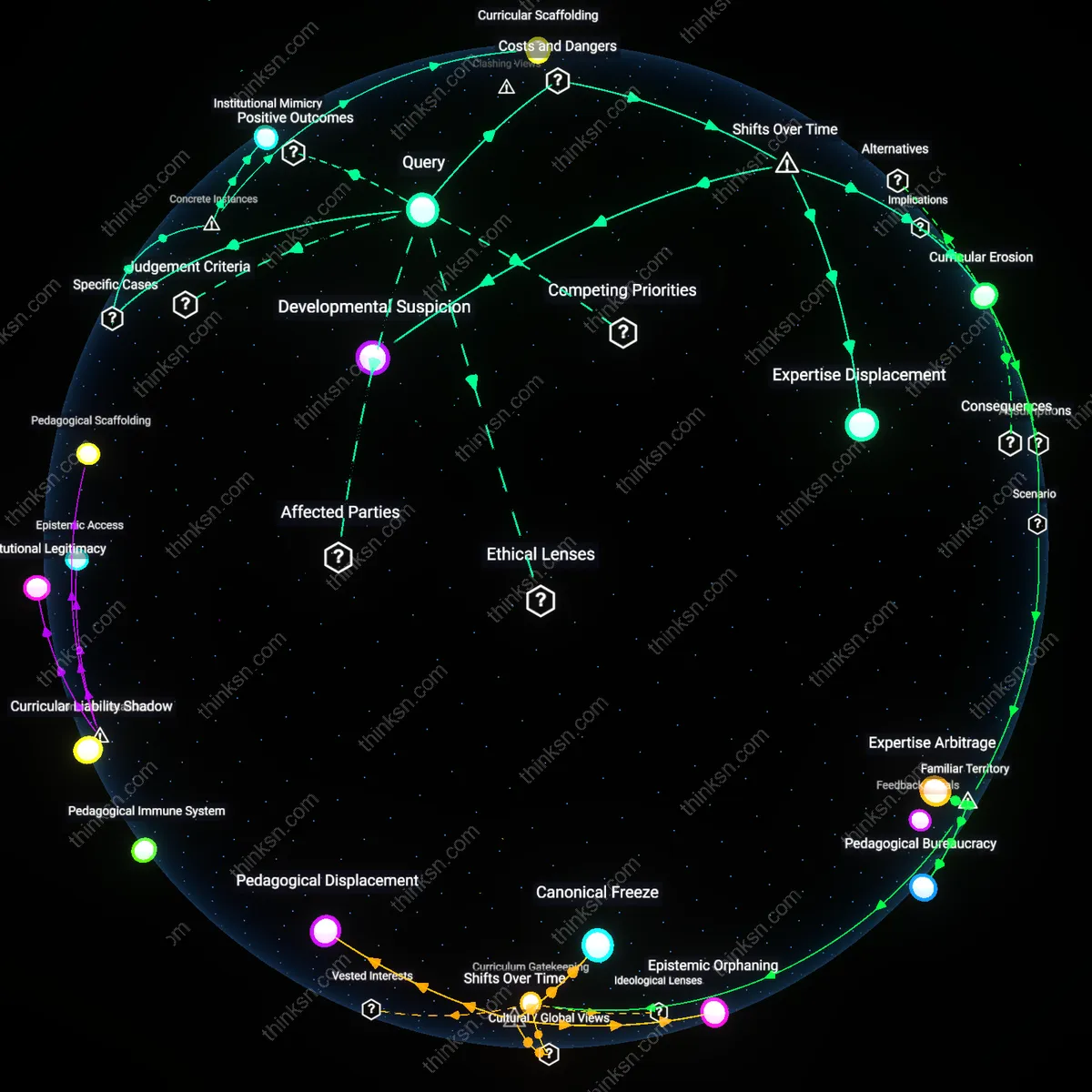
Curricular Erosion
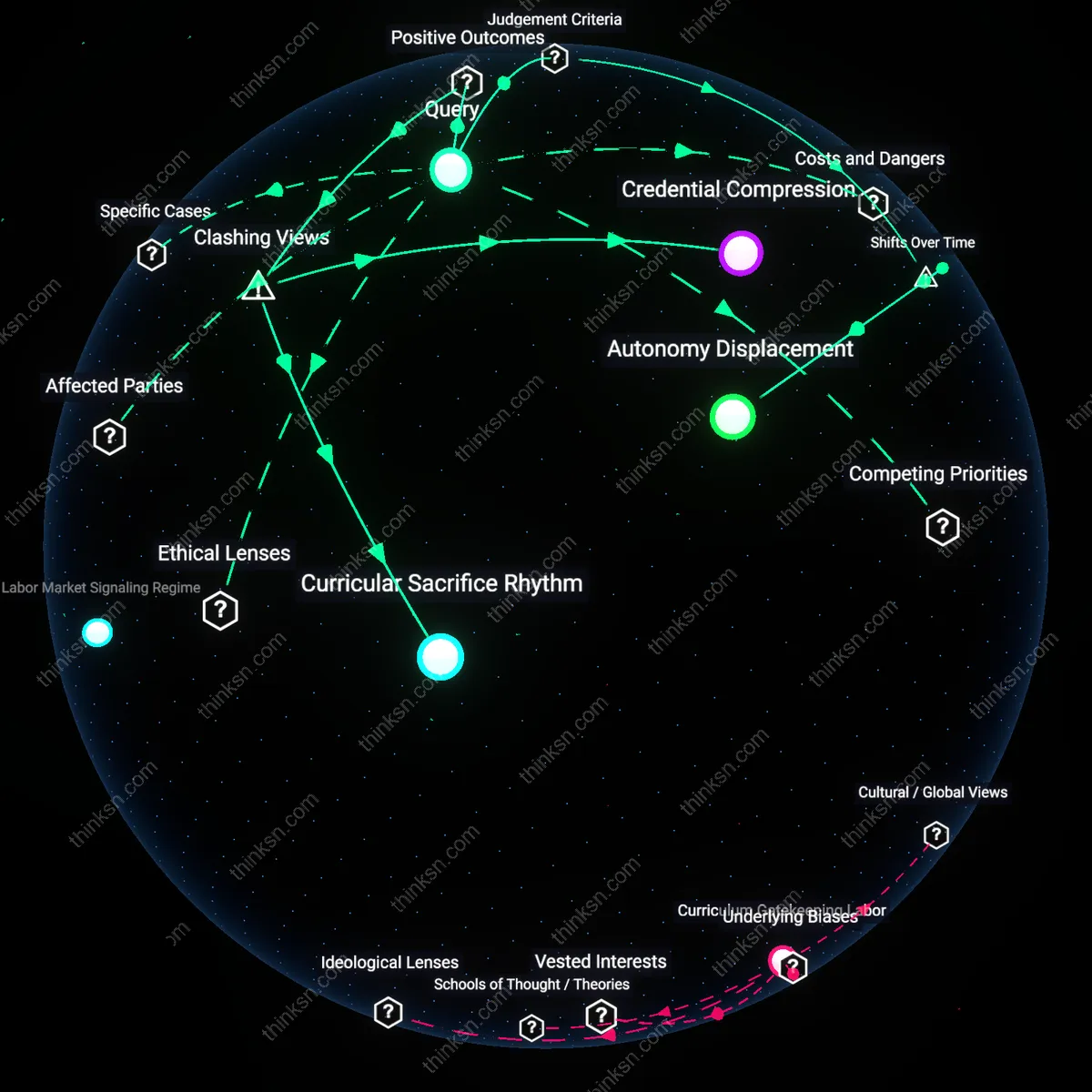
Parents should reject student-curated curricula because they risk institutionalizing pedagogical fragility through the erosion of standardized knowledge benchmarks—since the 1990s, the shift toward personalized learning, accelerated by No Child Left Behind’s accountability backlash and digital platform individualism, has weakened collective curricular coherence, allowing adolescent preference to override epistemic rigor, with schools now outsourcing intellectual authority to engagement metrics rather than disciplinary mastery, revealing that what was once a negotiated tension between developmental relevance and academic structure has hardened into systemic deference to student choice. This collapse of curricular spine, masked as empowerment, exposes students to cultural and cognitive fragmentation by dismantling shared frameworks that historically buffered democratic discourse against relativism. The underappreciated danger is not poor content, but the disappearance of content as a defensible public standard.
Expertise Displacement
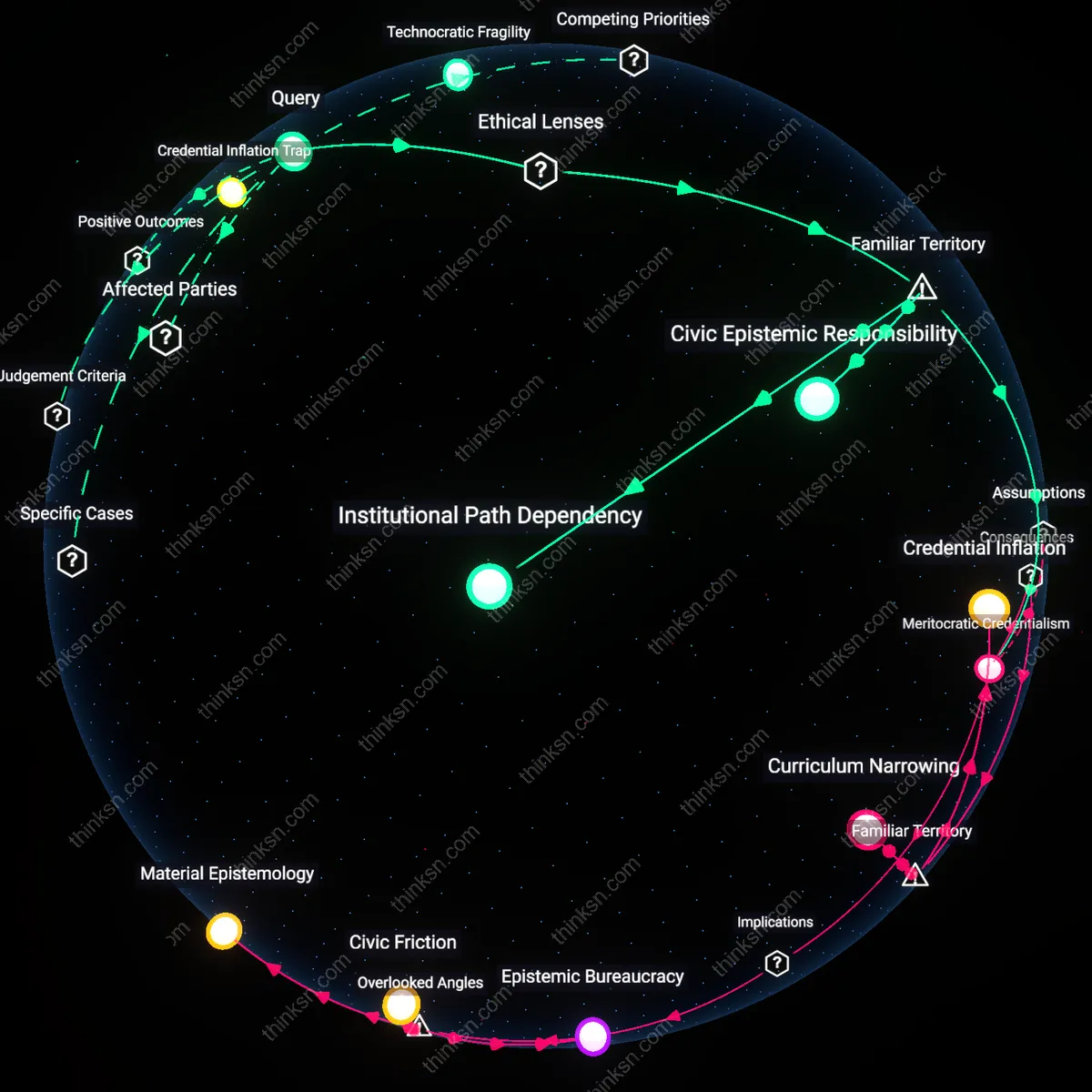
Parents should oppose expert-endorsed curricula as currently institutionalized because the post-World War II consolidation of academic authority into credentialized bodies has inadvertently enabled ideological path dependency, where standards set in mid-century institutional contexts—such as Cold War-era scientific priorities or assimilationist social curricula—persist despite evolving social epistemologies, so that today’s expert-endorsed content often reproduces systemic blind spots under the guise of objectivity, marginalizing lived experience and contemporary critical scholarship in favor of procedural legitimacy. This slow ossification of expertise, particularly visible in state-adopted textbooks and AP syllabi, transforms curriculum into a lagging indicator rather than a responsive tool, and parents who trust these mechanisms without scrutiny perpetuate epistemic inertia that undermines both equity and intellectual vitality. The unnoticed shift is not from bad to good content, but from adaptive knowledge systems to static credential architectures.
Developmental Suspicion
Parents must resist framing curriculum as a binary between student agency and expert gatekeeping because the late-20th-century reconceptualization of adolescence as a site of identity performance—driven by consumer capitalism and digital self-branding—has redefined student curation not as intellectual exploration but as market-style identity construction, where elective-based learning models reward affective alignment over cognitive dissonance, thus reframing educational risk not as epistemic gap but as psychological friction. As schools adopted student choice regimes post-2000 to increase ‘engagement,’ they inadvertently elevated authenticity claims over disciplinary depth, so that critique is now often interpreted as personal invalidation rather than intellectual challenge, creating a pedagogical culture where discomfort is pathologized. The pivotal shift—from curriculum as exposure to curriculum as affirmation—reveals how the very criteria for educational harm have been redefined, privileging immediate emotional safety over long-term intellectual resilience.
Epistemic Redundancy
Parents should assess curricular balance by identifying systems where student-autonomy strengthens, rather than undermines, epistemic rigor, as demonstrated by the Science Club at Berlinische Geijsteshöhere Schule (BGS) in Germany, where students design inquiry-based science units that are then peer-reviewed by university scientists—this dual-validation mechanism ensures that self-directed learning is constrained by external expertise, revealing that independence and authority need not compete when redundant validation loops are built into pedagogical design.
Institutional Mimicry
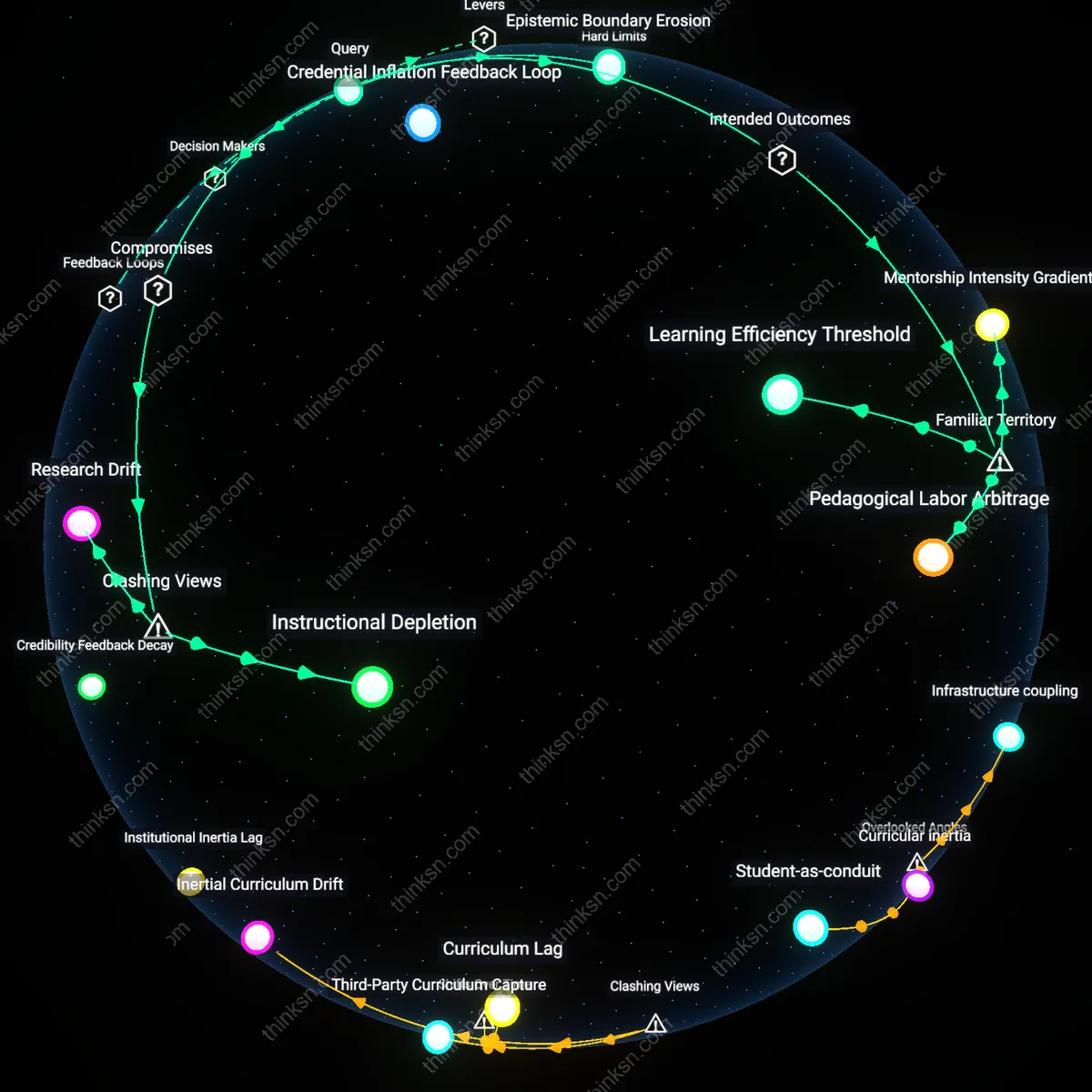
Parents should evaluate curricula through the lens of whether the educational environment replicates expert institutions in form but not function, as seen in the Stanford Online High School’s early 2010s pilot of student-led humanities seminars, where learners could choose research topics and lead discussions but operated without faculty oversight in syllabus design—this led to historically inaccurate or ideologically homogenous curricula, illustrating that student curation without embedded expert feedback risks institutional mimicry, where structures of academic legitimacy mask epistemic fragility.
Curricular Scaffolding
Parents should recognize that effective balance emerges not from alternating between student and expert content, but from nested integration, as evidenced by the AIMS Secondary Academy in Minneapolis, which scaffolds civics education by having students rework state-mandated history units into community action projects vetted by both teachers and local historians—this reveals that curricular legitimacy is maximized when expert frameworks are non-negotiable starting points, but student agency re-animates them in context-specific ways, exposing curricular scaffolding as a dynamic rather than static process.