Latency Privilege
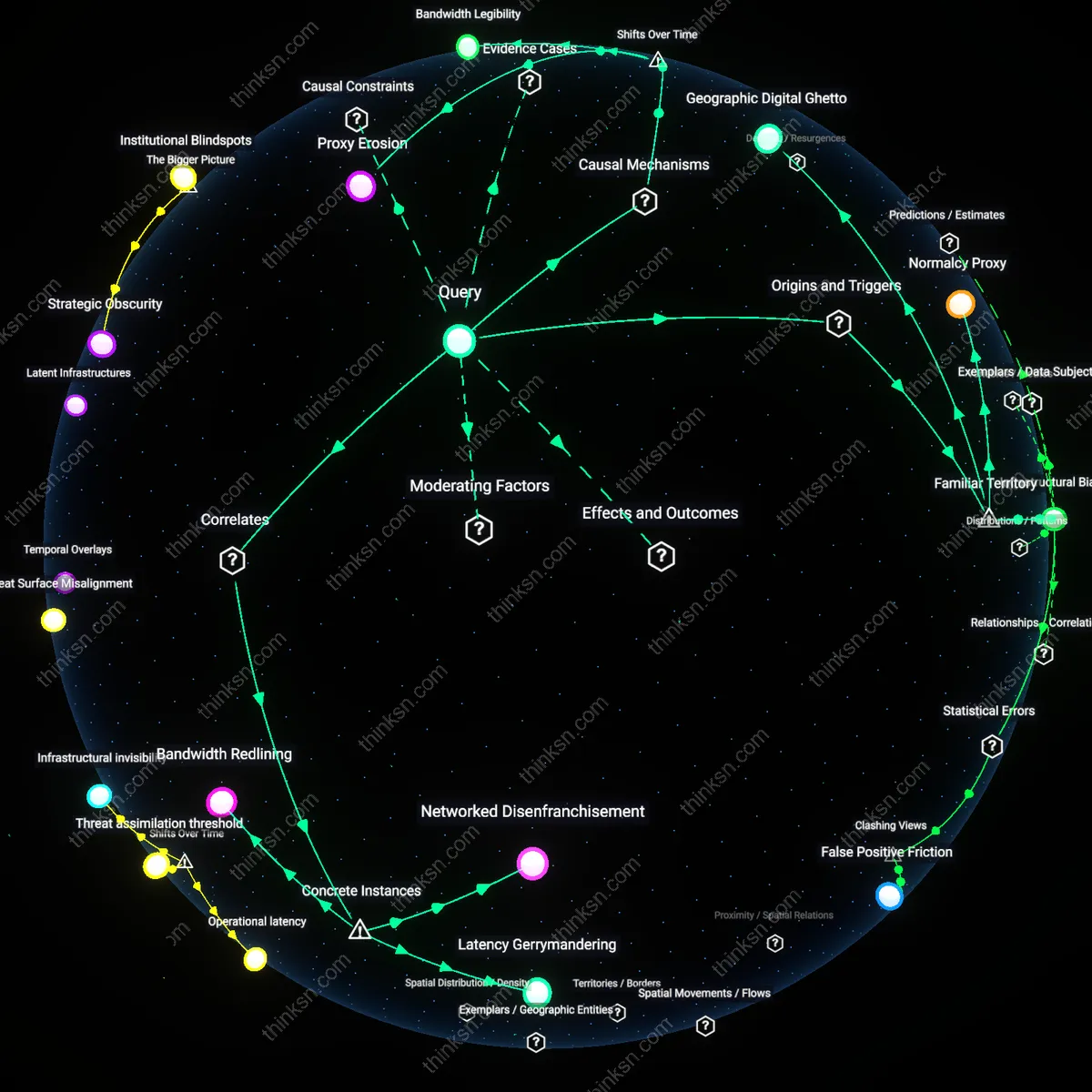
Automated identity checks for voting have grown faster in urban centers with robust infrastructure but have simultaneously increased in duration for rural users with spotty internet because asynchronous validation systems—designed to tolerate network instability—trigger repeated fallback protocols that extend verification time. This creates a hidden time tax on low-connectivity populations, even as aggregate metrics show improved speed, revealing that efficiency gains are not universally experienced but instead stratified by infrastructure access. The non-obvious insight is that optimization for speed in ideal conditions actively penalizes marginal connectivity, contradicting the dominant narrative of technological progress as uniformly beneficial.
Friction As Design
The increasing difficulty of automated identity checks for users with spotty internet is not a flaw but an emergent outcome of security-centric design mandates that prioritize fraud reduction over accessibility, evidenced by states like Georgia and Arizona adopting real-time biometric matching systems despite documented failures in low-bandwidth environments. These systems assume persistent connectivity for backend database cross-referencing, rendering them functionally inaccessible when signals drop, not because the technology fails, but because its logic treats intermittent connectivity as an edge case rather than a design constraint. This reframes difficulty not as a solvable technical hurdle but as a deliberate artifact of policy choices that equate rigor with procedural burden.
Temporal Dispossession
Automated identity verification has shifted the temporal burden of voting from polling agents to voters themselves, particularly evident in states like California where the DTSS (Door-to-Tablet Submission System) requires applicants to maintain continuous session integrity during upload—forcing individuals with unstable connections to repeatedly restart multi-step processes that can take hours cumulatively. This transfer of delay disguises systemic inefficiency as personal inconvenience, masking how the decentralization of verification labor onto fragile personal infrastructures erodes the time sovereignty of marginalized voters. The counterintuitive result is that automation, often sold as streamlining, actually extends the effective duration of voter enrollment by externalizing time costs onto the most vulnerable.
Infrastructural Asymmetry
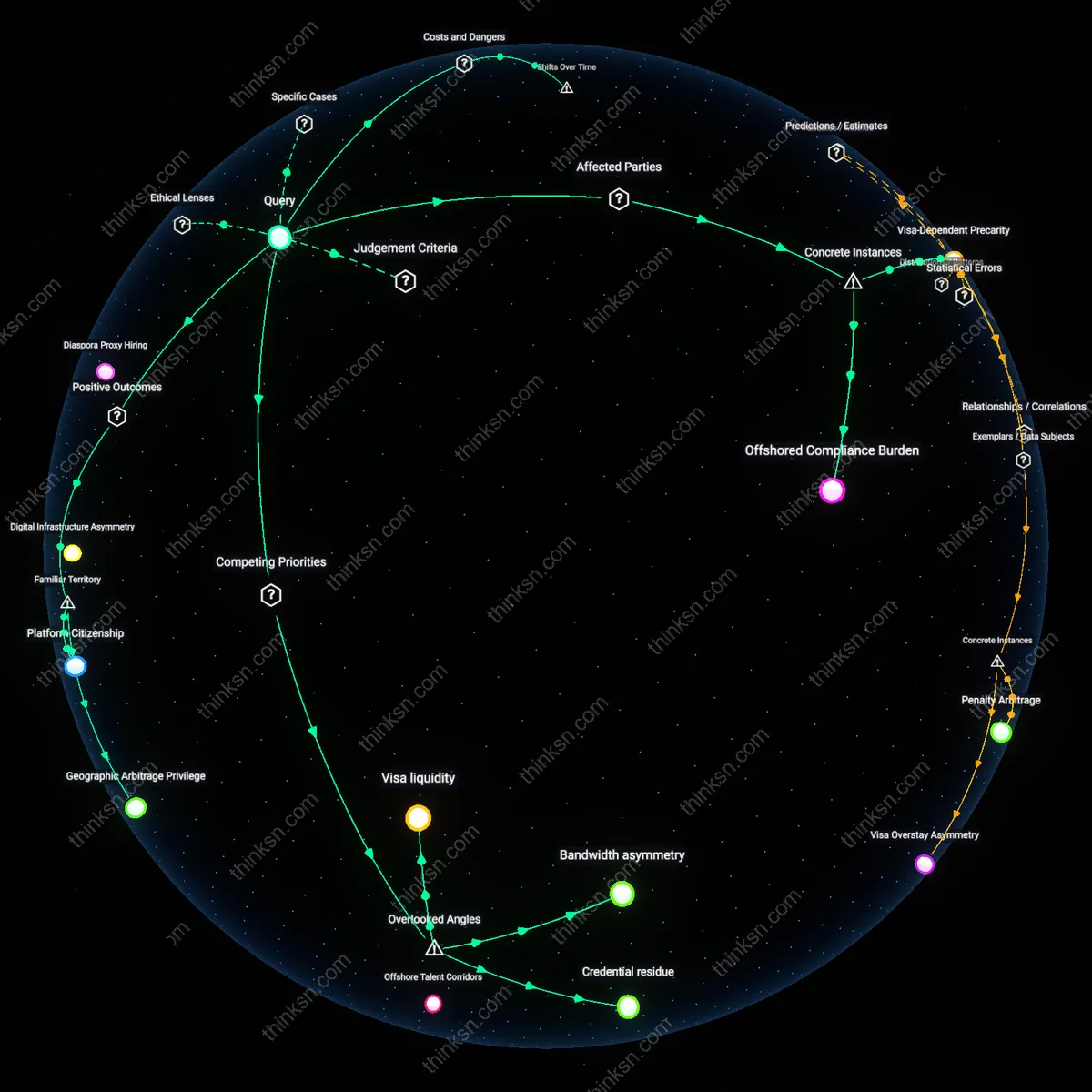
Automated identity checks for voting shifted from paper-based verification in the early 2000s to centralized digital systems after 2010, drastically increasing check times for voters in rural areas with unreliable broadband due to latency in real-time database synchronization. Local election officials began relying on state-run portals that require continuous connectivity, making sporadic internet a functional barrier rather than a logistical inconvenience; this redefined access not as a matter of literacy or documentation but of signal stability, exposing a hidden dependency on infrastructure that policy had overlooked. The non-obvious consequence is that slower verification does not reflect outdated tools but instead reveals how centralization penalizes edge locations in network design.
Temporal Displacement
Between 2018 and 2022, the introduction of AI-driven facial recognition in mail-in ballot verification extended processing times from hours to days for users with low-bandwidth connections, as biometric data failed to upload smoothly under compression or intermittent service. This shift moved the burden of delay from election-night tabulation to the pre-certification phase, where incomplete uploads triggered manual follow-ups that disproportionately affected mobile-only users in urban underserved communities. The underappreciated dynamic is that increased automation did not accelerate verification but redistributed temporal costs across the electoral timeline, transforming sporadic connectivity into a form of time poverty.
Authentication Friction
Following the expansion of online voter registration in swing states after 2020, identity checks began incorporating multi-factor authentication and third-party identity providers like ID.me, which increased successful verifications overall but introduced cascading failure points for users with unstable connections trying to reload CAPTCHAs or re-send SMS codes. These systems assume persistent session integrity, so brief dropouts force users to restart verification workflows entirely, effectively amplifying minor connectivity gaps into systemic exclusion. The shift reveals that difficulty now stems less from the complexity of the task and more from the intolerance of modern authentication architecture to discontinuous engagement.
Bandwidth Threshold Dependency
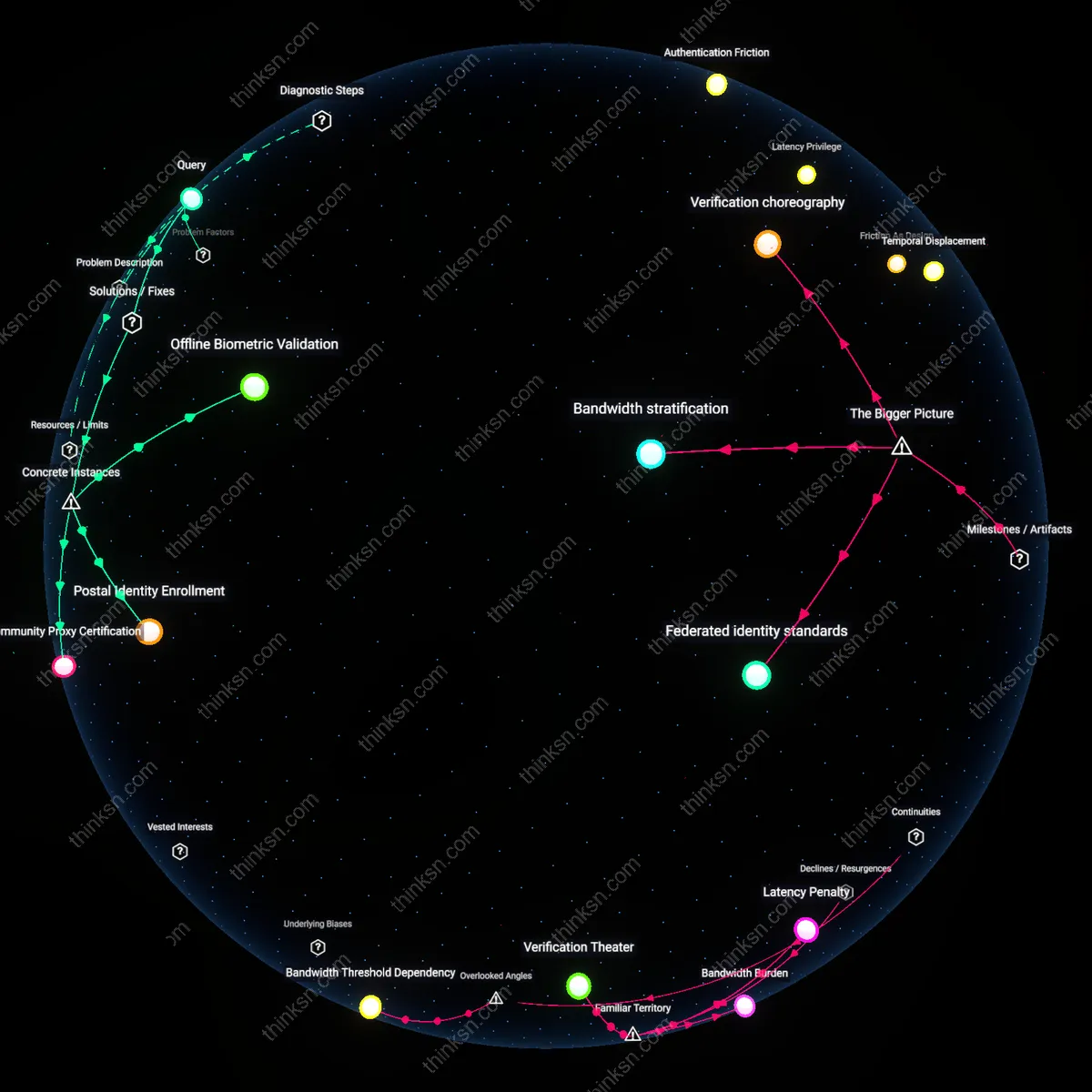
Automated identity checks for voting now take longer for users with spotty internet because backend systems increasingly rely on real-time biometric verification that fails repeatedly under low-bandwidth conditions, forcing retries that amplify delay disproportionately for rural or low-income populations. Unlike simple form submissions, these checks use JavaScript-heavy frontends and cloud-based facial recognition services—such as those contracted through state election vendors like Clearview AI or IdentoGo—which require sustained data throughput during the authentication window. The non-obvious implication is that latency tolerances, not connection stability per se, determine success, making intermittent signals more disruptive than slow ones; this dependency on transient bandwidth thresholds, rather than cumulative speed, has quietly shifted access barriers from 'digital literacy' to 'connection predictability,' a factor rarely measured in voter access studies.
Latency-Induced Trust Tax
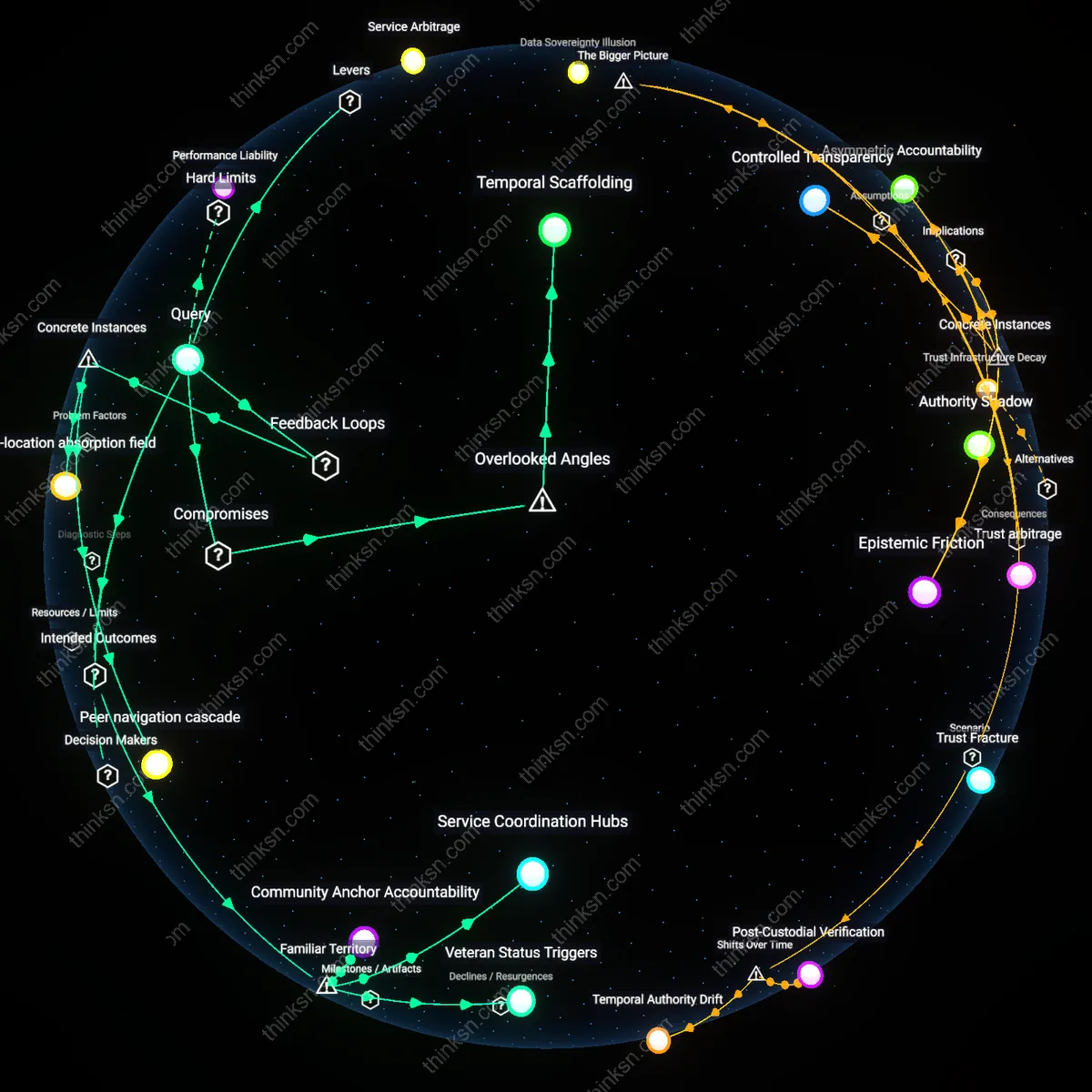
Longer completion times for automated identity checks now function as a de facto trust tax on voters with unreliable internet, where delays are interpreted by backend fraud-detection algorithms as suspicious behavior, triggering additional layers of scrutiny. In Georgia’s online voter portal, originally built by Election Systems & Software (ES&S), machine learning models flag repeated login attempts not just as signal loss but as potential impersonation, creating feedback loops that extend verification time only for those affected by connectivity gaps. The overlooked dynamic is that latency itself becomes a proxy for risk, so the system punishes its most vulnerable users not through outright denial but through recursive authentication demands—transforming technical fragility into procedural distrust, a shift that escapes conventional equity analyses focused on access rather than algorithmic interpretation of time.
Latency Penalty
Automated identity checks for voting have grown slower for users with spotty internet because backend systems increasingly rely on real-time biometric verification and cloud-dependent document validation. These checks now cascade through state voter databases, federal ID repositories, and third-party authentication services, each layer adding delay that disproportionately affects rural or low-bandwidth users. While widely assumed to be faster due to automation, the non-obvious reality is that complexity inflation has turned simple ID confirmation into a distributed network operation that fails quietly under poor connectivity, reinforcing the illusion that the user—not the system—is at fault.
Verification Theater
The difficulty of completing automated identity checks has increased over time not because of technological limitations but because political demands for visible 'security' have prioritized performative validation steps over usability. Poll monitors, voters, and election tech vendors now navigate redundant checks like facial recognition, two-factor SMS, and CAPTCHA—even when locally stored ID hashes would suffice—because observable safeguards signal trustworthiness to the public. The underappreciated truth, masked by familiarity with 'secure by sight' rituals, is that these processes are engineered more for civic reassurance than functional efficiency, deepening exclusion for those whose identities and connections don’t match the system’s expected norm.
Bandwidth Burden
Time-to-verify in automated voting identity systems has regressed to levels not seen since early e-voting experiments because mobile-first rollout strategies assume smartphone access but fail to account for unstable rural broadband and data caps. School gymnasiums repurposed as polling sites, tribal elections held on reservations, and low-income urban precincts now experience the longest lag times, not due to outdated hardware but because verification workflows demand uninterrupted API handshakes with centralized servers. Contrary to the popular belief that digital identity streamlines access, the routine experience of timeout errors and retry loops has quietly restored a modern analog of literacy tests—where persistence, not eligibility, determines participation.
Federated identity standards
Adoption of SAML and OAuth in state election infrastructure after 2016 reduced automated identity verification time but increased reliance on stable third-party authentication hubs, which disadvantaged voters in rural areas with intermittent connectivity because local election systems outsourced validation logic to centralized cloud services; this shift was driven not by voter access goals but by federal cybersecurity incentives that prioritized auditability over equity in authentication latency, revealing how national threat mitigation objectives systematically reconfigured the experiential texture of voter verification for edge users.
Bandwidth stratification
The 2020 expansion of mobile-based voter ID checks via apps like CLEAR and state portals introduced time savings for urban voters but disproportionately increased failure rates in tribal and rural precincts where packet loss disrupts multi-step API handshakes required for liveness detection and photo matching; this divergence emerged because private authentication vendors optimized for median-case performance on 4G LTE, making completion hardness a function of infrastructural hierarchy rather than individual effort, thereby embedding commercial internet performance benchmarks into civic participation thresholds.
Verification choreography
Post-2022 pilot programs in Arizona and Georgia replaced document uploads with real-time video identity reviews using automated facial analysis, shortening average verification from 72 hours to under 15 minutes but requiring continuous upstream bandwidth for live biometric streaming, a demand that elevated drop-out rates among low-income voters using shared public Wi-Fi; this reengineering of temporal efficiency altered the procedural burden from cognitive complexity to connection persistence, exposing how latency reduction in civic tech can covertly transform access barriers from time-based to topology-based exclusion.