Why Work-Anywhere Excludes International Talent Due to Immigration?
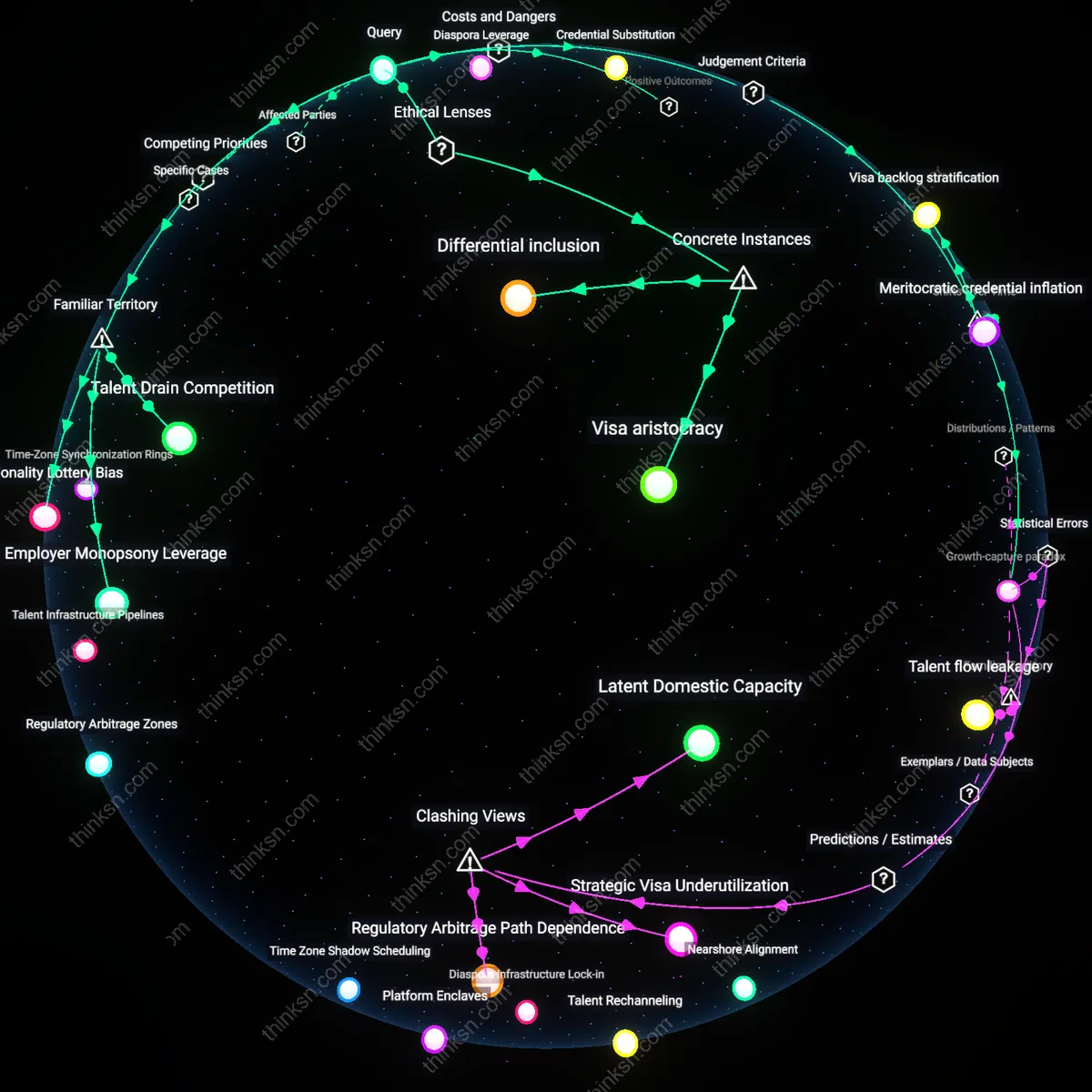
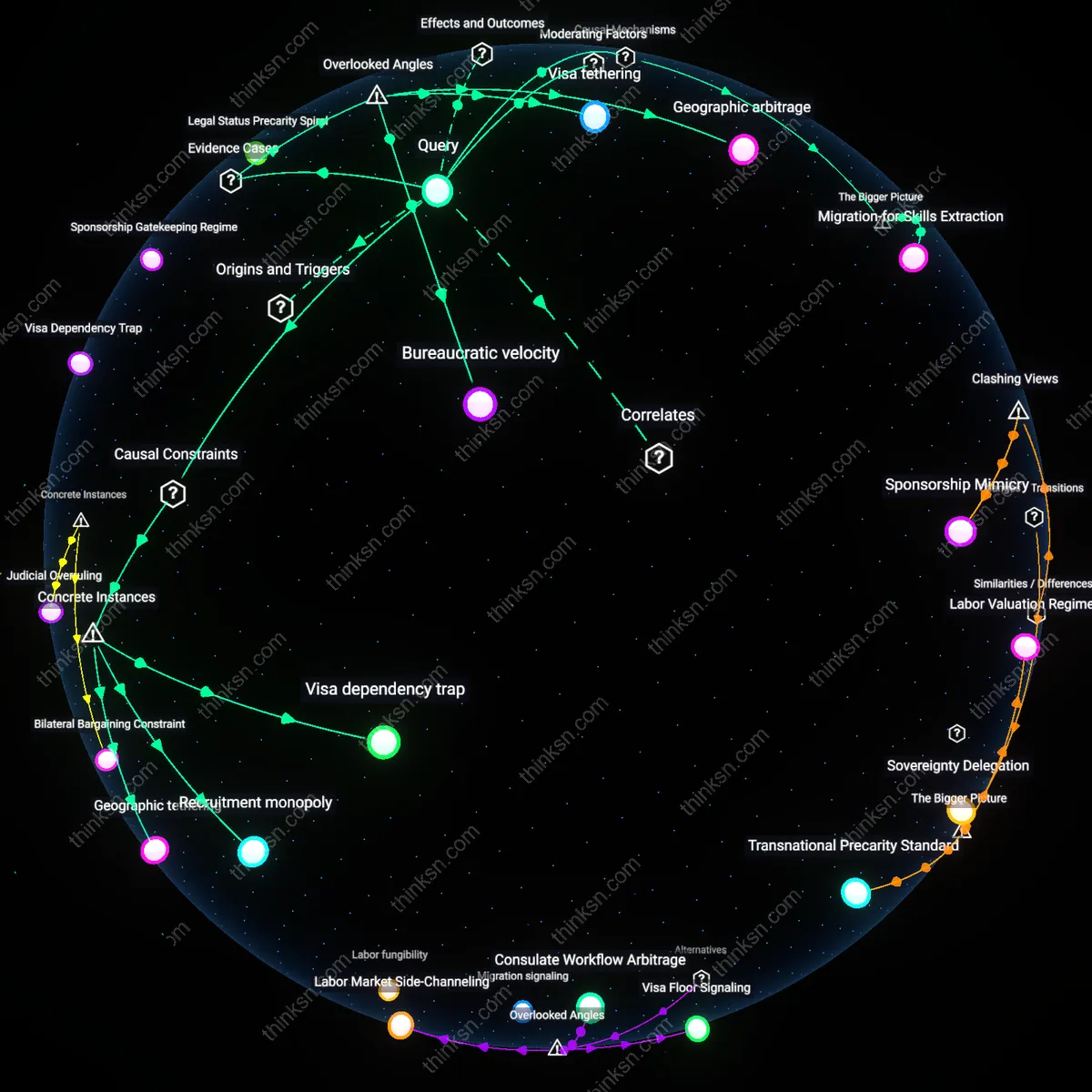
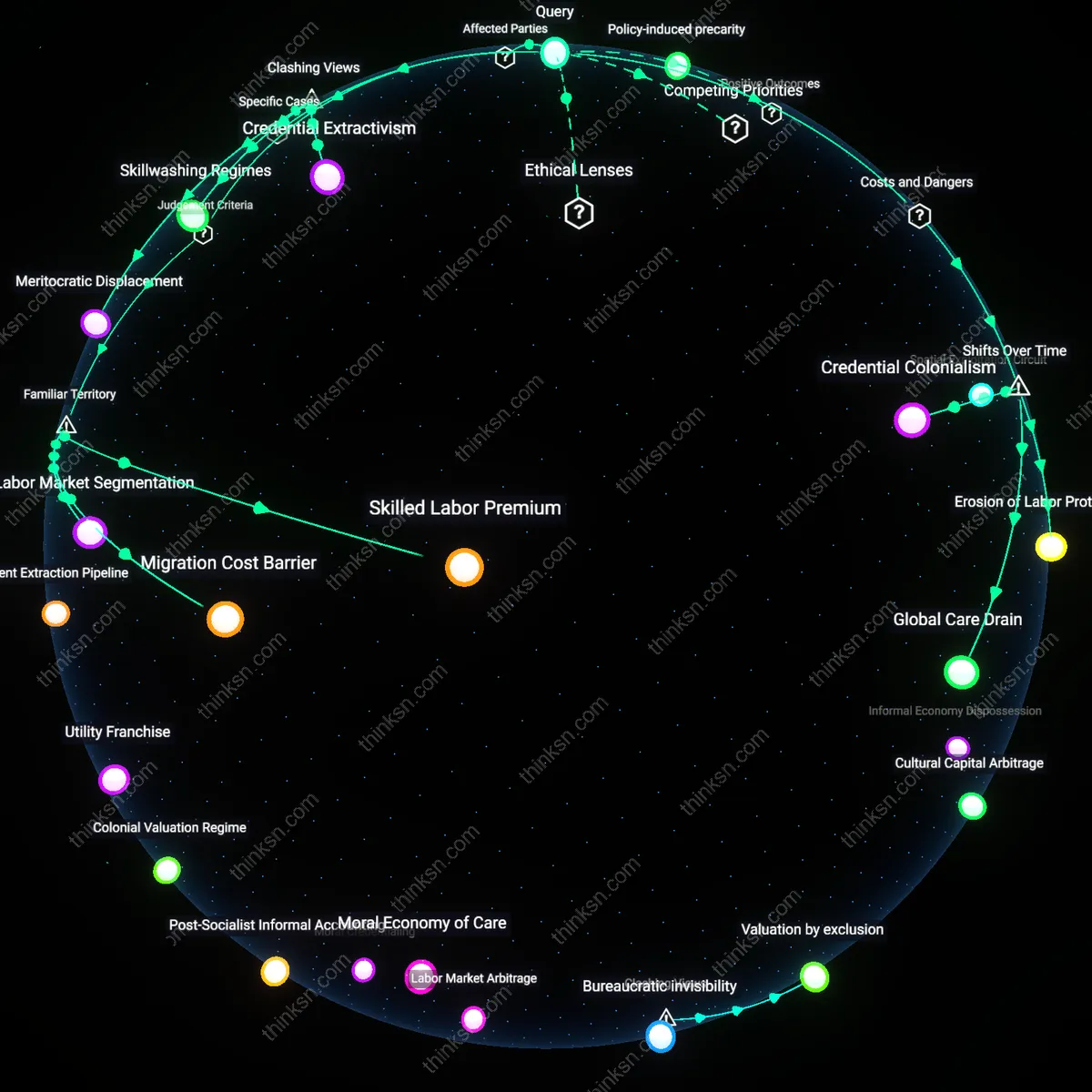
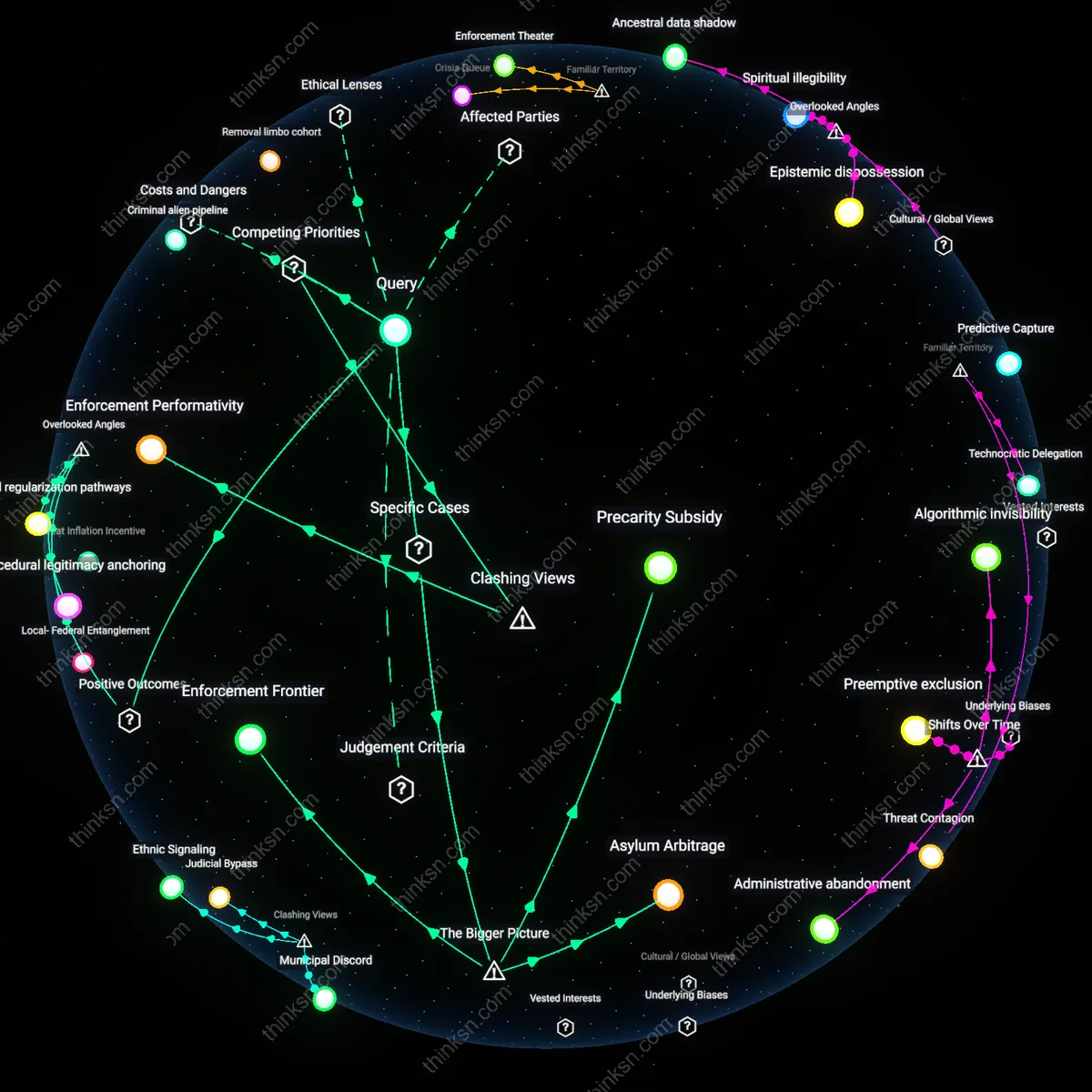
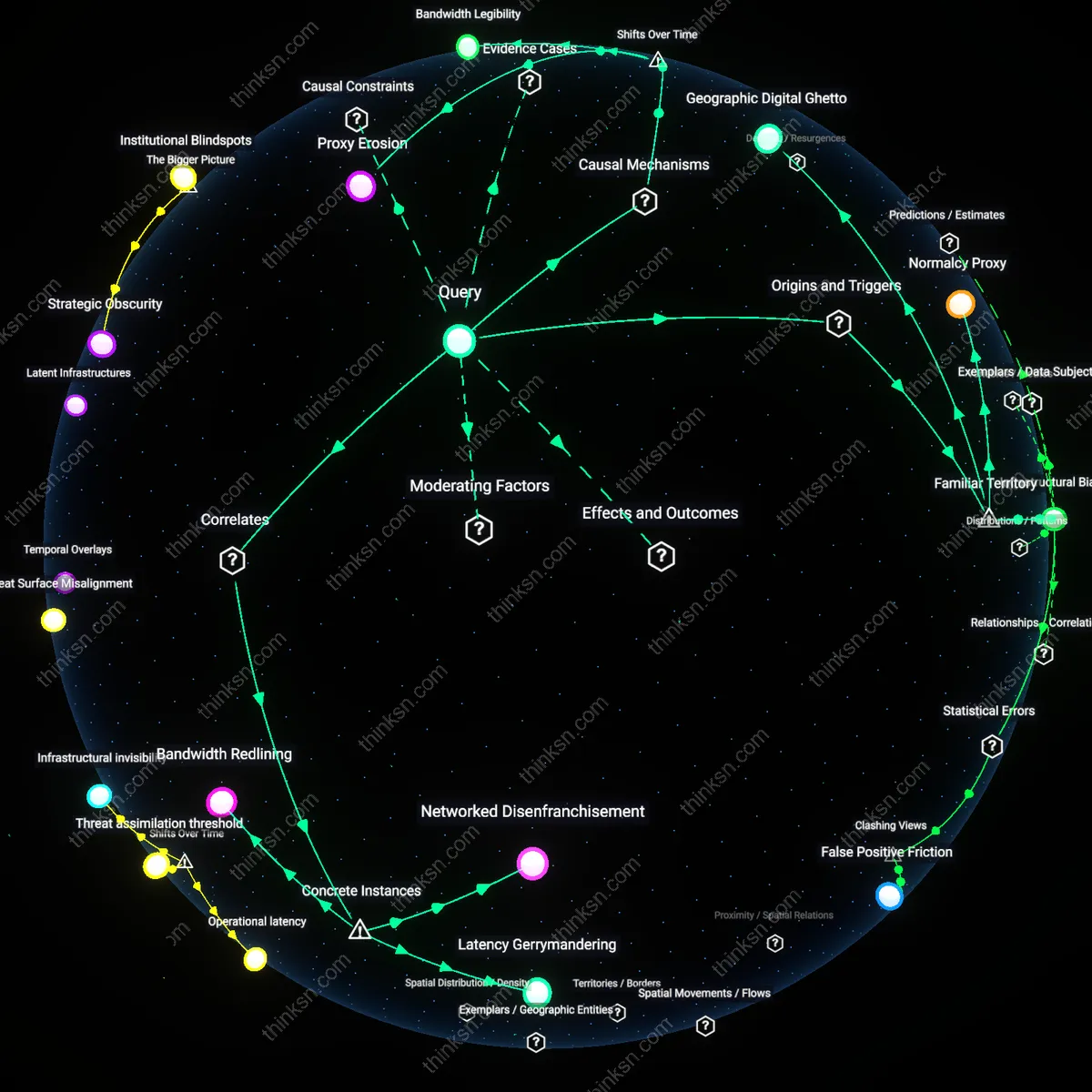
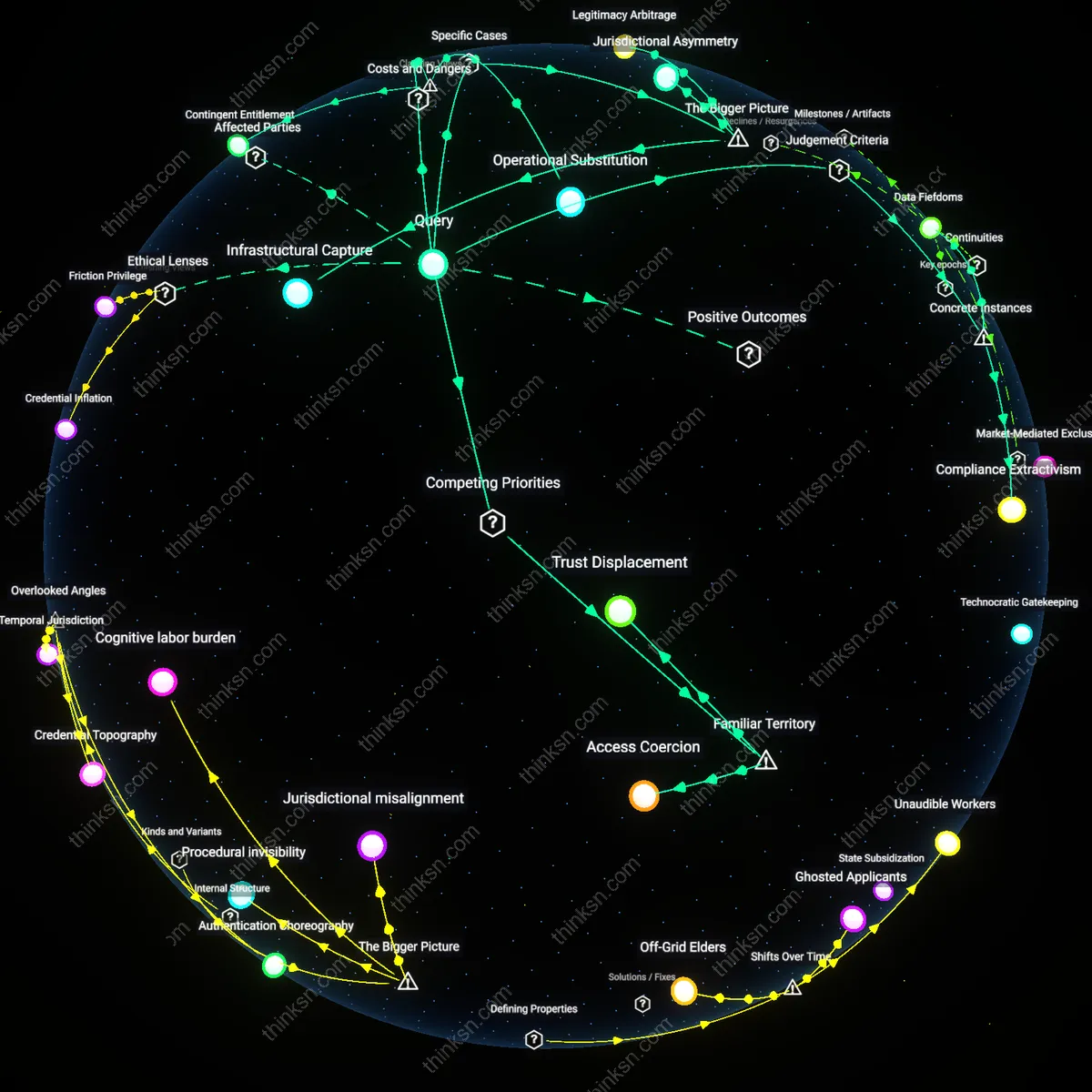
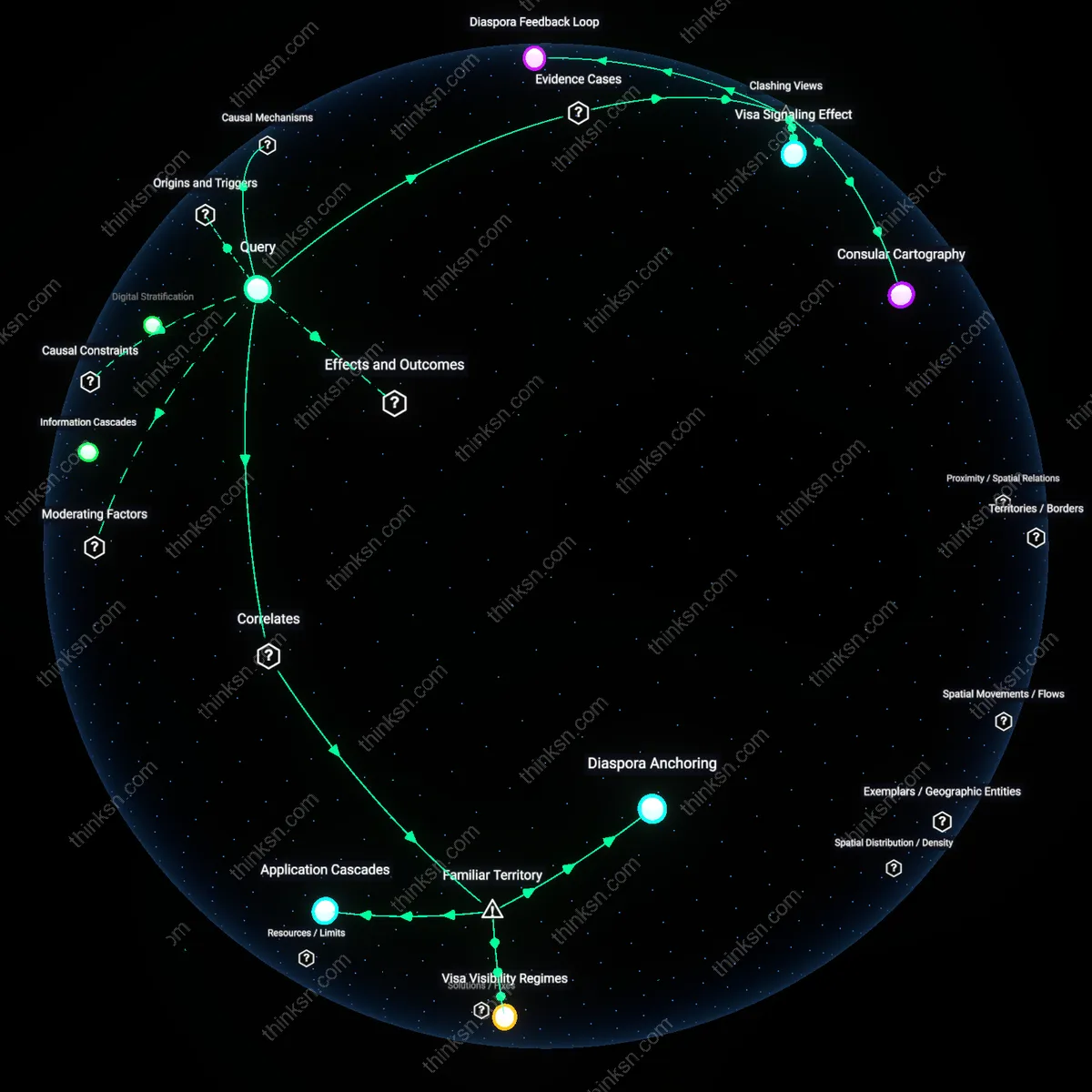
Analysis reveals 9 key thematic connections.
Key Findings
Visa-Dependent Precarity
Digital nomads from wealthy nations exploit tourist visas to work remotely in countries like Thailand or Mexico, bypassing formal immigration channels that are legally required for local workers, thereby reinforcing a two-tier labor system where Western remote workers operate with impunity while local professionals face deportation for similar violations. This dynamic is sustained through unequal visa reciprocity and weak enforcement against short-term overstay, privileging mobile workers from high-passport-value countries and exposing how the work-anywhere ideal institutionalizes legal exemptions for some while criminalizing others. The case of Chiang Mai’s digital nomad influx reveals that the freedom to work anywhere is not a universal right but a function of passport privilege, making immigration law a covert mechanism of labor stratification.
Offshored Compliance Burden
Philippine-based virtual assistants employed by U.S. startups must navigate complex BPO regulations and employer-mandated contracts that legally bind them to Philippine labor oversight, while their American counterparts working remotely from Bali operate without equivalent institutional accountability, as U.S. firms are not required to extend benefits or legal protections across borders. This asymmetry was evident in the rapid growth of remote work platforms like OnlineJobs.ph during the pandemic, where U.S. employers accessed low-cost labor without assuming immigration or social protection liabilities, shifting compliance risks onto workers in regulated domestic systems. The arrangement exposes how the work-anywhere model decentralizes risk while centralizing control, rendering global labor compliance selectively enforceable based on geography.
Digital Meritocracy Myth
Remote work promotes the belief that talent can thrive anywhere, reinforcing a meritocratic ideal where effort and skill alone determine success. This narrative, widely embraced by tech companies and global professionals, assumes equal access to opportunity once physical office barriers are removed—yet it overlooks how visa policies, digital infrastructure gaps, and financial capital requirements systematically exclude workers from lower-income countries. The non-obvious consequence is that the rhetoric of inclusion masks a two-tier system where Western-based or Western-citizenship holders retain outsized access to high-paying remote roles, particularly on platforms like Upwork or remote-first startups based in Silicon Valley. What feels like an open global marketplace is in practice shaped by entrenched geopolitical hierarchies that the discourse of 'work from anywhere' rarely confronts.
Geographic Arbitrage Privilege
High-income professionals in expensive cities use remote work to relocate to low-cost countries while retaining dollar-denominated salaries, generating personal wealth and lifestyle gains that are celebrated in mainstream media and digital nomad communities. This practice relies on visa categories like digital nomad visas in Portugal, Mexico, or Thailand, which are accessible only to those with stable incomes, advanced degrees, or citizenship from wealthy nations—excluding the very populations living in those lower-cost countries who lack the same mobility. The underappreciated dynamic is that this form of arbitrage reinforces global inequality by enabling privileged individuals to extract value from developing economies without reciprocal access for local workers to enter high-wage labor markets. The familiar image of the laptop-on-the-beach worker symbolizes freedom, but structurally it normalizes one-way economic flow without addressing immigration asymmetry.
Platform Citizenship
Global remote work platforms like Toptal, Fiverr, or Remote.com function as de facto labor gatekeepers, where access to high-value contracts depends not on skill alone but on adherence to Western business norms, time zone availability, and language fluency—conditions that favor applicants from English-speaking or formerly colonized countries with aligned institutional education. These platforms are perceived as neutral marketplaces, but they reproduce immigration-like barriers through algorithmic filtering, client preference patterns, and payment infrastructure that privileges certain nationalities. The overlooked reality is that digital labor platforms have become arbiters of economic inclusion, mimicking the power of national border controls while operating without the accountability of sovereign governance. This creates a tiered online labor order where 'platform citizenship'—earned through cultural and linguistic compliance—replaces legal immigration status as the determinant of economic mobility.
Mobility Arbitrage
After the dot-com boom formalized Silicon Valley’s talent-centric migration model, tech firms began strategically exploiting tiered global mobility regimes by relocating high-value workers to hubs with favorable immigration policies while offshoring routine digital tasks to workers denied physical or legal mobility. This bifurcation intensified post-2016, as restrictive border politics in the U.S. and Europe coincided with the rise of managed service platforms that retained geographic pay differentials under the guise of flexibility, allowing firms like Estonian e-residency startups or Dubai-based fintechs to extract higher productivity from immobile labor pools. The shift from physical relocation incentives to algorithmic wage segmentation entrenched mobility itself as a form of capital, invisible in HR analytics but central to maintaining wage suppression in outsourced roles.
Visa liquidity
The work-anywhere ideal presumes labor mobility can be decoupled from immigration access, but in reality, digital infrastructure investments by countries like Estonia and the UAE prioritize visa liquidity for high-skilled remote workers over universal access, creating a two-tier system where only those already possessing portable credentials or financial assets can participate. This mechanism treats national borders as financial clearance systems rather than regulatory checkpoints, privileging workers whose identities and income streams are already legible to Western financial institutions. What is overlooked is that the bottleneck is not connectivity or skills, but the liquidity of permission—how quickly and reversibly a worker can be granted temporary legitimacy in a jurisdiction without permanent status. This reframes immigration barriers not as static walls but as differential markets in conditional belonging, altering the standard narrative that remote work erodes geographic inequality.
Bandwidth asymmetry
The illusion of work-from-anywhere equity depends on symmetrical digital infrastructure, yet undersea cable landing stations and cloud server regions are heavily concentrated in the Global North, forcing Global South workers to route data through distant hubs and subjecting them to latency, throttling, and surveillance by foreign intermediaries. This infrastructural asymmetry silently enforces a performance hierarchy where real-time collaboration favors those whose location minimizes packet travel time, effectively privileging cognitive labor that conforms to North Atlantic time rhythms and communication norms. Most discussions assume internet access is functionally equivalent globally, but the physical topology of data transmission embeds colonial routing paths that reproduce power imbalances even when workers are technically 'present' on the same platforms. This changes the understanding of digital equality by exposing bandwidth not as a neutral utility but as a geopolitically weighted variable.
Credential residue
Remote hiring algorithms and platform-based job matching increasingly rely on 'credential residue'—the digital traces of past affiliations with recognized institutions, such as LinkedIn connections, university domains, or previous employment at well-known firms—which are unevenly distributed across national contexts and often inaccessible to workers from underrepresented educational or professional ecosystems. This creates an invisible filter where meritocratic platforms appear neutral but actually replicate traditional elite networks under the guise of data-driven objectivity, privileging applicants whose career paths have already been validated by dominant economic centers. The overlooked dynamic is that digital meritocracy assumes a continuity of legibility across borders, when in fact exclusion persists through the quiet privileging of metadata over demonstrated skill. This shifts the focus from overt discrimination to systemic epistemic bias embedded in hiring automation.