Is It Burnout or Misalignment? Navigating Mid-Career Crisis?
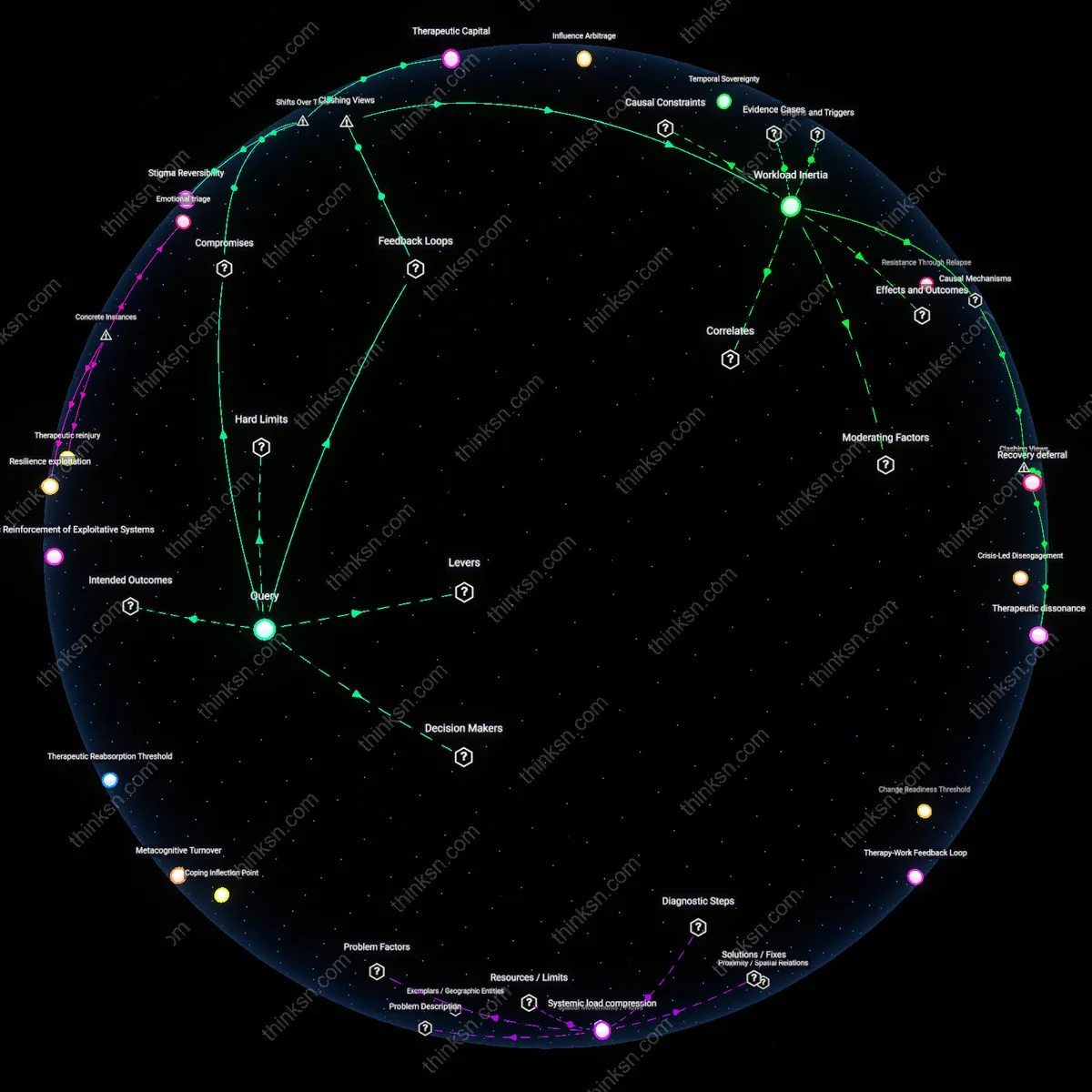
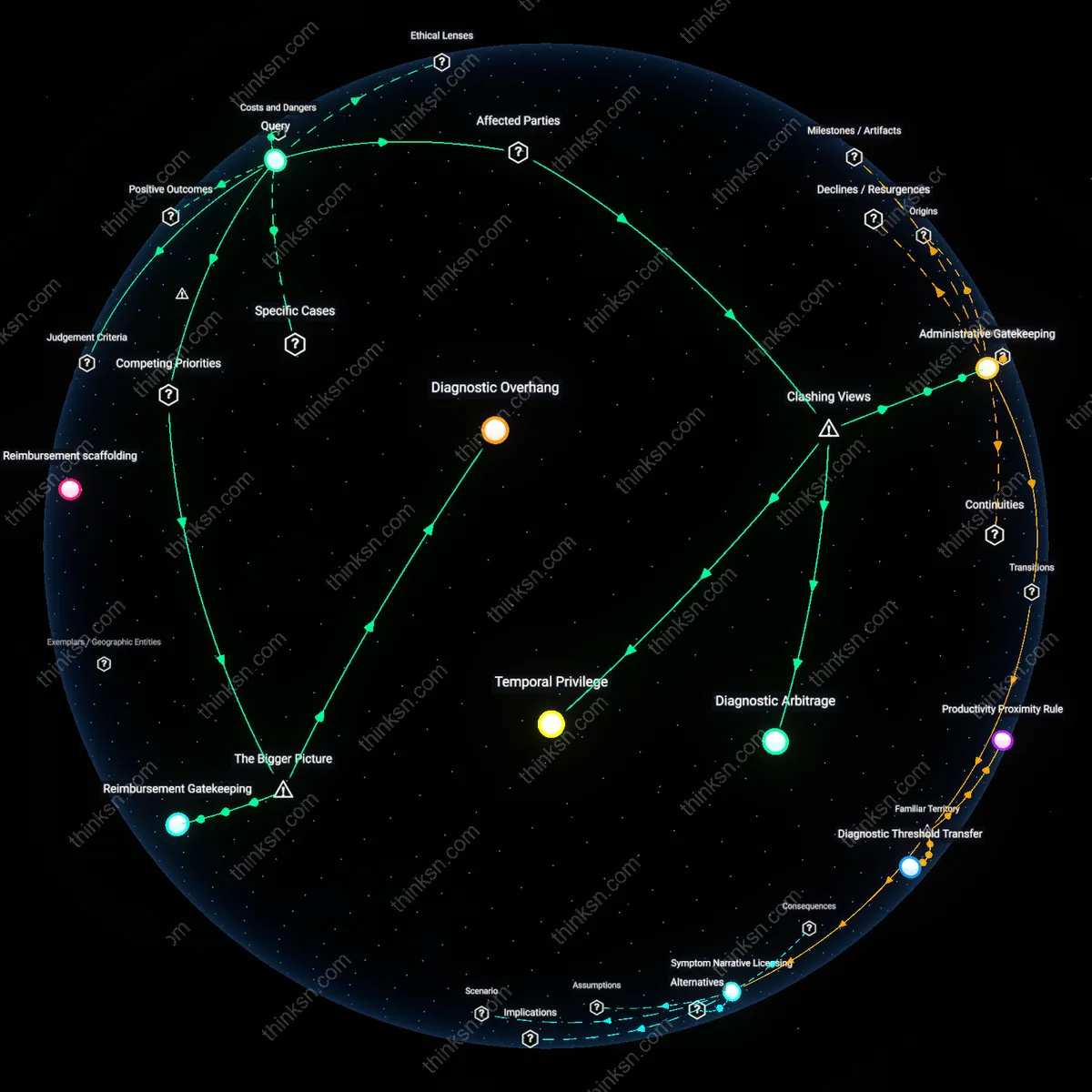
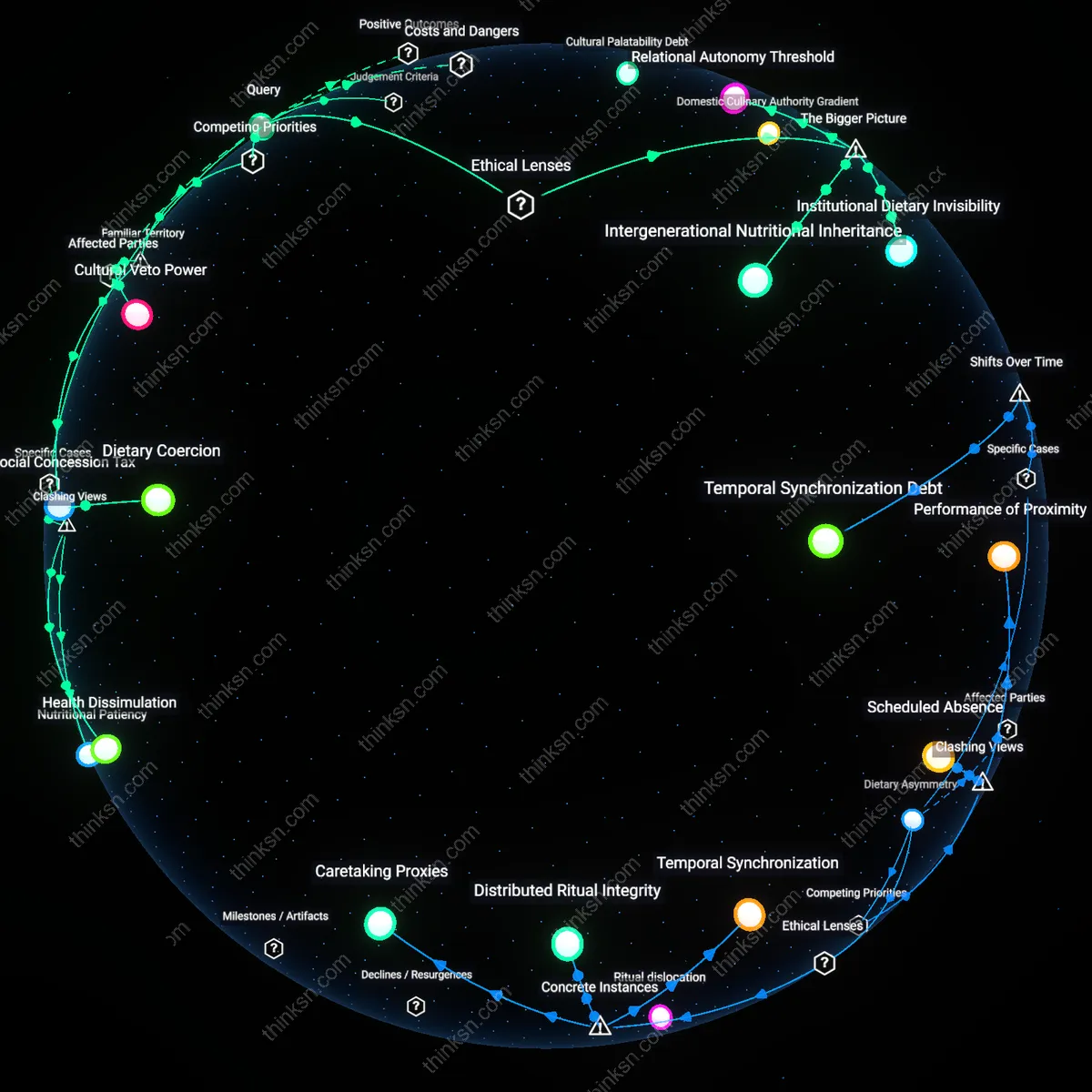
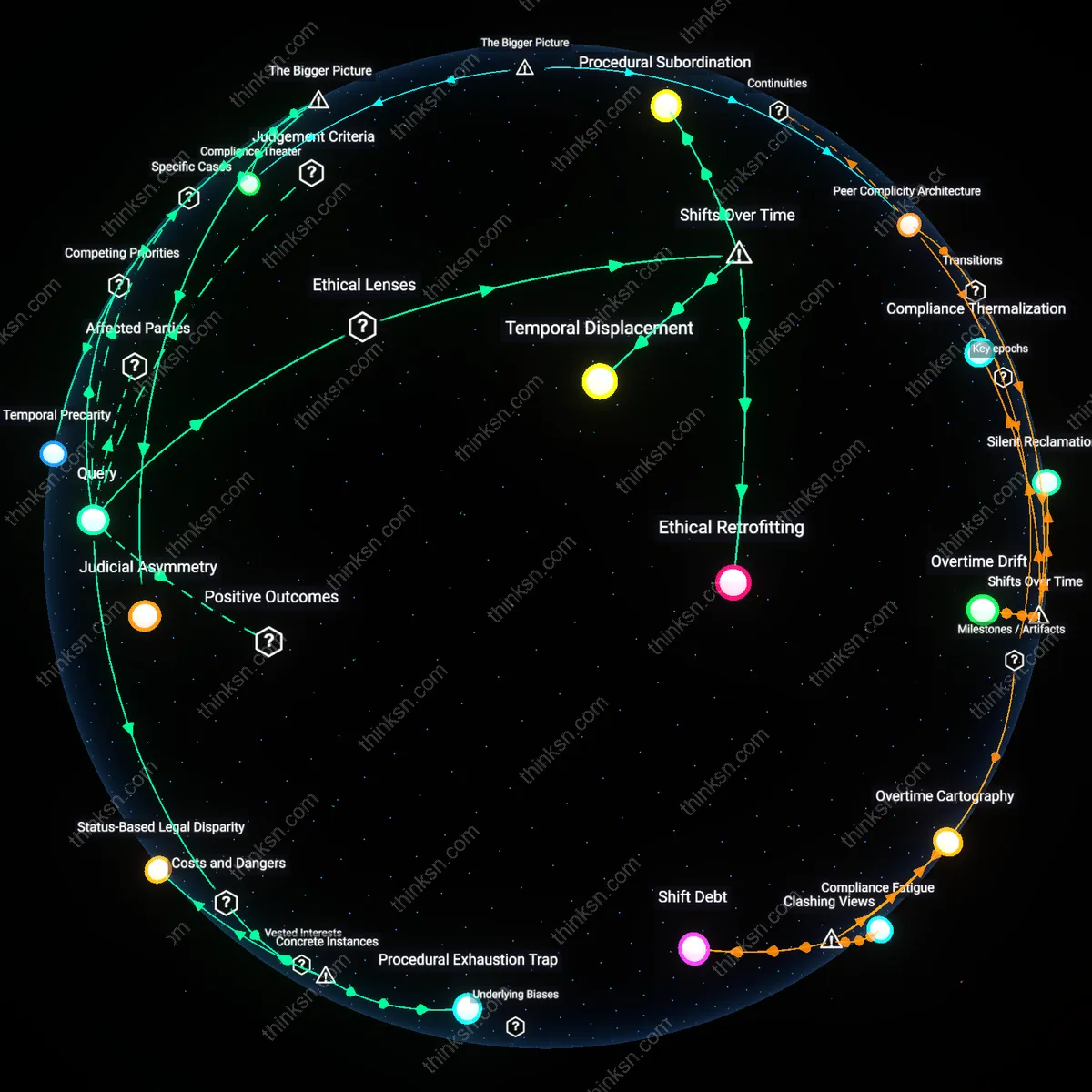
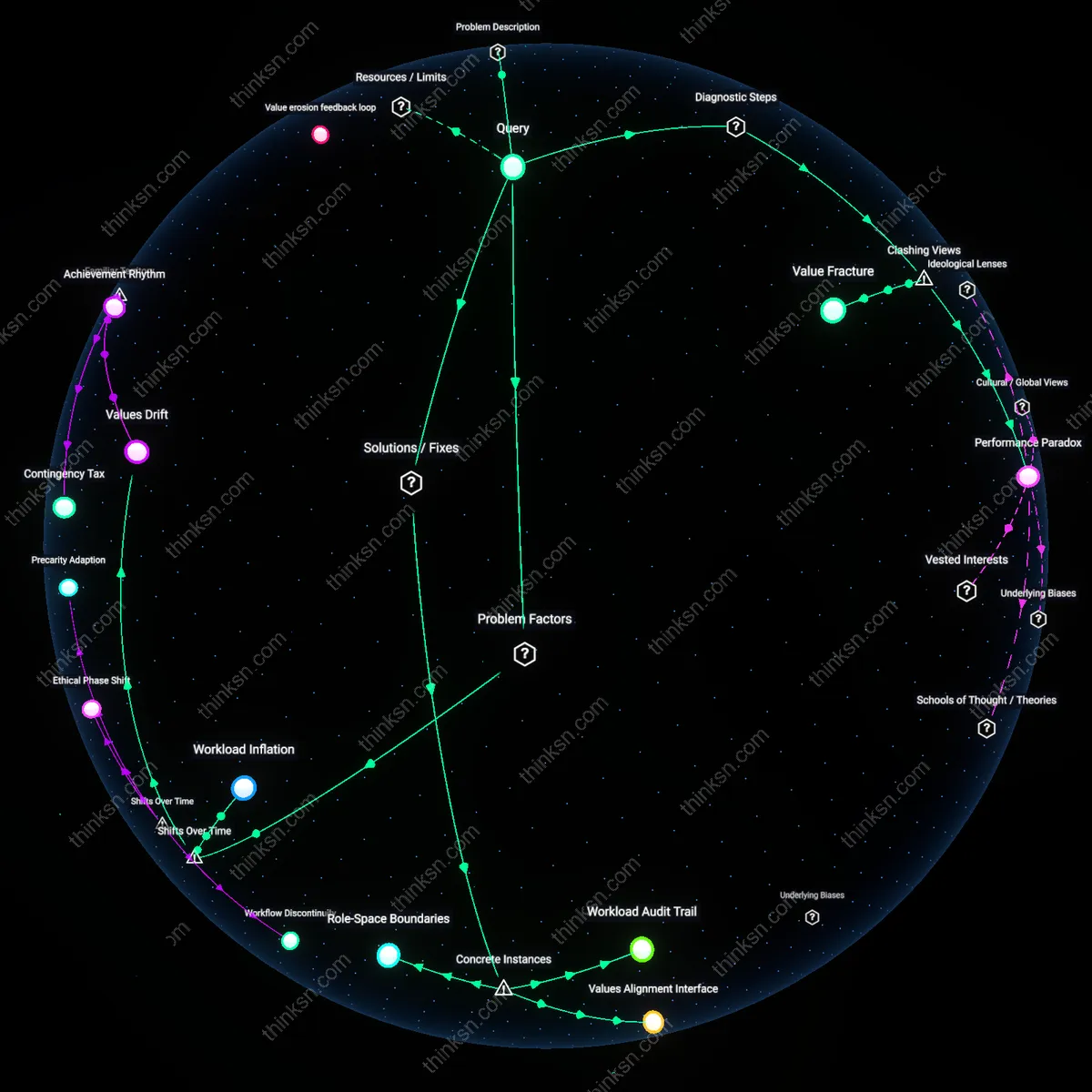
Analysis reveals 10 key thematic connections.
Key Findings
Value erosion feedback loop
A mid-career professional can identify values-based burnout by observing whether disengagement persists even during periods of reduced workload, which signals that the stress response is attached not to volume but to moral injury. Healthcare professionals, for instance, may report exhaustion despite lighter schedules when administrative demands undermine patient-centered care, revealing a feedback loop where institutional practices systematically erode professional identity. This distinction is obscured in performance cultures that frame all burnout as personal capacity failure, when in fact some fatigue is the body’s warning against identity betrayal. The residual concept is not mere mismatch but an accumulating physiological and emotional penalty for repeated complicity in compromised values.
Professional identity debt
Burnout rooted in values conflict becomes distinguishable when professionals experience a growing sense of identity debt—accumulated dissonance from repeatedly acting against their formed vocational self-conception. A corporate lawyer trained in public interest law, for instance, may thrive under pressure in high-stakes litigation but slowly disintegrate when the work consistently advances clients whose practices contradict their justice-oriented training. Unlike fatigue from overwork, this decay persists across vacations and role adjustments because it stems from unresolved identity trade-offs that compound over time. The systemic driver here is career path dependence in credential-heavy fields, where sunk costs in training and status make exit or redirection feel existentially costly.
Workload Inflation
A mid-career professional distinguishes burnout types by recognizing that post-2008 workplace scaling practices systematically increased output expectations without corresponding resource growth. Firms adopted leaner staffing, automated monitoring, and just-in-time delivery models—especially in sectors like tech and healthcare—causing work intensification that mimics moral burnout but is rooted in quantitative overload. The non-obvious insight is that the feeling of existential strain often stems not from values conflict but from a historical shift in performance metrics that now treat continuous overextension as baseline competence.
Values Drift
Burnout rooted in values conflict emerges visibly only after a professional's early-career idealism collides with institutional path dependencies established during their organization’s shift from mission-oriented to compliance-driven operations in the 1990s. As accreditation regimes, shareholder primacy, and risk-averse governance expanded—particularly in law, education, and medicine—their original ethical mandates eroded, making practitioners feel complicit in systems they once sought to improve. The critical insight is that the exhaustion comes not from effort but from a developmental rupture between formative professional identity and the routinized practice it became.
Career Inertia
Professionals struggle to differentiate burnout types because the post-WWII career arc—structured around linear progression within a single institution—has ruptured, leaving mid-career individuals trapped in roles that no longer align with either capacity or conscience. Since the 1980s, de-unionization and the rise of project-based employment dissolved clear promotion ladders, forcing sustained performance in environments where neither workload nor values are negotiable. The overlooked reality is that burnout persists not due to present conditions alone, but from a temporal mismatch between old social contracts and new, unanchored career trajectories.
Value Fracture
Conduct a values-mapping audit by reconstructing the professional’s ethical decision tree in three recent high-stakes cases to isolate where institutional demands diverged from personal integrity thresholds. This reveals not cumulative fatigue but a structural misalignment between the individual’s operative values and the profession’s mandated compromises, often obscured by the shared language of service or productivity. The non-obvious insight is that burnout persists post-workload reduction when values are violated, contradicting the assumption that rest alone restores capacity.
Performance Paradox
Analyze performance evaluations and peer feedback for evidence of escalating criticism despite rising output, indicating that distress stems not from overwork but from perceived inauthenticity in work product. High performers in value-conflict burnout often increase effort to compensate for moral dissonance, intensifying strain without addressing root cause. This reframes underperformance not as depletion but as a self-sabotaging signal of professional alienation, challenging the dominant triage model that prioritizes time management over identity coherence.
Workload Audit Trail
Conduct a time-use audit with third-party validation to isolate quantifiable workload thresholds, as implemented at Toyota Motor Corporation during its 2006–2008 production slowdown, where engineers logged task duration, interruption frequency, and recovery intervals; this revealed that burnout stemmed from unmeasured cognitive load in coordination tasks rather than hours worked, exposing how systemic process opacity masks overload, making visible what workers rationalize as personal failure.
Values Alignment Interface
Introduce a structured values-mapping exercise modeled on the Veterans Health Administration’s 2015 clinician ethics forums, where physicians ranked clinical decisions against core professional oaths and institutional mandates; discrepancies between personal medical ethics and top-down performance metrics surfaced as moral injury, not fatigue, revealing that burnout rooted in value conflict persists even when workload is reduced, and that misalignment becomes legible only when values are operationalized as decision criteria.
Role-Space Boundaries
Implement role-scoping protocols like those adopted by the Danish engineering firm Ramboll in 2017, when project managers were required to define 'red-line tasks'—activities they would refuse even under deadline pressure—based on professional integrity thresholds; this intervention surfaced that refusal capacity, not time pressure, predicted long-term retention, demonstrating that burnout due to value erosion is detectable through behavioral boundaries, not time logs.