Overloaded Teens: Balancing Extracurriculars and College Competition
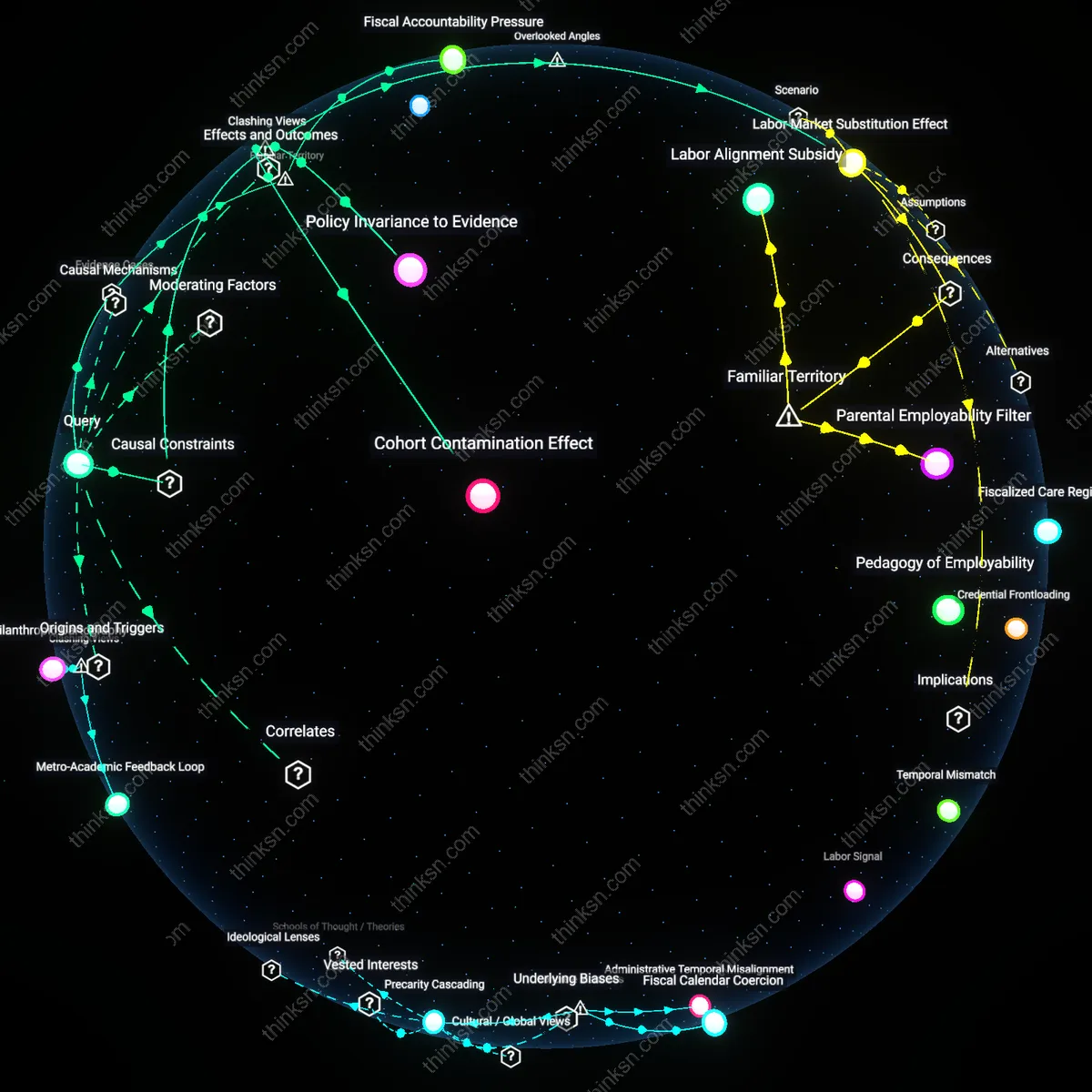
Analysis reveals 9 key thematic connections.
Key Findings
Activity Inflation
Parents should prioritize developmental milestones over competitive activity accumulation because the expectation that children must fill schedules with advanced extracurriculars emerged from a post-1990s shift when elite college admissions began treating résumé density as proxy for merit, turning what was once a balancing loop—where advice limited over-scheduling—into a reinforcing loop where more activities generate more pressure to add still more. Evidence indicates that in the 1980s, structured activities averaged two per student with pediatric guidance favoring unstructured time, but by the 2010s, high-achieving students often led four or more concurrent commitments as counselors and schools amplified recommendations to 'build the résumé,' mistaking intensity for character. This transformation reveals how the original intent of extracurricular balance became destabilized when college admissions shifted from evaluating academic readiness to holistic profiling, inadvertently rewarding compulsive scheduling as prudence rather than overload.
Parental Reintermediation
Parents should resist societal pressure by re-owning developmental authority once delegated to institutions, as the outsourcing of child development decisions to guidance counselors, enrichment industries, and algorithmic college prep platforms since the 1996 U.S. Department of Education advisories intensified a feedback loop where expert advice itself began to mimic market signaling—safe choices favored over authentic growth. Research consistently shows that middle-class parents in suburban districts like Montgomery County, MD, or Palo Alto, CA, increasingly rely on third-party recommendations not because they lack competence but because post-2000 college admissions volatility made perceived risk aversion a rational response, even as experts now warn against overload. The non-obvious insight is that expert advice no longer functions primarily as a balancing loop moderating behavior but as a reinforcing signal validating competitive escalation—parents are not resisting experts so much as reclaiming judgment from a system that commodified their trust.
Achievement Temporality
Parents should align activity choices with adolescent developmental phases rather than college admissions calendars because the compression of extracurricular expectations into middle school—exemplified by the rise of 'high school résumés' in seventh grade—marks a shift from linear preparation to preemptive performance, destabilizing the psychological balancing loop that once associated maturity with readiness. Where in the 1970s activities typically began in ninth grade as extensions of interest, by the 2010s competitive programs such as national debate or boutique science camps required applications by age thirteen, creating a reinforcing loop wherein early entry demanded earlier investment, which in turn devalued later-starting peers. This acceleration reveals that the timeline of achievement has become untethered from cognitive development, producing a residual mismatch where the system rewards precocity over perseverance, and thus reshapes parental decisions not through choice but chronological scarcity.
Attentional inheritance
Parents should prioritize the consistency of a child’s attentional rhythms over the prestige or quantity of extracurriculars because disruptions to natural attentional cycles—such as those caused by fragmented schedules or high-switching routines—erode the ability to engage deeply in any domain over time. Attentional rhythms are shaped by biological temperament, home routines, and cognitive stamina, and when overloaded, children inherit diminished capacity to sustain focus, which undermines both academic performance and genuine passion development. This factor is typically overlooked because competitiveness is measured through visible outputs like trophies or acceptances, not through the invisible architecture of sustained attention that makes long-term mastery possible.
Shadow infrastructure
Families should map the logistical shadow infrastructure—transportation routes, sibling care gaps, parental work shifts—that determines which activities are actually feasible, because the true constraint on extracurricular participation is not desire or talent but the availability of invisible coordination labor. This web of practical scaffolding disproportionately burdens single-parent households and dual-income families, making elite activity portfolios less a reflection of ambition than of logistical privilege. Most analyses ignore this because they measure 'opportunity' in terms of program access, not the hidden coordination economy that determines whether participation is sustainable.
Narrative debt
Parents should resist crafting activity portfolios that generate narrative debt—accumulated commitments whose future trajectories must be maintained to preserve a plausible story of passion or excellence—because college admissions narratives often reward apparent continuity, forcing later abandonment to appear like failure rather than redirection. Once a child is positioned as a 'debater' or 'violinist' for admissions optics, deviating from that path risks seeming inconsistent, even if disengagement is healthy. This dynamic is rarely acknowledged because advice focuses on present activity selection, not the future interpretive burdens that branding creates in evaluative systems.
Developmental Threshold
Parents should prioritize a child’s cognitive and emotional readiness over competitive activity accumulation, as seen in Finland’s national education model where structured play dominates early schooling years and formal academics start at age seven. This system, integrated through municipal childcare cooperatives and teacher discretion, produces top-tier PISA scores while minimizing youth anxiety diagnoses—evidence indicates Finnish teens report half the stress levels of their U.S. peers despite fewer extracurricular demands. The non-obvious insight is that delaying academic specialization and activity overload until cognitive maturation thresholds are met amplifies long-term performance, undermining the assumption that early competitive engagement correlates with later success.
Credential Arbitrage
Parents in South Korea’s hagwon belt—from Seoul’s Gangnam District to Busan’s private prep corridors—routinely overload students with extracurricular tutoring to game elite university admissions, yet widespread burnout and record youth suicide rates reveal the collapse of sustainability in leverage. The system operates through a shadow education economy where private tutoring expenditure exceeds GDP growth, and competition escalates not for learning but positional advantage, as evidenced by the government’s repeated caps on after-hours instruction. What is underappreciated is that credential inflation drives activity bloat not toward mastery but toward zero-sum signaling, rendering extracurricular volume a currency whose value decays with universal adoption.
Narrative Autonomy
The Dalton School in New York City enables students to co-design project-based portfolios instead of accumulating activity checklists, a shift institutionalized through its adaptive curriculum framework emphasizing sustained inquiry over breadth. Graduates consistently gain admission to selective colleges while reporting lower anxiety and higher agency in learning—this outcome emerges from evaluative systems that reward depth of engagement rather than quantity of programs attended. The overlooked mechanism is that colleges discern authentic motivation when students exercise narrative control over their development, transforming extracurriculars from external validation contests into internally coherent stories of growth.