Denied Disability Accommodation: Health Insurance Risk vs Legal Fight?
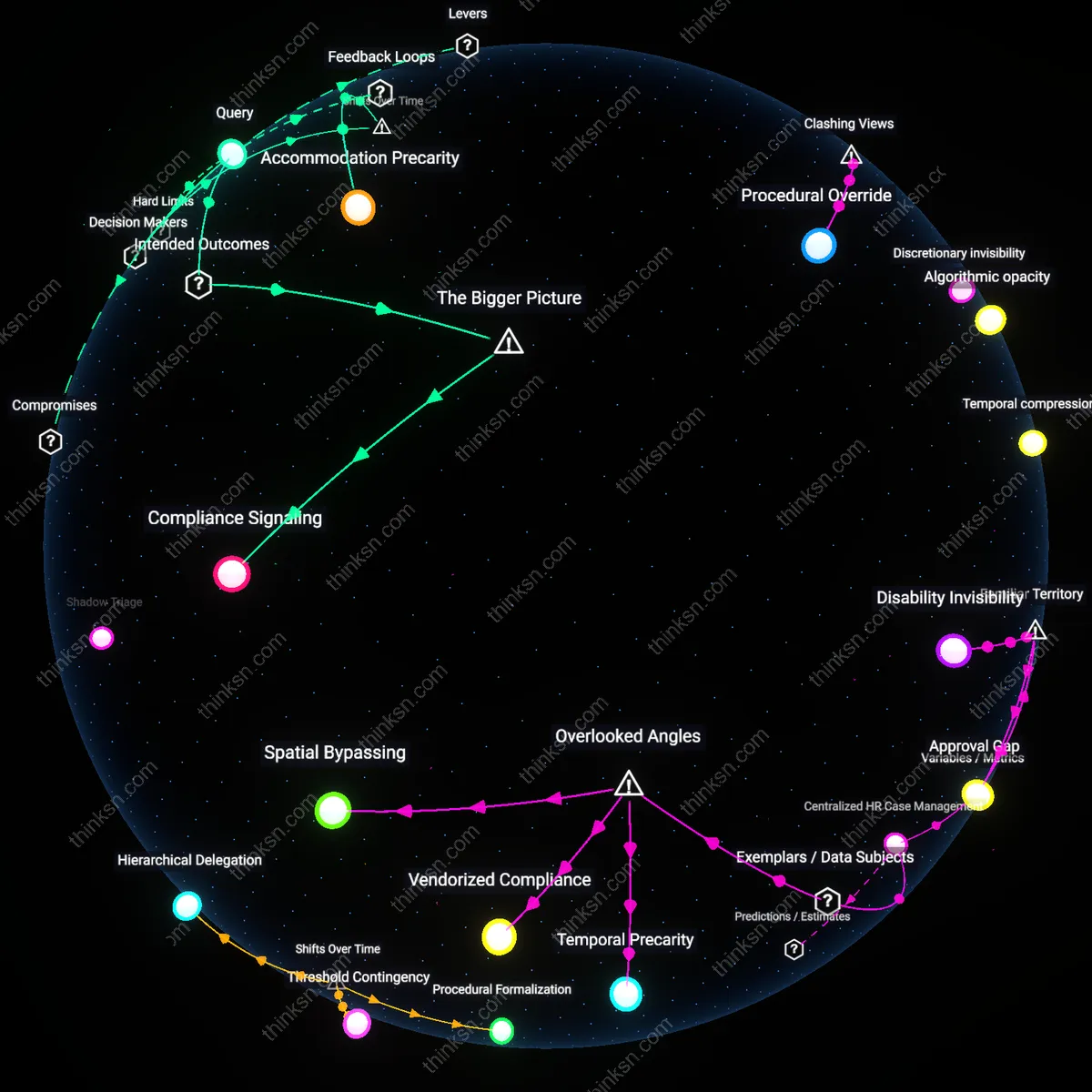
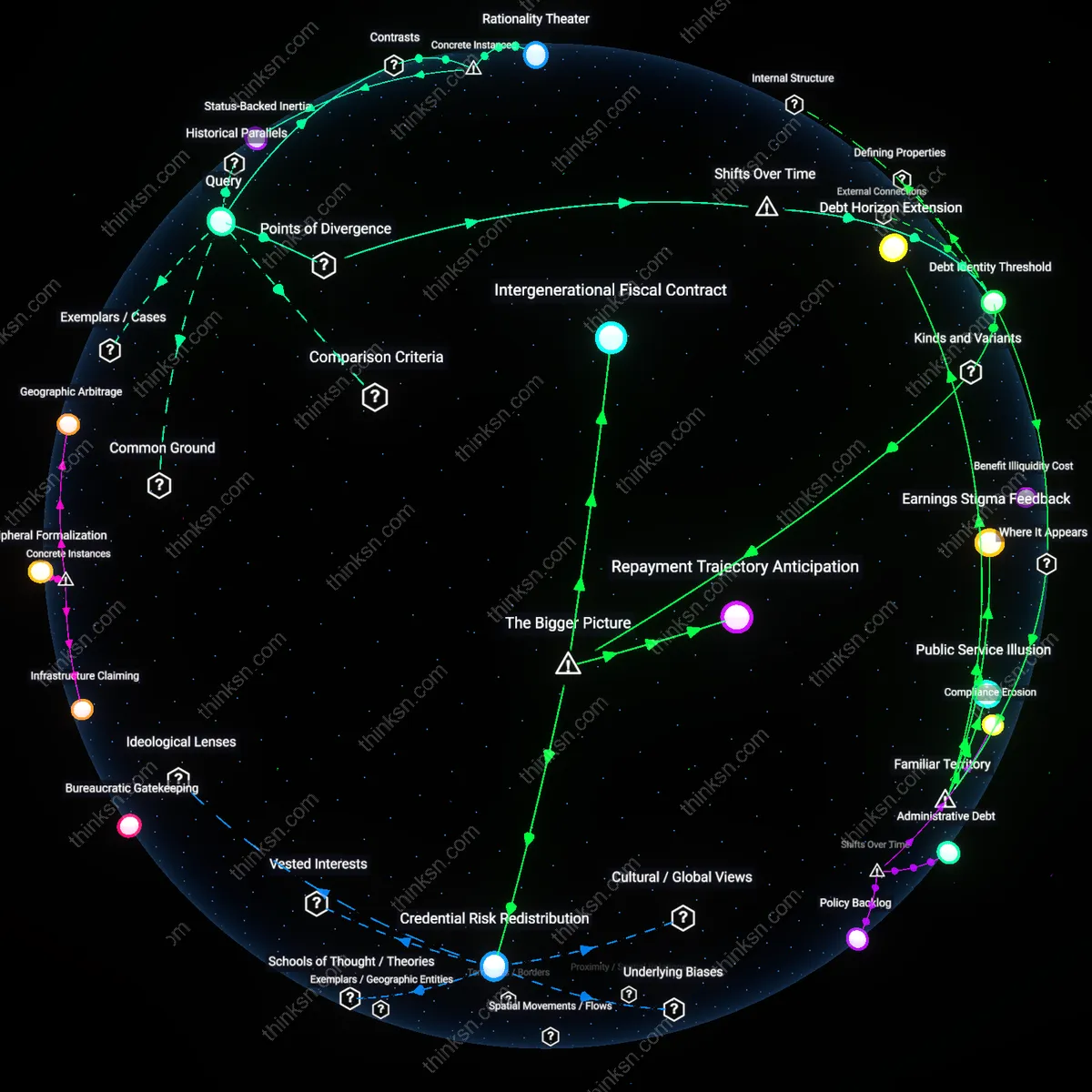
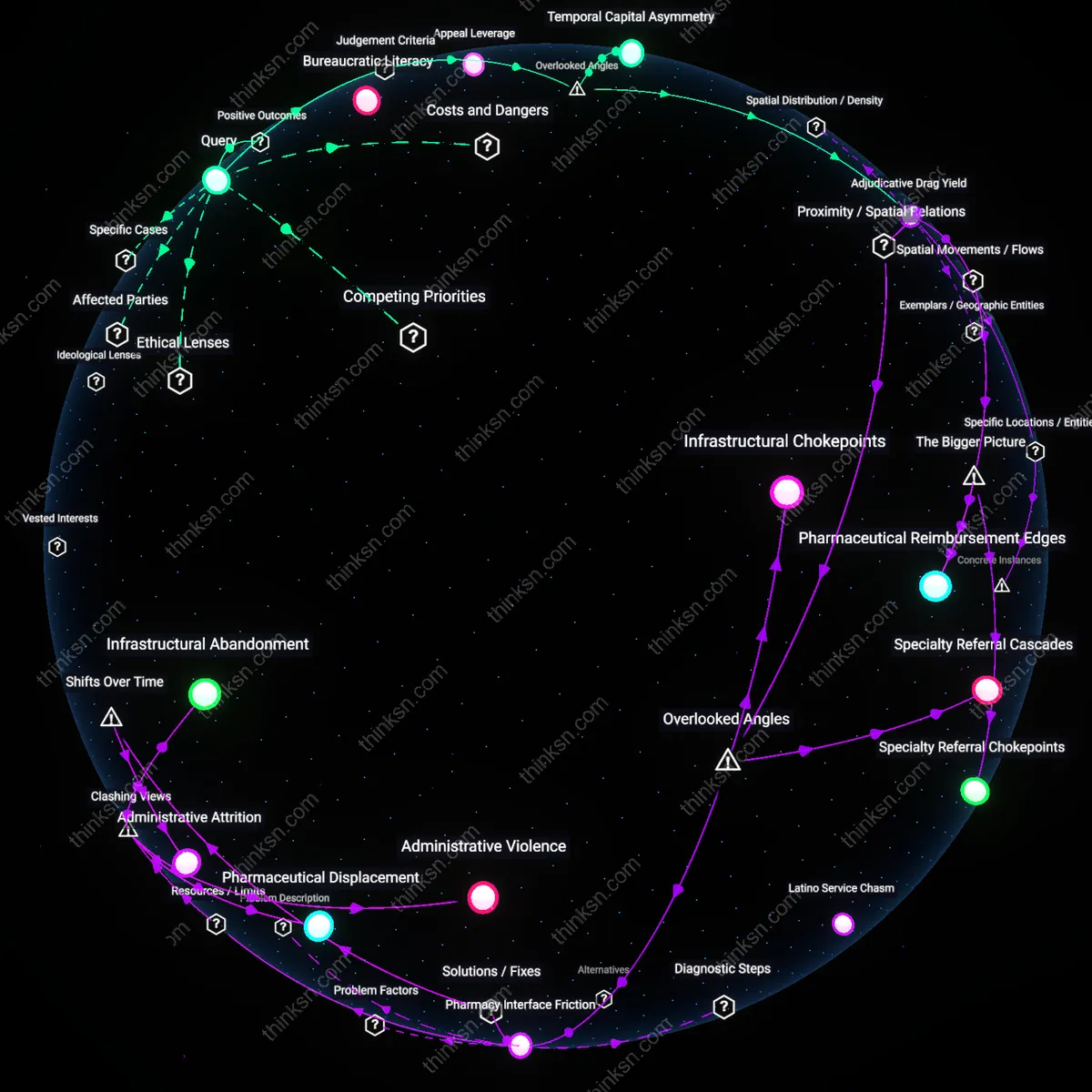
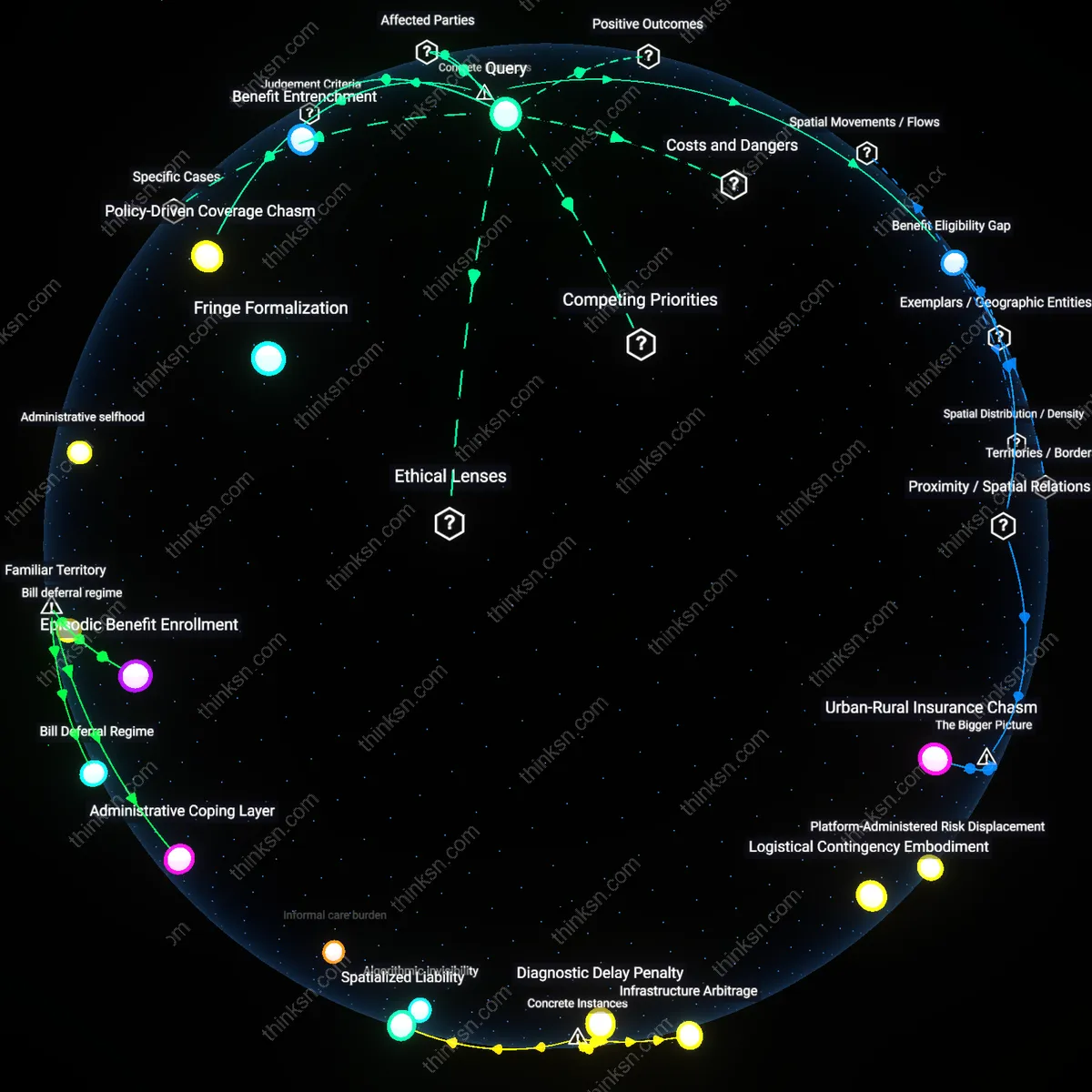
Analysis reveals 16 key thematic connections.
Key Findings
Employment Penalty
Fear of losing employer-provided health insurance deters employees from suing their employer over denied disability accommodations because the legal action itself signals disloyalty, which can trigger informal retaliation including non-renewal of contracts or workplace exclusion that undermines future access to care. This effect operates through the structural dependency of disabled workers on a single source—employer insurance—for medical and financial survival, where even a legitimate claim is perceived as a career-risking event. The non-obvious insight, though widely felt, is that healthcare and employment are so fused in the U.S. system that protecting one’s livelihood paradoxically requires enduring harm, rendering legal rights functionally inaccessible despite legal availability.
Solidarity Debt
Employees avoid legal action after denied accommodations because initiating a claim disrupts the unspoken norm of mutual obligation between worker and employer, where loyalty is exchanged for stability and care. This mechanism thrives in close-knit or mission-driven workplaces—such as nonprofits or healthcare itself—where employees internalize organizational identity and view litigation as betrayal. The underappreciated reality is that legal recourse is not just a procedural option but a social act, and the familiar virtue of 'team loyalty' systematically silences claims, not due to ignorance but as tribute to belonging.
Accommodation Tax
Workers forego legal challenges to denied accommodations because every act of enforcement is understood to carry an invisible cost—diminished future flexibility, delayed promotions, or the quiet denial of remote work privileges—despite formal legal protections. This operates through informal managerial discretion, where supervisors retain wide latitude in assigning tasks, scheduling, and morale assessments, allowing subtle penalties to escape legal scrutiny. The familiar association of 'making waves' as self-defeating ignores that retaliation isn’t rare—it’s bureaucratized, dispersed across daily decisions, making risk aversion not a personal failing but a rational response to embedded administrative power.
Insurance lock-in
The risk of losing employer-provided health insurance deters legal action by tethering employees to their employers during medical vulnerability, a dependency that intensified after the 1980s when U.S. healthcare financing became structurally tied to employment, replacing earlier postwar norms where disability protections were expected to function independently of job-based benefits; this shift embedded a silent economic veto into workplace justice claims, where the moral principle of procedural justice is undermined by the practical reality of benefit precarity, revealing how the privatization of social welfare transformed individual agency into actuarial calculation.
Therapeutic surveillance
Fear of losing insurance leads employees to moderate disability claims to preserve access to medical care, a self-policing behavior that intensified alongside the rise of employer-managed care programs and mental health coverage from the 1990s onward, which repurposed clinical settings into sites of labor compliance; whereas earlier industrial disability models emphasized physical impairment and objective capacity, current systems judge legitimacy through ongoing medical documentation controlled by insurers and HR, making the pursuit of legal redress appear not only economically risky but medically disruptive—revealing a shift from bodily injury to behavioral governance, where autonomy is constrained not by law but by therapeutic dependency.
Retaliatory Care Access
The risk of losing employer-provided health insurance deters legal action by weaponizing medical vulnerability, as employees dependent on coverage for preexisting or disability-related conditions face immediate, tangible harm from termination or reduced hours following a claim. This creates a coercive feedback loop in which the very system designed to support health—employer-sponsored insurance—becomes a tool of legal suppression, particularly under ERISA-governed plans in U.S. workplaces where coverage is tethered to job status. Unlike overt retaliation, this mechanism operates invisibly through structural dependency, making it resistant to anti-discrimination enforcement and reframing legal deterrence as a form of institutionalized medical blackmail.
Administrative Exhaustion Trap
Employees avoid litigation not because of fear of job loss per se, but because the procedural architecture of disability accommodation demands—such as mandatory internal appeals and insurer-mediated reviews—deliberately exhaust both financial and psychological resources before legal options mature. In systems like the Americans with Disabilities Act paired with private insurance protocols, the delay inherent in exhausting administrative remedies coincides with the erosion of income and coverage, effectively pricing out legal entry at the point it becomes viable. This reframes delay not as bureaucratic inefficiency but as a structural deterrent, revealing how legal eligibility is undermined by the timed depletion of the means to access it.
Benefit Reciprocity Coercion
Workers refrain from legal challenges because disability accommodations are often informally granted as discretionary favors rather than enforceable rights, creating a normative debt that stigmatizes formal claims as betrayal of employer generosity—especially in union-weak sectors like tech or nonprofit work where 'good culture' substitutes for robust policy. When health insurance is preserved conditionally on non-confrontation, it embeds compliance within social exchange, transforming legal rights into relational risks. This exposes how the appearance of benevolence in workplace benefits systems suppresses rights assertion more effectively than overt threats, by moralizing dependency and casting legal action as personal disloyalty.
Contractual Coercion
The risk of losing employer-provided health insurance deters legal action because employees are structurally bound by the contingent reciprocity of benefits established under post-1980s neoliberal labor policy, where health coverage became tethered to employment rather than recognized as a civil right. This arrangement, solidified after the decline of universal healthcare proposals in the 1970s and codified through tax incentives and ERISA regulations, positions insurance as a vulnerable workplace privilege. As a result, employees facing disability accommodation denials confront not just legal but metabolic risk—the potential loss of access to medical care itself—making dissent economically irrational despite statutory protections under the ADA. The non-obvious implication is that deterrence operates not through overt illegality but through the normalized privatization of welfare, converting health security into a disciplining tool.
Bureaucratic Invisibility
Employees refrain from legal action after denied accommodations because the post-1990s proliferation of internal administrative appeals and disability management systems within employers masks the denial’s legal significance, shifting conflict resolution from public courts to private, opaque HR processes. Following the Americans with Disabilities Act (ADA) of 1990, employers adopted ostensibly compliant procedures that depoliticize disability claims by reclassifying them as personnel issues rather than civil rights violations—thereby containing legal risk and reinforcing managerial control over medical narratives. This procedural absorption emerged alongside the rise of employer-sponsored wellness and compliance regimes, which substitute due process with managerial discretion, rendering the act of legal pursuit appear redundant or disproportionate. The historically underappreciated shift is how formal legal rights were undercut not by resistance, but by mimicry—creating institutional forms that satisfy legal appearance while neutralizing material challenge.
Precautionary Dependence
The fear of losing health coverage suppresses litigation because the 2008–2010 rollout of the Affordable Care Act, while expanding access, inadvertently reinforced reliance on employer plans for robust disability-related care, as marketplace plans often exclude long-term or specialized treatment. Even with legal protections, employees post-ACA recognize that self-purchased insurance rarely matches the comprehensiveness of large-group employer policies, especially for chronic conditions tied to disability claims—making job-linked insurance a de facto medical lifeline. This dependence crystallized during the transition from employer-based coverage as the default to a dual system where choice is structurally constrained by cost and care gaps, revealing a new form of precarity masked as reform. The overlooked consequence is that legal agency is eroded not by absence of law, but by the calibrated insufficiency of alternatives, producing rational self-censorship among the rights-bearing.
Institutionalized coercion
The threat of losing employer-provided health insurance actively compels employees to self-censor legal challenges to denied disability accommodations, even when such denials violate the Americans with Disabilities Act (ADA), because the individual's access to essential care is tethered to job retention under employer-controlled plans. This mechanism operates through the U.S.-specific fusion of healthcare and employment, wherein the logic of neoliberal labor policy transforms a statutory right into a contingent benefit—employees subject to this system rationally prioritize survival over rights enforcement. This dynamic is obscured by dominant legal discourse that presumes equal standing between employer and employee in accommodation disputes, when in practice, the insurance tie effectively nullifies the ADA’s promise for those with chronic or costly conditions.
Normative disablement
Employees refrain from pursuing legal action not because of tangible retaliation but because the internalized expectation of dependence on employer goodwill reshapes their perception of what counts as a legitimate or winnable claim, a phenomenon reinforced by workplace cultures that stigmatize accommodation requests as burdens. This operates through the moral psychology of relational contract theory, where employees weigh not only legal rights but perceived fairness and social obligation, particularly in sectors like public education or nonprofit work where ethical commitment to mission discourages adversarial posture. The non-obvious consequence is that the suppression of claims arises not from fear of losing insurance per se, but from a deeper erosion of entitlement identity—workers come to see themselves as recipients of grace, not holders of rights.
Asymmetric legal personhood
The employer, as both the administrator of health benefits and the defendant in a disability claim, occupies a dual legal role that structurally undermines the employee’s capacity to act as a full legal subject, a condition legitimized by doctrines like at-will employment that prioritize organizational autonomy over individual remedy. This operates through the fragmentation of U.S. social provision, where the absence of universal healthcare transforms the employer into a de facto sovereign over bodily integrity—rendering legal action existentially risky rather than merely procedurally difficult. The challenge to conventional civil rights frameworks is that enforcement assumes a symmetrical legal arena, when in reality, the denial of accommodation and the threat to insurance function as a single, consolidated act of subordination that law is neither designed nor intended to mediate.
Job-Linked Courage
Employees at large U.S. manufacturing firms like Ford or Boeing are less likely to challenge denied disability accommodations because appealing triggers fears of retaliatory position elimination under thin workforce justifications. The tight coupling between health insurance and employment in the American labor market creates a system where legal pushback is functionally discouraged, not through explicit threats but through financial exposure—specifically, the risk of losing employer-sponsored coverage during prolonged disputes. This mechanism is underappreciated because public discourse assumes legal rights are equally exercisable, ignoring how benefit dependence suppresses claim assertion even when victories are likely.
Benefits Blackmail
Workers in medium-sized private companies, such as regional grocery chains or call centers, often drop legal pursuits after accommodation denials because HR departments frame insurance continuity as contingent on 'cooperative' behavior, subtly conditioning benefits access on dispute avoidance. The informal power of mid-level managers to influence enrollment status—especially during probationary or review periods—creates a shadow governance system where formal legal avenues are rendered inert by off-the-record warnings about coverage stability. This dynamic is rarely acknowledged because it operates beneath policy language, masquerading as advice rather than coercion, yet it directly shapes employee inaction.