When Religious Accommodation Fails, Is Legal Action Justified?
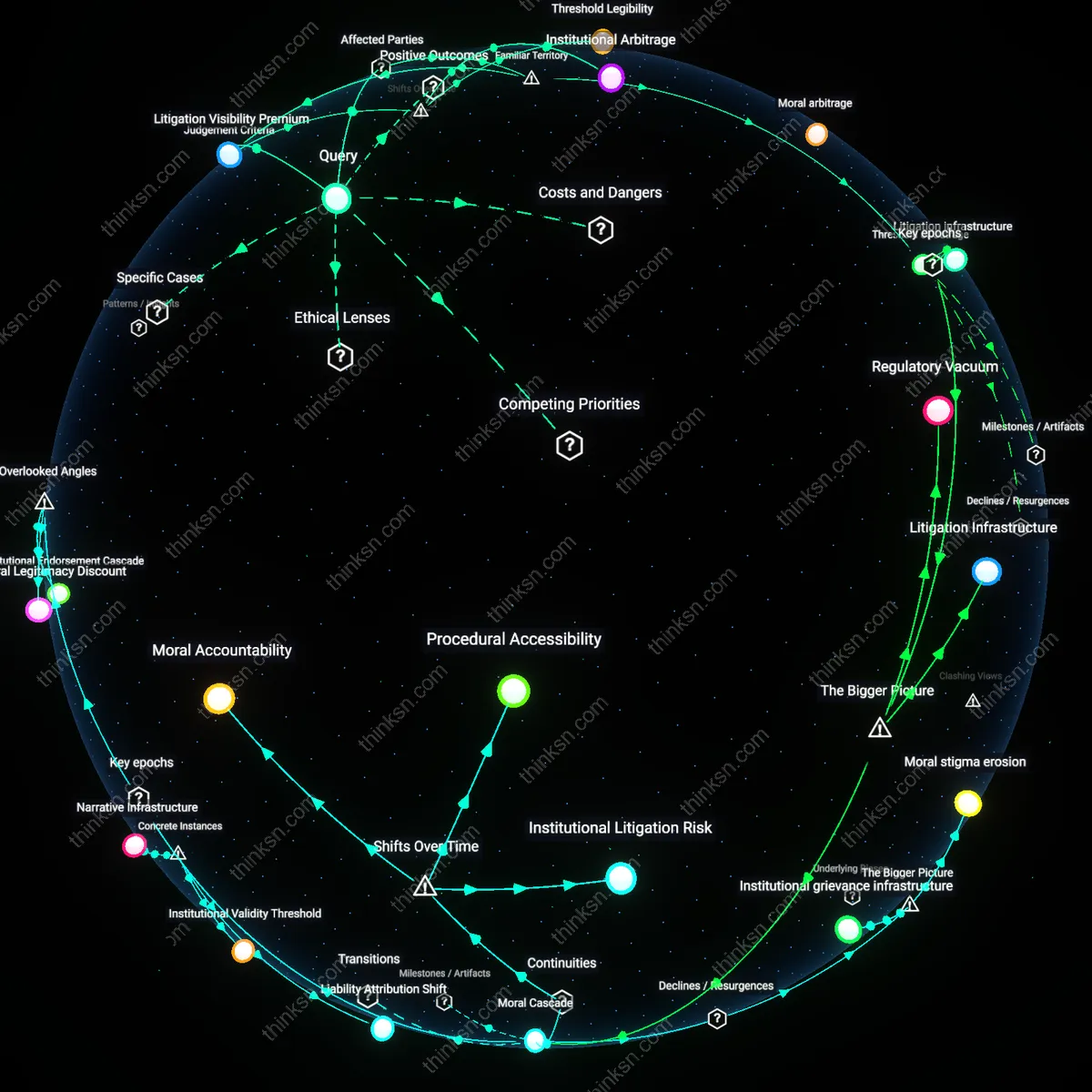
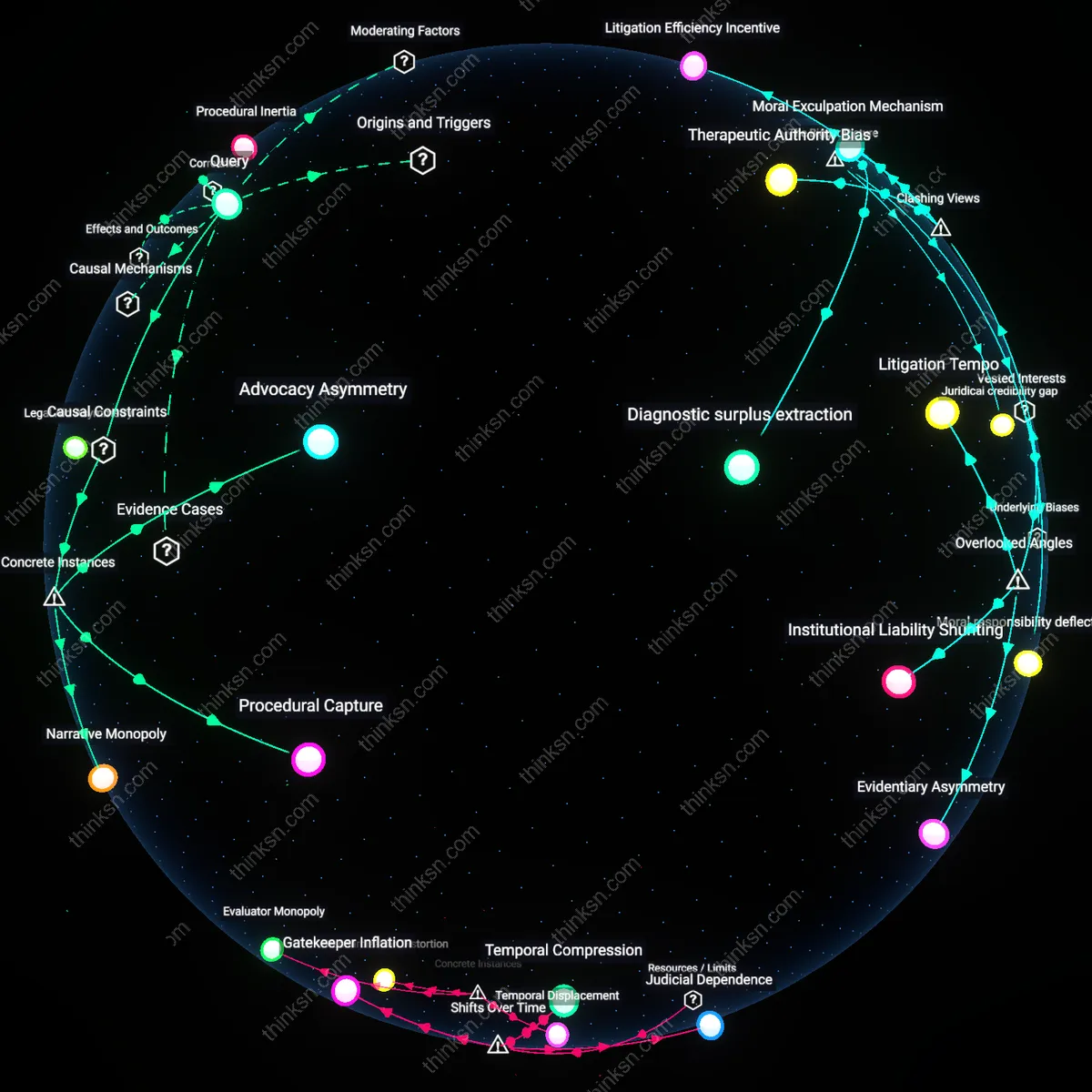
Analysis reveals 6 key thematic connections.
Key Findings
Institutional Accountability Threshold
Filing a civil rights lawsuit becomes a proportionate response when a public employer’s refusal to accommodate religious practice reveals a pattern of systemic noncompliance with Title VII, particularly in hierarchical institutions like police departments or school districts where precedent and policy inertia suppress individualized exceptions. This is enforced through federal district courts that treat repeated failures to engage in the interactive process as evidence of discriminatory motive, making litigation not just a personal remedy but a corrective mechanism for organizational culture. The non-obvious element is that the lawsuit functions less as individual redress and more as a structural audit, triggering judicial scrutiny that internal HR processes deliberately avoid.
Career Reputational Tipping Point
A civil rights lawsuit is proportionate when the denial of religious accommodation coincides with visible professional marginalization—such as missed promotions or reassignment to adverse duties—indicating that compliance would require sacrificing long-term career viability in fields like federal contracting or academic tenure. In these contexts, the legal action signals public refutation of tacit coercion to assimilate, where the real cost of accommodation denial is measured in eroded professional credibility. Most overlook that the suit often serves as a reputational counterstrike, using public record to reframe the employee not as disruptive but as a principled actor resisting institutional orthodoxy.
Doctrinal Recognition Threshold
Litigation becomes proportionate when the employee’s religious practice occupies a symbolically charged category—such as headcoverings, Sabbath observance, or dietary mandates—that courts have historically validated as 'legitimate' under prevailing First Amendment and RFRA interpretations, thereby increasing the likelihood of favorable precedent. This operates through the judiciary’s reliance on familiar religious archetypes (e.g., Orthodox Jewish, Seventh-day Adventist, or Sikh plaintiffs) whose practices are legible within the American legal imagination, making accommodation denials appear as overt bias rather than administrative oversight. The underappreciated dynamic is that 'recognizable' religiosity—shaped by media and prior rulings—functions as a gatekeeper, determining which denials are legally contestable and which dissolve into obscurity.
Structural Incentive Misalignment
Filing a civil rights lawsuit becomes a proportionate response when internal complaint mechanisms in large employers systematically deprioritize religious accommodation to avoid operational disruptions, as seen at Amazon fulfillment centers where Muslim workers requesting prayer breaks were denied despite repeated appeals, triggering litigation because corporate HR protocols are calibrated to minimize workflow interruptions rather than uphold Title VII obligations. This misalignment reflects a broader condition in gig and logistics firms where legal liability is treated as a calculable risk, subordinate to efficiency metrics driven by automated performance tracking. The non-obvious consequence is that proportionality in legal action is not determined by individual harm but by the employer’s institutionalized tolerance for statutory noncompliance, revealing how workplace algorithmic management undermines religious accommodation before it reaches courts.
Judicial Doctrinal Drift
A civil rights lawsuit becomes proportionate only after courts reinterpret the 'undue hardship' standard under Title VII to favor minimal employer burden, as demonstrated in the 2023 Supreme Court case Groff v. DeJoy, where the USPS’s refusal to accommodate a Seventh-day Adventist mail carrier was ruled unlawful, signaling a shift from lax to strict scrutiny of accommodation denials. This doctrinal recalibration activates litigation as a necessary response when employers rely on outdated interpretations that normalize automatic denial of religious requests, particularly in federal and state agencies with rigid scheduling systems. The underappreciated dynamic is that legal proportionality emerges not from workplace events alone but from strategic litigation timed to leverage judicial transitions, positioning civil suits as arbiters of doctrinal evolution rather than mere remedies for harm.
Career Shadowing Effect
Filing a civil rights lawsuit is a proportionate response when continued employment after a denied accommodation exposes workers to progressive marginalization, as observed among Sikh employees at Tesla’s Fremont plant who withdrew accommodation requests due to retaliatory reassignments and performance scrutiny following initial appeals. In high-surveillance, union-weak manufacturing environments, the mere act of requesting accommodation triggers informal disciplinary cascades that erode advancement trajectories long before termination occurs. The overlooked mechanism is that proportionality is determined not by the denial itself but by the invisible accumulation of career-damaging responses embedded in performance evaluation systems that are formally neutral but informally punitive, making litigation the only viable tool to interrupt institutionalized professional sidelining.