Why Medicaid Rules Push Families to Expensive Private Care?
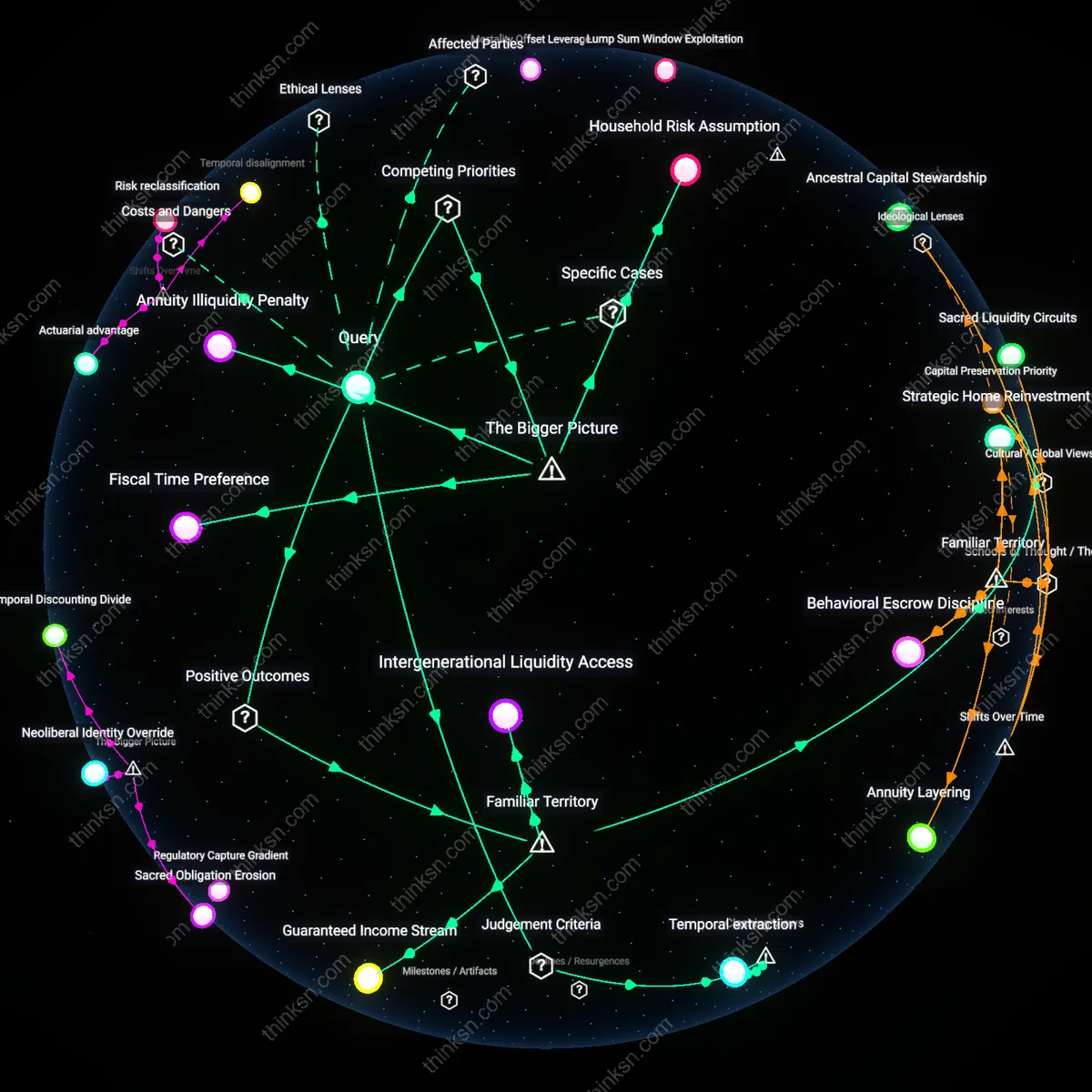
Analysis reveals 10 key thematic connections.
Key Findings
Asset Cliff Effect
Medicaid eligibility thresholds impose strict asset limits that force families to exhaust nearly all savings before qualifying, pushing them toward private long-term care financing to preserve wealth. This mechanism operates through state-level Medicaid programs that penalize asset ownership above $2,000 for individuals, compelling middle-income families to spend down homes, investments, or retirement accounts—often via complex legal strategies—before accessing public support. The non-obvious reality is that this design does not merely screen for poverty but actively disincentivizes preparedness, making private insurance or family subsidies the default for those with modest wealth, despite widespread public assumption that Medicaid functions as a safety net for aging populations.
Home Equity Penalty
Current Medicaid rules exclude a primary home from asset calculations only up to a capped equity value—typically $688,000 in 2024—forcing families in high-cost regions to liquidate property to qualify, which drives reliance on private long-term care solutions. This condition affects homeowners in states like California or New York, where home values routinely exceed the threshold, and operates through federal guidelines that allow states to pursue estate recovery after death, undermining the perceived benefit of preserving home equity. The underappreciated insight is that the home, widely seen as a key retirement asset, becomes a liability under Medicaid’s hard limits, contradicting the familiar narrative that owning a home ensures stability in old age.
Spousal Disincentive Structure
Medicaid’s spousal impoverishment protections allow a married applicant to transfer limited income and assets to a community spouse, but these allowances are bounded by strict federal floors and ceilings, creating a calculated risk for couples who might otherwise rely on shared resources. This mechanism, embedded in the Deficit Reduction Act of 2005, caps the protected spousal resource allowance at $148,620 in 2024, pushing dual-earner households with moderate joint savings into private long-term care plans to avoid destabilizing the healthy spouse’s financial security. The overlooked consequence is that a policy designed to protect spouses instead institutionalizes mistrust in the system, reinforcing the familiar belief that families must go it alone—even when public support exists.
Eligibility Chasm
Medicaid’s 1997 expansion of children’s and parents’ coverage without reciprocal adjustments to adult institutional care thresholds created a bifurcation where families now exhaust private savings to qualify for nursing home support. The shift from pre-1997 categorical aid to post-welfare-reform income-based eligibility inadvertently priced out middle-income households who earn above state-specific parental limits but lack long-term care insurance. This mechanism—where tightened income ceilings for parents coexist with unexpanded asset limits for adult services—forces a spend-down logic that was historically reserved for the destitute, now applied to the working poor and lower middle class. The non-obvious outcome is that Medicaid’s own expansion in one domain (child/family health access) intensified private dependency in another (geriatric and disability care).
Savings Penalty
The 1981 Omnibus Budget Reconciliation Act (OBRA) initiated a shift from federal entitlement to state-block-granted authority, leading states to tighten asset tests while promoting private insurance as a compliance hedge. As home equity and retirement savings became disqualifiers under post-1981 means-testing, families began structuring estates around Medicaid ineligibility, using irrevocable trusts and spousal impoverishment rules to transfer wealth preemptively. This dynamic—where saving is structurally disincentivized by the very program meant to protect against catastrophic costs—only emerged clearly in the 2000s when state-level spend-down requirements exceeded median household liquid assets. The underappreciated shift is that Medicaid ceased being a floor of last resort and became a trigger for forced asset liquidation, pushing risk onto private financial instruments.
Medicaid Disentitlement Anxiety
State Medicaid directors’ anticipatory denial of enrollment due to projected long-term fiscal exposure causes families to preemptively purchase private long-term care insurance, even when currently eligible. This occurs because state agencies, facing unpredictable future care costs and capped federal matching funds, quietly tighten eligibility interpretations beyond federal mandates—creating a climate of perceived instability. Families respond by opting for private plans not because they exceed income thresholds, but to avoid anticipated future exclusion, a behavioral response rarely captured in formal eligibility statistics. This reveals that expectations of future ineligibility, not current rules, are driving market substitution—a dynamic overlooked in policy cost models that assume rationality based on present conditions.
Primary Care Gatekeeping Deficit
Primary care providers in Medicaid managed care organizations often fail to initiate long-term care planning conversations, inadvertently steering families toward private solutions by omission. Because reimbursement structures in most states do not compensate clinicians for time-intensive care coordination or advance care planning with non-imminently frail patients, discussions about future institutionalization risks are deferred or skipped entirely. As a result, families remain unaware of potential future Medicaid pathways and instead interpret the lack of provider guidance as infeasibility, turning to private insurance as a default. The overlooked mechanism here is clinical silence as a structural determinant of financial decision-making—a subtle form of care rationing that shifts risk onto households.
Intergenerational Asset Miscalibration
Medicaid's five-year asset transfer lookback period distorts family financial planning by incentivizing premature disinvestment from intergenerational wealth vehicles like 529 college savings plans or family trusts, pushing middle-class families to liquidate and restructure assets in ways that erode future private caregiving capacity. Families anticipating future nursing home costs often unravel multi-generational savings structures not to meet current eligibility, but to position themselves for future qualification—yet in doing so, they deplete resources that could have supported in-home care alternatives. This hidden tradeoff between Medicaid eligibility preparation and long-term private care sustainability is absent from policy debates, which treat asset rules as mere compliance mechanisms rather than drivers of intertemporal family economic strategy.
Care Diversions
In Florida, the state's managed care model for Medicaid long-term services under the Long-Term Care Reform Initiative redirects eligible but not-yet-impoverished seniors into private insurance or family-funded home care while they wait months for Medicaid approval, transforming temporary ineligibility into de facto privatization of care. This system-produced detour reveals ‘Care Diversions’—a hidden rerouting of demand away from public support not by rejection but by procedural delay, an effect rarely captured in policy evaluations focused on final approval rates rather than interim burden.
Threshold Arbitrage
Wealthier families in Massachusetts exploit Medicaid's income cap by diverting earnings into pooled income trusts to qualify for long-term care, a legal workaround unavailable to lower-middle-class families without specialized legal access, revealing a two-tier response to uniform thresholds. This stratified compliance produces ‘Threshold Arbitrage’, where eligibility rules become market-like constraints that generate unequal financial engineering strategies, making the policy's surface neutrality collapse into class-differentiated behaviors despite uniform standards.