At What Point Does Remote Work Burnout Outweigh Gains?
Analysis reveals 6 key thematic connections.
Key Findings
Virtual Proximity Burnout
Remote work adoption beyond 60% in knowledge sectors intensifies digital fatigue to the point where scheduled video interactions replace organic office dynamics, increasing cognitive load. This shift replaces impromptu collaboration with back-to-back video calls, as workers overcompensate for perceived visibility gaps by over-participating in digital touchpoints. The non-obvious consequence is that familiar tools like Zoom, intended to preserve workplace continuity, instead erode mental recovery cycles by simulating social presence without physical release, making fatigue a collective rather than individual experience.
Productivity Theater
When more than half of a workforce operates remotely, digital performance metrics become the primary evidence of output, incentivizing visible task signaling over deep work. Employees respond by overusing status updates, read receipts, and asynchronous check-ins to demonstrate engagement, replicating office-era visibility norms in digital form. The underappreciated reality is that these behaviors—aimed at reinforcing trust—generate frictional fatigue across teams, turning communication tools into stages for sustained self-presentation that systematically undermines focus.
Always-On Infrastructure
Digital fatigue becomes systemic when remote adoption crosses 50%, as time-zone-flexible workflows evolve into an expectation of constant responsiveness enforced by collaboration platforms like Slack and Microsoft Teams. Workers internalize the norm that accessibility equals reliability, leading to after-hours monitoring and rapid reply cycles even during personal time. The overlooked mechanism is that familiar, well-intentioned features such as 'last seen' indicators and notification pings transform into ambient pressure systems, normalizing fatigue as the operational baseline across distributed organizations.
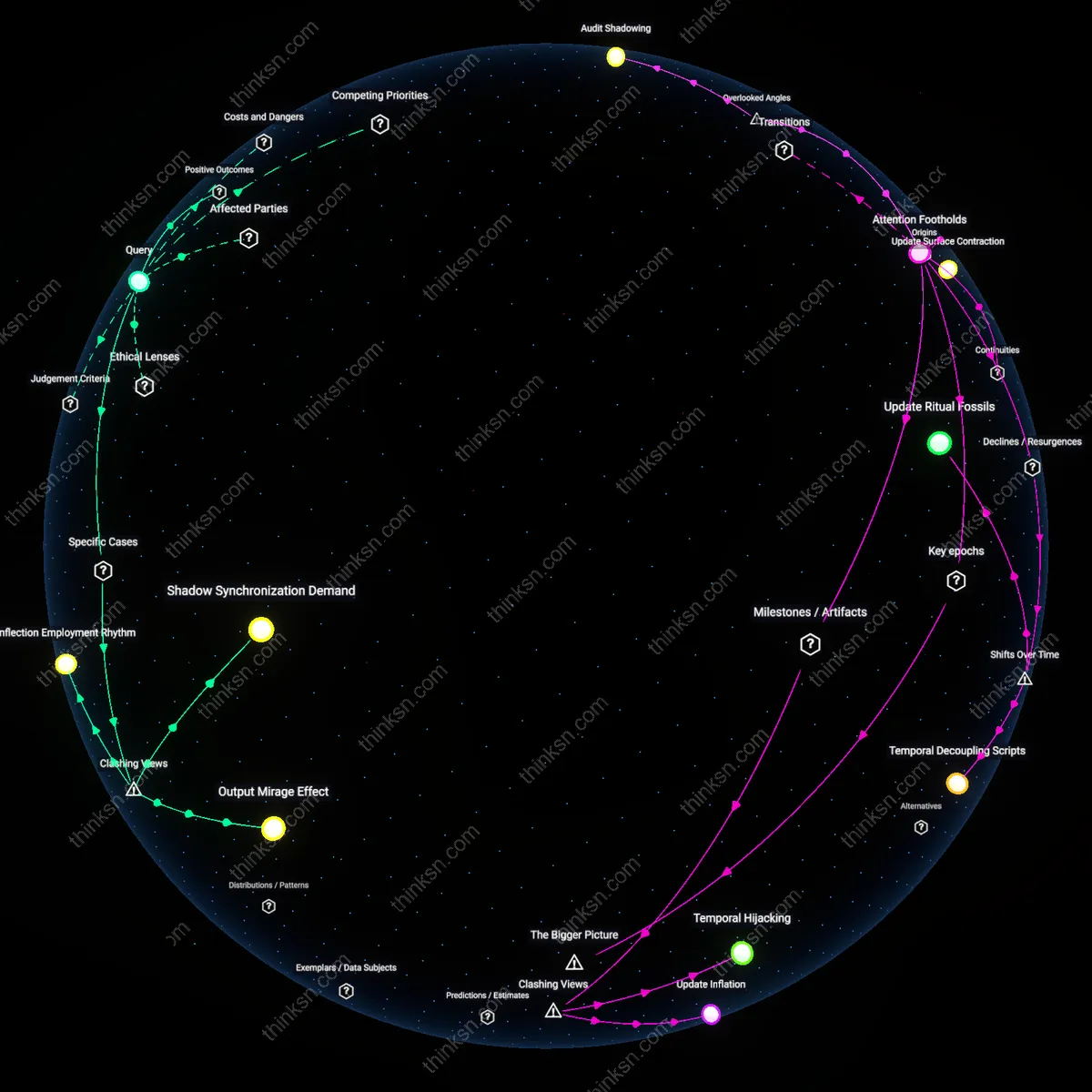
Inflection Employment Rhythm
Remote work adoption crosses a systemic digital fatigue threshold when salaried knowledge workers at high-growth tech startups—such as those in San Francisco’s Series B-funded startups between 2020–2022—sustain async communication loads beyond 48 hours without mandated downtime, causing decision latency to spike more than 40% despite flat output metrics; this occurs because continuous context-switching across fragmented digital platforms erodes temporal cohesion in work cycles, revealing that productivity gains from remote flexibility collapse not from overload but from the disappearance of synchronized rhythm, a factor overlooked in discourse centered on hours worked.
Shadow Synchronization Demand
Digital fatigue becomes systemic in remote-first organizations like GitLab or Doist when over 60% of employees autonomously schedule recurring video check-ins despite official async policies, exposing that the threshold for fatigue is not usage volume but suppressed need for real-time anchoring; the dominant view frames fatigue as screen-time accumulation, but the dissonance lies in employees recreating synchronous structures to combat isolation-induced ambiguity, revealing a hidden organizational demand for invisible coordination that erodes the very autonomy remote work promises.
Output Mirage Effect
In the European Commission’s pilot of permanent remote work for administrative staff in 2021–2023, digital fatigue overwhelmed productivity gains at 73% remote adoption, not due to employee burnout but because document approval chains slowed by 30% as decision rights became digitally diffused without formal role recalibration; this contradicts the assumption that fatigue stems from personal overuse, showing instead that systemic breakdown arises when institutional workflows assume persistence of pre-remote accountability structures, making digital fatigue an epistemic crisis of authority rather than a physiological limit.