When Does Curbing Hate Speech Silence Political Dissent?
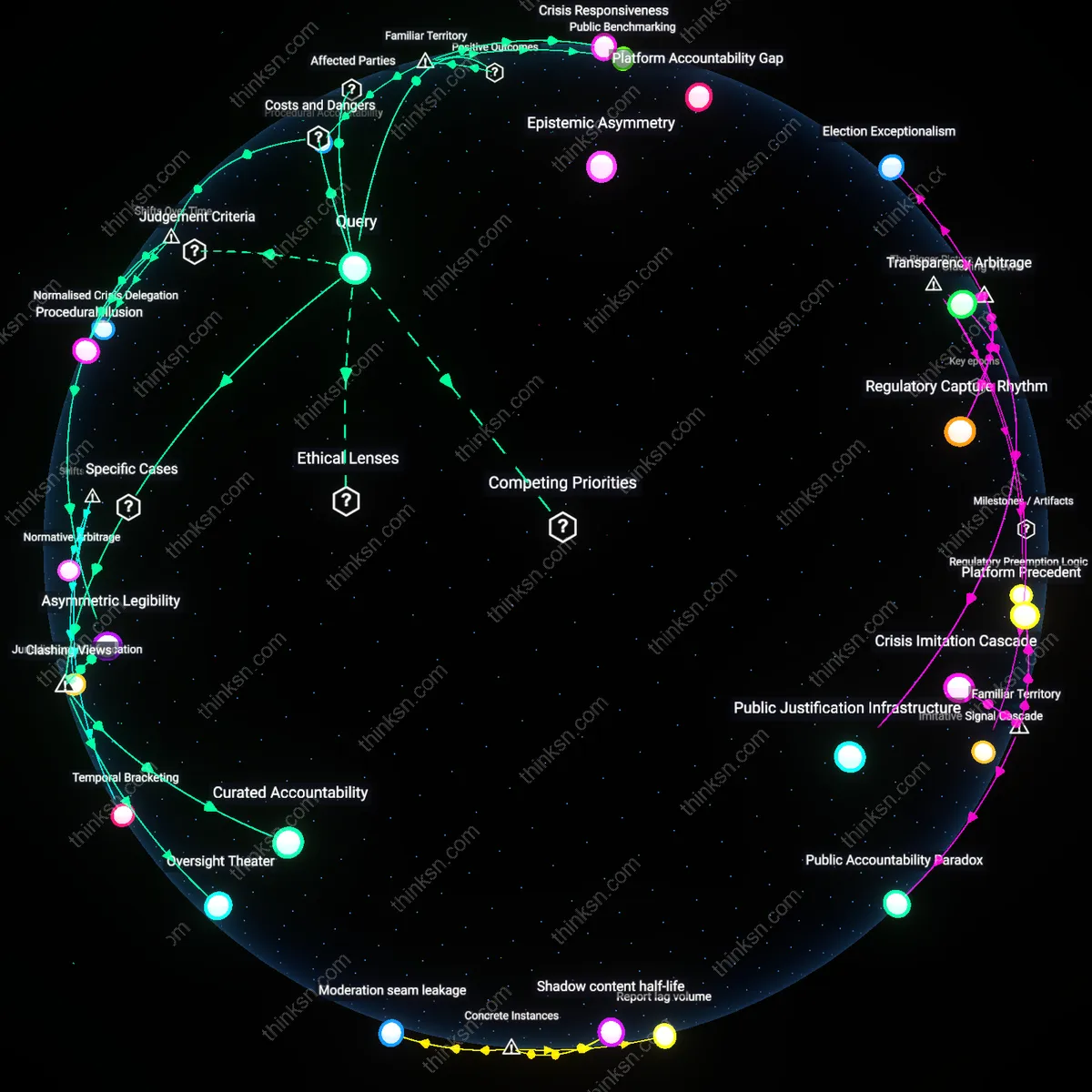
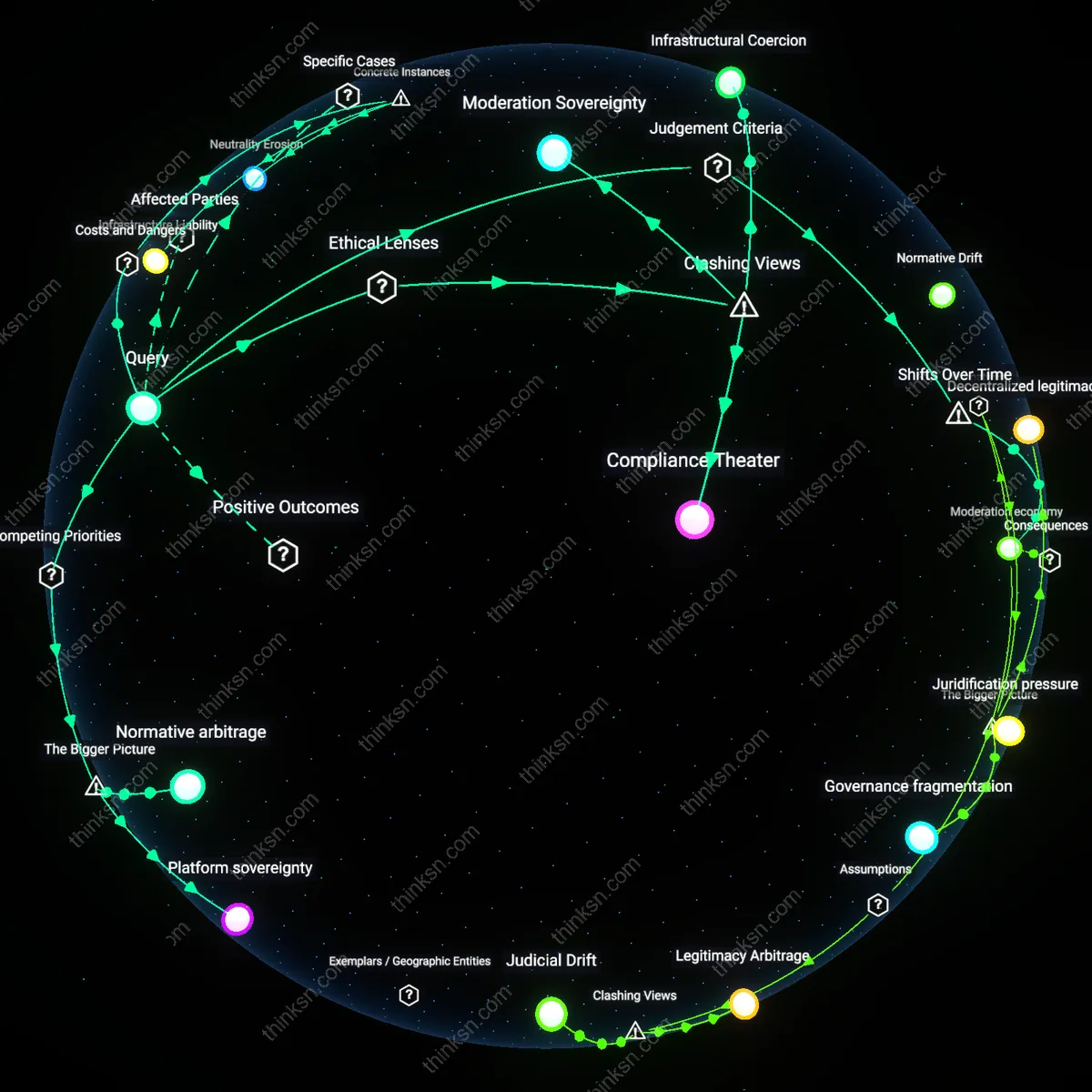
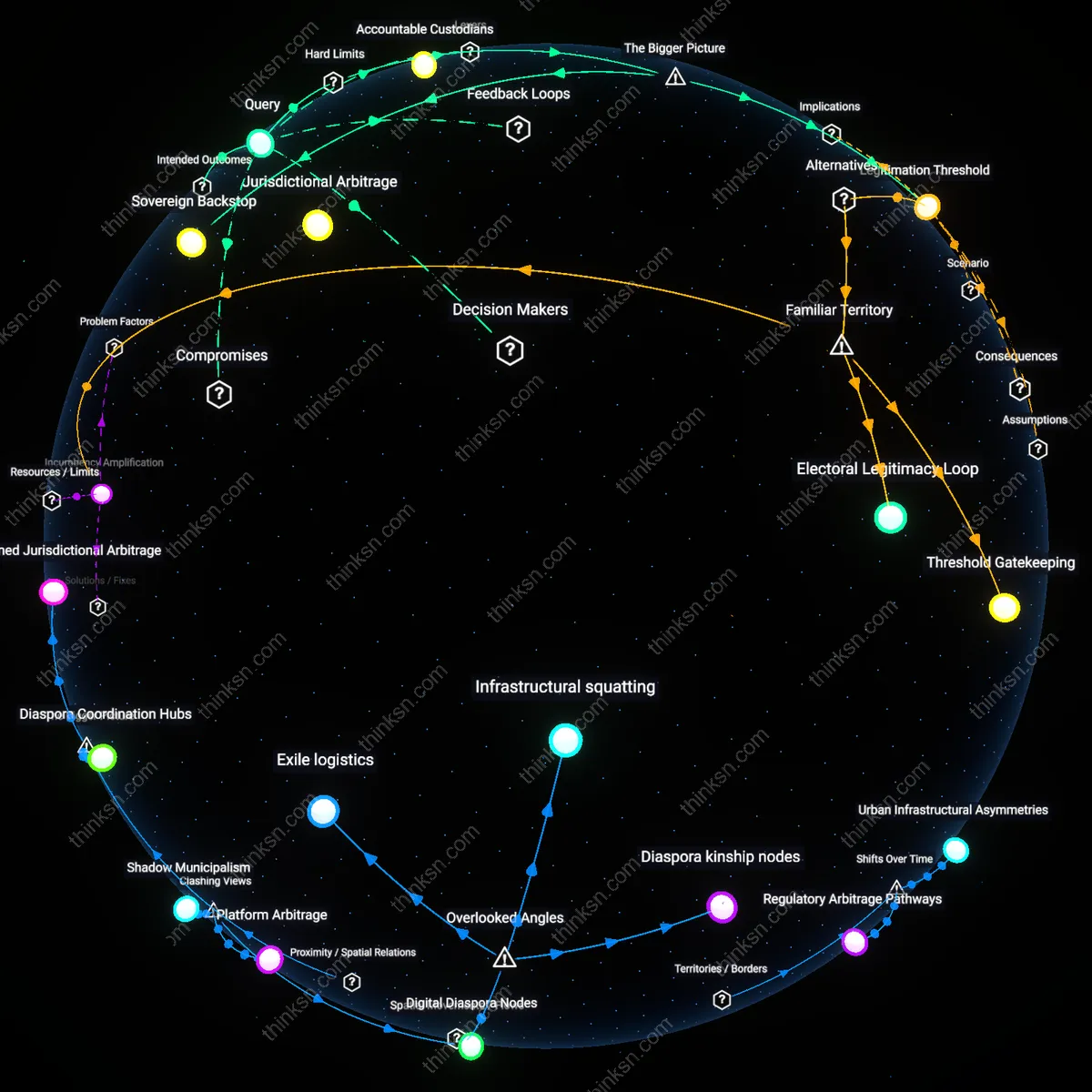
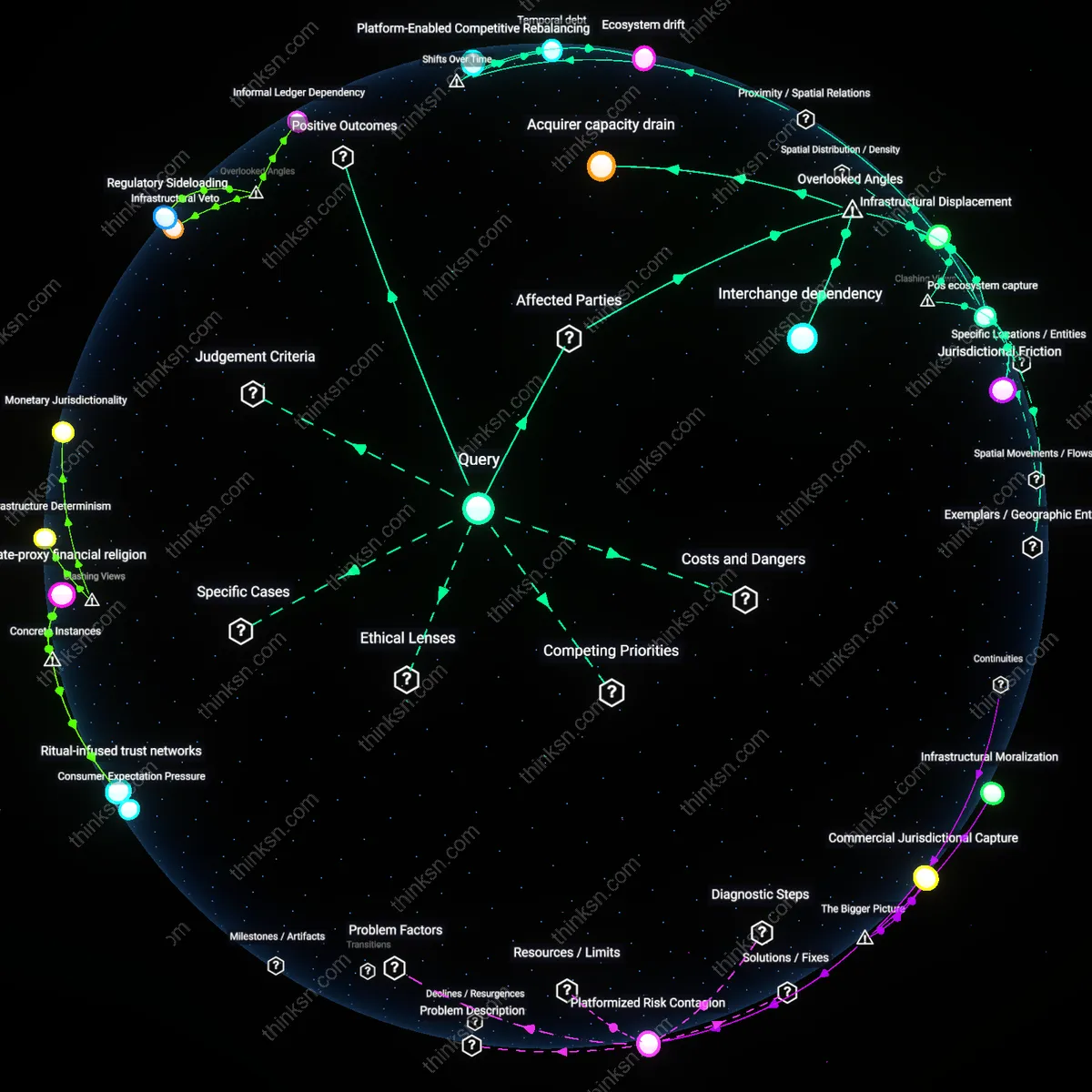
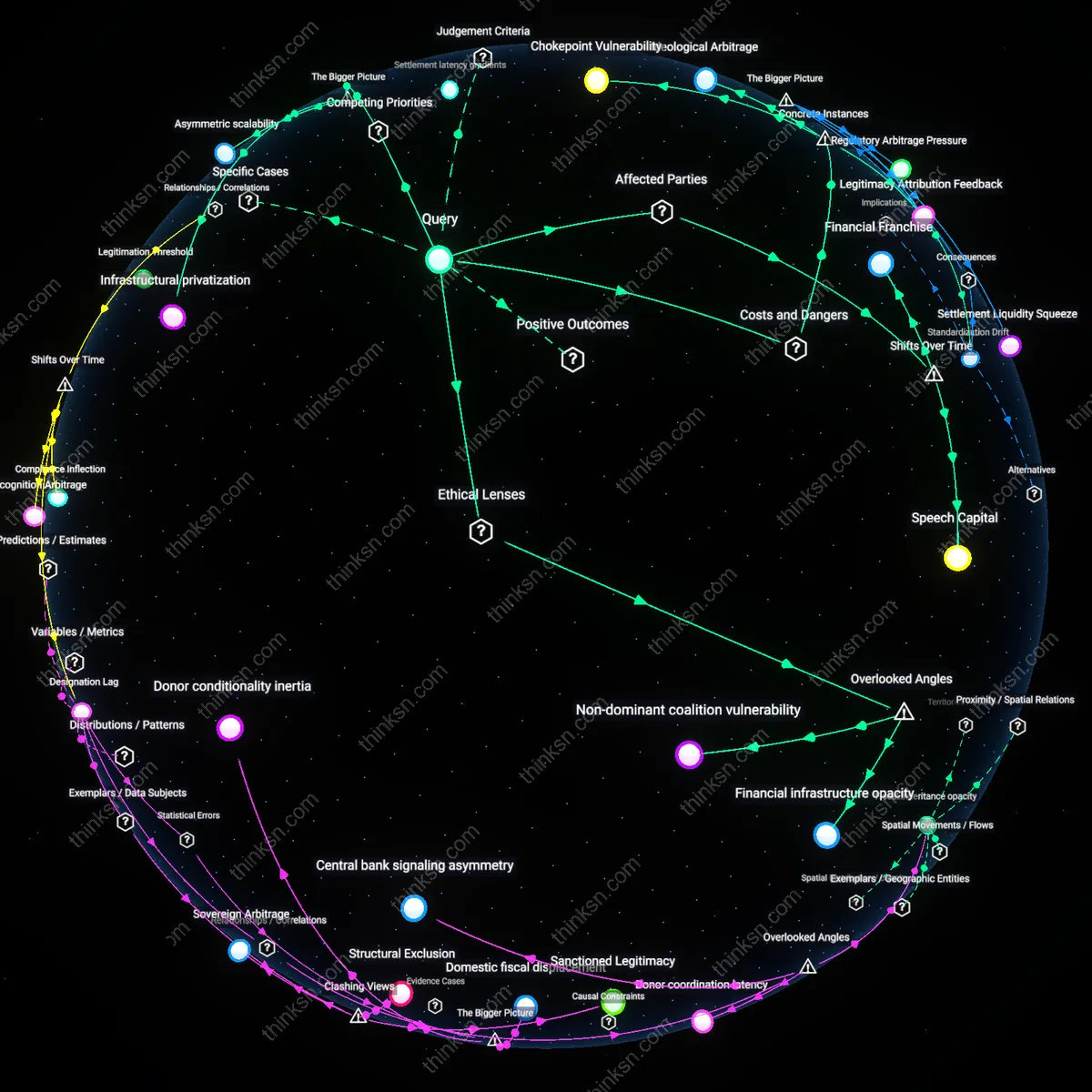
Analysis reveals 11 key thematic connections.
Key Findings
Financial Franchise
Payment networks began enforcing hate speech policies in the mid-2010s not as neutral custodians but as de facto regulators of political legitimacy, shifting from passive infrastructure to active gatekeepers during the post-2016 rise of ethnonationalist movements in North America and Europe; this transition placed payment processors like PayPal and Stripe at the center of disputes over who qualifies for economic inclusion, with right-wing extremist groups and antifascist collectives alike discovering that access to donation processing could make or break their public presence, revealing that financial intermediaries now wield decisive influence over which political forms are viable. The non-obvious insight is that the line between suppression and safety is not drawn legally or rhetorically but through the mundane operation of transaction approval algorithms and merchant risk scoring—systems designed for fraud prevention repurposed as ideological filters.
Speech Capital
The removal of hate speech from payment platforms since the late 2010s has redistributed political power by converting expressive capacity into a function of financial infrastructure stability, particularly evident when Black Lives Matter organizers and white supremacist militias faced equivalent deplatforming by payment providers during the 2020 U.S. racial justice protests, revealing that expressive survival increasingly depends on access to seamless transactional networks rather than public airwaves; this shift marks a transition from state-centered free speech regimes to market-mediated speech economies where political legitimacy is determined less by courts than by processor underwriting thresholds. The underappreciated dynamic is that principled censorship resistance now requires liquidity reserves and corporate compliance teams—turning grassroots movements into de facto fintech dependents.
Trust Layer
After the 2018 Christchurch attack, global payment networks accelerated the outsourcing of ideological vetting to third-party risk consortiums like the Global Internet Forum to Counter Terrorism, embedding counter-extremism protocols into default onboarding procedures and transforming payment access from a universal service into a reputation-anchored privilege, a shift that redefined civil society actors—from Palestinian solidarity networks to anti-abortion campaigners—as financial risks rather than political voices; this institutionalized due diligence as ideological gatekeeping, where the boundary between hate and dissent is set not by speech content alone but by historical association scores generated from cross-platform data pooling. The overlooked consequence is that payment suppression now precedes and predicts legal or social condemnation, making the financial trust layer a preemptive control point for political expression.
Chokepoint Vulnerability
When Patreon cut off funding to far-right pundit Milo Yiannopoulos in 2018, it set a precedent where private moderation decisions on platforms handling payments could instantly disable the infrastructure sustaining controversial speech, even when that speech remained legal under U.S. law. This action revealed how financial intermediaries, unlike speech-hosting platforms, operate with less public scrutiny and fewer appeals mechanisms, enabling de facto censorship through economic suffocation. The systemic risk lies in concentrating veto power over expression in opaque, profit-driven payment gatekeepers whose terms of service are not designed for political neutrality. This case underscores that deplatforming via payment removal can silence expression not because it violates legal or democratic norms, but because it loses access to essential economic plumbing—what makes Chokepoint Vulnerability distinct is its invisibility until activated.
Ideological Arbitrage
After PayPal suspended accounts associated with the Canadian Freedom Convoy in 2022—initially framed as a response to illegal activity, then broadened to include 'hateful conduct'—many donors shifted to cryptocurrency and alternative networks that lacked content-based restrictions. This response demonstrated how attempts to suppress expression through financial control can unintentionally reward actors who reframe repression as persecution, amplifying their reach and legitimacy within sympathetic communities. The real danger is not just the loss of oversight but the incentive it creates for movements to escape regulated systems altogether, weakening state and corporate leverage over time. Ideological Arbitrage emerges when enforcement deepens the trust of target communities in parallel economies, turning suppression into a recruitment tool.
Standardization Drift
Mastercard and Visa’s joint decision in 2017 to stop processing donations to anti-abortion group Center for Medical Progress—after public backlash over its covertly recorded videos—was justified as enforcing policies against deceptive practices, not political bias. Yet the lack of consistent standards across payment networks meant similar tactics by other advocacy groups on different issues did not face equivalent penalties, creating a patchwork enforcement that appears politically selective. Over time, these ad hoc judgments drift into implicit editorial standards without public deliberation, turning risk-averse compliance into a stealth form of content regulation. Standardization Drift captures how inconsistent application erodes the perceived legitimacy of financial platforms as neutral carriers, transforming risk management into political adjudication by default.
Infrastructural privatization
When private payment networks enforce hate speech policies, they assume regulatory power once held by states, thereby transforming financial infrastructure into a tool of ideological governance. Financial intermediaries like PayPal or Stripe, driven by brand risk and investor pressure, deplatform individuals not through legal judgment but corporate discretion, embedding political bias into systems meant for economic exchange. This shift is significant because it masks governance under commercial operations, making ideological exclusion appear neutral and technical rather than political—obscuring accountability. The non-obvious consequence is that privatized infrastructure becomes a stealth regulator of dissent, where economic exclusion precedes and substitutes for legal process.
Normative arbitrage
Removing hate speech on payment platforms crosses into political suppression when actors exploit inconsistent global speech norms to delegitimize fringe but lawful ideologies through financial strangulation. U.S.-based platforms, operating under Section 230 and First Amendment constraints, cannot legally censor political speech—but can and do invoke 'acceptable use' policies rooted in European or corporate social responsibility norms to deny services to controversial movements. This mechanism allows platforms to align with transnational progressive norms while evading domestic free speech obligations, creating a backdoor for ideologically motivated exclusion. The underappreciated reality is that normative arbitrage enables de facto censorship by outsourcing moral judgments to unelected compliance officers guided by global ESG frameworks.
Asymmetric scalability
Political expression becomes suppressed when deplatforming disrupts the financial lifelines of small, decentralized movements while leaving institutional actors unscathed, turning scalability into a proxy for legitimacy. Grassroots political campaigns, unlike established parties, rely on micro-donations processed through commercial APIs, making them uniquely vulnerable to sudden payment denials based on opaque risk algorithms. Major actors with diversified financial infrastructure weather such disruptions, but marginal groups cannot absorb the loss of payment rails, effectively collapsing their operational capacity. The overlooked dynamic is that financial architecture does not treat speech equally—its fragility is weaponized against those without bureaucratic or technical redundancy, turning technical thresholds into political filters.
Financial infrastructure opacity
Removing hate speech from payment networks crosses into suppression when opacity in financial infrastructure prevents contested speakers from appealing or understanding deplatforming criteria. Payment processors like Stripe or PayPal operate as opaque intermediaries whose terms of service lack transparent adjudication mechanisms, enabling arbitrary enforcement that mimics state censorship while evading public accountability. This dimension is typically overlooked because debates focus on content rather than the procedural invisibility of backend financial enablers, which allows suppression to occur without visible justification. What matters is not just the removal itself, but the absence of due process within systems that function as essential gatekeepers of political voice.
Non-dominant coalition vulnerability
Suppression occurs when deplatforming exploits the structural fragility of non-dominant coalitions that rely on unified funding channels to sustain dissenting political movements. Unlike mainstream actors who can access diversified financial networks, marginalized groups—such as anti-state environmental activists in Eastern Europe—depend on single payment platforms to channel support across fragmented jurisdictions, making removal functionally equivalent to political disablement. This dynamic is rarely acknowledged because ethical analyses assume political expression is platform-agnostic, ignoring how financial consolidation creates chokepoints that weaponize economic efficiency against ideological diversity.