Does Job Hopping Hurt Your Long-Term Professional Brand?
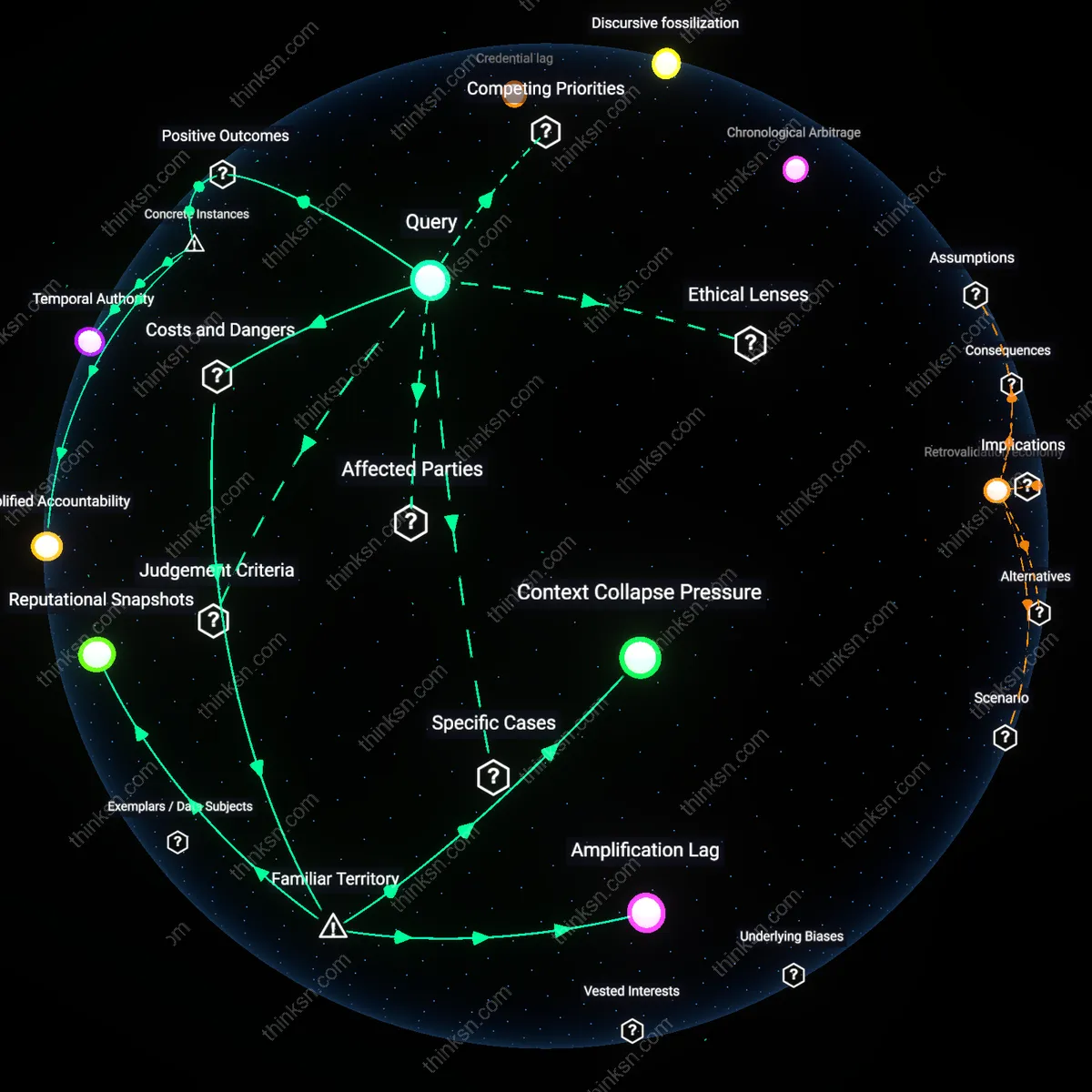
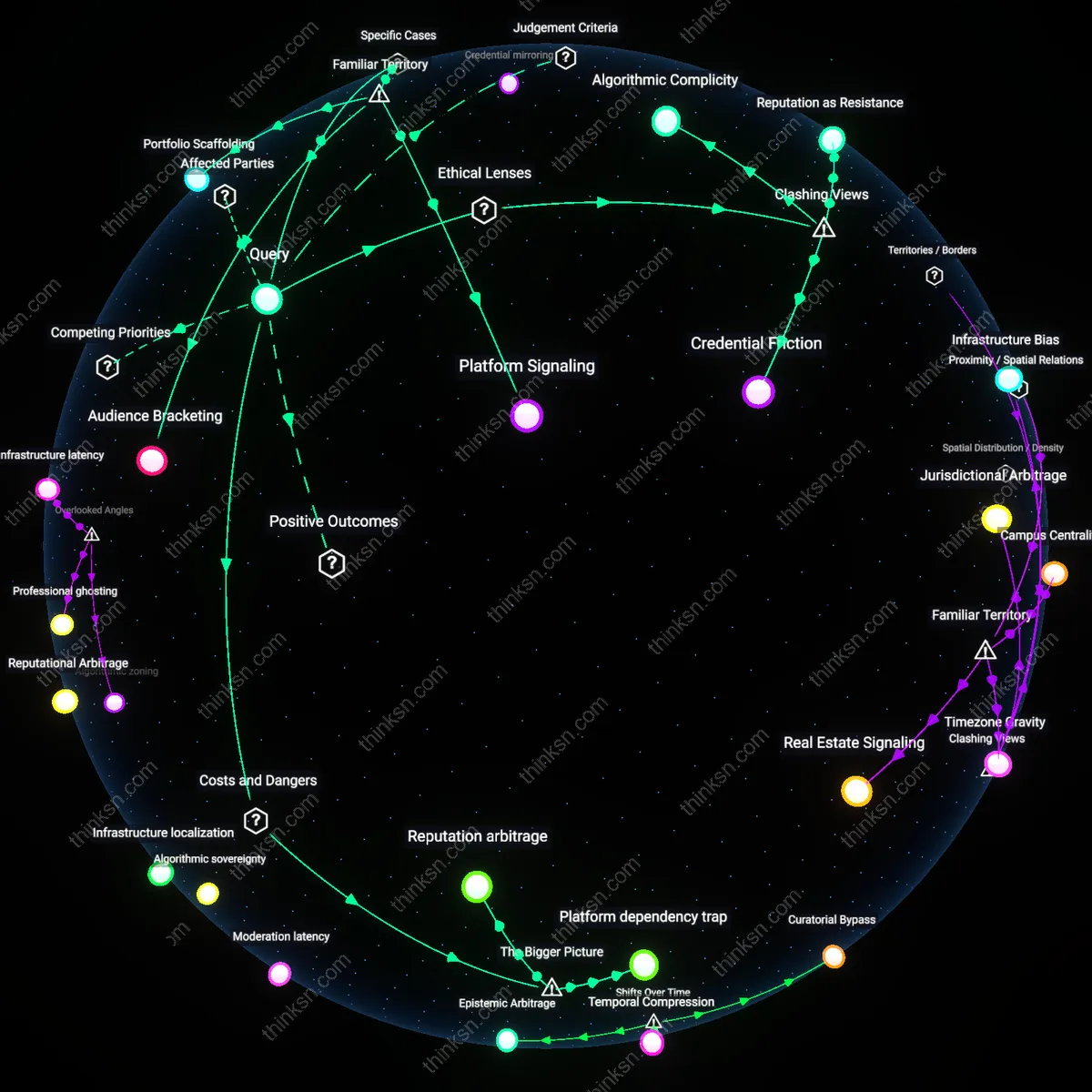
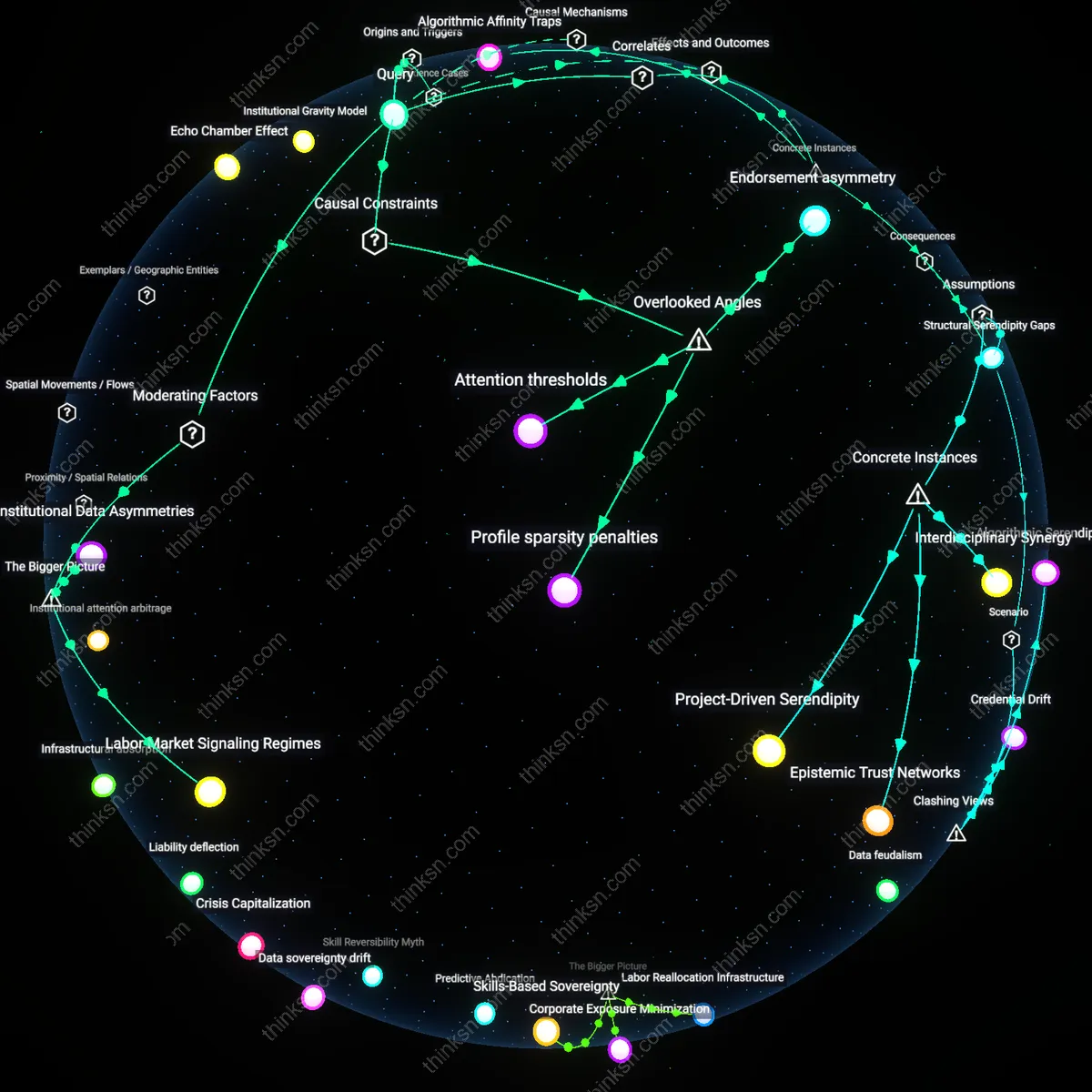
Analysis reveals 9 key thematic connections.
Key Findings
Strategic Identity Fluidity
Frequently changing industries strengthens long-term professional brand by enabling individuals to cultivate strategic identity fluidity, allowing them to reframe past experience as cross-domain insight rather than inconsistency. This reframing is especially effective in innovation-driven sectors like Silicon Valley tech startups or Berlin-based creative agencies, where adaptability signals cognitive agility and resilience. The mechanism operates through narrative capital—professionals who articulate transitions as intentional learning arcs gain credibility with investors, recruiters, and peers seeking boundary-spanning thinkers. This undercuts the dominant assumption that brand coherence requires linear progression, revealing instead that curated discontinuity can be a competitive advantage in knowledge ecosystems valuing disruptive thinking.
Antidisciplinary Leverage
Repeated industry shifts generate antidisciplinary leverage, where professionals accrue unique problem-solving repertoires by applying methodologies from one field to another, often producing breakthrough innovations. For example, a designer moving from automotive manufacturing to medical devices in Shenzhen's hardware ecosystem introduced crash-test simulation techniques to surgical tool development, improving durability metrics. This transfer effect thrives in globally connected innovation clusters where modular knowledge and open prototyping cultures lower barriers to cross-sector application. Contrary to the conventional view that frequent changes erode expertise, evidence indicates that such movement fosters meta-competence—the ability to rapidly decode and integrate new domains—making these individuals disproportionately valuable in hybrid roles at the intersections of emerging technologies.
Epistemic debt
Frequently changing industries systematically accumulates epistemic debt by forcing professionals to rely on superficial, transferable frameworks rather than deep, domain-specific knowledge, weakening their ability to anticipate second-order consequences in new roles. This occurs because each transition compresses learning curves, privileging heuristics over nuanced understanding, and embeds blind spots when individuals replicate mental models across contexts where they don't fully apply—such as applying Silicon Valley growth tactics to healthcare innovation, where regulatory inertia reshapes what 'speed' means. The mechanism operates through cognitive economizing under time pressure, a dynamic overlooked because career advice emphasizes adaptability but ignores the compounding cost of repeatedly skipping foundational learning, which eventually erodes decision quality in complex environments.
Network entropy
Frequent industry changes accelerate network entropy by fragmenting professional relationships into low-cohesion clusters that cannot mobilize quickly during crises or opportunity windows, reducing access to trusted advocates in any single domain. Unlike simple network size, the structural weakness emerges from reduced reciprocity density—contacts in prior industries lose incentive to signal on one’s behalf when career trajectory appears unanchored, and new peers remain cautious about emotional or reputational investment. This condition is exacerbated in tightly coupled fields like defense contracting or academia, where referrals act as gatekeepers, yet it remains hidden because conventional wisdom celebrates 'diverse networks' without accounting for the declining activation energy of weak ties spread too thin across ecosystems with incompatible social logics.
Credibility amortization
Rapid cross-industry movement triggers credibility amortization, wherein each career pivot resets the timeline for reputation accrual without fully preserving prior gains, forcing professionals to repeatedly prove competence in new contexts despite overlapping skills. The mechanism functions through domain-specific trust circuits—such as underwriters in insurance or partners in law firms—who discount external achievements as contextually unproven, effectively erasing portions of accumulated goodwill. This creates a hidden tax on mobility, particularly acute in status-graded fields like finance or biotech, where legitimacy depends on communal endorsement over time; the cost goes unnoticed in mainstream discourse because narratives of 'disruption' and 'reskilling' presume reputational portability, ignoring how much of professional power is locked in unspoken, localized consensus rituals.
Brand Dilution
Frequently switching industries erodes perceived expertise by fragmenting professional identity across disconnected domains. Employers in regulated or hierarchy-driven sectors like banking or healthcare prioritize deep domain-specific knowledge, and a résumé spanning unrelated fields signals unreliability rather than versatility. The non-obvious cost is not lack of experience but the undermining of credibility in systems where trust accrues through linear, legible career arcs.
Adaptability Premium
Repeated industry transitions position professionals as crisis-ready generalists valued precisely for their capacity to navigate uncertainty, as seen in management consulting or disaster response contracting. In rapidly evolving markets like tech or green energy, employers increasingly prioritize situational agility over vertical depth, creating a niche advantage for those who trade specialization for broad pattern recognition. The overlooked dynamic is that volatility itself becomes a credential when framed as deliberate exposure to disruption.
Narrative Burden
Changing industries frequently forces individuals to repeatedly justify career logic, shifting focus from competence to coherence in personal storytelling during hiring processes. In economies where résumés are treated as moral texts—common in Anglo-European labor markets—a disjointed trajectory demands extra rhetorical labor to offset suspicions of flightiness or failure. The unexamined friction is not the moves themselves but their cumulative toll on interpretive trust, requiring candidates to invest disproportionately in narrative repair.
Reputation Fragmentation
Frequently changing industries fractures one’s professional reputation by preventing the consolidation of domain-specific credibility within any single network. In Silicon Valley, serial career-shifters who move from biotech to fintech to cleantech often struggle to gain senior advisory roles because venture capital gatekeepers—such as prominent partners at firms like Sequoia or a16z—prioritize deep ecosystem knowledge over generalist experience. This dynamic is reinforced by investor reliance on tight-knit referral chains and reputation signaling, where proven track records in a given sector act as currency; without sustained presence, even high performers are seen as peripheral. What is underappreciated is that mobility itself can devalue human capital in ecosystems where trust is locally bounded and context-specific.