Is Homeownership Stabilizing for Mobile Tech Pros in Sun Belt Hubs?
Analysis reveals 11 key thematic connections.
Key Findings
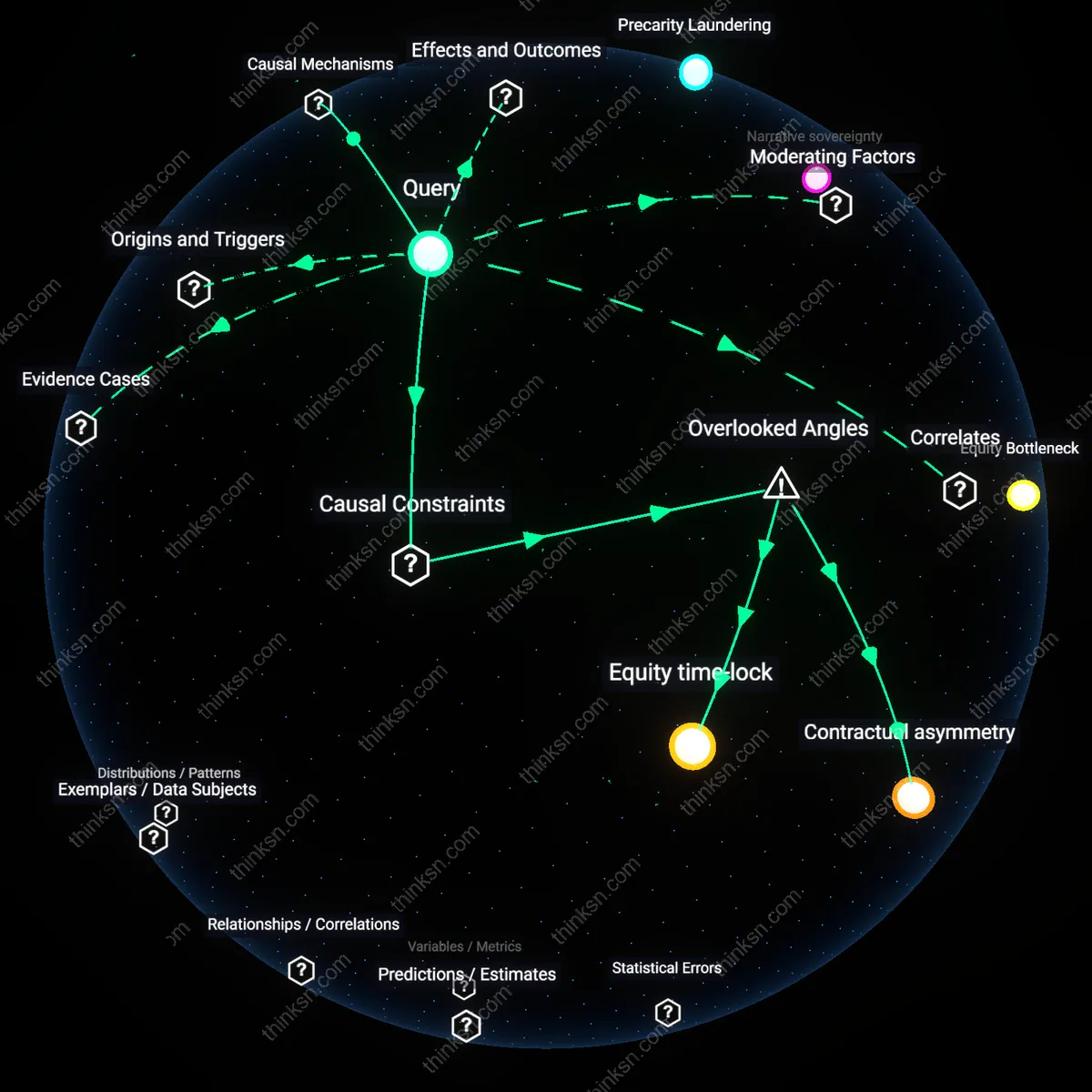
Speculative Anchoring
Homeownership increases financial exposure to regional volatility, making frequent relocations by tech workers a tool to hedge against overcommitment in emerging Sun Belt markets like Austin or Nashville; rather than fostering stability, owning property binds workers to uncertain local economies, and the real utility lies in maintaining liquidity to capitalize on boom cycles across competing metros. This mechanism reveals that the traditional link between home possession and personal stability is inverted for mobile professionals, who gain strategic advantage by avoiding rootedness in policy-incentivized but speculative real estate environments.
Labor Market Arbitrage
Tech workers exploiting frequent moves between Sun Belt cities achieve higher wage growth and equity vesting by resetting compensation packages at each relocation, turning homeownership—which would constrain mobility—into a liability; the positive utility emerges not from residential continuity but from treating cities as transient nodes in a career-maximization chain, where rental flexibility enables faster adaptation to shifting innovation hubs. This undercuts the assumption that ownership-driven stability benefits all workers, exposing instead a new professional norm where instability is productively weaponized.
Infrastructure Exploitation
By renting rather than owning, mobile tech workers extract maximum benefit from publicly subsidized urban infrastructure—such as broadband, transit expansions, and innovation districts—without contributing to long-term community investment, thus accelerating economic dynamism while evading the civic responsibilities of ownership; the result is a form of parasitic urban development where stability is engineered for systems, not individuals, and the value lies in sustained disruption rather than continuity. This reframes homeowner-driven stability as an outdated social contract that hinders optimal resource cycling in rapidly evolving city ecosystems.
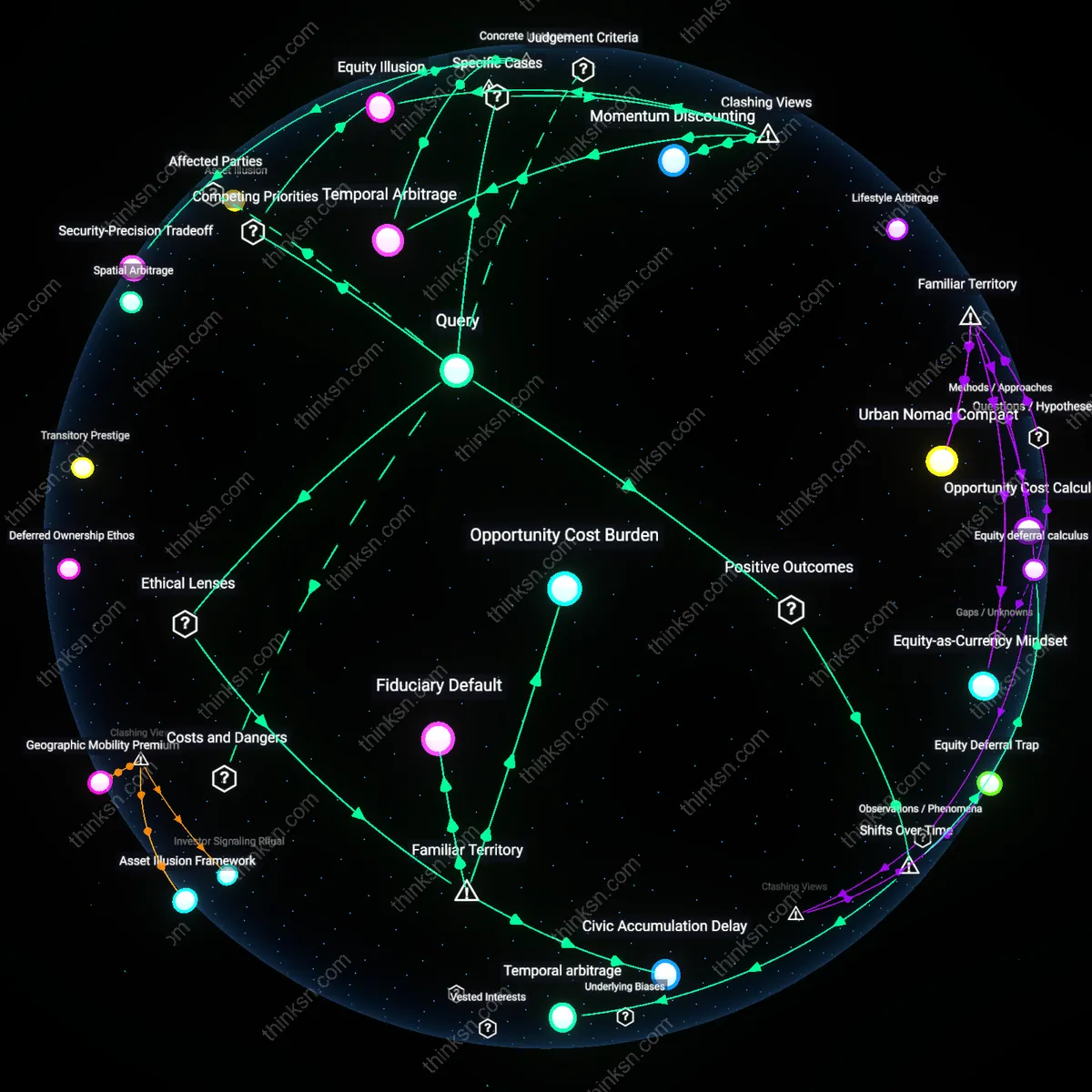
Equity Lock-in
Homeownership destabilizes tech workers who relocate frequently by trapping them in illiquid assets tied to volatile Sun Belt housing markets. When engineers or product managers buy in Austin, Nashville, or Atlanta expecting long-term stability, they often face steep losses or complicated dual-mortgage scenarios when laid off or transferred within 18–24 months — a common cycle in the current tech employment climate. The mechanism is mortgage illiquidity meeting occupational mobility, where the home becomes a financial anchor rather than a safe haven. This undermines the core cultural promise of homeownership as grounding, revealing instead how it can enforce geographic and economic exposure during downturns.
Neighborhood Erosion
Frequent turnover of tech owners in Sun Belt neighborhoods erodes community continuity and weakens local civic infrastructure. As high-income but transient buyers purchase homes not as anchors but as speculative or rotational living sites — common in areas like East Austin or Druid Hills — long-term neighbors observe diminished participation in schools, block associations, or local governance. The system operates through demographic churn undermining social trust, a dynamic often overlooked because homeowners are assumed to be stewards. The non-obvious risk is that ownership without tenure generates the instability it is supposed to prevent.
Debt Exposure
Tech workers who buy homes in Sun Belt cities often leverage high-risk financing to access fast-appreciating markets, exposing them to sharp downside during correction cycles. With home prices in cities like Boise or Phoenix doubling between 2020–2022 and then stalling, many new buyers — especially those on variable-income tech compensation — face negative equity if they must sell prematurely. The dynamic is speculative lending meeting occupational precarity, where the assumed safety of ownership becomes a lever of financial vulnerability. Most fail to anticipate how mortgage commitments magnify job market shocks when mobility is forced rather than chosen.
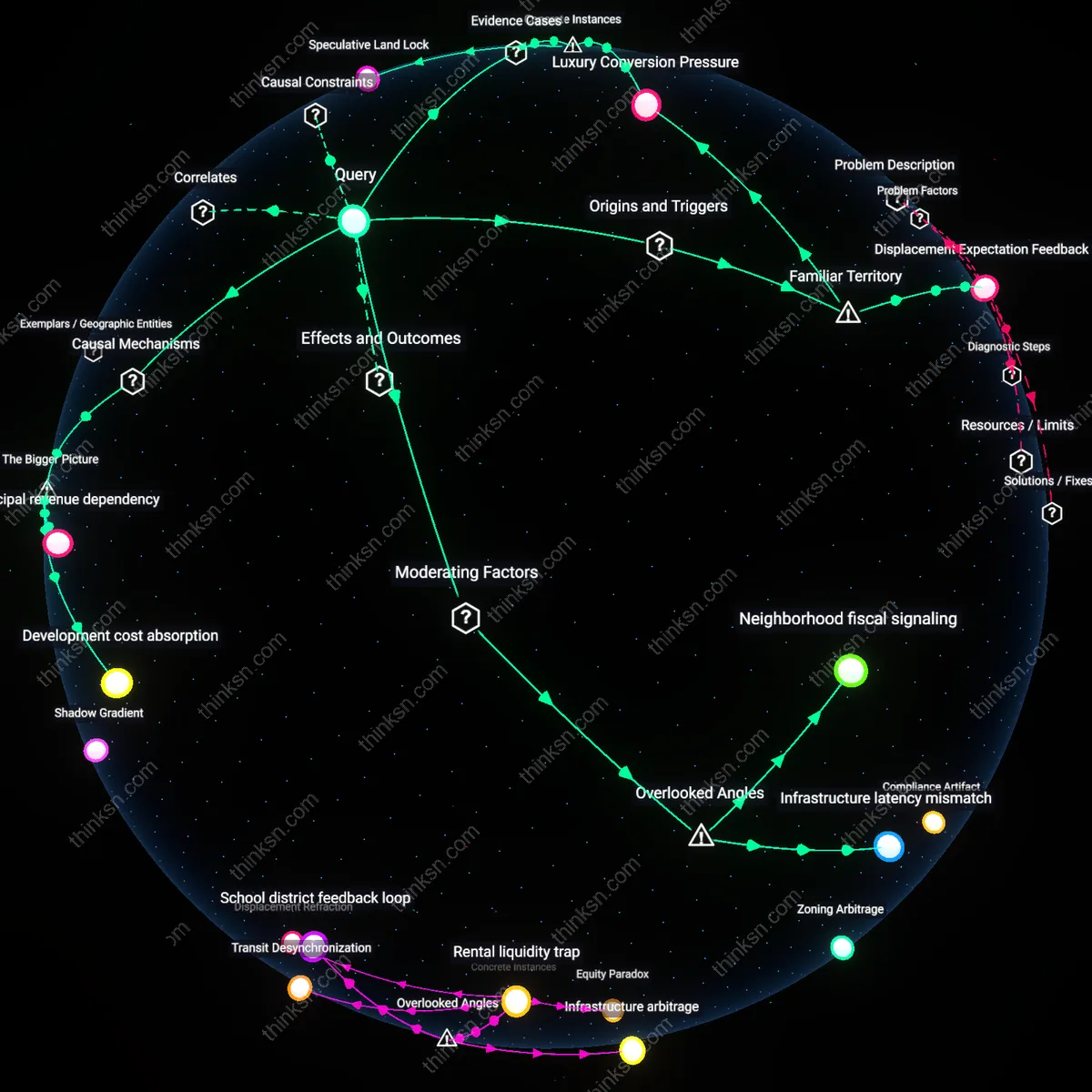
Temporal precarity
Homeownership for tech workers in emerging Sun Belt cities now produces temporal precarity because the stability once tied to property is undermined by the rapid depreciation cycles of speculative urban development. As Silicon Valley spillover drove migration to cities like Austin and Raleigh after 2015, housing markets shifted from long-term residential anchoring to short-term asset flipping, aligning ownership with volatility rather than permanence. The mechanism—venture-fueled urban scaling—rewards mobility and elastic labor, making homeownership a transitional liability rather than a stabilizing force, revealing that the mid-2010s marked a turning point where housing stability became temporally decoupled from tenure.
Spatial arbitrage
For tech workers moving between Sun Belt hubs since the pandemic remote-work surge, homeownership serves not as a commitment device but as a tool of spatial arbitrage, where stability is redefined as financial optionality across locations. Unlike the postwar model in which ownership promoted community embeddedness, the new pattern—exemplified by dual residency, short-term rentals, and equity extraction—treats homes as transferable equity stakes, eroding the norm of place-based continuity. This shift, accelerated by 2020–2022 relocation waves and platform-mediated property management, exposes how stability is no longer measured in duration at a single site but in the velocity of reinvestment across markets.
Infrastructural mismatch
The assumption of stability through homeownership fails tech migrants in Sun Belt cities because the infrastructure enabling their mobility emerged after the 1990s housing finance regime, creating an infrastructural mismatch where legacy systems of property valuation and taxation conflict with fluid professional lives. As tech labor began relocating frequently after the 2010 broadband expansion and agile startup culture took hold, cities like Phoenix and Tampa expanded mortgage access without adapting zoning or school-district continuity, forcing owners into fixed institutional commitments despite transient needs. This misalignment, rooted in the gap between late-20th-century homeownership frameworks and 21st-century labor fluidity, reveals that stability is now institutionally fragmented rather than individually secured.
Asset-backed mobility
Tech workers in booming Sun Belt metros such as Nashville and Phoenix often buy homes not to settle but to leverage equity for future relocations, turning ownership into a tactical financial instrument rather than a stabilizing anchor. Enabled by rising property values and remote work flexibility, these workers treat homeownership as a liquid asset class, using home equity lines or sale profits to fund rapid geographic shifts. The mechanism depends on low-tax, low-regulation real estate markets that appreciate quickly due to in-migration and speculative development. The non-obvious insight is that ownership can facilitate displacement—stability is not of place, but of net worth preservation across moves.
Housing fungibility regime
In emerging tech corridors like Miami and Dallas, the proliferation of standardized, investor-built single-family rentals and cookie-cutter subdivisions enables tech workers to achieve perceived stability without ownership, decoupling home ‘stability’ from tenure. Institutional investors such as Invitation Homes create a de facto condominium-like rental experience with long leases and managed maintenance, mimicking homeownership benefits while retaining flexibility. This system is enabled by Wall Street capitalization of suburban housing and zoning policies that favor tract development over community-rooted design. The overlooked consequence is that stability becomes a service product—not a social or spatial condition—undermining the moral economy of homeownership altogether.