Why the U.S. Asylum Deadline Hurts Trauma Victims?
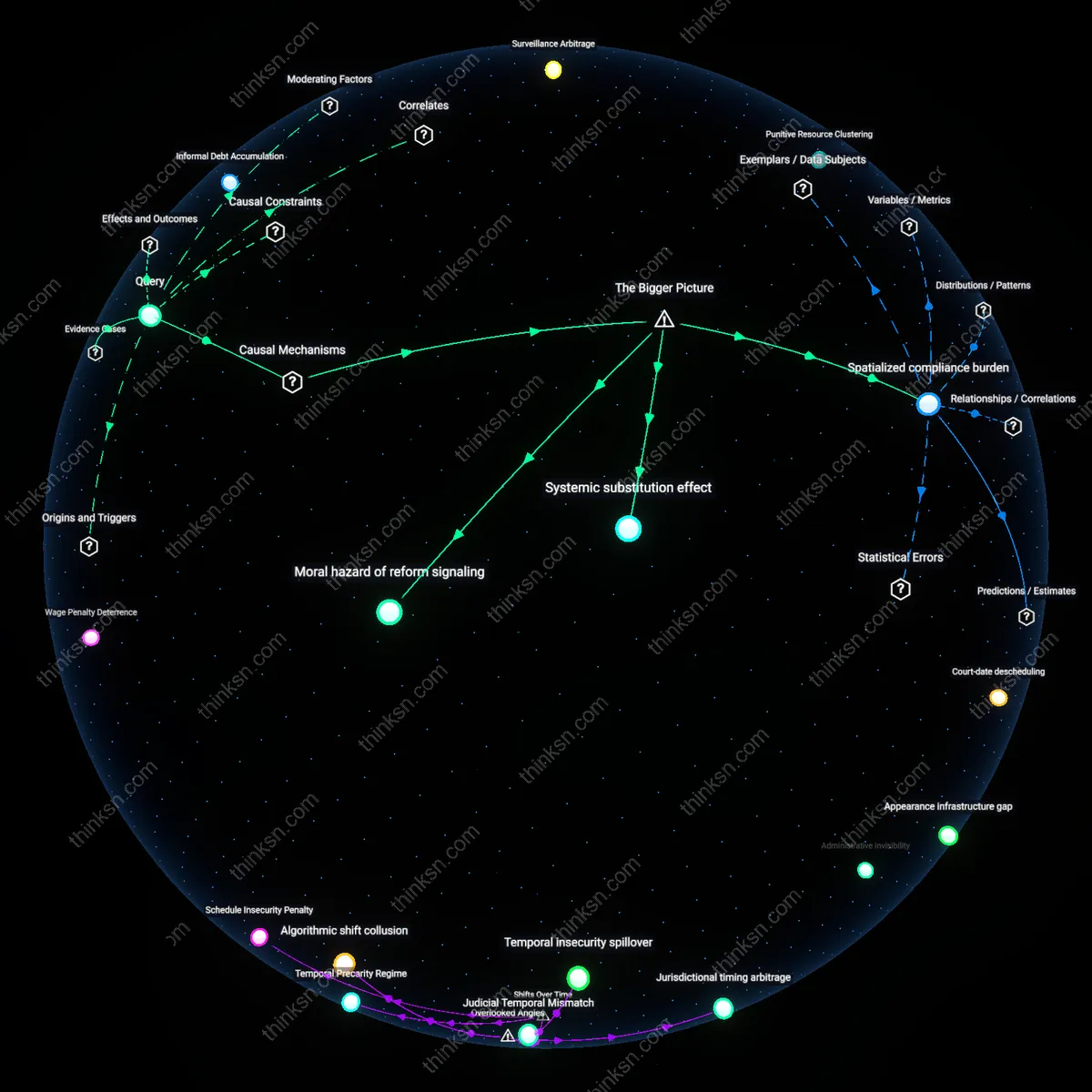
Analysis reveals 11 key thematic connections.
Key Findings
Legislative Backlash Mechanism
The 1996 Illegal Immigration Reform and Immigrant Responsibility Act (IIRIRA) imposed the one-year asylum filing deadline as a direct response to a surge in asylum claims following the fall of the Khmer Rouge and Salvadoran civil conflict, revealing Congress’s strategic use of time-limited eligibility to manage perceived system abuse. U.S. policymakers, particularly in the Republican-dominated 104th Congress, framed rising asylum applications as exploitative despite documented trauma and displacement, embedding the deadline as a deterrent within broader criminalization of irregular entry. This legislative design prioritized border control over trauma-informed adjudication, institutionalizing a procedural barrier that disproportionately affects survivors whose symptoms delay disclosure, such as those with PTSD or dissociative conditions. The non-obvious consequence is that the deadline functions not merely as an administrative rule but as a legislative backlash mechanism—transforming humanitarian exceptions into narrowly policed temporal windows.
Asylum Bureaucratic Latency
In the 2014 Central American child migrant crisis, over 68,000 unaccompanied minors from Honduras, El Salvador, and Guatemala arrived at the U.S. Southwest border, yet fewer than 10% filed asylum applications within one year due to labyrinthine intake procedures managed by ORR and USCIS. These children, many fleeing gang violence and domestic abuse, were dispersed across shelters with inconsistent legal orientation, causing systemic delays in accessing counsel and understanding asylum requirements. The deadline thus interacts perversely with state-administered bureaucratic latency—where government processes meant to protect minors inadvertently generate non-compliance. The overlooked dynamic is that the state simultaneously enforces a rigid deadline while producing the very delays that cause its violation, exposing a self-undermining regulatory cycle.
Trauma-Processing Gap
The one-year asylum filing deadline became a structural filter for trauma legitimacy only after the 1996 Illegal Immigration Reform and Immigrant Responsibility Act institutionalized it, transforming asylum from a protection pathway into a time-bound legal performance that requires survivors to narrate trauma before psychological readiness. This mechanism operates through immigration judges’ reliance on chronological consistency, which interprets delayed disclosure—common in PTSD and complex trauma—as lack of credibility, despite clinical evidence of memory fragmentation and dissociation. The shift from pre-1996 discretionary adjudication to post-1996 procedural rigidity reveals how legal temporality now precedes medical understanding, producing a systemic exclusion of trauma survivors whose healing timelines violate statutory urgency.
Bureaucratic Temporality
The one-year deadline emerged not as a protection safeguard but as a containment device during the post-9/11 securitization of asylum, when the 2001 USA PATRIOT Act and 2002 Homeland Security Act redefined asylum processing as a national security function rather than a humanitarian one. Within this shift, asylum offices adopted time-compliance metrics from enforcement agencies, converting deadlines into performance indicators that deprioritize trauma assessment in favor of case closure. This reconfiguration of humanitarian review into administrative efficiency reveals how trauma survivors are funneled into procedural failure not because their claims lack merit, but because the system's operational logic rewards timely submission over therapeutic truth-telling.
Narrative Prematurity
Prior to the 1980 Refugee Act, asylum was ad hoc and politically mediated, but its formalization created an expectation of immediate testimony, a demand that collided with evolving clinical understandings of trauma disclosure that emerged in the 1990s and 2000s. The systemic impact arises because the deadline compels first disclosures in legal rather than therapeutic settings, where attorneys must file claims before clients have processed or disclosed full narratives, leading to inconsistencies used against them. This misalignment between legal pacing and trauma recovery timelines, intensified by post-2010 restrictions on exceptions, reveals how institutional timelines now precede and override the emergent, nonlinear process of memory integration in trauma survivors.
Bureaucratic Temporal Violence
The one-year asylum filing deadline functions not as a procedural filter but as an active producer of harm by institutionalizing a temporal rupture that contradicts trauma’s nonlinear disclosure patterns. U.S. Citizenship and Immigration Services (USCIS) applies the deadline uniformly despite clinical evidence that survivors of political torture or gender-based violence often repress or delay articulation of traumatic events, rendering the timeline a mechanism of exclusion disguised as neutrality. This reveals how administrative efficiency norms overwrite psychiatric reality, making the deadline not an external constraint but a structuring instrument of epistemic violence—where the state invalidates nonconforming narratives by design, not oversight.
Asylum Capital Formation
The deadline does not simply limit access but redistributes legal survivability according to geographic and economic access to early legal counsel, privileging urban asylum seekers near pro bono hubs like Brooklyn or Los Angeles over rural or detained applicants. This creates a shadow market where timely filing becomes less about individual circumstances and more about proximity to nonprofit infrastructure funded by ephemeral grants or religious networks, turning survival into a form of time-bound capital. The real function of the rule, then, is not border control but stratification—sorting who counts as a ‘believable’ refugee based on structural access to legal formality, not the merit of their claim.
Trauma Aesthetics Gatekeeping
Adjudicators rely on narrow, culturally coded expectations of how trauma ‘should’ manifest—immediate, coherent, emotionally performative—and the one-year rule codifies this bias by presuming delayed testimony signals fabrication. This dynamic privileges litigants who can narrate suffering in linear, Anglo-Western therapeutic idioms while filtering out those whose silence aligns with collective or spiritually framed responses to violence, such as many Indigenous or collectivist communities. Thus, the deadline operates not as a temporal boundary but as a covert aesthetic enforcer, where the state rewards trauma performances that mirror dominant psychological norms, exposing a colonial undercurrent in credibility assessment.
Burden Externalization
The U.S. one-year asylum filing deadline functions as a procedural tool to shift the psychological and bureaucratic burden of trauma disclosure onto survivors, who are then required to prove credible fear within a rigid timeframe. Government agencies such as USCIS and immigration courts uphold this deadline not by assessing mental health capacity but by enforcing administrative compliance, privileging procedural finality over clinical readiness. What is underappreciated in public discourse—despite widespread recognition of trauma—is how the system treats delayed disclosure not as a symptom of injury but as a deficiency in claimant diligence, thereby transforming medical latency into legal failure.
Crisis Containment
The asylum deadline co-occurs with immigration enforcement surges at the southern border, suggesting its role in containing the visibility and duration of migrant crises within manageable bureaucratic windows. Customs and Border Protection and detention centers operate more efficiently when asylum claims are filtered rapidly, even when survivors are in early stages of psychological recovery. While the public links the deadline to 'order' and 'control,' the unexamined corollary is that trauma-induced delays are structurally repurposed to justify expedited removals, effectively using mental health patterns as implicit criteria for exclusion without naming them as such.
Narrative Disqualification
Asylum seekers who miss the filing deadline are systematically disqualified from protection even when their trauma histories are corroborated, reinforcing a cultural assumption that delayed disclosure indicates falsehood. This aligns with courtroom norms in immigration judges’ decisions, where timing of testimony is treated as a proxy for credibility, despite clinical evidence that PTSD and dissociation routinely inhibit timely reporting. The overlooked mechanism is how the legal system adopts folk psychology—equating immediacy with truth—which makes trauma survivors appear deceptive when they are instead neurologically impaired, rendering their narratives illegible rather than delayed.