How Much Funding Pressure Undermines Public Media Impartiality?
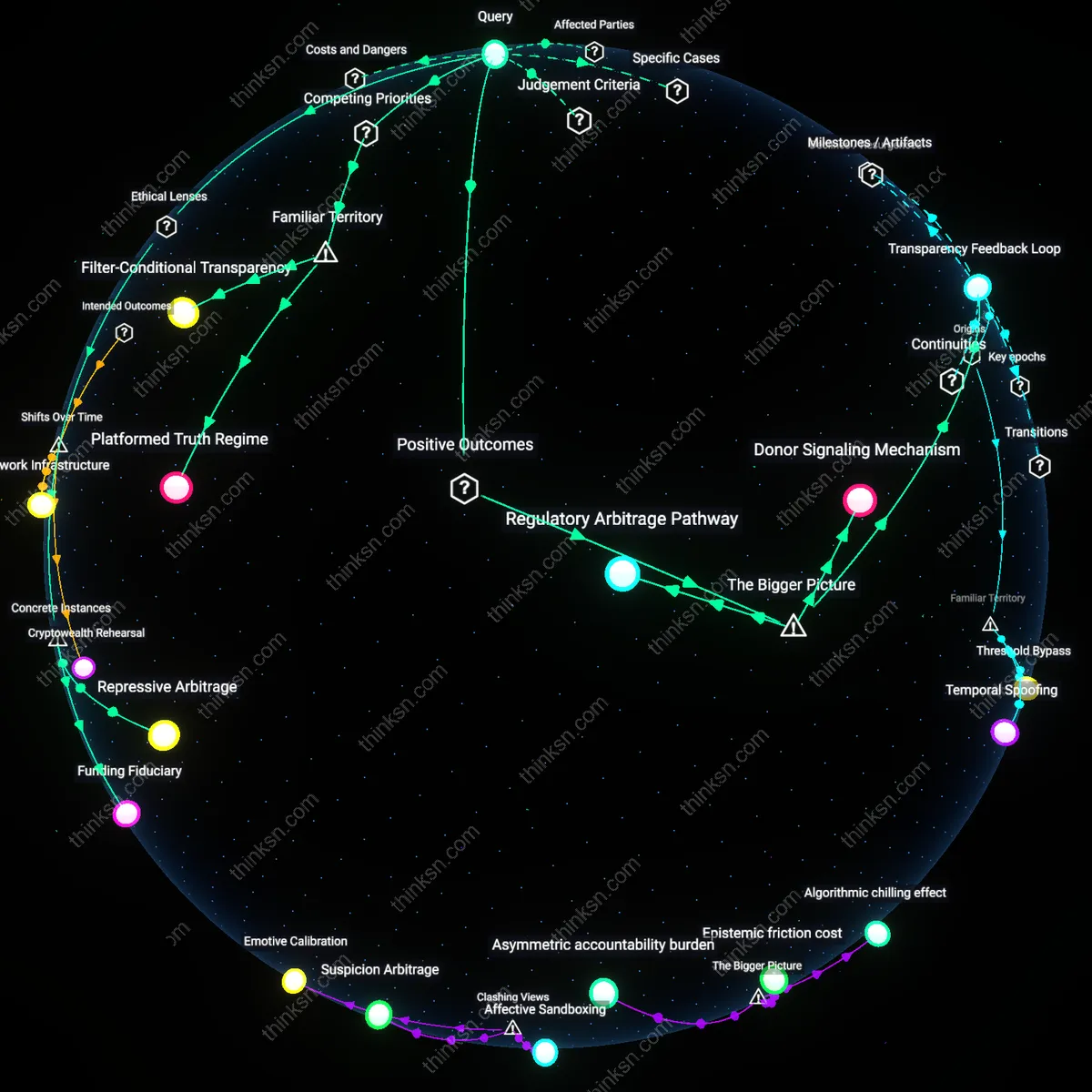
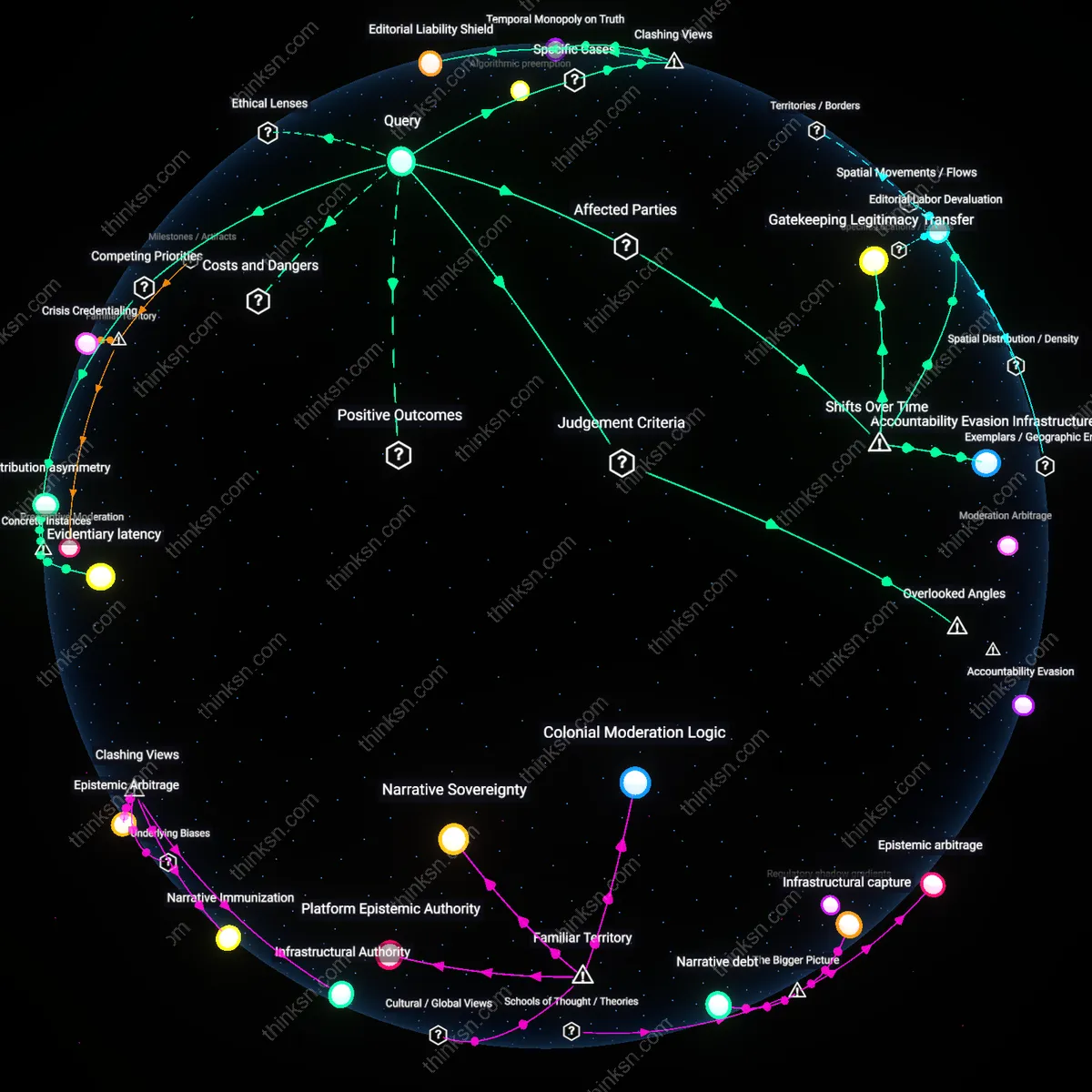
Analysis reveals 9 key thematic connections.
Key Findings
Funding Threshold
Public broadcasters lose impartiality when budget cuts force overreliance on state-directed allocations, because sustained underfunding reconfigures editorial independence into a logistical compromise managed by finance ministries rather than journalistic boards, which embeds political oversight into resource planning; this shift is underappreciated because the erosion appears fiscally technical rather than editorial, masking influence within administrative restructuring rather than overt censorship.
Audience Abandonment
Audiences systematically distrust public broadcasters once funding instability leads to visible programming homogenization, because persistent financial stress pushes management to prioritize audience reach metrics over investigative depth in order to attract supplementary grants or advertising partnerships, which forces content convergence with commercial media; this quiet privatization of public media logic undermines trust not through bias per se but through the unnoticed displacement of civic criteria by engagement-driven efficiency.
Credibility Arbitrage
Public broadcasters experience irreversible impartiality degradation when funding pressures incentivize symbolic displays of neutrality over structural safeguards, because editors begin allocating airtime symmetrically between credible and fringe viewpoints to preempt accusations of bias, thus elevating false equivalence as a survival tactic; this performative balance emerges from political actors weaponizing funding debates to pressure editorial boards, transforming due impartiality into a weaponized norm.
Editorial Redundancy
During the 2003 BBC coverage of the Iraq War, intense political pressure and threats to future licence fee renewal led senior management to cancel a planned Panorama investigation into government manipulation of intelligence—yet the story still emerged through multiple overlapping investigative teams in Radio 4 and Newsnight, preserving critical scrutiny despite top-down constraints. This mechanism of distributed initiative across autonomous programme units within the same broadcaster ensured no single suppression could eliminate adversarial reporting, revealing how decentralized production structures act as a fail-safe for impartiality. The non-obvious insight is that redundancy—not just independence—is what sustains credibility under institutional duress, allowing public broadcasters to absorb political shocks without systemic failure.
Audience Verification Norms
When Canada's CBC faced sharp budget cuts in 2009–2011, it responded by expanding its 'Cross-Country Check-Up' town hall segments and launching a public Editor’s Blog that documented sourcing decisions and addressed viewer criticisms in detail—leading to a measurable rise in audience trust scores by 2012, even as funding per capita declined. By institutionalizing feedback loops that made editorial standards transparent and participatory, CBC turned financial vulnerability into a catalyst for demonstrating accountability, shifting the audience role from passive trust to active verification. The underappreciated dynamic here is that reduced resources, when paired with deliberate transparency, can strengthen rather than erode legitimacy by fostering co-produced credibility.
Regulatory Arbitrage Safeguard
After Poland’s ruling party passed amendments to the public broadcaster’s funding formula in 2016 to favor political allies, TVP’s domestic news division initially complied with pro-government narratives—but its international arm, TVP World, continued broadcasting in English to global markets under EU-based editorial standards to maintain affiliate distribution and ad revenue, inadvertently creating an internal contrast that highlighted slanted domestic reporting. The divergence between domestic and international editorial lines under asymmetric regulatory pressure exposed bias through comparative visibility, enabling domestic audiences to triangulate truth using the broadcaster’s own content. The striking insight is that global-facing units can function as inadvertent integrity anchors, where external compliance requirements create counterweights to internal political capture.
Funding-Conditioned Editorial Drift
Public broadcasters began losing impartiality when core funding shifted from direct state allocations to conditional and performance-based grants starting in the 1980s, particularly under neoliberal reforms in the UK and Canada; this change tied budgetary survival to measurable 'public value' metrics, which incentivized programming that avoided controversial topics to ensure continued funding, thereby embedding risk-averse editorial judgment into institutional logic. The mechanism—funding precarity filtered through bureaucratic evaluation—produced not overt propaganda but a slow erosion of critical reporting, most visible in reduced investigative output on government policy. What is underappreciated is that the shift did not require direct political interference; the mere redesign of fiscal architecture reshaped speech norms from within.
Audience Trust Entropy
Audiences began systematically distrusting public broadcasters once the 24-hour news cycle merged with digital fragmentation in the early 2000s, transforming trust from a default assumption into a contested negotiation shaped by perceived institutional defensiveness; as broadcasters increasingly justified their existence through audience ratings and social media engagement, they adopted reactive, self-legitimizing communication that mirrored partisan media, undermining their epistemic authority. This shift—from being heard because they were mandated to being heard because they competed—meant trust was no longer structurally conferred but continually eroded by the very strategies meant to preserve it, revealing a paradox where institutional survival tactics accelerated legitimacy loss.
Legitimacy Arbitrage
Impartiality in public broadcasting degraded irreversibly when public service remits were leveraged as political capital during constitutional crises, such as during Brexit debates in 2016–2019, where broadcasters were compelled to prove neutrality through hyper-visible balance, distorting coverage by granting proportionate airtime to marginal views; this marked a shift from impartiality as an internal editorial standard to a publicly performative ritual vulnerable to strategic manipulation by well-resourced external actors. The danger was not censorship but the inflation of equivalence, where the need to demonstrate neutrality in real time corrupted journalistic judgment—a systemic cost that rewired public perception of fairness itself.