Can Modern Antitrust Win Against Social Giants Like Microsoft Did?
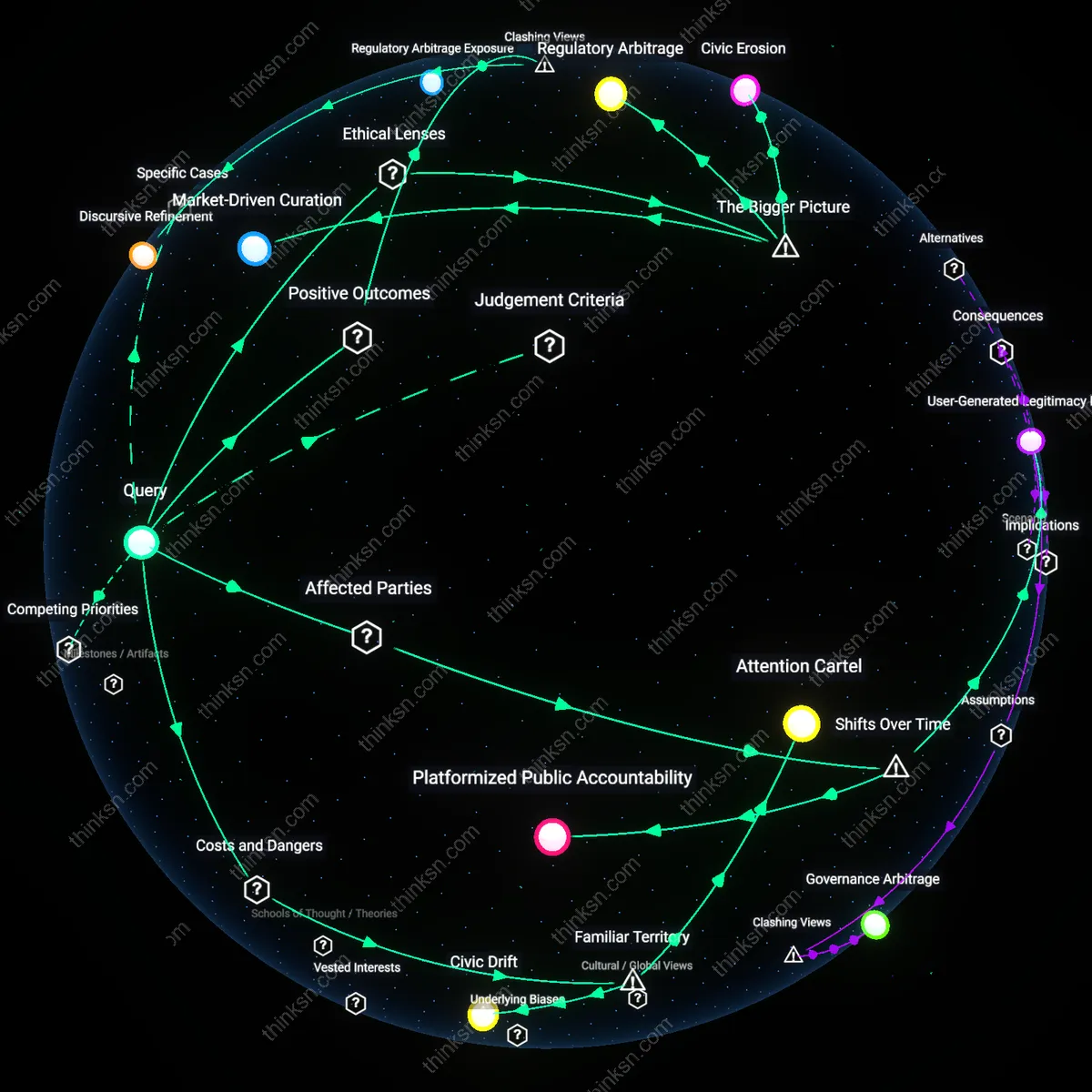
Analysis reveals 11 key thematic connections.
Key Findings
Regulatory Lag
The Microsoft antitrust case suggests that antitrust actions against today's social media platforms are unlikely to succeed in real time because regulatory mechanisms operate on a temporal scale mismatched to digital market evolution. The U.S. v. Microsoft case unfolded across the 1990s, culminating in a remedy that arrived only after Netscape’s irrelevance was already entrenched and the internet economy had shifted toward services Microsoft didn’t dominate—demonstrating that enforcement timelines lag behind market-relevant windows. This delay reveals that antitrust, structured as a reactive legal process, cannot preemptively disrupt platform dominance in fast-moving digital epochs, making successful intervention appear ex post and often inconsequential. The non-obvious implication is that the 'success' of antitrust is misjudged by legal outcomes rather than market impact, which is where it fails.
Infrastructure Capture
The Microsoft case misleads when applied to social media because it assumed dominance was tied to executable code installed on devices, whereas today’s platforms exert control through behavioral data flows and algorithmic curation that are invisible to traditional antitrust scrutiny. In the 1990s, tying Internet Explorer to Windows was a visible, static integration that courts could dissect as a bundling violation; in contrast, social media platforms like Facebook or TikTok embed themselves as default information conduits through continuous network effects and personalized engagement systems that evolve in real time. This shift from product-based monopolization to ecosystem-based capture means that conventional remedies—like forced unbundling—would fail to dismantle entrenched influence. The friction here is that dominance is no longer about owning a product category but about commanding user attention cycles continuously, a form of infrastructural control invisible to precedent-based law.
Judicial Scripting
Antitrust actions against social media platforms are unlikely to succeed because courts rely on narrative templates forged in industrial-era cases, and the Microsoft trial reinforced a script where monopolists are punished for exclusionary deals and technical barriers, not cognitive capture. The 1990s case centered on explicit contractual coercion—like pressuring OEMs not to install rival browsers—providing a clear villainous arc courts could endorse; today’s platforms dominate by shaping user behavior through interface design and algorithmic nudges, mechanisms that lack contractual intent but produce de facto exclusion. Because judicial legitimacy depends on coherent, blame-attributable stories, these subtle, systemic manipulations evade condemnation despite equivalent market entrenchment. The overlooked point is that antitrust outcomes depend less on economic harm than on whether the wrongdoing fits a legally legible plot—rendering modern dominance structurally immune to remediation.
Behavioral Entrenchment
In the 1990s, Microsoft's dominance was anchored in the distribution and bundling of software through ownership of a closed operating system, whereas today’s social media platforms exercise control through continuous user engagement and behavioral data accumulation, a shift that reconfigures monopoly from a static architecture to a dynamic process. This transition from product-based exclusion (e.g., blocking Netscape in Windows) to attention-based capture (e.g., algorithmic feed manipulation on Facebook) means that traditional remedies like divestiture or access mandates fail because the core asset—real-time user behavior—is not separable from the platform’s operational logic. The underappreciated point is that the nature of monopolistic entrenchment has moved from technical integration to continuous experiential integration, rendering past remedies structurally obsolete.
Jurisdictional Drift
The Microsoft case was adjudicated primarily within national legal boundaries—the U.S. Department of Justice and later the European Commission acting on regional market distortions—whereas today’s social media platforms operate algorithmic infrastructures that instantaneously shape mass behavior across sovereign territories, creating a jurisdictional mismatch in enforcement capacity. As platform power evolved from software licensing to influence over public discourse and electoral dynamics, the locus of accountability has drifted beyond the scope of any single regulatory body, particularly as enforcement mechanisms remain anchored in 20th-century conceptions of market geography. The critical shift is that monopoly power has become deterritorialized, exposing how antitrust governance has not kept pace with the transnational operational tempo of algorithmic platforms.
Regulatory Imprinting
The Microsoft antitrust case established a precedent that dominant platform providers cannot leverage their control over operating systems to suppress competition in adjacent software markets, a principle that today’s social media platforms challenge by embedding content distribution, identity, and advertising into singular, closed ecosystems. This continuity reflects how regulatory memory—shaped by the 1990s enforcement action—creates institutional templates for identifying abuse of gatekeeping power, particularly when dominant firms integrate backward or forward into complementary services. The non-obvious insight is that regulators do not approach today’s cases from first principles but through cognitive frameworks hardened by the Microsoft precedent, making structural remedies more conceivable despite superficial technological differences. The mechanism is path dependency in antitrust interpretation, where past litigation shapes what future violations look like, even across disparate technological eras.
Attention Arbitrage
Unlike Microsoft, which controlled distribution through ownership of a computing platform (Windows), today’s social media platforms exercise dominance by monetizing user attention at scale through algorithmic curation and behavioral data extraction, a shift that undermines traditional antitrust metrics like price and market share. This transformation in value creation—where the product is behavioral prediction and the market is human attention—renders conventional remedies like forced interoperability or divestiture insufficient, as the core mechanism of control lies in data network effects and machine learning feedback loops, not API access or bundling. The underappreciated dynamic is that market power now flows through cognitive infrastructure rather than software architecture, implicating advertising ecosystems, surveillance capitalism, and real-time personalization systems that were marginal in the 1990s. The enabling condition is the rise of a data-driven feedback economy that escapes the boundaries of classical market definition.
Political Foothold
The success of the Microsoft antitrust case was contingent on a specific alignment between federal regulators, state attorneys general, and independent software developers who could credibly argue harm under existing doctrines of product tying and market foreclosure—a coalition that does not yet coalesce around social media due to fragmented grievances and weak countervailing institutions. Today, would-be challengers—including creators, journalists, and app developers—lack both juridical clarity and collective leverage, while platforms have deepened their political entrenchment through lobbying, campaign finance, and framing their governance as essential to national discourse and security. The crucial divergence is that structural enforcement requires not only legal grounds but a politically viable injury narrative, which has yet to crystallize for social media despite widespread dissatisfaction. The systemic trigger is the absence of a coherent challenger bloc capable of translating user discontent into enforceable antitrust standing, leaving regulatory action dependent on episodic scandals rather than sustained institutional pressure.
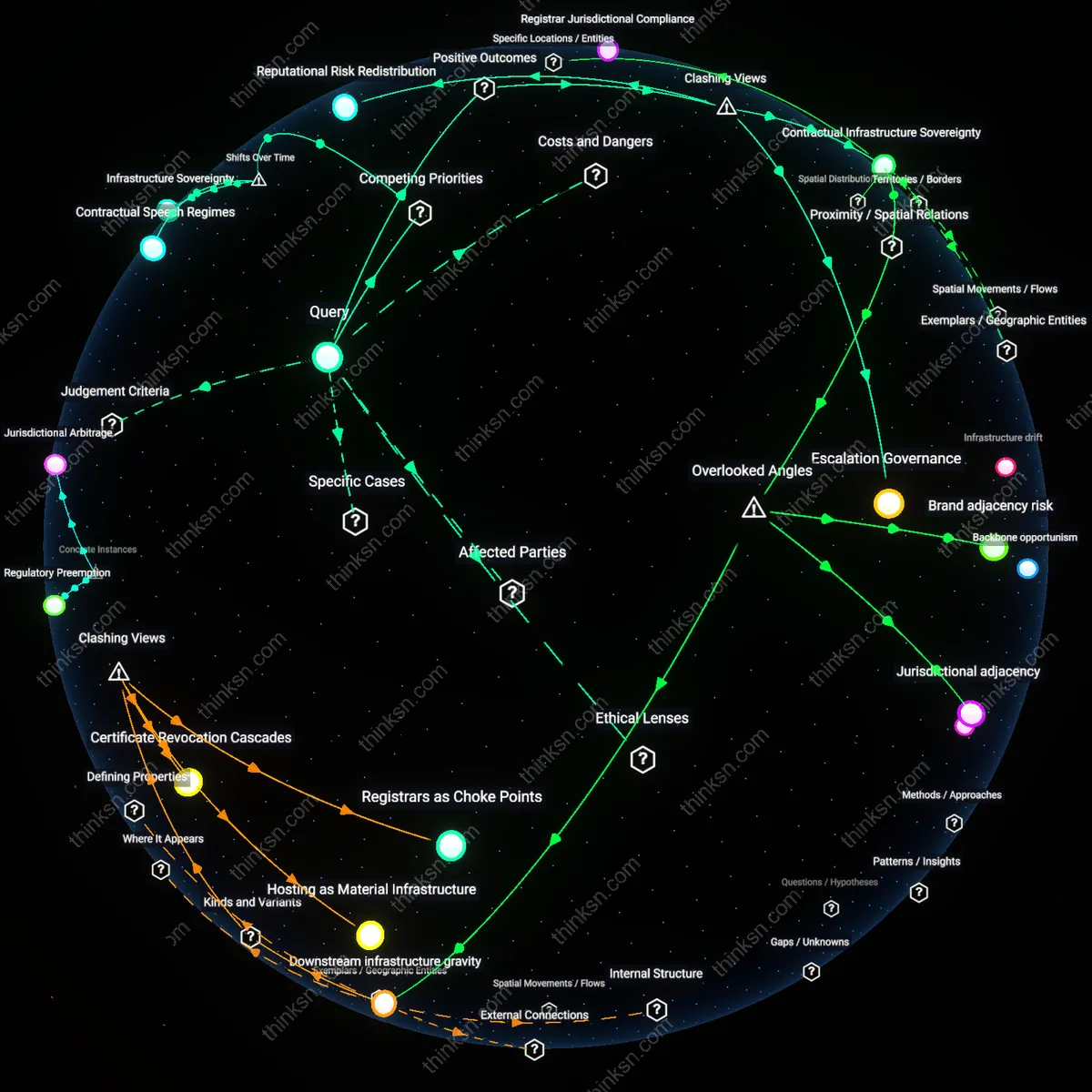
Judicial forum selection
The strategic choice of judicial venue by the Department of Justice—specifically, filing the Microsoft antitrust case in the U.S. District Court for the District of Columbia rather than a more tech-specialized or industry-familiar jurisdiction—was decisive in shaping the case’s procedural fate and outcomes. This venue, historically central for regulatory battles, lacked established precedent in software architecture disputes, allowing judges to interpret ‘monopolization’ without constraints from technical norms, which amplified the perception of Microsoft’s browser integration as anticompetitive rather than innovative. Most analyses focus on substantive antitrust doctrine or market definitions, yet the underappreciated variable is how the unremarkable administrative act of filing location conferred interpretive freedom to the judiciary, enabling expansive rulings that might not have survived in courts with deeper technological literacy; today’s social media platforms, by contrast, face litigation frequently initiated in Northern California federal courts, where judges are institutionally habituated to pro-innovation tech interpretations, thus lowering the likelihood of similarly aggressive remedial orders. Judicial forum selection is the residual concept that explains a hidden procedural vulnerability in legacy antitrust enforcement that current platforms now structurally avoid.
Product bundling semantics
The successful prosecution of Microsoft hinged not on the fact of Windows-Internet Explorer integration per se, but on the government’s ability to redefine a technical feature—default browser inclusion—as an act of coercive bundling in a context where ‘free’ software had no accepted pricing baseline. Regulators exploited ambiguity in what constituted a ‘separate product,’ arguing that OEMs could not remove IE despite no explicit charge, thereby framing integration as exclusionary rather than efficiency-enhancing. Today’s social media platforms embed features like messaging, marketplace, or identity systems not as purchasable add-ons but as unified technical architectures, making it harder to replicate this rhetorical move—yet overlooked is how the semantics of ‘bundling’ depend on legacy pricing schemas that do not map cleanly to data-driven, zero-marginal-cost ecosystems. This shifts the leverage point from economic structure to linguistic categorization, where the absence of historically discrete pricing units in social media weakens the analogical power of the Microsoft case. The residual concept is product bundling semantics—the contested naming of integrated functions as either inseparable technical necessities or artificial market distortions.
Developer ecosystem dependency
Antitrust traction against Microsoft grew because independent software vendors (ISVs) and web developers actively lobbied for interoperability and API access, creating a visible, organized constituency that validated claims of harm from browser entrenchment—this coalition functioned as a proxy for consumer injury in an era where user activism was structurally mediated through technical gatekeepers. In contrast, today’s social media platforms face no equivalent organized developer countermovement, as app ecosystems are either fully proprietary (e.g., Instagram) or so fragmented (e.g., third-party tools on Facebook or X) that no unified voice exists to substantiate antitrust narratives with on-the-ground technical grievances. The overlooked dynamic is that successful antitrust outcomes depend less on market concentration metrics than on the existence of a politically mobilized intermediary class whose operational survival depends on platform openness—something markedly absent in current digital social environments. Developer ecosystem dependency, as a residual concept, reframes antitrust viability as contingent on the presence of institutional allies within the tech ecology rather than solely on regulatory will or market dominance.