When Fighting Health Insurance Denials Becomes a Costly Gamble?
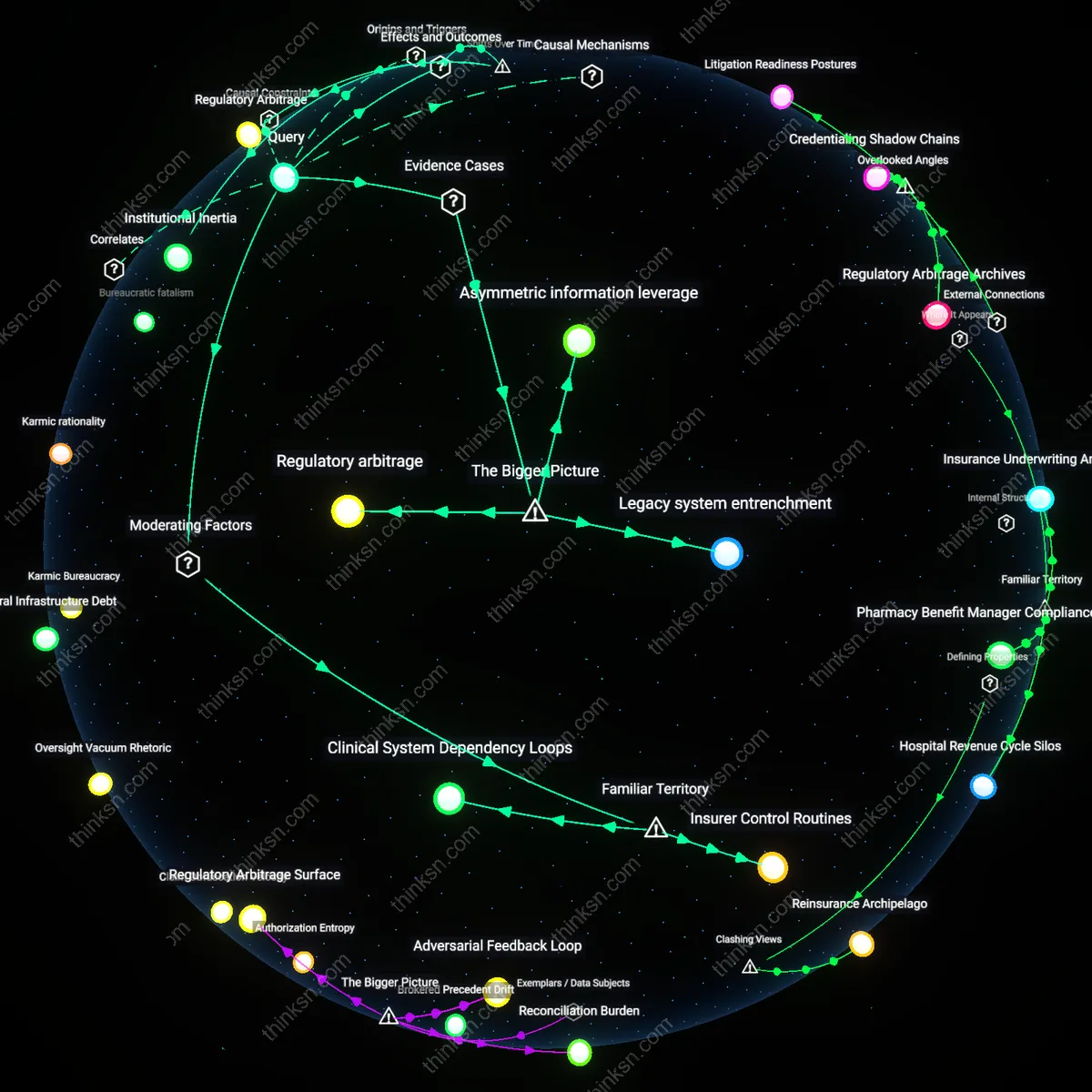
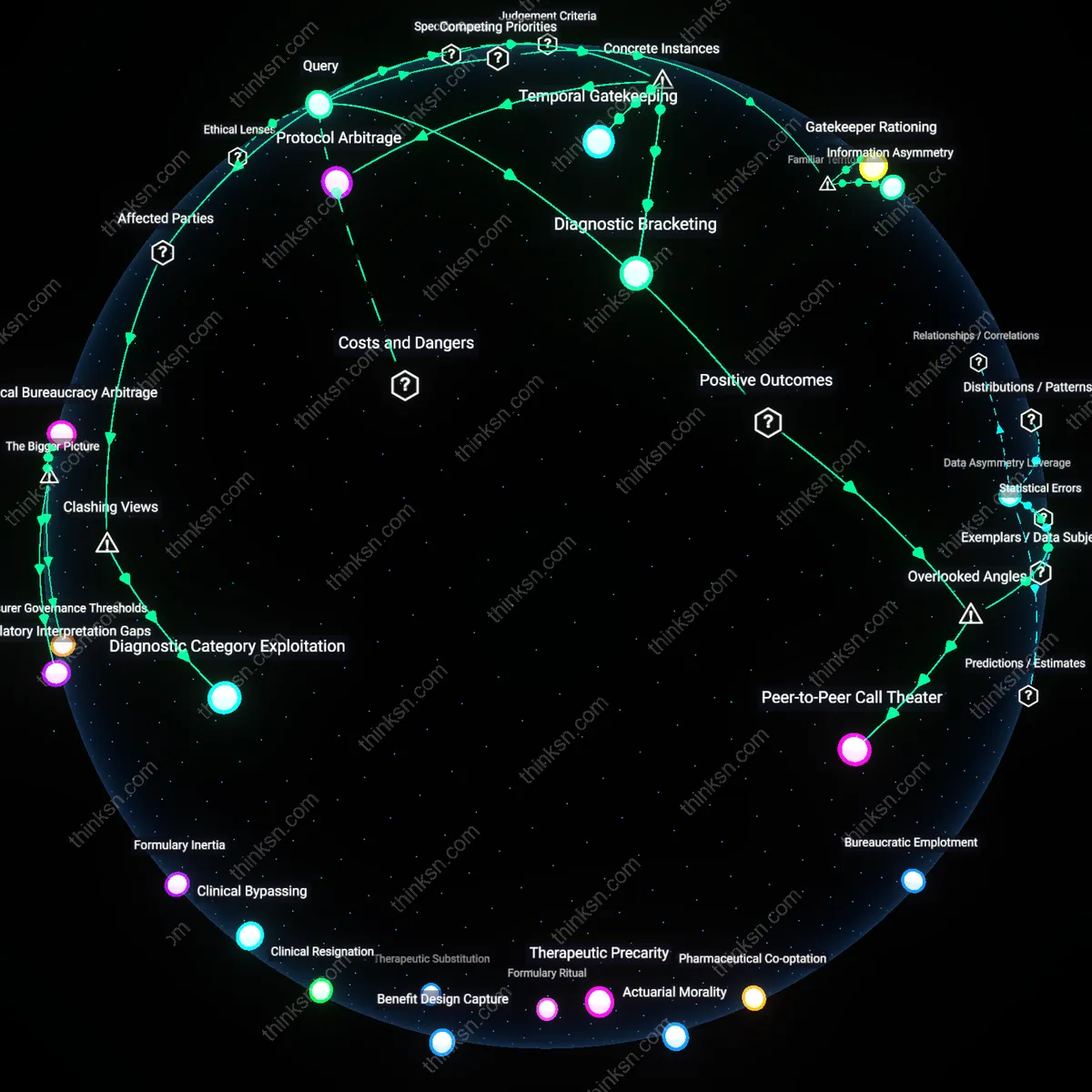
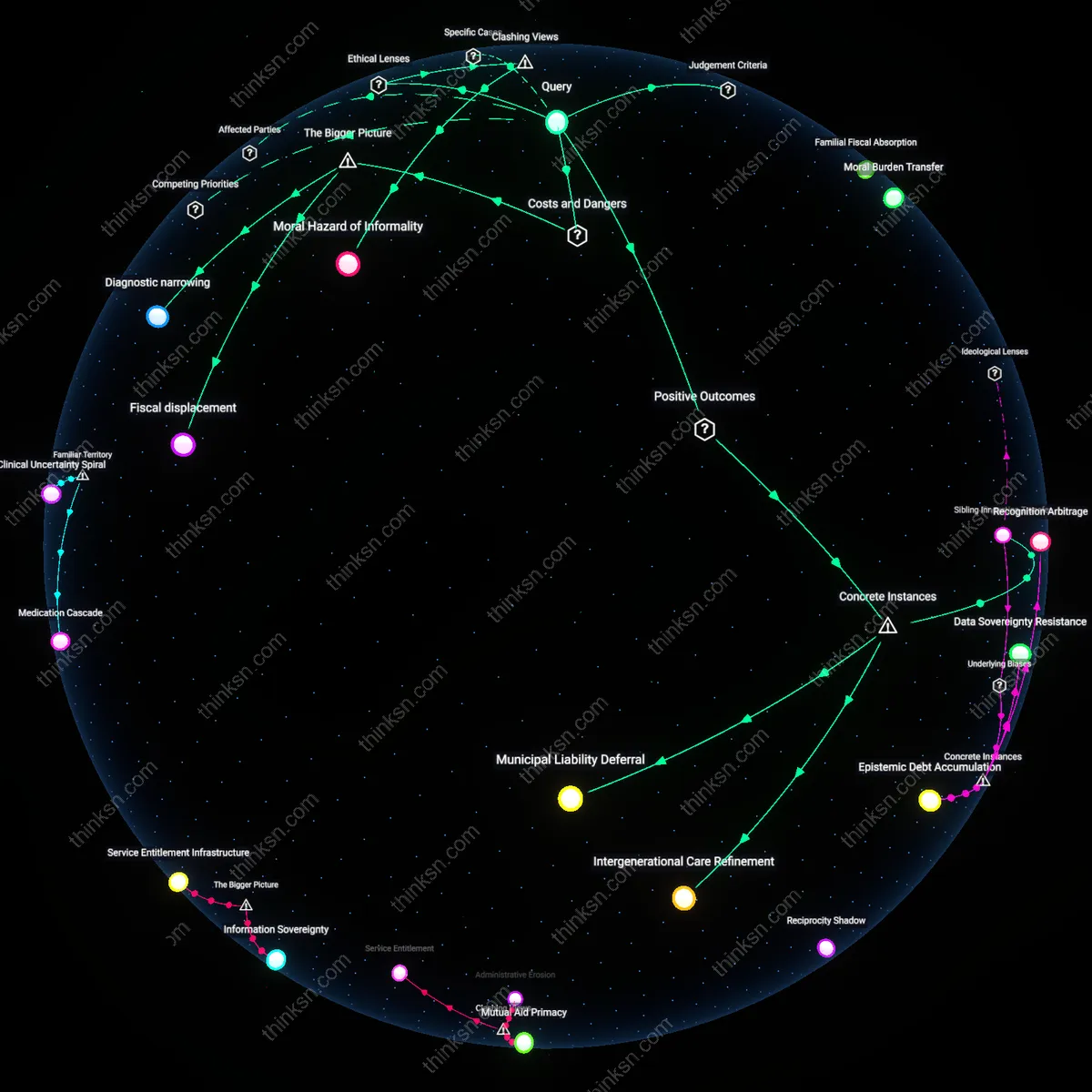
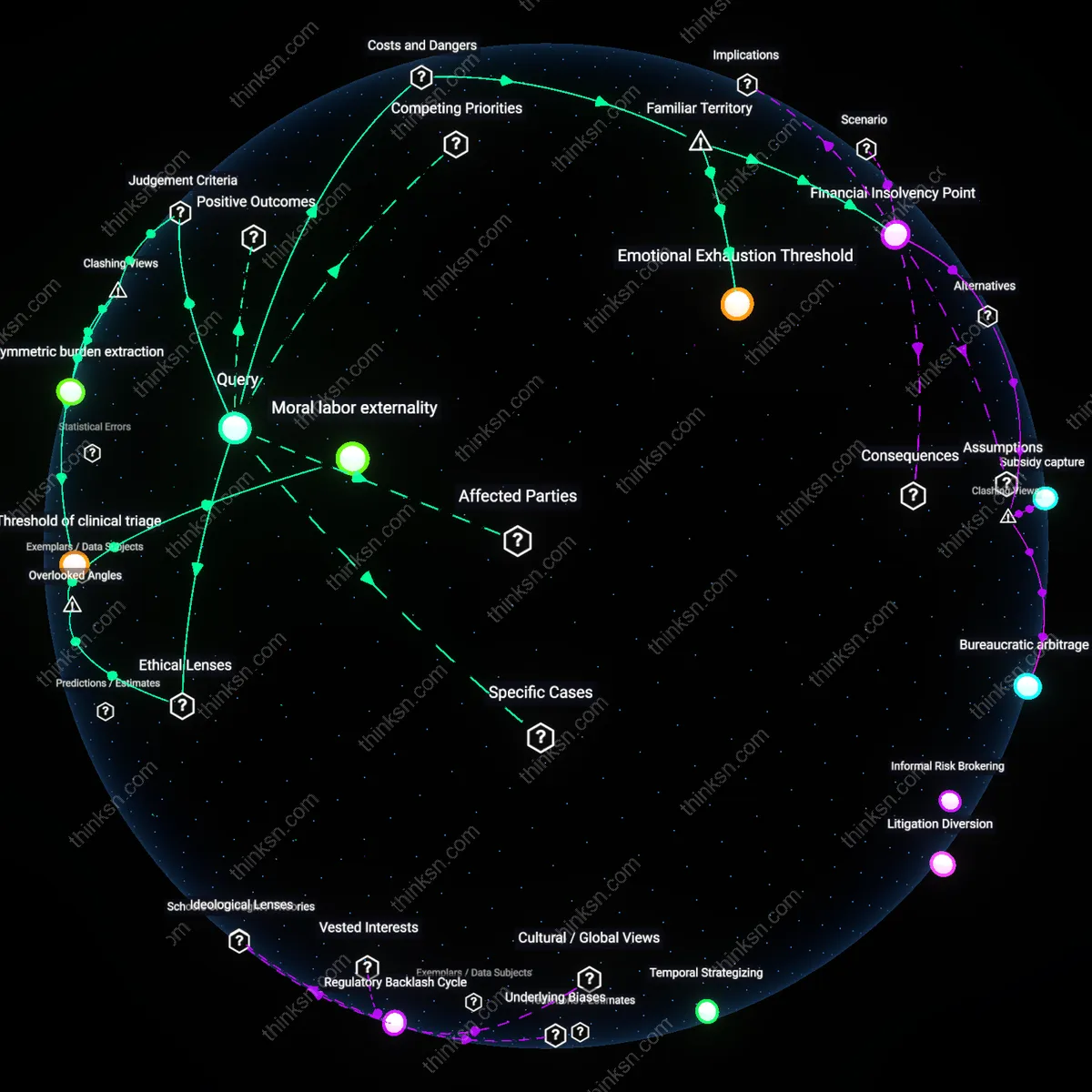
Analysis reveals 7 key thematic connections.
Key Findings
Threshold of clinical triage
Challenging a health insurance denial becomes rationally justifiable only when the patient's case falls within the threshold of clinical triage, where a reviewing medical board identifies a plausible, non-anecdotal pathway of therapeutic benefit that aligns with phase II trial benchmarks, because insurers and institutional review boards operate through shared epistemic standards for what counts as 'promising' data, and patients who engage appeals outside this threshold are not appealing a coverage decision but contesting the foundational epistemology of medical evidence itself—a costly and structurally unwinnable position masked as administrative advocacy.
Asymmetric burden extraction
It is rational to challenge a denial when the mechanism of appeal forces the insurer into procedural exposure—where each submitted appeal incrementally raises the company’s administrative and reputational costs across a cohort of similar cases—because in markets like the U.S. private insurance system, individual appeals aggregate into actuarial risk for insurers via CMS reporting and state-level rate review regulations, turning personal effort into an invisible subsidy for systemic inefficiency; this reframes the 'rational' actor not as someone pursuing personal benefit but as a node in a distributed cost-transfer scheme that exploits regulatory opacity, a dynamic obscured by the dominant narrative of patient empowerment.
Temporal privilege of deterioration
A challenge becomes resource-rational when the patient has already entered a state of measurable clinical deterioration that post-dates the initial denial, because progression creates a temporally privileged evidentiary position—new biomarkers or functional declines—rendering the original denial objectively outdated under the insurer’s own resubmission protocols, and this pivot from advocacy to evidence-based recalculation leverages the medical system’s procedural fetishism for updated documentation over lived experience, revealing that success often hinges not on moral claim but on strategic timing disguised as medical inevitability.
Emotional Exhaustion Threshold
Challenging a health insurance denial becomes irrational when the caregiver’s emotional stamina collapses under prolonged bureaucratic engagement. Families confronting rare diseases often enter multi-month appeals processes that demand precise documentation, coordination across specialists, and repeated justification of medical necessity—tasks that accumulate psychic toll disproportionate to outcome likelihood. The system leverages predictable emotional commitment, making persistence feel morally obligatory even as success probability diminishes. This threshold is rarely acknowledged in public discourse, which celebrates fighting the system without quantifying the mental health cost of sustained confrontation.
Financial Insolvency Point
The challenge ceases to be rational the moment out-of-pocket litigation costs—legal consultants, independent medical reviews, couriered records—threaten household solvency. Middle-income families pursuing CAR-T therapy or gene-based treatments often liquidate retirement accounts to fund parallel appeal infrastructures while maintaining premium payments. Insurers structure denials around high-upfront cost barriers, knowing that few can sustain concurrent medical and administrative spending. This insolvency point operates silently within the logic of high-deductible plans, where the appearance of coverage access masks the reality of financial infeasibility, a contradiction rarely surfaced in patient empowerment narratives.
Moral labor externality
Challenging a health insurance denial becomes rationally justifiable when the caregiver's unseen emotional and temporal burden—what is typically dismissed as personal resilience—is systemically exploited to substitute for institutional ethical action. This occurs because appeals processes in private insurance regimes function as mechanisms of moral labor displacement, wherein families absorb the procedural and psychological costs of contesting care denials, effectively performing unpaid ethical work that insurers and regulators avoid. The non-obvious dimension is that the rationality of appeal is not solely determined by clinical or financial probability of success, but by whether the distribution of moral labor crosses a threshold of invisibility and normalization—where the system depends on private individuals to sustain the appearance of ethical responsiveness without structural reform. This shifts the ethical evaluation from individual perseverance to collective cost-shifting.
Precedent capture risk
It is rational to contest a denial when the treatment, though labeled 'experimental,' operates within a diagnostic category where insurer precedents are actively being formed—such as ultra-rare genetic disorders treated at specialized academic centers like those in the NIH’s Undiagnosed Diseases Program. From a consequentialist-utilitarian standpoint grounded in rule utilitarianism, individual appeals can instrumentally shape future coverage norms because insurers and Medicare often retroactively adjust policies based on clusters of successful appeals in emerging disease categories. The hidden dependency is that early adopter patients implicitly function as de facto policy litigants whose cases reduce systemic uncertainty, thereby lowering future transaction costs for population-level access. Most analyses ignore that the rationality of challenge lies not in personal benefit but in reducing normative ambiguity for subsequent patients.