Is an Insurers Experimental Label on Cancer Drugs Legitimate?
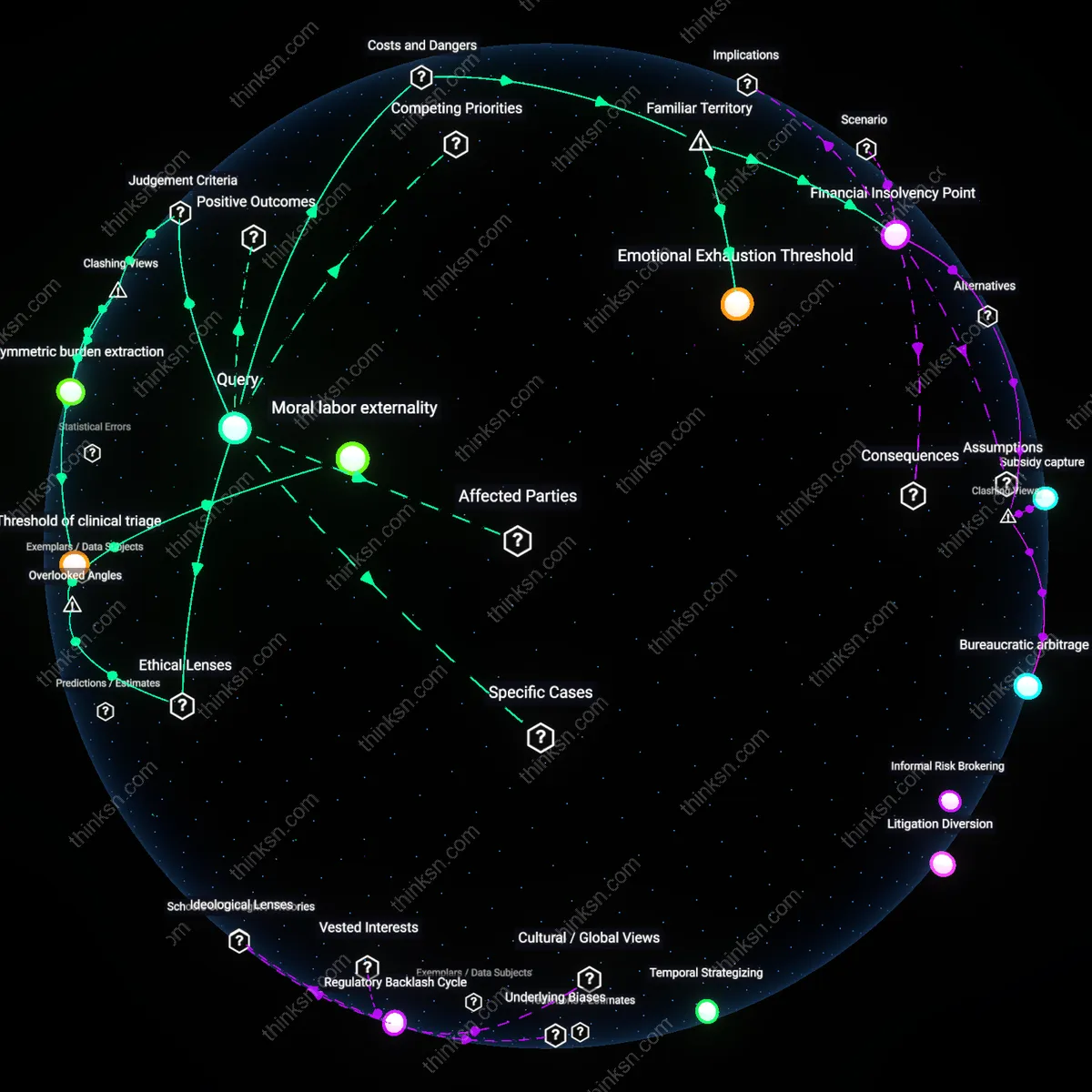
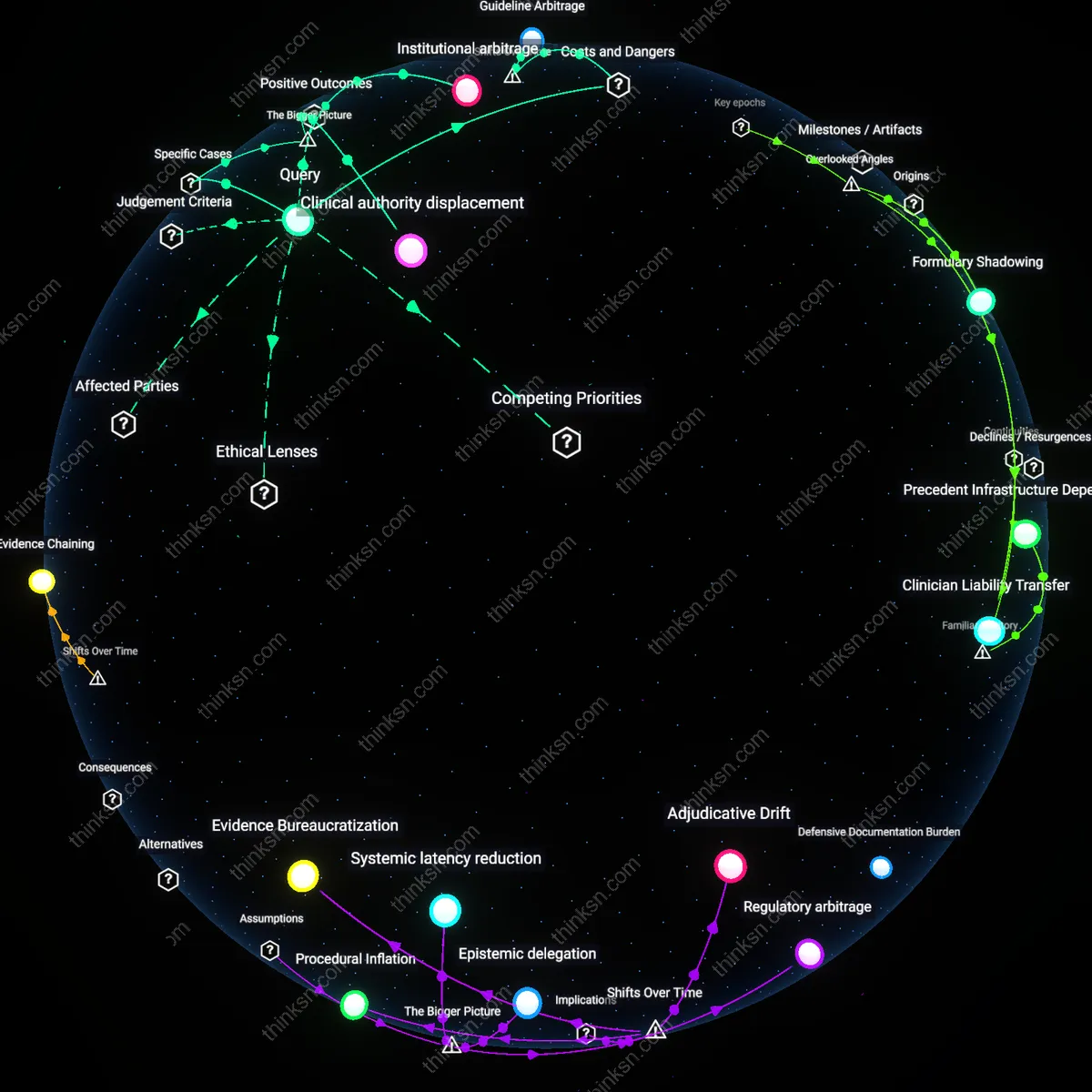
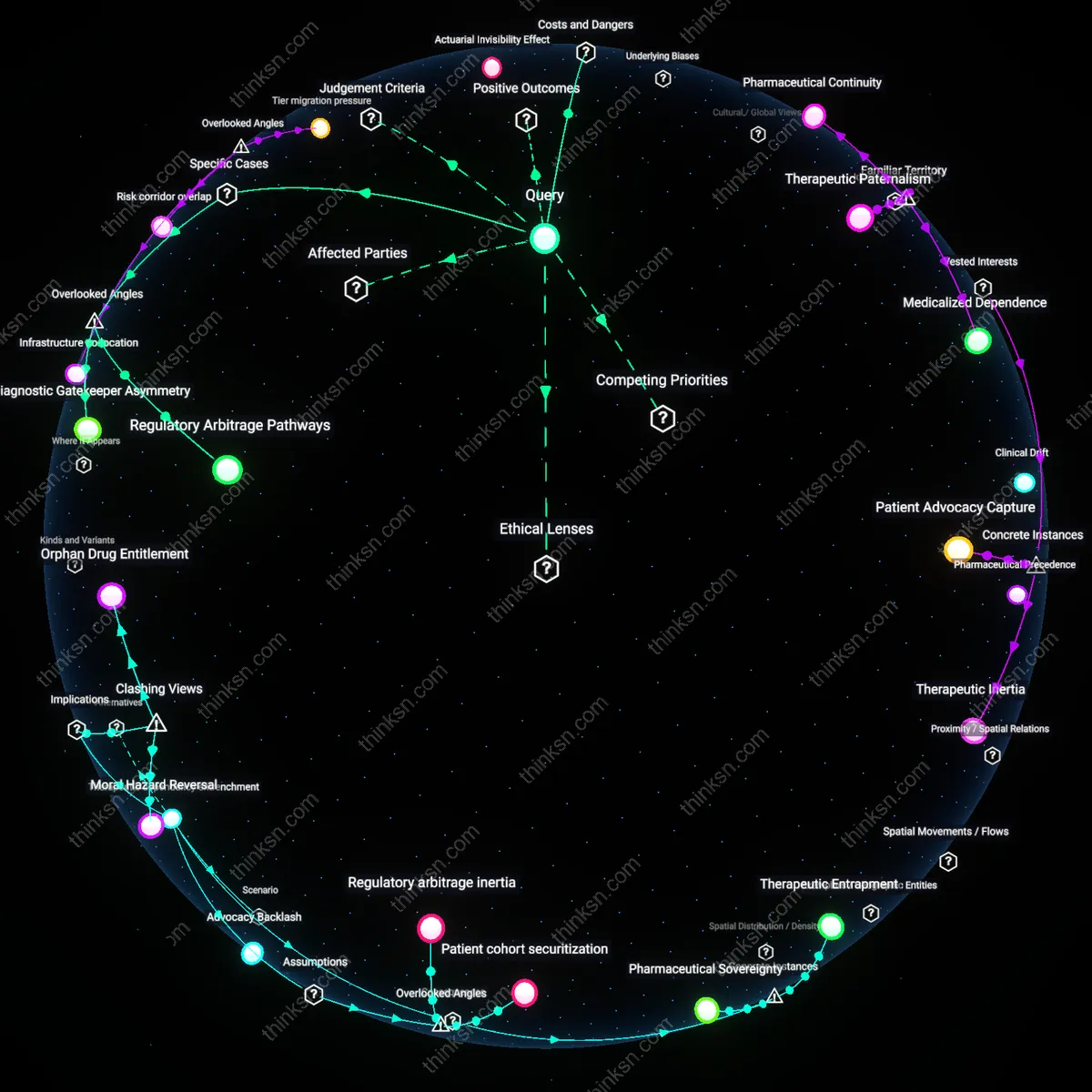
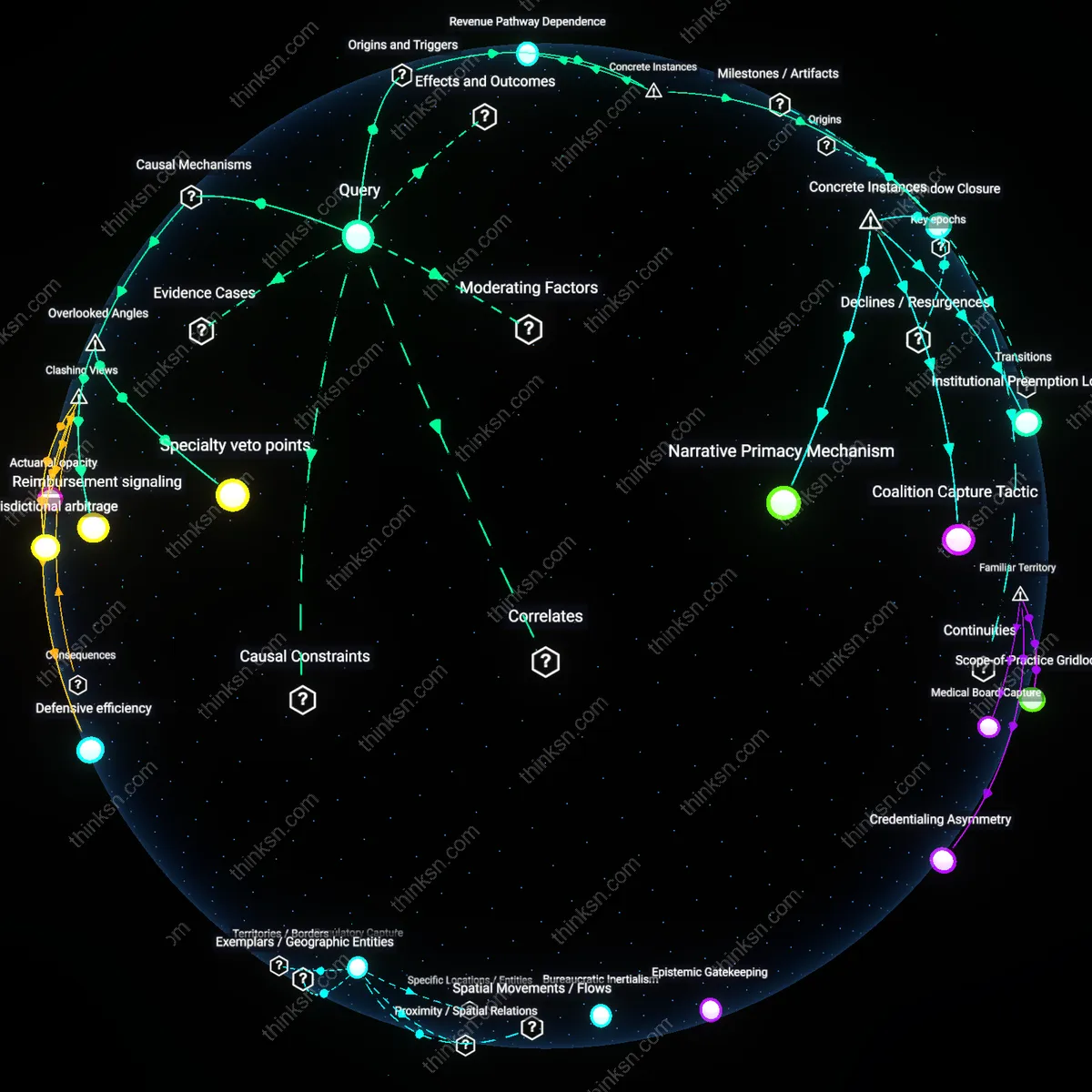
Analysis reveals 12 key thematic connections.
Key Findings
Regulatory Arbitrage
Patients can identify insurers' misuse of 'experimental' designations by tracking discrepancies between FDA approval status and insurer coverage policies, because pharmaceutical manufacturers often secure FDA approval based on accelerated pathways while insurers retroactively classify these same drugs as experimental to avoid reimbursement, operating through the misalignment between regulatory and payer risk assessment frameworks. This mechanism reveals that 'experimental' is not a fixed scientific category but a negotiable label deployed asymmetrically across institutions, with insurers leveraging procedural ambiguity to contain costs even when clinical evidence meets federal standards. The non-obvious insight is that the conflict does not stem from scientific uncertainty but from institutional forum shopping, where payers exploit gaps between regulatory authorization and coverage logic.
Epistemic Bureaucracy
Patients can detect cost-driven 'experimental' rulings by analyzing the composition and deliberation patterns of insurer utilization review boards, because these internal committees often lack independent oncologic expertise and instead rely on proprietary algorithms calibrated to financial risk models rather than clinical trial outcomes, embedding economic logic within ostensibly medical decision-making structures. This reveals that the designation functions as a bureaucratic ritual that disguises fiscal constraints as methodological rigor, where 'evidence' is operationally defined by actuarial thresholds rather than peer-reviewed consensus. The underappreciated reality is that these boards produce not medical judgment but administratively legible justifications, transforming therapeutic innovation into a compliance category subject to internal rate-setting.
Therapeutic Gatekeeping
Patients can recognize cost-avoidance masquerading as scientific caution by monitoring off-label prescribing patterns among National Comprehensive Cancer Network (NCCN) recognized regimens, because insurers frequently deny coverage for drugs labeled 'experimental' despite their inclusion in NCCN guidelines—evidence that the determination overrides consensus oncology standards in favor of internal cost-effectiveness thresholds. This exposes a hidden hierarchy in cancer care where payer policies silently supplant clinical authority, using 'experimental' as a disciplinary tool to restrict access even when professional societies affirm therapeutic benefit. The counterintuitive dynamic is that the term functions less as a descriptor of innovation and more as a gatekeeping mechanism that preserves financial control under the guise of evidence-based medicine.
Coverage veto logic
Patients can interpret an insurer's 'experimental' designation as a procedural deflection that shifts evidentiary burden onto institutional validation systems like Medicare’s Coverage with Evidence Development or FDA expanded access programs, where private insurers de facto align with public risk-aversion standards to justify non-coverage; this mechanism allows insurers to frame cost containment as scientific caution, leveraging the public trust in regulatory rigor while avoiding direct confrontation over rationing, a dynamic that is rarely transparent to patients navigating treatment options under time pressure.
Therapeutic legitimacy contest
Patients often rely on advocacy networks—such as disease-specific foundations or pharmaceutical patient support programs—that actively reframe 'experimental' drugs as medically necessary through storytelling, survivor testimonials, and appeals to moral urgency, thereby challenging insurer designations not through data alone but through socially legitimated narratives that resonate more strongly than clinical uncertainty in public consciousness; this reflects the widely recognized cultural power of personal experience over statistical evidence in health decisions, especially when institutions are perceived as indifferent.
Asymmetric expertise covenant
Patients implicitly depend on oncologists to translate both clinical evidence and insurance politics, assuming physicians will challenge unjust denials—a trust rooted in the social expectation that doctors act as counterweights to corporate constraints—but this relationship obscures how providers are often complicit in or constrained by prior authorization systems, leading to underreported instances where medical authority defers to payer rules without formal protest, revealing a hidden alignment between clinical practice and financial governance.
Epistemic Sovereignty
Patients in Indigenous communities of Aotearoa (New Zealand) may interpret an insurer's 'experimental' label as a continuation of colonial exclusion from biomedical legitimacy, wherein Māori knowledge systems like mātauranga medicine are structurally dismissed despite intergenerational efficacy—this perception reframes cost-driven denials as part of a broader system where Western clinical trials serve as gatekeepers of epistemic legitimacy, reinforcing a hierarchy in which evidence is only valid if it conforms to Eurocentric scientific norms; the residual concept identifies the power to define what counts as evidence as a sovereign act within global health governance.
Litigious Deterrence
In the U.S. healthcare context, insurers' designation of a cancer drug as 'experimental' is shaped by liability avoidance in a litigation-prone system, where preemptive classification forestalls coverage mandates even when preliminary data suggest efficacy—this mechanism is amplified by the dominance of private insurance firms for whom judicial exposure outweighs actuarial risk, making 'evidence' thresholds malleable tools of financial forecasting rather than clinical assessment; the residual concept reveals how legal culture indirectly regulates medical coverage by incentivizing conservative classifications to evade courtroom accountability.
Hierarchical Altruism
In Japan, insurers and regulatory bodies often delay labeling cancer drugs as covered due to a collectivist ethic that prioritizes population-level evidence over individual access, meaning 'experimental' designations persist not purely for cost control but to uphold a social contract demanding demonstrable benefit across cohorts before distribution—this reflects a systemic preference for consensus-derived data shaped by cultural norms of group harmony and institutional restraint, where early access risks are seen as ethically disruptive to societal trust in medical governance; the residual concept captures how altruistic rationing becomes a legitimizing principle enabling prolonged evidence demands.
Reimbursement Gatekeeping
Patients can identify insurers' 'experimental' designations as cost-saving tactics when prior authorization protocols shift to incorporate comparative effectiveness reviews after the 2010 Affordable Care Act, because private payers began adopting Medicare’s evidentiary benchmarks not to improve care but to legally insulate denial rationales through standardized templates managed by pharmacy benefit managers, revealing that post-2010 risk-adjusted payment models turned clinical evidence into a liability shield rather than a quality standard.
Commercial Delay Inertia
Patients can detect insurer resistance to non-experimental classification when drugs approved under FDA’s Accelerated Approval pathway post-1992 face prolonged payer non-coverage despite confirmatory trials, because private insurers exploit the lag between regulatory leniency for high-unmet-need cancers and their own slower evidence assimilation cycles, exposing how the 1990s HIV activism–induced regulatory flexibility inadvertently created a dual-track system where therapeutic urgency benefits manufacturers but not access when payers invoke 'evidence development' to defer payment.
Clinical Utility Arbitrage
Patients can recognize 'experimental' labels as financial constructs when insurers exclude biomarker-defined subpopulations from coverage even after FDA approval in those groups, because between 2015 and 2020, the rise of tumor-agnostic therapies like pembrolizumab revealed that traditional payer evidence hierarchies rooted in population-level trial data systematically undervalue real-world genomic evidence, making narrow interpretation of 'clinical utility' a temporally contingent barrier that emerged alongside precision oncology to preserve actuarial predictability at the cost of individualized benefit.