Travel Bans on Reproductive Services: Threat to Interstate Travel Rights?
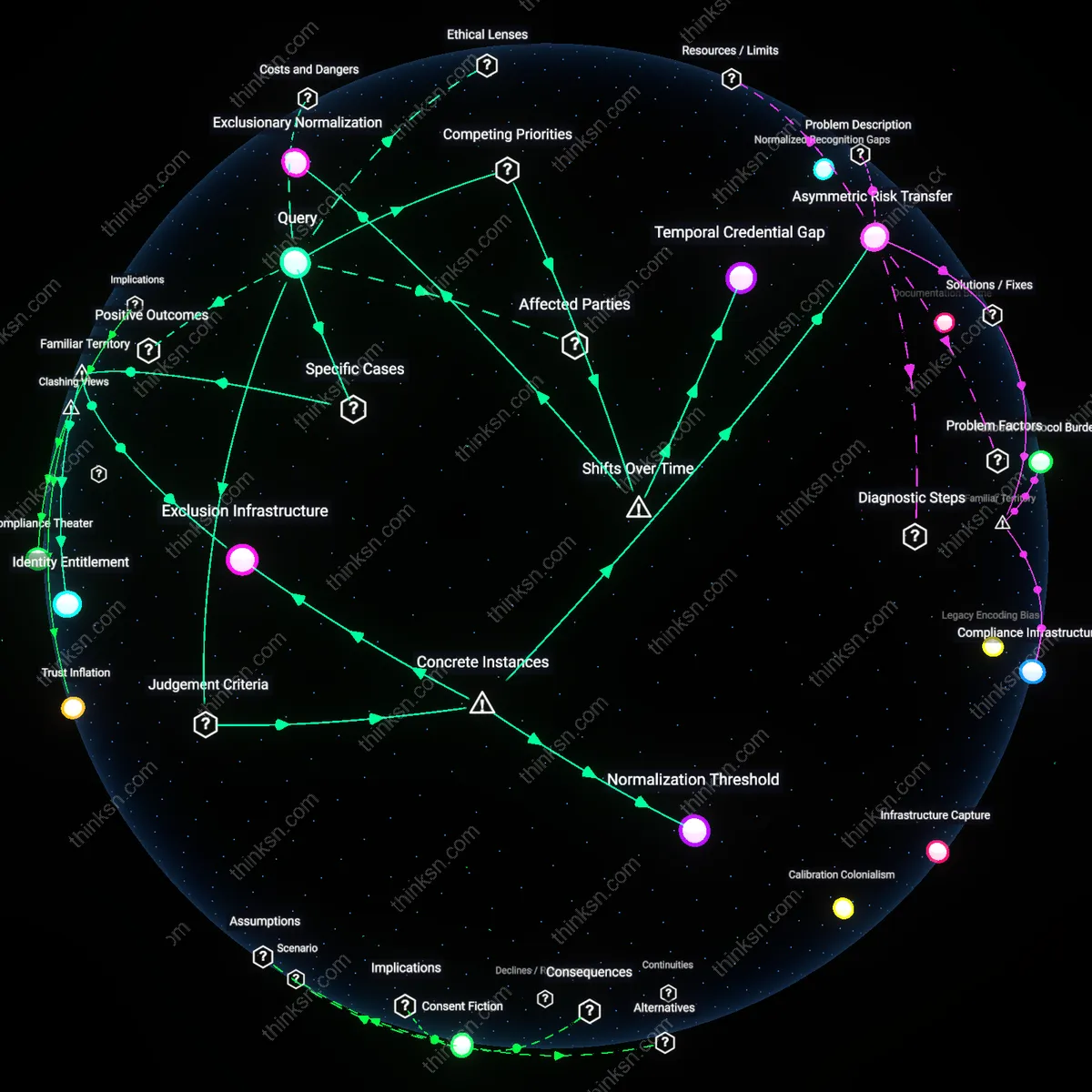
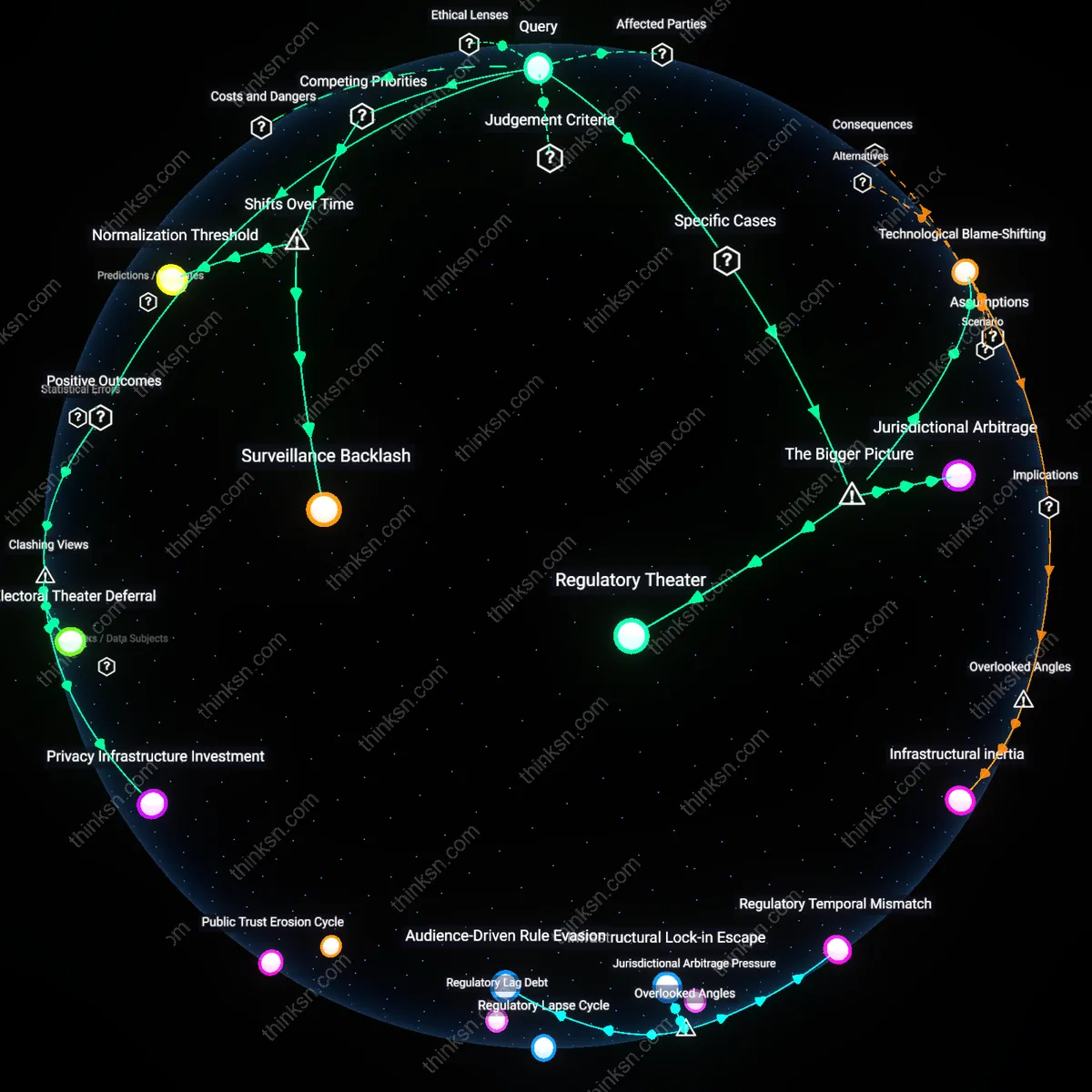
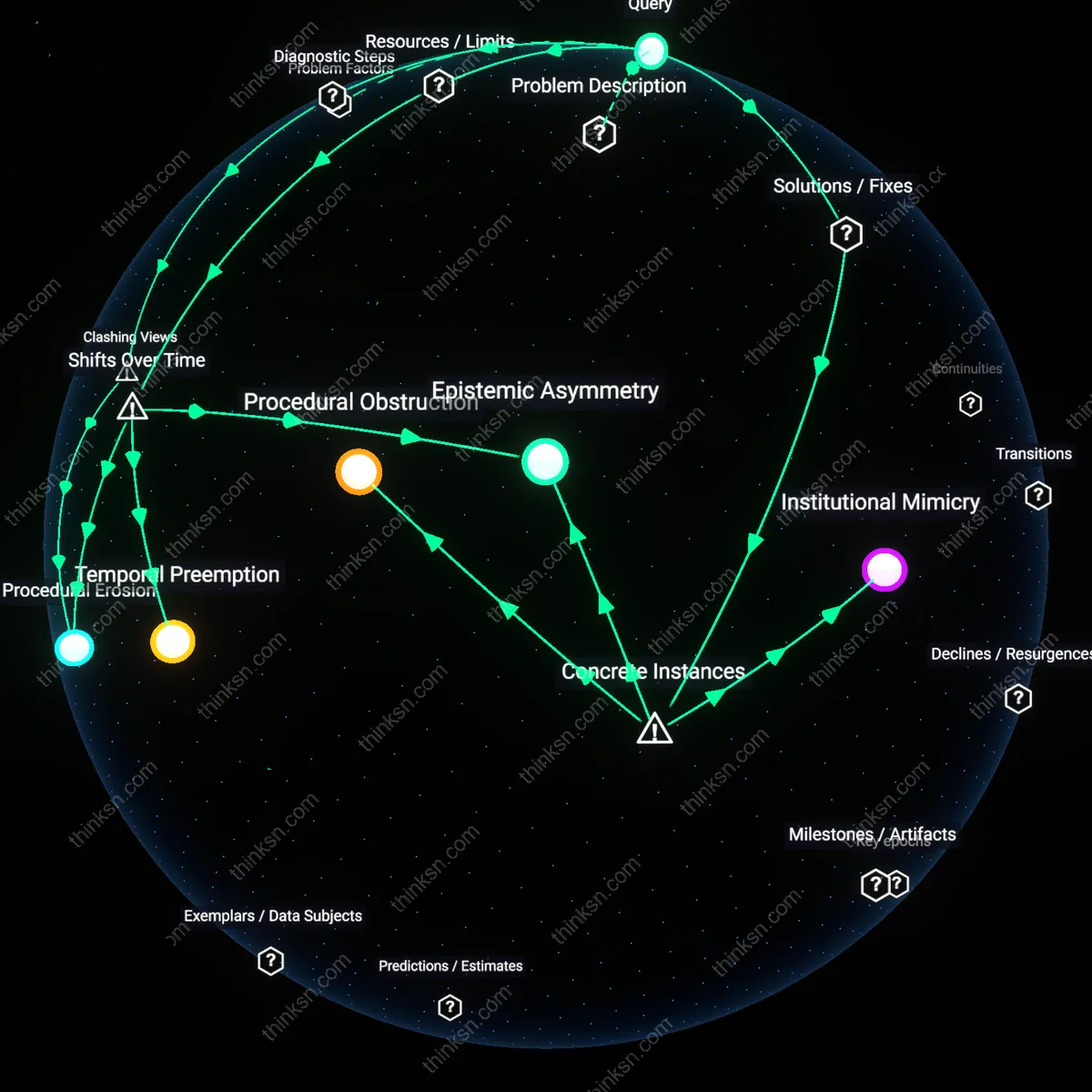
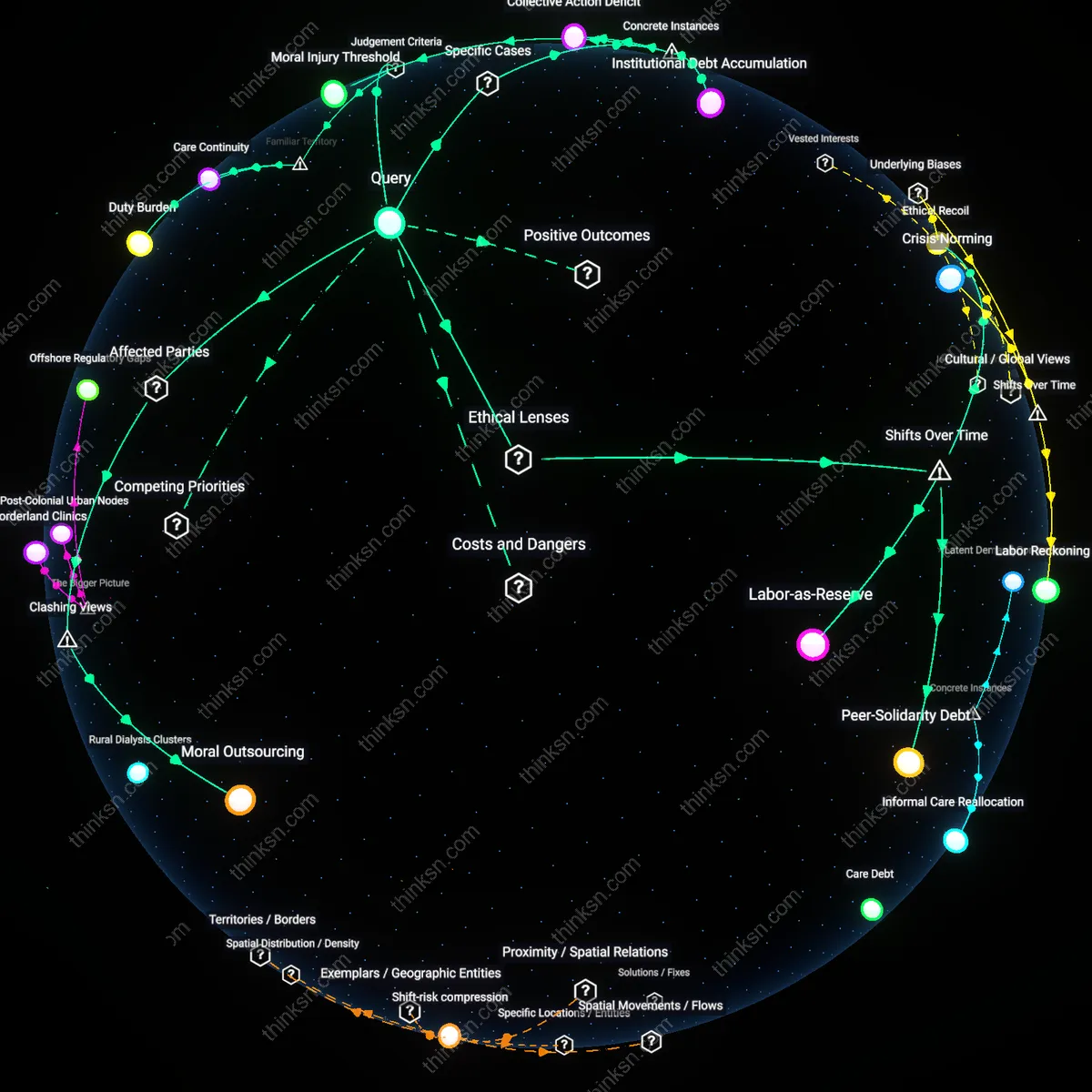
Analysis reveals 8 key thematic connections.
Key Findings
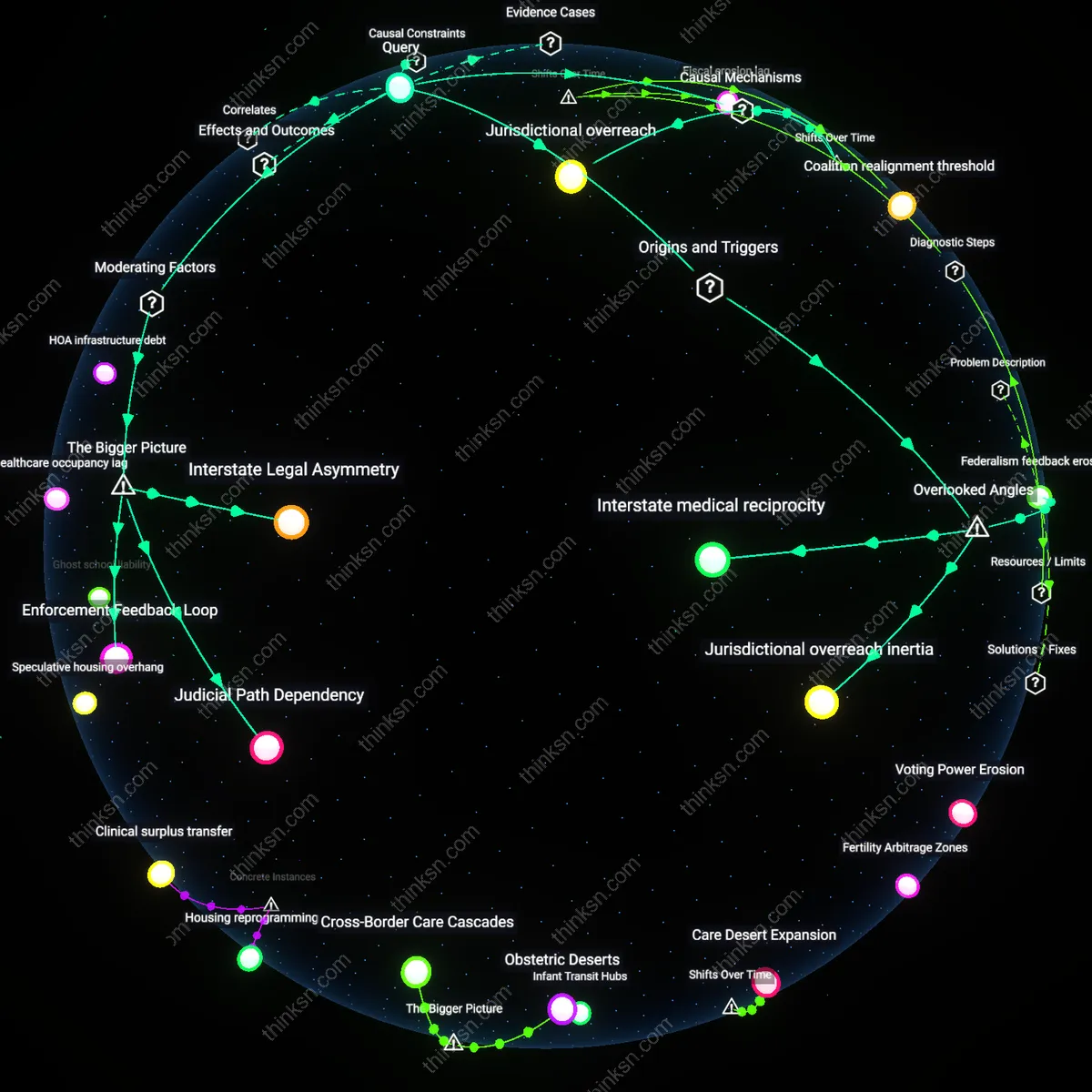
Interstate medical reciprocity
State travel bans on reproductive care undermine the unspoken compact of interstate medical reciprocity, where states implicitly recognize each other's medical services as part of a functional federal health ecosystem. This compact allows patients to receive care across state lines—such as emergency treatment or specialist procedures—without post-hoc legal penalty, and its erosion threatens to fracture state-to-state trust in shared medical legitimacy. The non-obvious dimension is that reproductive travel bans don't merely restrict movement but delegitimize care received elsewhere, triggering a silent unraveling of reciprocal recognition that extends beyond abortion to transplant coordination, telehealth licensure, and chronic disease management.
Jurisdictional overreach inertia
Once a state asserts extraterritorial jurisdiction by penalizing residents for legally obtaining medical services in another state, it creates a precedent that incentivizes further jurisdictional overreach in other policy domains due to bureaucratic and legal path dependency. Prosecutorial offices, once equipped with legal theories allowing them to enforce state law beyond borders, are more likely to apply similar logic to issues like digital privacy, tax enforcement, or drug use monitored via interstate data flows. The overlooked mechanism is not the immediate constitutional conflict but the institutional momentum such overreach generates within state legal apparatuses, normalizing extraterritorial enforcement in ways that bypass constitutional scrutiny until embedded in routine practice.
Federalism feedback erosion
Travel bans on reproductive services disrupt the tacit feedback loops in federalism that rely on inter-state mobility to signal policy failure or success, effectively insulating poorly performing state policies from corrective market-like pressures. When residents can vote with their feet, states face reputational and demographic consequences that nudge policy adjustment; banning travel severs this feedback, allowing extreme policies to persist without accountability. The underappreciated consequence is that such bans don't just violate individual rights—they degrade the adaptive function of federalism itself, turning states from experimental laboratories into policy dead ends shielded from systemic correction.
Jurisdictional overreach
State travel bans on reproductive care emerged after Roe’s federal protection was overturned in 2022, shifting the legal locus from national uniformity to state-level enforcement, which triggers constitutional conflict by asserting regulatory control beyond a state’s territorial boundary. This mechanism relies on state actors attempting to criminalize conduct occurring entirely in another jurisdiction, exploiting gaps in dormant Commerce Clause and full faith and credit doctrine enforcement; the non-obvious implication is that states now treat extraterritorial patient mobility as actionable behavior, transforming medical pilgrimage into a contested constitutional frontier.
Medical exile
The reactivation of pre-Roe analog laws post-2022 has forced a structural reversal in reproductive rights access, turning what was once a federally protected liberty into a geographically stratified system where residents of restrictive states must cross borders to obtain care, thereby producing a legally induced displacement. This mechanism operates through state-level trigger laws that deputize civil and medical institutions to deter travel via liability threats, revealing how constitutional devolution enables the criminalization of care-seeking as a form of dissent against state policy.
Interstate Legal Asymmetry
A state-imposed travel ban on reproductive care triggers constitutional conflict by creating legal jeopardy for residents who seek services in jurisdictions where those services are lawful, exposing them to prosecution under home-state laws despite compliance with host-state statutes. This tension emerges not merely from conflicting laws but from the lack of a national legal framework to resolve divergent state criminal jurisdictions when conduct is legal in one state and criminalized in another, enabling prosecutorial overreach that destabilizes the functional coherence of federalism. The non-obvious significance lies in how reproductive travel bans strain interstate comity and due process by weaponizing jurisdictional divergence without established legal mechanisms to mediate cross-border legality, transforming geography into a constitutional fault line.
Judicial Path Dependency
The enforceability of out-of-state travel restrictions hinges on whether federal courts treat abortion-related movement as a protected liberty interest under the Fourteenth Amendment, a determination increasingly contingent on the ideological composition of appellate courts shaped by strategic judicial appointments over decades. Because doctrinal evolution on substantive due process is path-dependent—rooted in prior rulings like *Planned Parenthood v. Casey* yet destabilized by *Dobbs v. Jackson Women’s Health Organization*—current challenges pivot on whether courts will recognize bodily autonomy as integral to liberty even in the absence of explicit textual protection. The underappreciated dynamic is that constitutional challenges to travel bans are less about statutory interpretation than about the slow accretion of judicial precedent filtered through partisan confirmation processes, revealing how institutional sequencing determines constitutional meaning.
Enforcement Feedback Loop
State attempts to criminalize out-of-state reproductive care generate self-undermining enforcement dilemmas by requiring surveillance and prosecution of citizens’ lawful activities in other states, escalating political and logistical costs that may force legislative retreat or provoke federal intervention. This feedback arises because effective enforcement demands inter-state data sharing, cooperation from unwilling host states, and intrusive monitoring of personal travel—capabilities that exceed most states’ operational reach and trigger public backlash when attempted. The overlooked systemic consequence is that aggressive travel bans inadvertently expose the limits of state sovereignty in a mobile, interconnected polity, where overreach catalyzes resistance not only from individuals but from federal institutions and corporate actors (e.g., tech companies restricting location data access), turning enforcement difficulty into a de facto constraint on legislative ambition.