Facial Recognition Ban: Civil Rights or Political Gain?
Analysis reveals 9 key thematic connections.
Key Findings
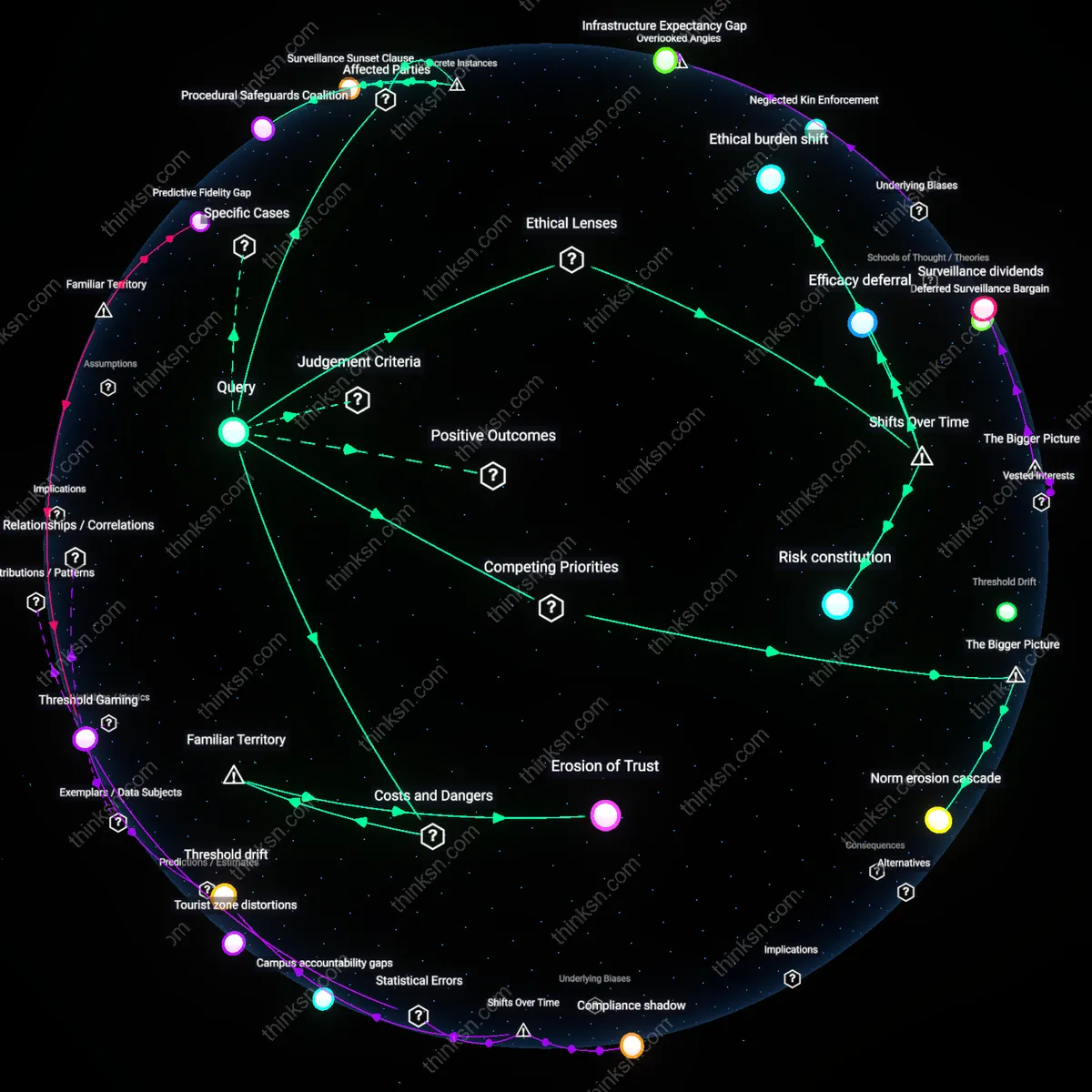
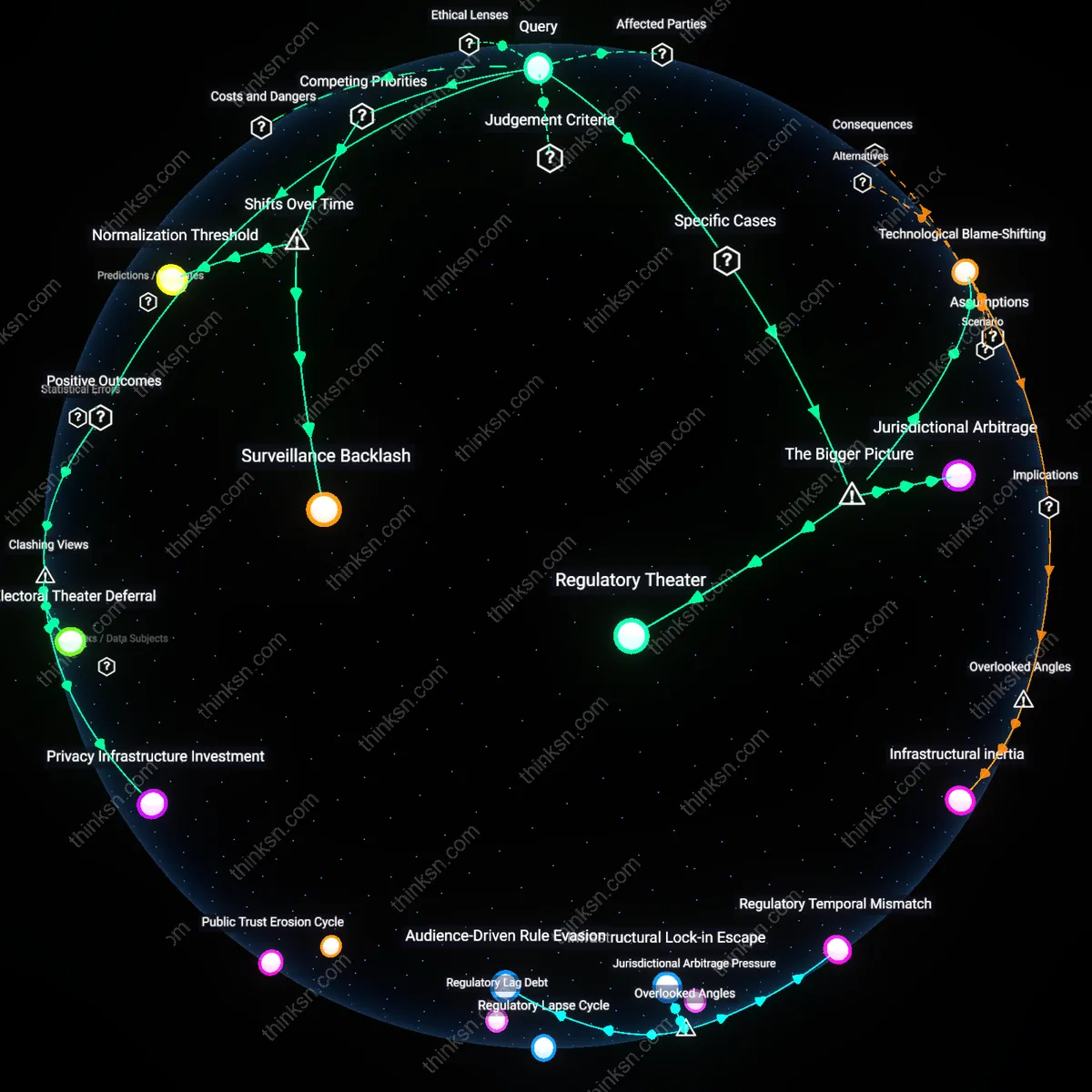
Privacy Infrastructure Investment
A state-level ban on facial recognition by law enforcement accelerates investment in auditable privacy-preserving technologies by creating regulatory scarcity that forces agencies to adopt alternative surveillance accountability measures. Jurisdictions like Vermont and Washington have leveraged these bans to redirect funding toward community-controlled data governance platforms and algorithmic impact assessments, revealing that restriction functions not as stagnation but as a catalyst for building more transparent and participatory surveillance oversight systems. The non-obvious insight is that prohibition can generate technological and institutional innovation by eliminating complacency around unchecked data extraction.
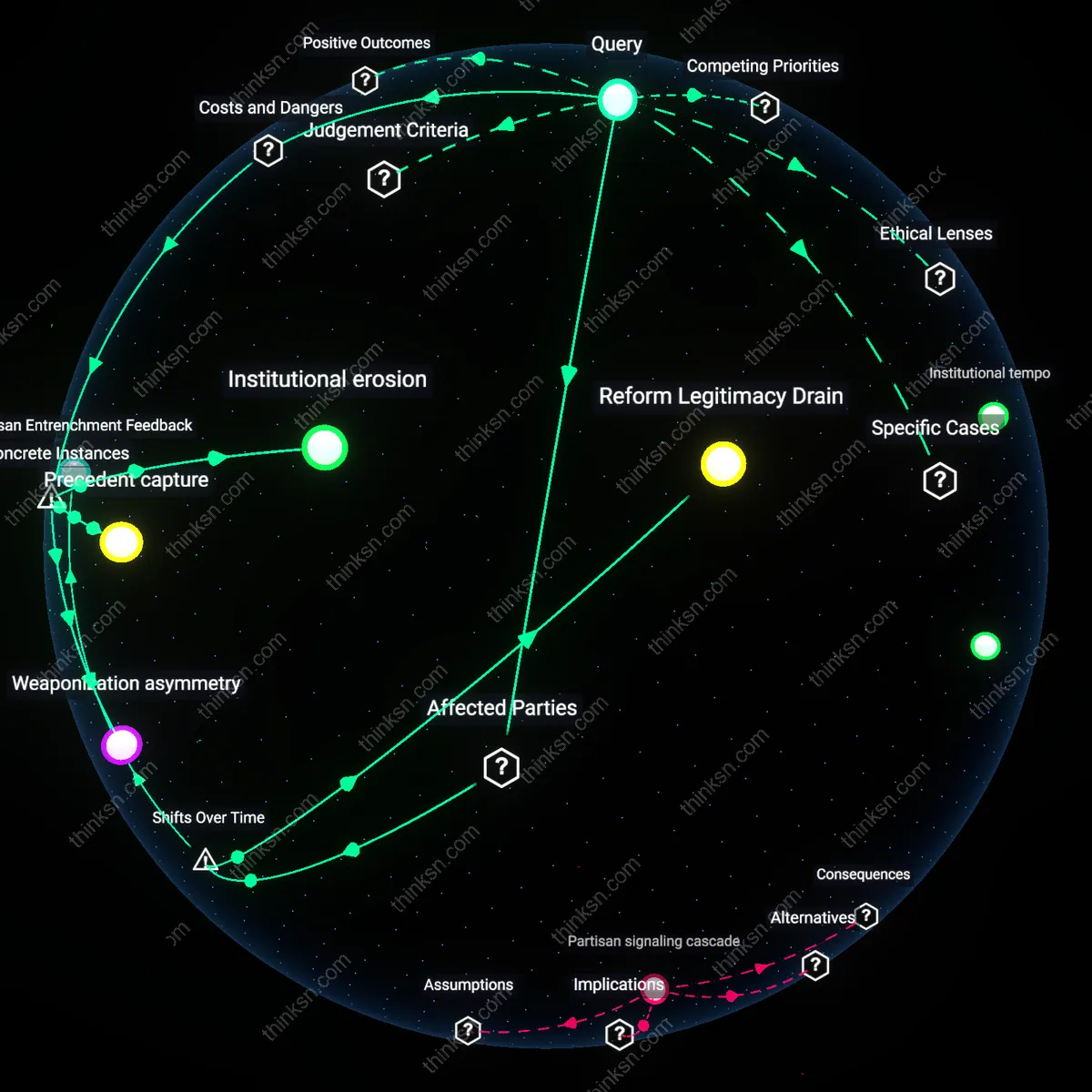
Electoral Theater Deferral
State bans on facial recognition serve as symbolic concessions to civil rights constituencies that allow governing coalitions to defer more radical demands for police defunding or abolition, as seen in Democratic-led cities like San Francisco and Boston where moratoriums coincided with stalled budget reallocations to social services. By prioritizing visible legislative action over structural reform, officials absorb protest energy while preserving surveillance capacities through adjacent tools like license plate readers or third-party data brokers. This reveals that civil rights responsiveness can function as a pressure-release valve, where political gain emerges not from deception but from the strategic containment of movement demands.
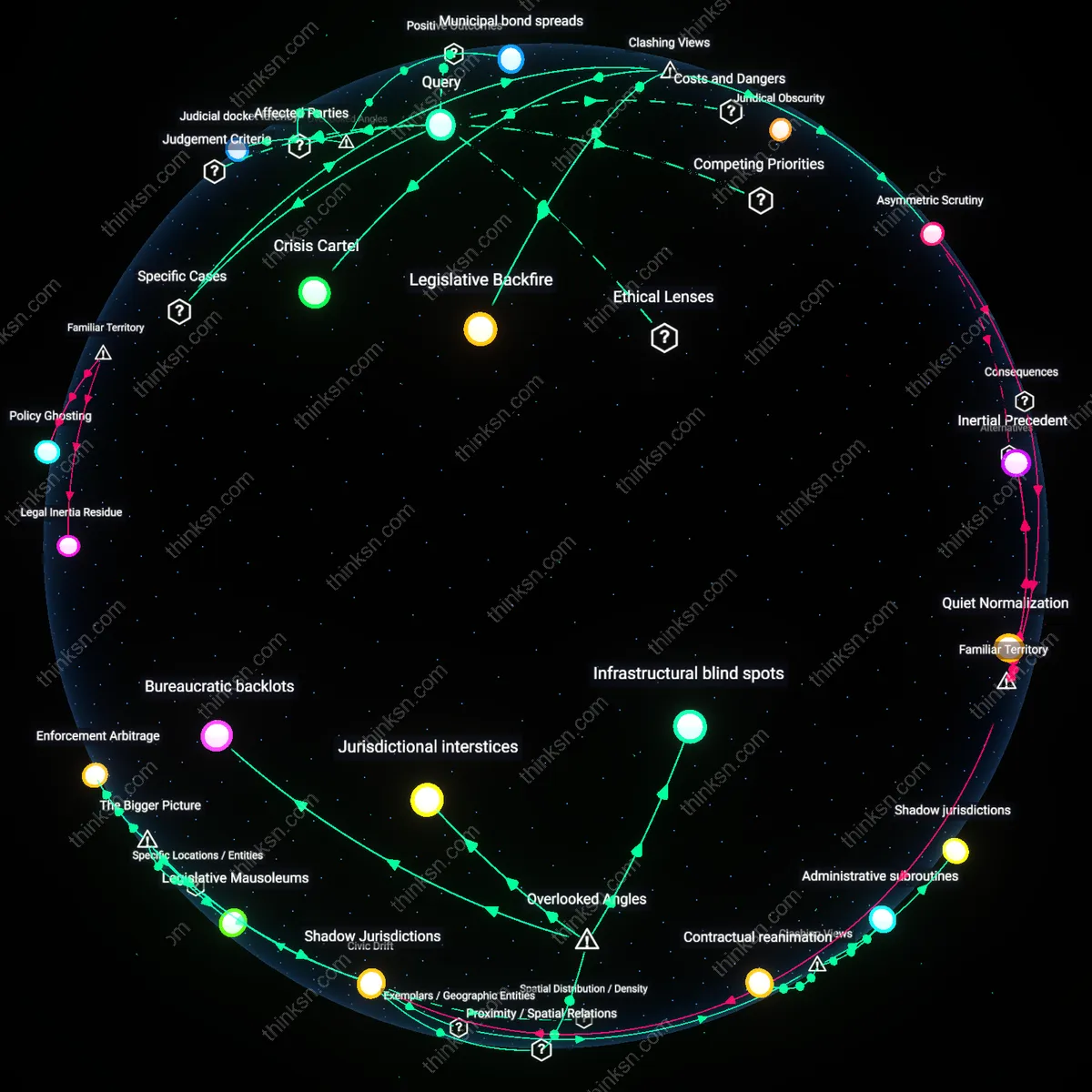
Jurisdictional Arbitrage Risk
Facial recognition bans at the state level incentivize law enforcement agencies to outsource surveillance functions to federal partners or multi-state fusion centers, as observed in Oregon where local police submitted facial images to FBI’s Next Generation Identification system post-ban. This dynamic transforms statutory restrictions into procedural workarounds, demonstrating that civil liberties legislation can unintentionally strengthen opaque intergovernmental surveillance networks by pushing activity into unregulated seams. The counterintuitive outcome is that localized bans may increase overall surveillance opacity rather than reduce it.
Surveillance Backlash
A state-level ban on facial recognition by law enforcement emerged as a response to public outrage after high-profile misidentifications of Black suspects in 2020, revealing that civil rights concerns gained political traction only after technological failures disrupted the perceived balance between security and privacy. Prior to the George Floyd protests, law enforcement adoption of facial recognition was expanding quietly, with minimal legislative resistance, suggesting that civil liberties arguments were politically inert until a rupture in public trust reframed surveillance as systemic racial threat. The shift from technical efficiency to racial accountability as the dominant critique marks a transformation in how privacy trade-offs are politically legible, exposing that civil rights discourse only becomes a viable policy driver after a crisis renders inequities undeniable.
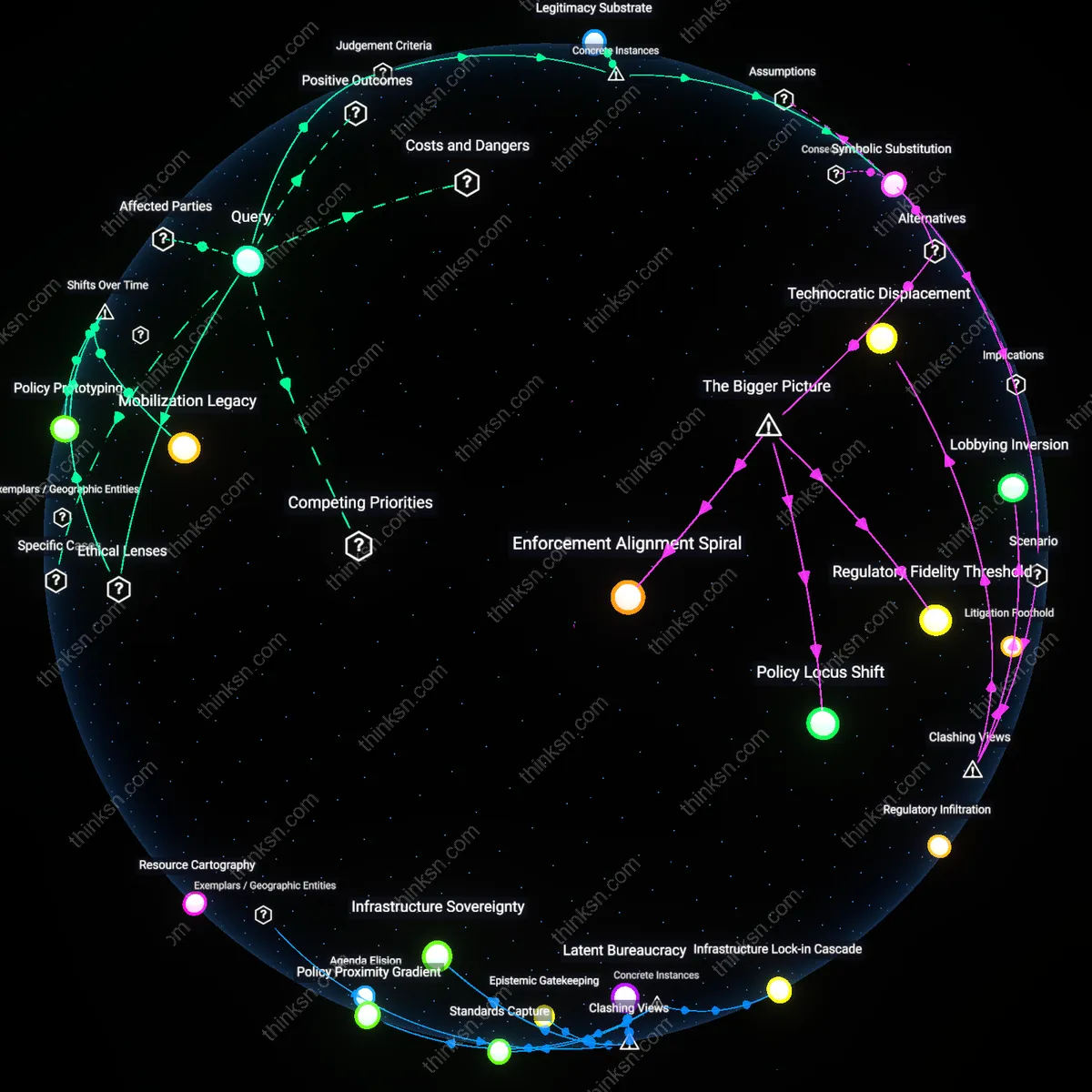
Preemptive Legitimation
State bans on facial recognition began as symbolic moratoria in 2019—before widespread deployment—allowing legislators to position themselves as privacy defenders while avoiding direct conflict with federal intelligence priorities, thus preserving political capital without sacrificing security credentials. In cities like San Francisco and Boston, these early restrictions emerged not in reaction to proven misuse but in anticipation of federal programs like the FBI’s Face Services expanding into local databases, creating a temporal misalignment where political action preceded operational reality. This anticipatory governance reflects a growing pattern where local authorities use civil liberties as a jurisdictional shield, revealing that electoral incentives are recalibrated not by past abuse but by the narrative control of future risks.
Normalization Threshold
Facial recognition bans in states like Vermont and Maine became feasible only after a critical mass of jurisdictions adopted similar measures between 2021 and 2023, shifting the political cost of restriction from perceived radicalism to mainstream prudence, thereby decoupling the policy from immediate civil rights catalysts and embedding it in institutional routine. Earlier attempts, such as Portland’s 2020 ban, were framed in urgent moral terms, but by the mid-2020s, restrictions were justified through procedural risks and audit deficiencies rather than racial injustice, indicating a transition from moral protest to bureaucratic risk management. This evolution reveals that what appears as enduring civil rights progress often institutionalizes only after the initial political volatility has been absorbed into administrative norms, marking the point at which reform loses its transformative edge and becomes governance as usual.
Regulatory Theater
A state-level ban on facial recognition by law enforcement reflects a performative response to civil rights advocacy, as seen in Oregon’s 2021 deployment moratorium, which exempted federal partnerships and ongoing investigations, revealing calculated limitations designed to signal reform without operational disruption; this selective restriction functions within a political economy where lawmakers absorb activist pressure while preserving surveillance capacity, thereby maintaining law enforcement trust and voter goodwill across competing constituencies. The gap between symbolic prohibition and functional continuity enables officials to cite racial justice concerns while insulating core policing tools, exposing how policy design can serve as electoral risk management rather than rights protection.
Technological Blame-Shifting
In Massachusetts, the 2020 facial recognition ban emerged alongside expanded funding for body-worn cameras and data integration platforms, indicating that the prohibition targeted public backlash against algorithmic error while enabling growth in foundational surveillance infrastructure; the ban thus operates within a systemic shift toward data centralization, where political actors isolate controversial tools to preserve broader security architectures. This reframing of civil rights concerns as a technical reliability issue deflects scrutiny from institutional oversight failures, redirecting reform energy toward solutionism rather than structural accountability.
Jurisdictional Arbitrage
California’s 2019 moratorium on facial recognition in police body cameras failed to restrict access via fusion centers or federal databases like those operated by DHS and FBI, creating an enforcement loophole that sustains surveillance through interagency data sharing; this structural design reveals that bans are calibrated not to eliminate use but to insulate state officials from direct liability while permitting continuity through federal channels. Embedded within a decentralized federal system, such bans function less as civil rights safeguards than as jurisdictional boundary-drawing, where state actors cede operational risk to federal partners to preserve intelligence flows without bearing political cost.