Is Forced Competition via Third-Party App Stores Better for Choice?
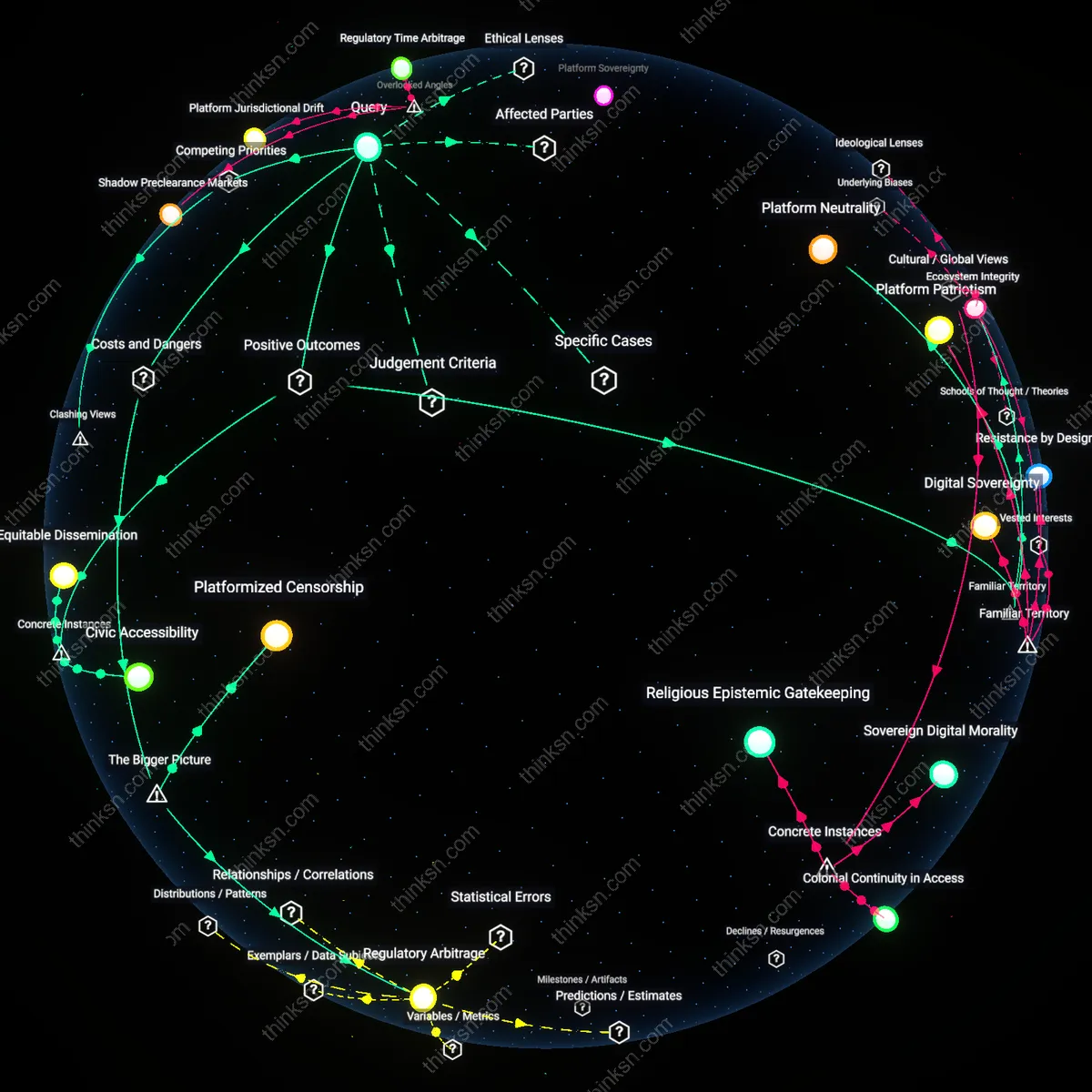
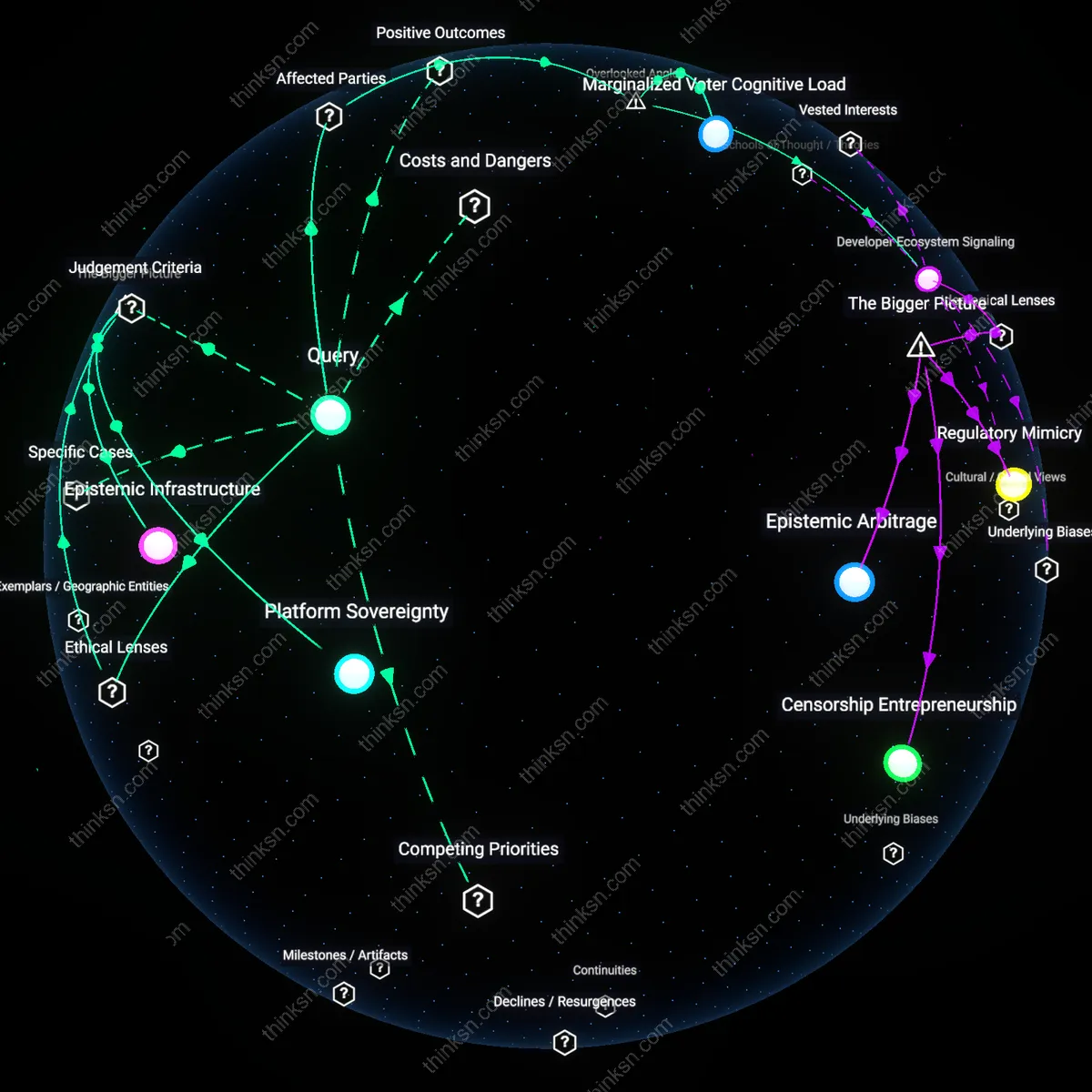
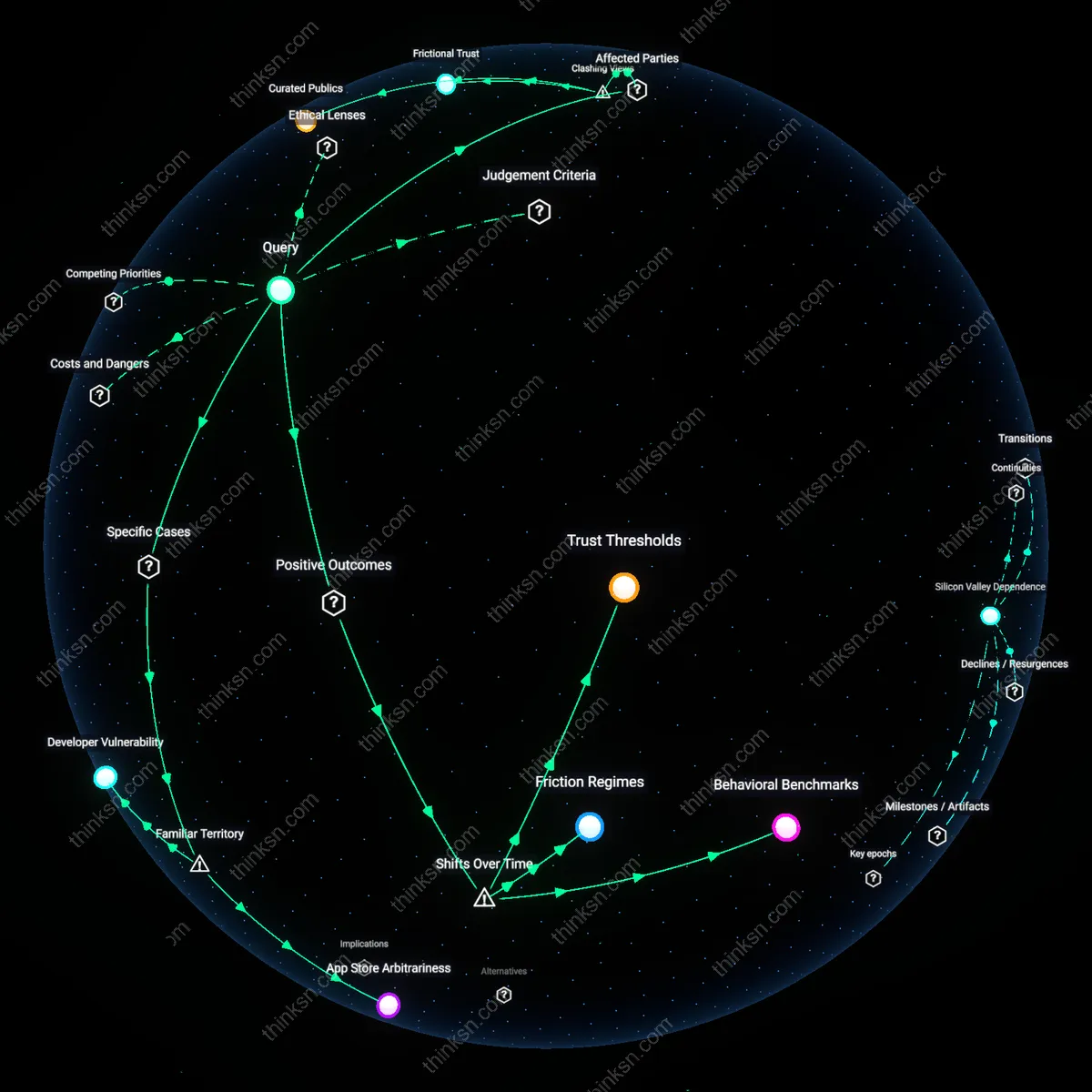
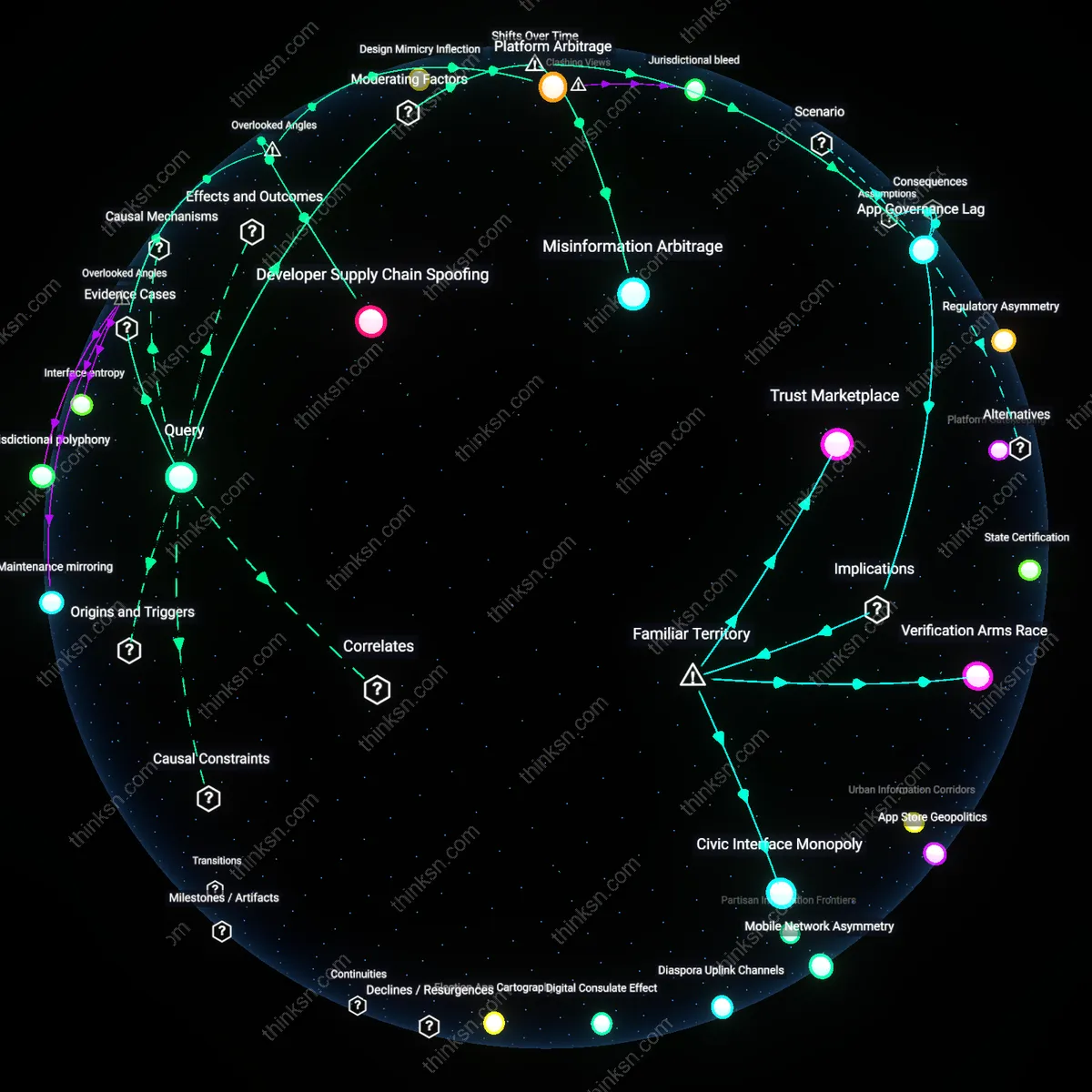
Analysis reveals 12 key thematic connections.
Key Findings
Regulatory Lag
Mandating third-party app stores increases consumer choice only after prolonged delays in enforcement, because the mechanism hinges on regulators overcoming incumbent platform resistance that emerged after the 2010–2015 era of closed ecosystem consolidation; during this earlier phase, companies like Apple framed security and user experience as justifications for exclusivity, which established a de facto standard that subsequent policy must now dismantle through reactive, case-by-case interventions that lag behind technological adoption cycles. This delay reveals how legal mandates follow rather than anticipate shifts in digital market structures, making the expansion of choice a retroactive correction rather than an immediate outcome.
Platform Entrenchment
Forcing access to alternative app stores does not automatically restore consumer choice because dominant platforms leveraged their 2010s-era gatekeeper position to embed proprietary incentives—such as exclusive features, optimized performance, and developer subsidies—that persist even after regulatory openings in the 2020s; the causal mechanism operates through asymmetric ecosystem dependencies, where developers and users remain habituated to the dominant store due to switching costs baked into earlier phases of platform growth. This path dependency illustrates how past infrastructural decisions constrain present options, rendering formal openness functionally incomplete.
App Distribution Pluralism
Third-party app store mandates enable genuine consumer choice only after a critical mass of alternative distribution infrastructures emerged post-2020, following high-profile antitrust cases in the EU and South Korea that disrupted the previously dominant logic of vertically integrated control perfected by Apple and Google in the 2010s; the shift allowed new actors—such as Epic Games and Samsung Galaxy Store—to exploit newly legal distribution models, activating a causal chain where regulatory recognition of interoperability enabled technically and commercially viable alternatives to form. This transition marks the institutionalization of pluralistic distribution, a condition previously suppressed by de facto monopolistic norms.
Platform Fragmentation Risk
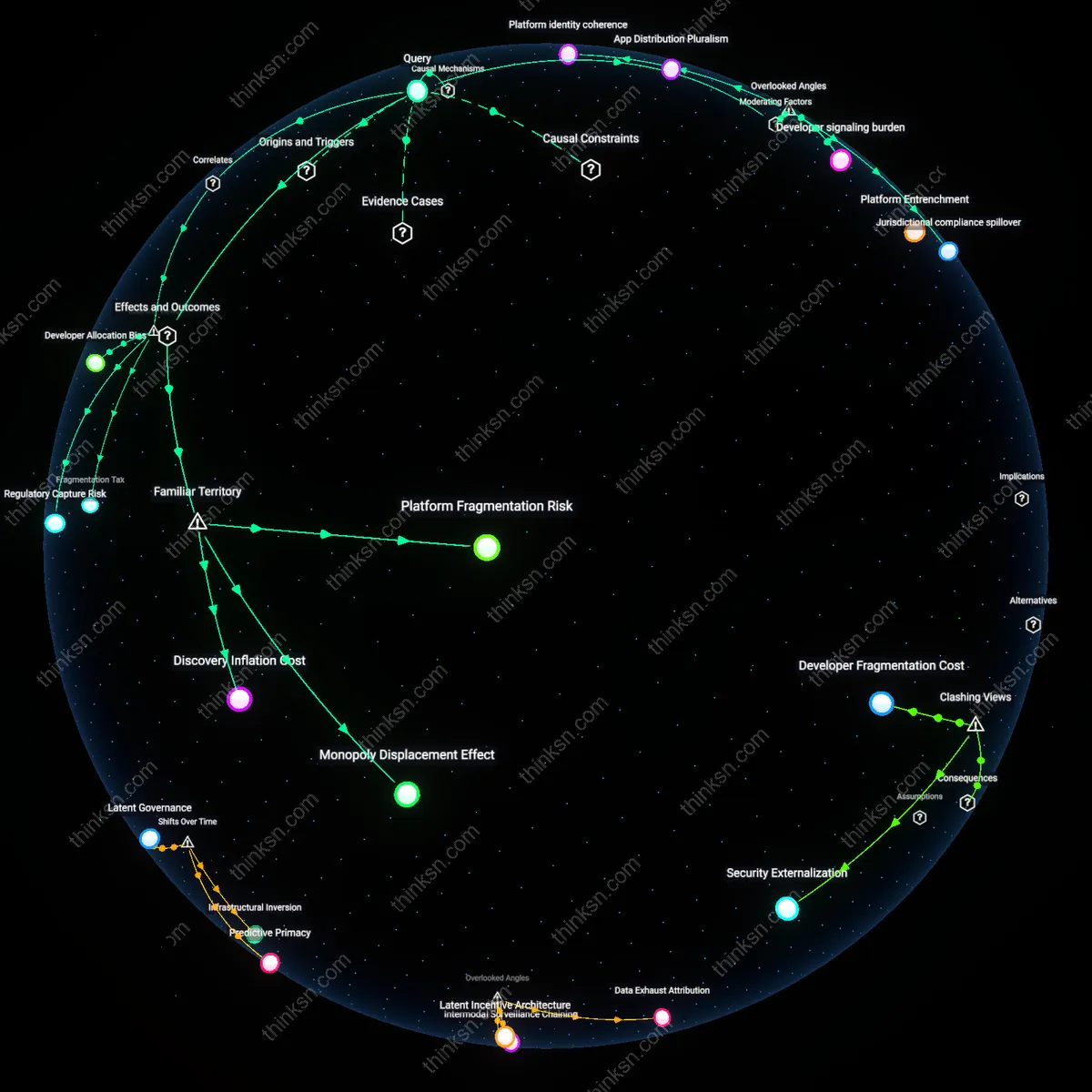
Mandating third-party app stores increases consumer choice in the short term by enabling access to alternative distribution channels. However, it simultaneously introduces platform fragmentation, where inconsistent security standards, disparate update cycles, and divergent interface norms across stores complicate user experience and developer support. This fragmentation dilutes the coherence that made dominant platforms reliable for both consumers and developers, revealing a hidden trade-off between distribution diversity and systemic stability. The non-obvious insight is that consumer choice is not monotonically improved by more outlets—familiar expectations of seamless interoperability and trust erode as the ecosystem splinters.
Monopoly Displacement Effect
Forcing dominant platforms to allow third-party app stores shifts monopolistic control from the original gatekeeper to new intermediaries who replicate the same extractive behaviors. Alternative app stores often impose their own commission fees, curation rules, and data requirements, recreating the very constraints consumers were meant to escape. This reproduces the dynamics of rent-seeking at a smaller scale, where the locus of power shifts but the structure remains intact. The overlooked reality is that in familiar territory—where apps mean convenience, safety, and simplicity—new gatekeepers inherit trust not by being different, but by mimicking the old ones.
Discovery Inflation Cost
Expanding app distribution multiplies the number of places where apps can appear, but this overloads consumer attention and degrades the efficacy of discovery mechanisms like rankings, reviews, and recommendations. As users face more stores with overlapping but inconsistent curation logic, the cognitive labor of finding trustworthy apps rises sharply. Developers in turn must optimize for multiple visibility systems, increasing marketing costs and favoring well-resourced players. The counterintuitive outcome is that more distribution points don't democratize access—they inflate the cost of being found, reinforcing hidden barriers that were previously attributed solely to monopoly control.
Platform identity coherence
Mandating third-party app stores reduces consumer choice when platform identity coherence is high because users rely on curated ecosystems like Apple’s App Store for trust and consistency; allowing arbitrary distribution undermines the implicit contract of security and design integrity that premium users expect, particularly in markets where brand loyalty depends on perceived reliability rather than price competition. This dynamic is most visible in high-income regions where iOS dominates and consumer preferences are shaped by risk aversion to malware and poor UX, not app variety. The overlooked mechanism here is that enforced distribution pluralism can degrade platform brand value—an intangible but critical constraint on choice expansion that most regulatory models treat as neutral infrastructure rather than a crafted experiential product. This reframes app store mandates as potentially conflicting with the very consumer welfare they aim to protect when the platform’s identity is built on exclusivity and control.
Developer signaling burden
Forcing open app distribution increases consumer choice only if developers can effectively signal quality across fragmented channels, but in reality, smaller developers lack the resources to maintain visibility, trust, and compatibility on multiple stores, concentrating advantage instead in large firms like Epic or Meta who can absorb the overhead—thus replicating, not disrupting, concentration. This shifts market power from platform gatekeepers to developers with marketing scale, an outcome rarely considered in antitrust remedies that assume decentralization automatically benefits indie creators. The overlooked dimension is that multi-store compliance functions as a regulatory tax that disproportionately burdens the very actors open-store policies aim to liberate, turning distribution freedom into a signaling arms race most cannot join.
Jurisdictional compliance spillover
Mandating third-party app stores in one jurisdiction, such as the EU under the DMA, can reduce global consumer choice when platforms like Apple or Google implement uniform technical and policy changes across all regions to minimize compliance complexity, effectively homogenizing app distribution terms worldwide—even in markets where users had no demand for alternative stores. This creates a one-size-fits-all distribution model driven by regulatory thinnest common denominator rather than local preferences, eroding differentiated service offerings that previously aligned with regional risk tolerance or innovation cultures. The underappreciated factor is that national-level mandates generate systemic externalities across global digital markets, transforming targeted liberalization into an unintended form of regulatory imperialism that overrides consumer choice elsewhere.
Regulatory Capture Risk
Mandating third-party app stores amplifies consumer choice only if regulators resist lobbying that skews oversight toward incumbent platforms. This condition manifests in the EU’s Digital Markets Act, where designated gatekeepers influence audit standards and enforcement timelines, weakening effective competition. The non-obvious mechanism is not market liberalization but the redistribution of regulatory leverage, which dominant firms exploit to burden rivals with compliance costs while maintaining ecosystem control. This reveals that structural reforms can deepen dependency on incumbent governance when enforcement institutions lack autonomy.
Fragmentation Tax
Forcing sideloading and third-party app stores increases consumer choice in theory but triggers platform fragmentation that raises security and compatibility costs in practice. Android’s open model shows that alternative stores like Samsung Galaxy Store or Huawei AppGallery coexist with Google Play yet fail to aggregate developer attention or user trust at scale, resulting in uneven updates and higher malware exposure. The overlooked dynamic is not monopolistic exclusion but the economic friction of maintaining multiple, non-interoperable distribution channels, which disadvantages smaller developers and risk-averse users. This reframes app store mandates as potentially deepening stratification rather than broadening access.
Developer Allocation Bias
Even with mandated third-party app stores, developers concentrate on platforms with dominant user bases, perpetuating de facto distribution concentration despite de jure openness. Evidence from Epic Games’ storefront strategy shows that its Fortnite release bypassed Apple’s App Store but did not scale independent distribution for other titles, as most developers still prioritize iOS and Google Play for reach and monetization. The critical but unproven assumption is that supply-side availability reflects consumer choice, when in fact developer labor and marketing budgets follow network effects, not regulatory openings. This exposes a misalignment between technical access and economic viability in app distribution.