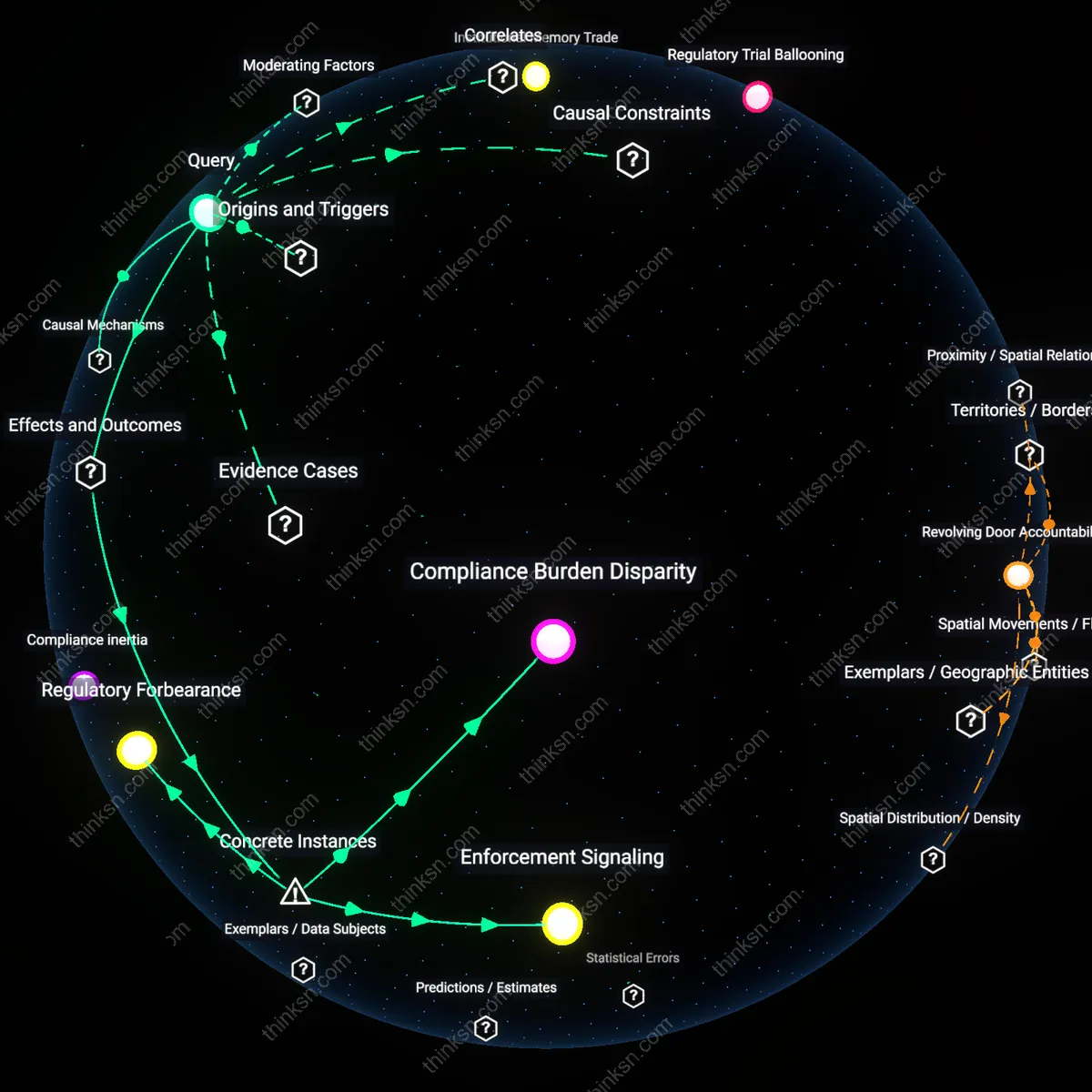
Litigation Surge
Plaintiff firms in states like Texas and Florida would immediately file class actions using their own privacy laws modeled after BIPA, leveraging identical 'opt-in harm' theories to target biometric and digital tracking technologies. These firms would partner with advocacy groups such as the ACLU and Electronic Frontier Foundation to amplify perceived public harm, triggering a wave of lawsuits against companies using facial recognition or voice data. The mechanism depends on statutory damages—$1,000–5,000 per violation—turning minor technical violations into massive exposure, as seen in Illinois. The non-obvious insight is that the real catalyst isn't public concern about privacy, but the economic engine of contingent-fee litigation that transforms compliance lapses into profit centers.
Compliance Cascade
Multinational corporations would adopt a universal compliance standard—even in states without private litigation rights—to avoid the operational chaos of state-by-state risk assessment, effectively nationalizing BIPA-like policies by default. Firms like Amazon and Walmart, once burned by Illinois judgments, would implement centralized data governance protocols that exceed the strictest state mandates, driven not by ethics but by legal operations cost minimization. The mechanism operates through corporate legal departments prioritizing uniformity over risk segmentation, turning localized legal experiments into de facto national norms. The non-obvious truth is that private litigation in one jurisdiction can induce voluntary corporate overcompliance everywhere, making federal regulation seem redundant even as it remains absent.
Jurisdictional arbitrage capacity
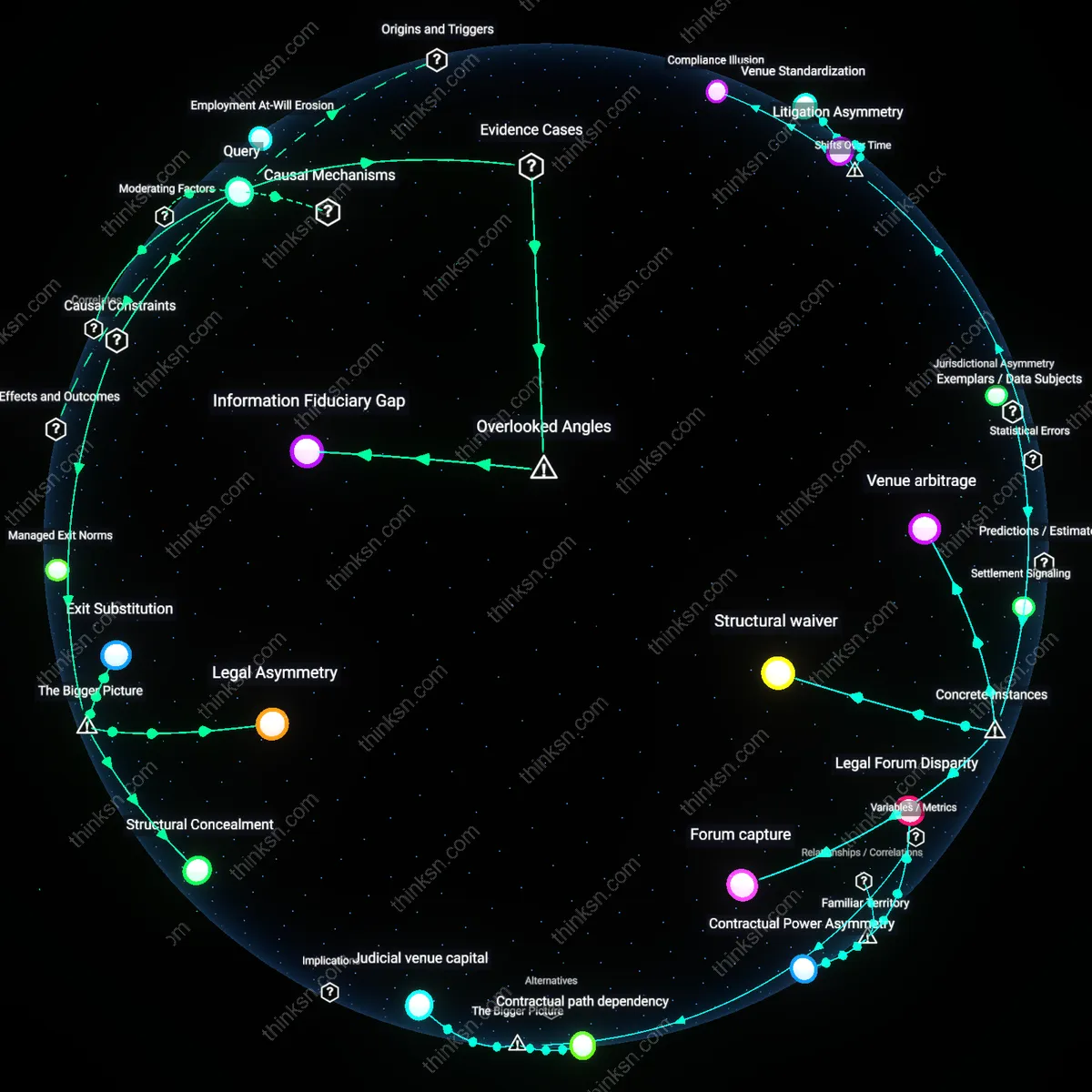
Replicating the Illinois BIPA strategy elsewhere will fail unless plaintiff firms can exploit asymmetries in state judicial infrastructure, because only certain state courts possess both permissive standing rules and dockets with minimal congestion to enable high-volume litigation—conditions uniquely met in Illinois’ chancery divisions. Most analyses assume replicability hinges on law adoption, but without access to courts engineered for non-injury statutory claims at scale, the enforcement model collapses; this hidden logistical gatekeeper determines whether a privacy law becomes a litigation engine or remains symbolic. The overlooked variable is not legal text but judicial throughput.
Corporate compliance signaling
When advocacy groups mimic the BIPA model under new privacy laws, firms will increasingly treat settlements not as penalties but as calibrated investments in regulatory quietude, strategically accepting small-dollar payouts to avoid systemic operational changes—especially in states where federal preemption looms. This shift transforms litigation outcomes into a form of compliance theater, where paying claimants becomes cheaper than overhauling data practices, a dynamic obscured by public focus on statutory damages alone. The residual mechanism is not deterrence but ritualized concession, altering the incentive structure away from accountability and toward managed leakage.
Plaintiff-side innovation lag
Efforts to export the BIPA playbook will stall due to the absence of specialized plaintiff-firm ecosystems capable of mass-docketing technical privacy violations, as seen in Chicago’s concentration of class-action boutiques with forensic vendor networks for detecting biometric scanning. Unlike consumer protection statutes, BIPA’s success relied on a dense local supply chain for identifying defendants and weaponizing compliance gaps—something not easily reconstructed in states where plaintiff bar resources are oriented toward personal injury or labor litigation. The unreplicated substrate is not the law but the litigative industrial base.
Litigation Arbitrage
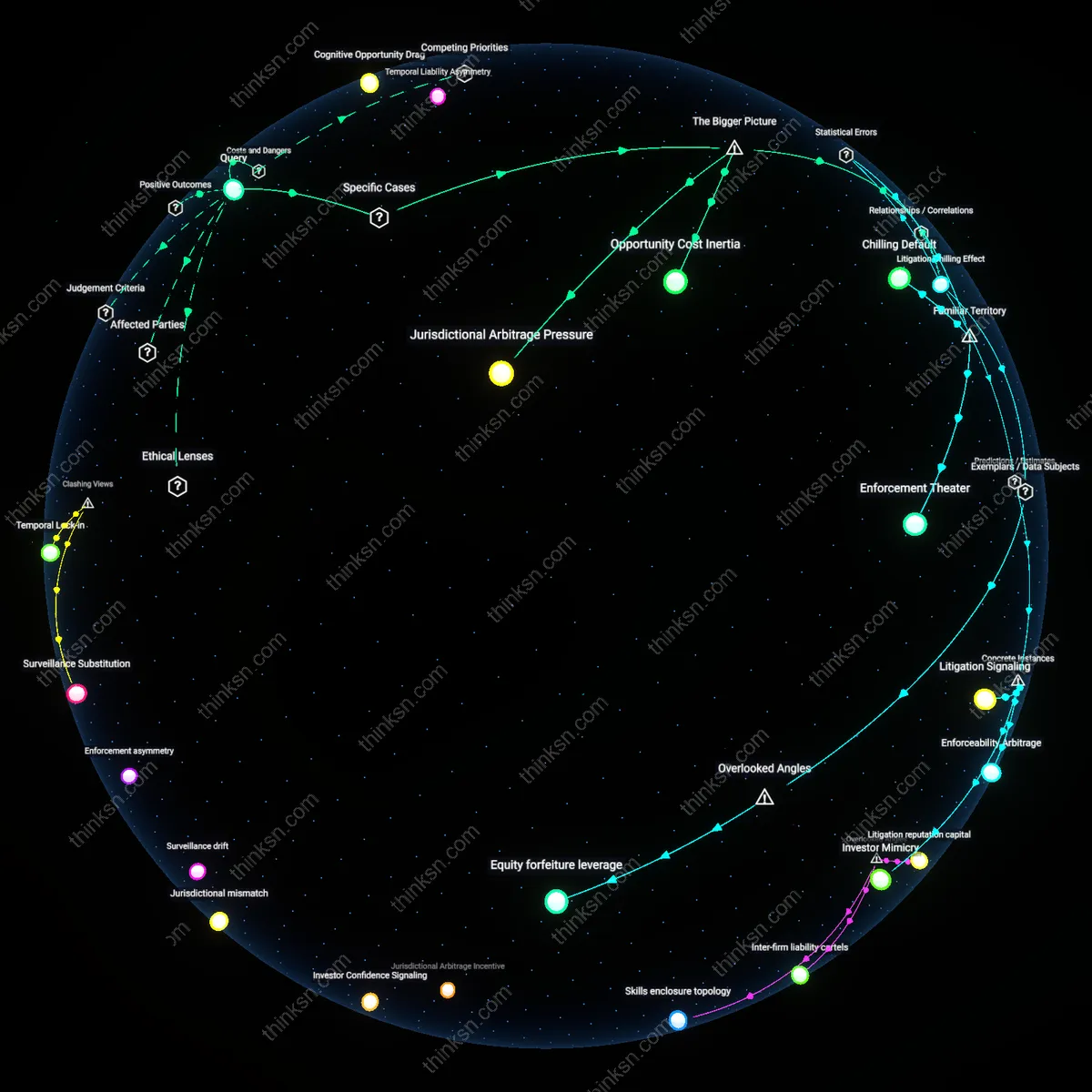
Plaintiff firms in Texas have already adapted the BIPA model by targeting biometric data under the Texas Capture or Use of Biometric Identifier Act (CUBI), filing dozens of class actions against employers using time-recognition software—exploiting a law with no private right of action by bundling claims under the Texas Deceptive Trade Practices Act, revealing how jurisdictional gaps and creative pleading enable forum-specific exploitation of statutory ambiguities. This mechanism mirrors Illinois’ BIPA surge not through replication but through adaptive circumvention, where the absence of express standing provokes inventive linkage to existing consumer protection frameworks, demonstrating that legal ecosystems with latent enforcement pathways can be weaponized even without statutory intent. The non-obvious insight is that the strategy’s scalability lies not in statutory similarity but in the mismatch between dormant laws and aggressive procedural innovation.
Regulatory Backlash
After New York advocacy groups pushed for BIPA-style litigation under the SHIELD Act, state lawmakers responded by explicitly excluding private rights of action from all biometric provisions—a direct legislative reaction to perceived lawsuit abuse following Illinois’ experience, exemplified by the withdrawal of proposed amendments in 2022 after hotel and retail trade associations mobilized against open-ended liability. This dynamic, observed when California initially considered but then abandoned a standalone biometric law post-BIPA, reveals that successful litigation campaigns in one state can trigger defensive preemption in others, where policymakers prioritize liability containment over privacy expansion. The underappreciated consequence is that high-profile class-action victories may paradoxically stifle stronger privacy legislation by framing enforcement as judicial overreach rather than regulatory necessity.
Regulatory Mimicry
States without private right of action will respond to the BIPA precedent by enacting narrower privacy laws that exclude individual enforcement mechanisms, effectively designing statutes to resist replication of Illinois-style litigation waves. Legislative actors, influenced by business coalitions and judicial warnings about docket overload, will prioritize regulatory control within state agencies over open access to civil courts. This strategic law design reflects a systemic shift where the specter of mass litigation reshapes the DNA of emerging privacy frameworks, revealing that legal innovation is often reactive to litigation risk rather than driven by privacy maximization.
Standing Inflation
Federal courts will begin reinterpreting Article III standing in privacy cases to accommodate—or curtail—expanding claims based on statutory violations without concrete harm, as replicated BIPA-like lawsuits force judges to reconcile technical breaches with constitutional limits. The pressure comes from a surge in claims alleging mere procedural violations (e.g., failure to disclose data collection) as sufficient injury, prompting circuit splits and eventual Supreme Court review. This judicial recalibration is significant because it positions courts not just as adjudicators but as gatekeepers determining whether privacy injuries are economic, dignitary, or purely normative—thereby defining the boundary of enforceable digital rights in the U.S. legal system.
Litigation Inflection
The replication of Illinois’ BIPA strategy elsewhere will fail to generate equivalent pressure on corporate data practices because the 2010s era of permissive standing regimes—enabled by statutory damages and judicial leniency toward procedural harms—has given way, post-2021, to a narrowing of Article III standing following Supreme Court decisions like Transunion v. Ramirez, which now require tangible injuries and collapse the legal space for plaintiff firms to exploit compliance lapses disconnected from actual harm. This shift reveals that the window for privacy litigation as a de facto regulatory mechanism, open during BIPA’s peak enforcement from 2018–2021, is closing under a reconfigured federal jurisprudential standard that re-centers injury-in-fact, thus making later-mover replication legally ineffectual even when statutes mirror BIPA’s form. The non-obvious lesson is that the efficacy of private enforcement was temporally tethered to a specific judicial posture now in retreat.