Async Communication: Undermining Accountability in Distributed Teams?
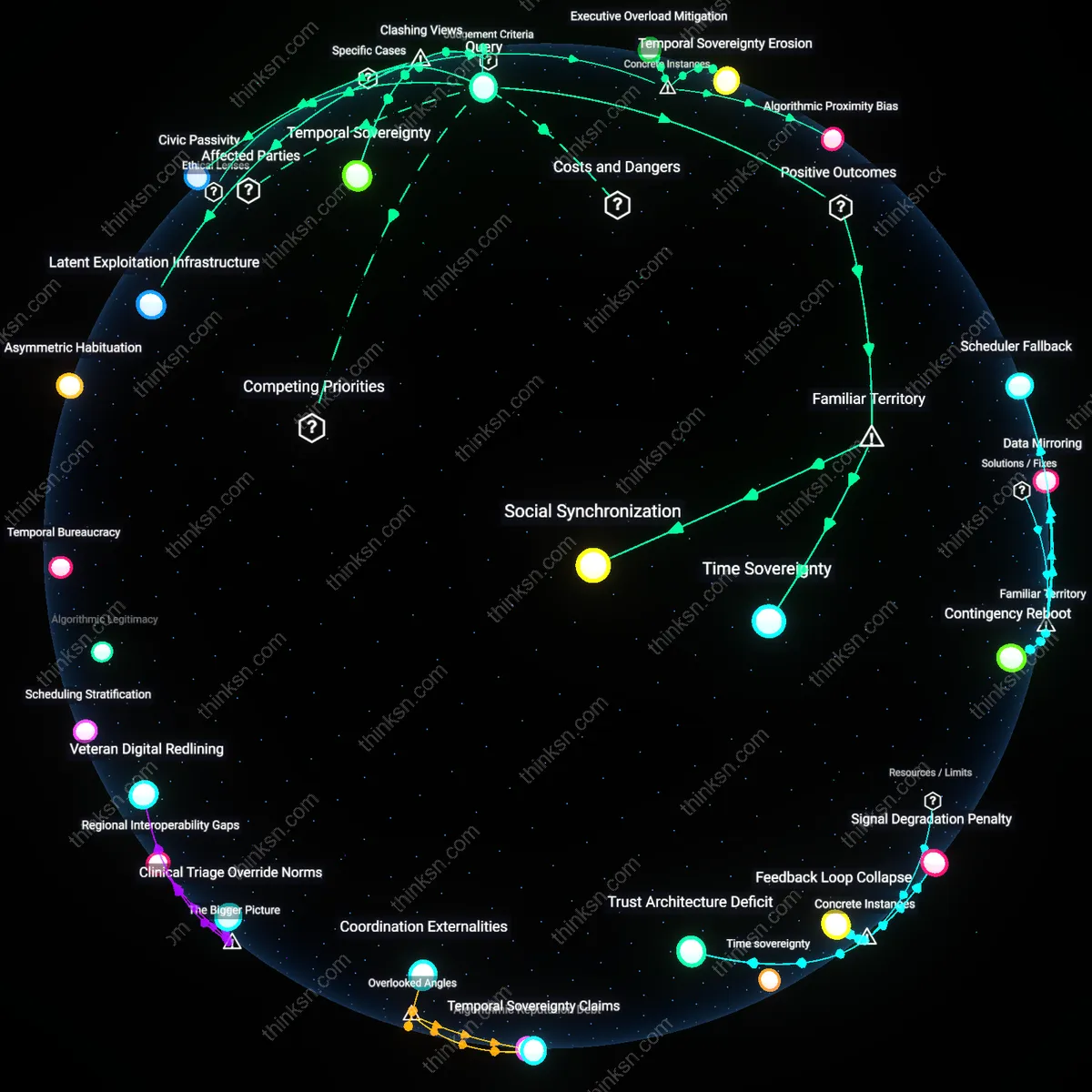
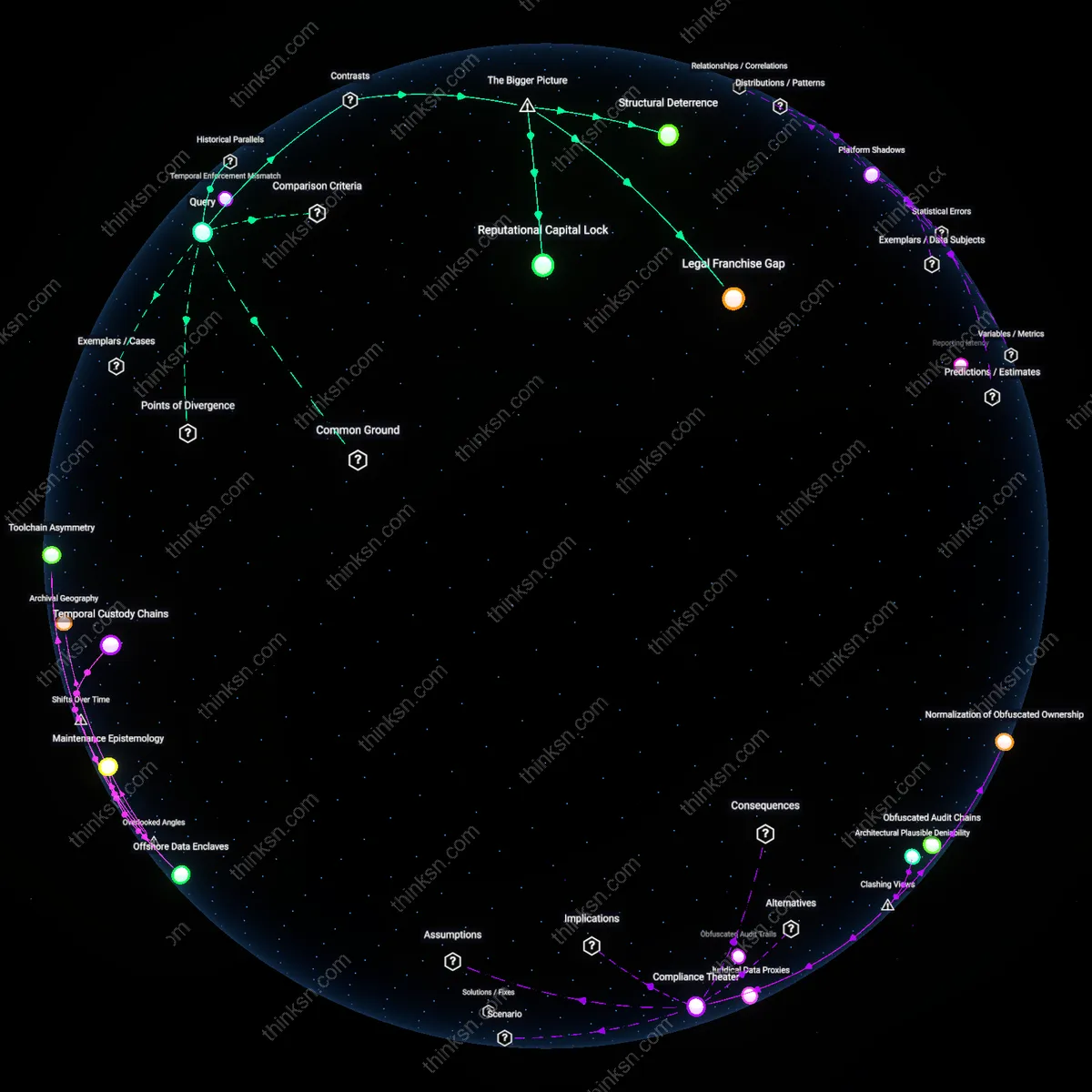
Analysis reveals 6 key thematic connections.
Key Findings
Temporal Sovereignty
Implementing organization-wide asynchronous communication protocols with standardized response-time SLAs creates accountability by making time commitments explicit and measurable. When teams codify expectations around how quickly messages must be acknowledged or acted upon—such as a 24-hour response window for priority tasks—this transforms individual availability into a collective temporal norm enforced through peer review and performance tracking systems. This is significant because it shifts accountability from personal responsiveness to system-governed time discipline, revealing how distributed coordination fails not from laziness but from conflicting temporal sovereignties across time zones and work cultures.
Traceability Infrastructure
Embedding decision-tracing mechanisms—like version-controlled documentation and threaded accountability logs—into collaboration platforms ensures that contributions and delays are attributable to specific actors and decisions. Systems like Notion or Confluence, when mandated for all project updates, force explicit documentation of who decided what and when, making omissions or bottlenecks visible and reviewable in post-mortems. This matters because the core deficit in asynchronous settings isn't lack of effort but invisibility of contribution; traceability infrastructure turns latent work into auditable action, exposing how uncredited cognitive labor erodes trust in remote environments.
Coordination Debt
Treating unaligned communication practices as accumulating coordination debt compels leadership to invest in integrative roles like asynchronous facilitators who synthesize updates and flag accountability gaps. Just as technical debt slows development, unchecked message fragmentation across Slack, email, and project tools creates a systemic drag where responsibilities dissolve into ambiguity—particularly when handoffs cross functional or geographic boundaries. By institutionalizing roles that reconcile these fractures, organizations confront the underappreciated reality that scalability in distributed work depends not on more autonomy but on dedicated maintenance of shared understanding.
Temporal Misalignment Debt
Systemic synchronization protocols can mitigate accountability gaps in asynchronous communication by institutionalizing timestamped decision logs within version-controlled collaboration platforms like GitLab or Notion, a shift originating in post-2015 remote-first tech firms that replaced ad hoc email chains with traceable workflows; this transition revealed how pre-2010 distributed teams relied on episodic check-ins, creating accountability gaps that accrued as unresolved dependencies over time—a condition now recognizable as a form of temporal debt, where delayed clarity compounds confusion and erodes ownership. The non-obvious insight is that accountability deficits are not merely behavioral failures but structural byproducts of asynchronous systems that fail to codify decision latency as a cost.
Tool Sovereignty Threshold
Limiting asynchronous accountability failures requires centralized ownership of collaboration tools by platform engineering teams rather than individual departments, a shift that solidified after 2020 when companies like Automattic and HashiCorp enforced standardized toolchains across global teams; this move countered the prior era’s fragmentation, where teams adopted disparate tools (Slack, WhatsApp, email) based on local convenience, creating information silos that obscured responsibility. The underappreciated consequence of this centralization is that accountability becomes feasible only after a 'tool sovereignty threshold' is crossed—where organizational control over tool standardization surpasses local autonomy, marking a shift from communication flexibility to systemic traceability.
Audit Lag Residue
Accountability in asynchronous systems is increasingly enforced through automated audit trails generated by CI/CD pipelines and project management integrations, a practice that emerged prominently during the 2022–2023 wave of compliance-driven remote scaling in fintech and healthtech; unlike earlier eras where accountability relied on memory or manual reporting, today’s systems embed verification into deployment sequences, rendering omissions visible only in retrospect. The key shift is that accountability is no longer synchronized with action but lags it structurally, producing an 'audit lag residue'—a temporal gap where actions precede their validation, exposing a new form of systemic blind spot despite technological advancement.