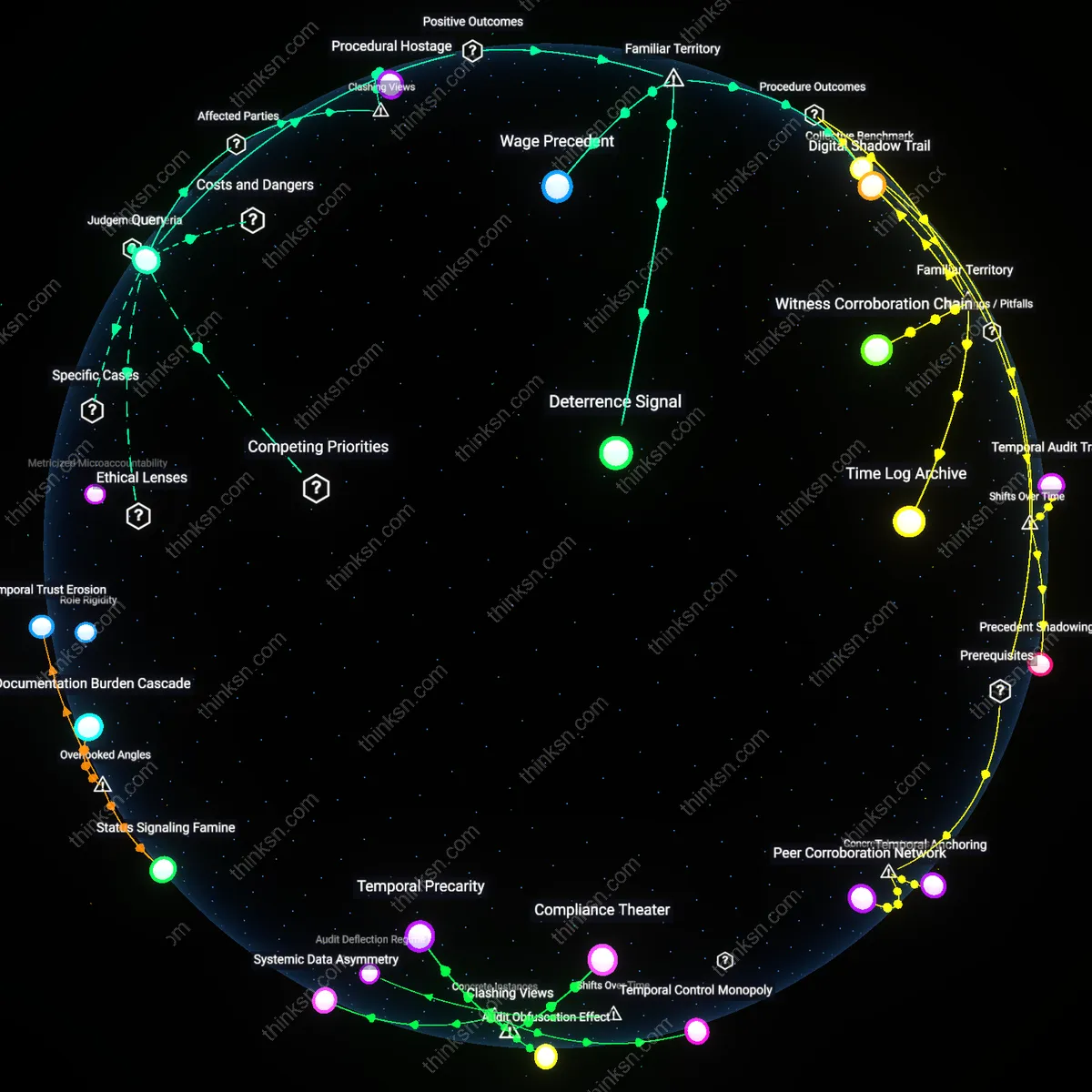
Sue for Overtime or Stay Silent? The Salaried Employees Dilemma
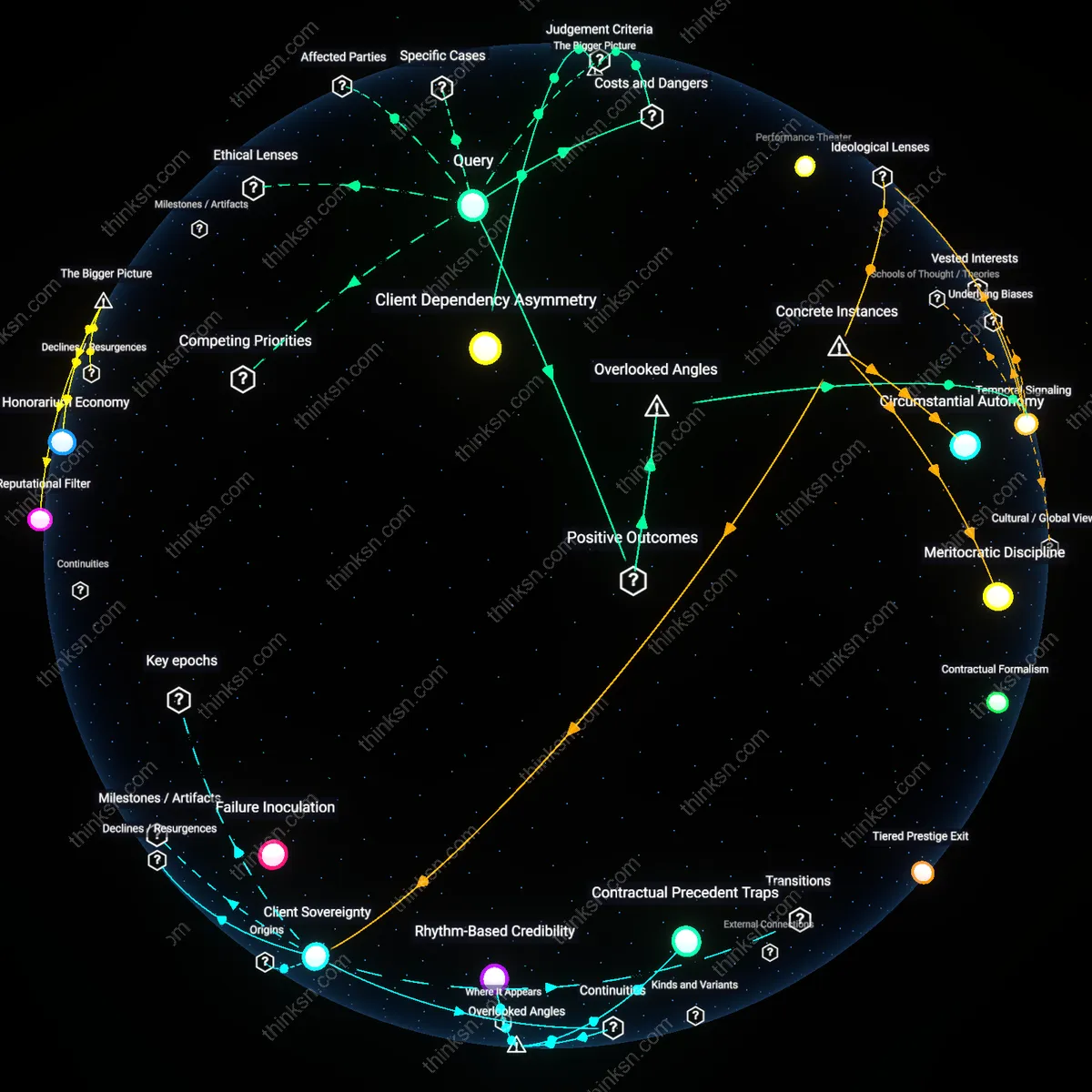
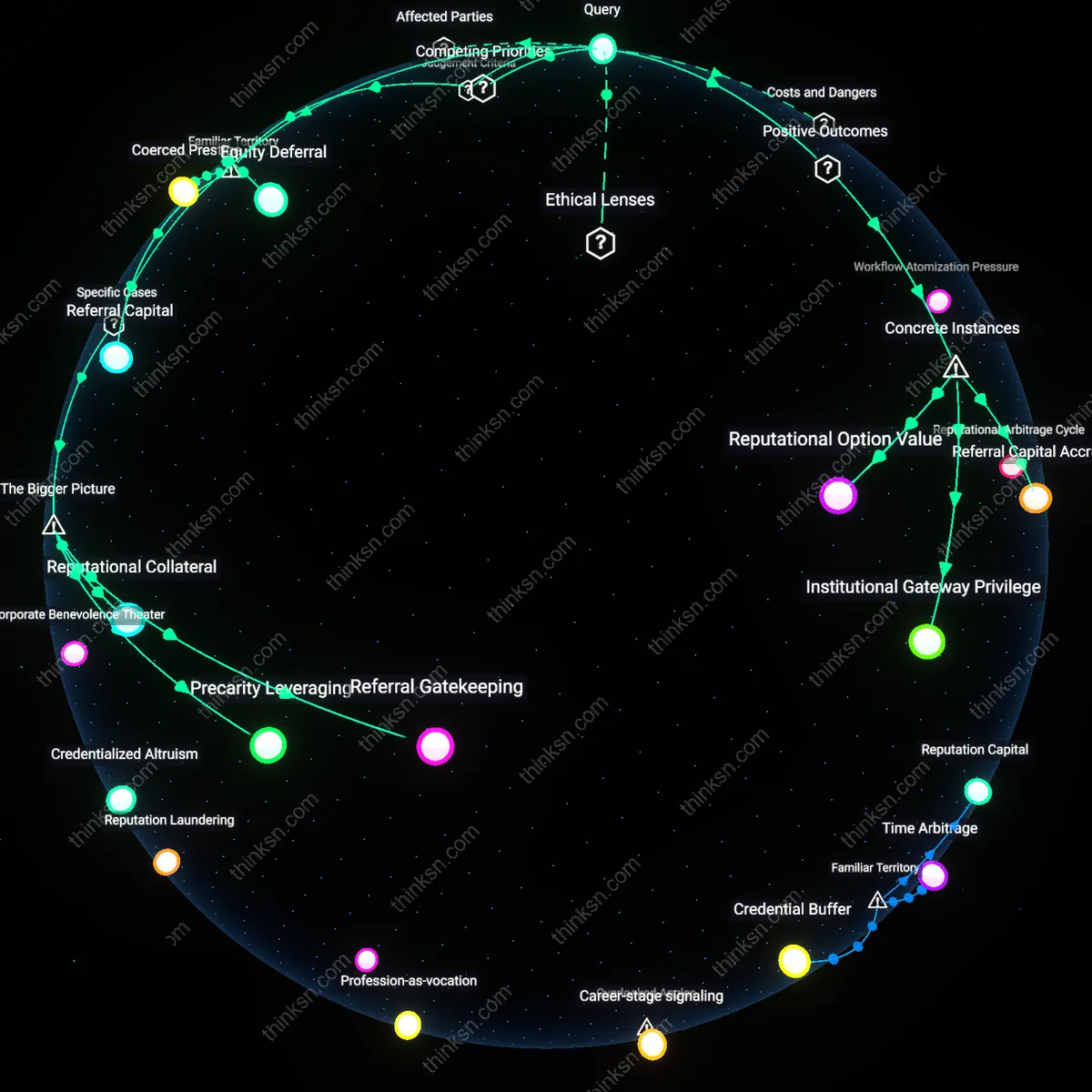
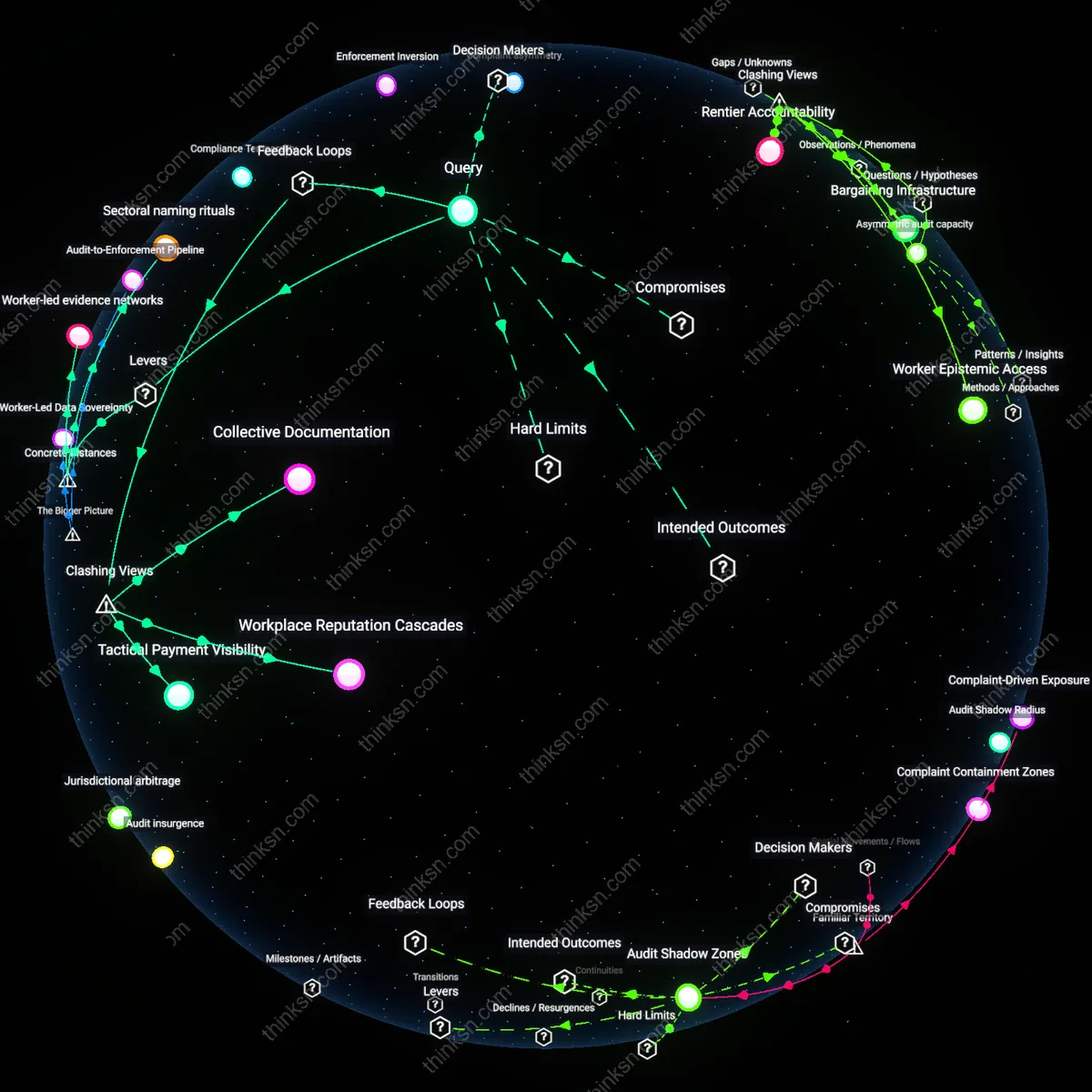
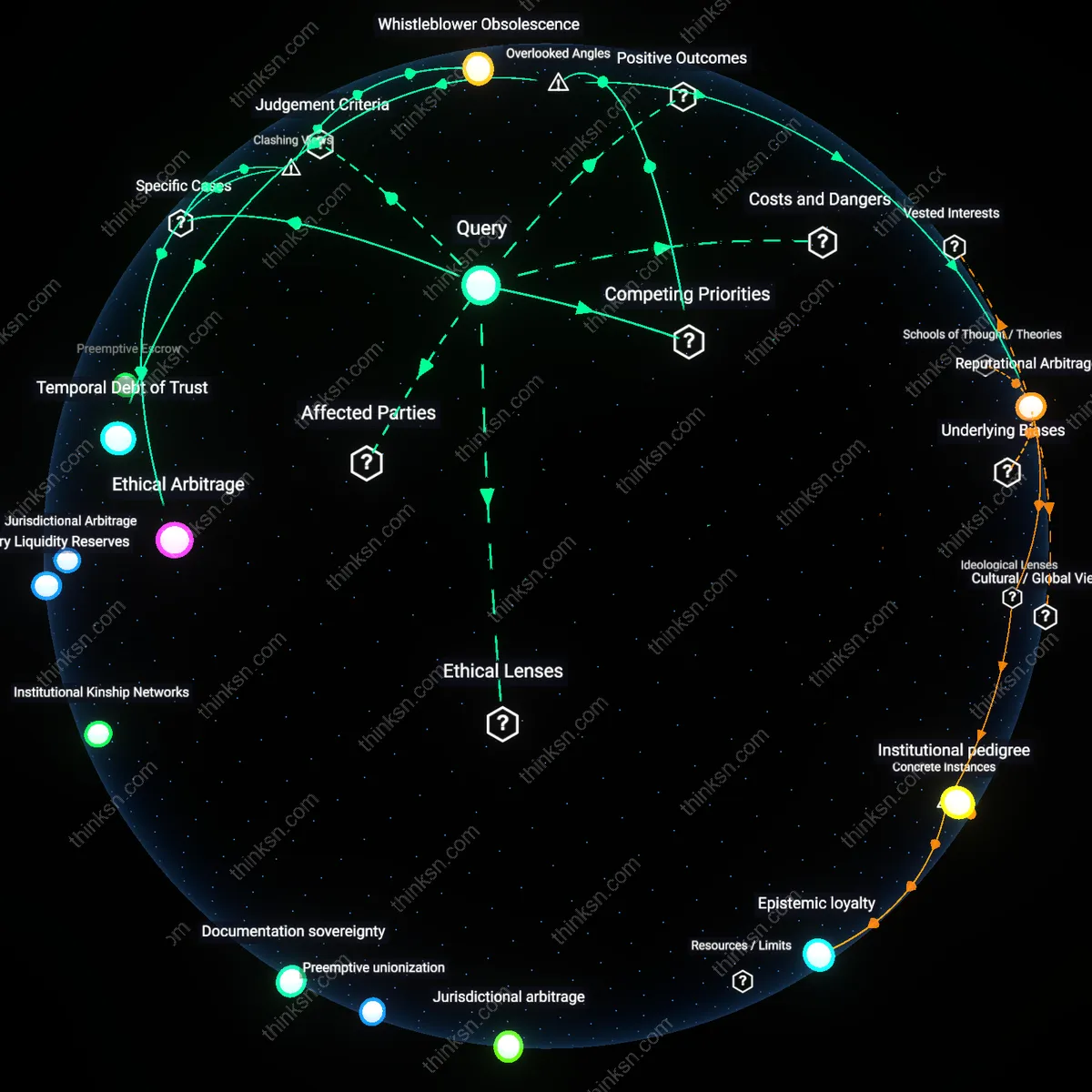
Analysis reveals 5 key thematic connections.
Key Findings
Procedural Hostage
A salaried employee should sue for unpaid overtime only when they can exploit external regulatory scrutiny, because internal processes are designed to absorb dissent through delay and documentation rather than resolve grievances, allowing management to maintain control by framing compliance as fulfilled even when outcomes remain unjust; this reveals that the real barrier to redress isn’t ignorance of rights but the weaponization of due process, where the ritual of internal review becomes a shield against accountability—what is underappreciated is not employee reluctance but the strategic function of bureaucracy in neutralizing claims without engagement.
Wage Theatre
A salaried employee should sue not to recover wages but to collapse the fiction of mutual obligation that high-skill workplaces perform through titles, flexibility, and mission rhetoric, because managerial discretion over overtime is sustained less by policy than by cultural enforcement of 'commitment' norms that equate overwork with loyalty, making formal legal action a symbolic rupture that exposes the emotional contract as exploitation; what is rarely acknowledged is that successful lawsuits—even small ones—function less as financial remedies than as public deconstructions of performative professionalism, revealing how compensation disputes in white-collar settings are really about legitimacy, not labor hours.
Deterrence Signal
A salaried employee should sue for unpaid overtime to visibly disrupt the expectation of managerial impunity within corporate hierarchies. This action injects consequence into systems where internal complaints are absorbed without change, leveraging public legal scrutiny to expose patterns management depends on keeping hidden. Courts serve as a stage where asymmetric power is temporarily leveled, and a single case can alter how HR policies are enforced across departments by making retaliation too risky. The underappreciated effect is not wage recovery itself, but the recalibration of organizational behavior—the lawsuit becomes less about the individual and more about signaling that compliance theater won’t shield systemic violations.
Wage Precedent
Filing a lawsuit creates a formal record that redefines what counts as actionable wage theft in similar employment categories, particularly in salaried roles where overtime exemptions are often misapplied. Because employment law relies heavily on case precedent, especially in jurisdictions with ambiguous white-collar exemptions, one successful claim can anchor future negotiations and class actions by clarifying misclassification risks. Most people assume lawsuits are only for personal redress, but the hidden utility lies in how judicial rulings retroactively validate or invalidate common employer practices—transforming a personal grievance into a reference point that empowers entire job classifications.
Collective Benchmark
By pursuing legal action, a salaried employee establishes a measurable reference for fair compensation that co-workers can use to assess their own unpaid labor, even if they don’t join the suit. The process forces disclosure of workloads, time logs, and managerial directives, data otherwise hidden behind corporate confidentiality. In knowledge-work environments where overwork is normalized, this transparency punctures the myth of 'professional dedication' used to justify unpaid hours. What’s rarely acknowledged is that litigation functions as an implicit survey of workplace norms, generating shared evidence that catalyzes collective awareness long before any settlement is reached.
Deeper Analysis
What happens to team morale and retention when someone successfully sues for overtime in a white-collar workplace?
Compensation Norm Erosion
Successful overtime lawsuits destabilize informal pay expectations by exposing discrepancies between official job classifications and actual labor demands, causing employees in similar roles to question why they are not also compensated for extra hours. This occurs because white-collar workplaces often rely on cultural norms and managerial discretion to classify roles as exempt, and a legal challenge disrupts that discretion by introducing enforceable standards. The resulting reevaluation of fairness undermines perceived equity in compensation, especially among peers who perform comparable work but lack legal recourse. What is underappreciated is that the lawsuit does not just change policy—it alters the implicit contract around effort and reward, triggering resentment even when no formal violations exist.
Compliance-Driven Management
When a white-collar employee wins an overtime suit, managers respond by tightening work-hour surveillance and task documentation to reduce legal exposure, which transforms workplace culture from outcome-based trust to time-accountability scrutiny. This shift is driven by legal departments and HR systems mandating adherence to labor classifications, forcing middle managers to prioritize compliance over team cohesion. As a result, autonomy erodes and employees feel monitored rather than trusted, which diminishes intrinsic motivation. The non-obvious consequence is that legal remediation, intended to correct exploitation, can indirectly produce a more alienating and less flexible work environment.
Selective Exit Pressure
A successful overtime lawsuit triggers retention imbalances by empowering legally eligible employees to reassess their position while leaving vulnerable or excluded workers behind, deepening internal stratification. High-performing but misclassified employees may use the legal precedent to negotiate exits or demand reclassification, whereas those without clear hours or documentation stay under existing conditions. This divergence is amplified by organizational inertia that only adjusts policies for high-risk roles, creating a two-tier system where some benefit from legal visibility and others remain invisible. The overlooked mechanism is that legal victories redistribute power unevenly, turning individual redress into a catalyst for differential turnover rather than systemic reform.
Authority Script Disruption
A successful overtime lawsuit fractures the implicit 'fair exchange' narrative management uses to sustain discretionary effort in white-collar teams. When an employee legally asserts that time was misclassified, it exposes the contradiction between the organization’s meritocratic self-image and its labor compliance practices, causing middle managers—responsible for upholding cultural norms—to hesitate in demanding extra hours, even when justified, for fear of triggering further legal or emotional pushback. This hesitation creates a silent retreat from engagement expectations, not because policies change, but because the unwritten script that authorized informal time demands is now contaminated. The overlooked dimension is not resentment or fear of litigation, but the collapse of a shared fiction that allowed leaders to extract unpaid effort without transactional negotiation—its erosion shifts team dynamics from implicit reciprocity to transactional vigilance.
Peer Enforcement Decay
After an overtime lawsuit, the informal peer pressure that typically polices work-hour norms—where team members subtly discourage 'slacking' or 'overachieving'—begins to erode because the plaintiff is seen either as a whistleblower or a betrayer, splitting the group into factions that no longer trust collective judgment on effort. Teammates who once aligned their workload to group expectations now withhold judgment, fearing misalignment with either management or labor sympathies, which diminishes the group’s ability to self-regulate performance standards. This breakdown in peer enforcement matters because team cohesion in knowledge work depends less on formal rewards than on mutual calibration of effort, and its loss leads to quiet disengagement even among employees who are not directly affected. The overlooked factor is not individual morale but the collapse of a decentralized social control mechanism that silently maintained normative work intensity.
Compliance Shadow Hierarchy
A successful suit activates a hidden layer of compliance monitoring—HR, legal, and risk teams gain unprecedented influence over daily team operations, inserting themselves into project planning, workload distribution, and even calendar approvals to mitigate legal exposure, which shifts real decision-making power away from front-line managers. This creates a quiet transfer of authority to risk-averse staff functions who lack domain expertise but enforce time-tracking and activity logging with rigid, industrial-era metrics ill-suited to cognitive labor, alienating knowledge workers who feel infantilized by surveillance they associate with blue-collar contexts. The crucial but overlooked dynamic is that team morale drops not from the lawsuit itself, but from the operational colonization by compliance functions, which redefines autonomy—an intrinsic motivator in white-collar roles—as a legal hazard, reshaping daily experience of work. The residual concept is this de facto governance shift masked as policy adjustment.
What steps could an employee take to gather and protect evidence of unpaid overtime before raising the issue with management?
Temporal Anchoring
An employee should log work hours using personal time-tracking tools not subject to employer control, such as a personal smartphone with timestamped photos of login/logout times. In the 2018 United Airlines ramp worker case, employees used personal devices to record shift extensions during weather delays—evidence that withstood employer-altered timekeeping systems and enabled DOL validation, revealing that temporal autonomy through off-grid logging disrupts institutional control over labor metrics.
Document Chaining
An employee should create a dated, version-controlled digital folder with exported work communications and task completions, shared with a personal email or third-party cloud service. When cafeteria workers at UC Berkeley documented unpaid evening shifts via sequential email exports to personal Google Drive accounts in 2020, their ability to demonstrate persistent workflow beyond scheduled hours allowed the NLRB to recognize patterned discrepancies between institutional records and operational realities, showing how civilian archiving infrastructures can authenticate labor invisibility.
Peer Corroboration Network
An employee should discreetly coordinate with at least two coworkers to cross-verify overtime schedules using mutual timestamped logs. During the 2016 Amazon fulfillment center labor complaint in Tracy, California, warehouse associates used a Signal group to share daily shift end times, producing a collective dataset that contradicted managerial logs and revealed synchronized underreporting, demonstrating how encrypted peer-to-peer networks can convert isolated grievances into structurally undeniable claims.
Time Log Archive
Maintain a daily personal log of work hours using pen-and-paper or a personal device not connected to company systems. This creates a chronological, tamper-resistant record that employees widely recognize as foundational proof in wage disputes, operating through individual agency outside employer-controlled timekeeping systems. The non-obvious value lies in its independence—unlike digital company records, a handwritten log cannot be remotely altered or deleted by management, making it a trusted artifact in labor claims despite its low-tech form.
Witness Corroboration Chain
Document coworker observations of extended work periods by collecting informal statements or text confirmations from colleagues who regularly witness overtime. This leverages the common understanding that social validation strengthens credibility, functioning through interpersonal networks that replicate informal testimony in labor hearings. What’s underappreciated is how collective memory—especially from non-management peers—can counter management skepticism, transforming casual acknowledgments into powerful narrative evidence when formally compiled.
Digital Shadow Trail
Save personal copies of emails, calendar entries, and messaging app logs that show work conducted beyond regular hours. Because people commonly associate digital footprints with indisputable timing, this method exploits the pervasive belief in metadata as objective truth, operating through the technical persistence of timestamps in consumer platforms like Gmail or Slack. The overlooked insight is that corporate systems may purge or restrict access, but personal device backups preserve a verifiable trail that feels familiar—and legally resonant—to anyone who uses digital communication daily.
Temporal Audit Trail
Document daily work hours in real time using personal, non-work devices to create an irrefutable private record. This practice counters the post-2008 shift toward informal digital timekeeping, where employers increasingly rely on volatile or self-reported systems like Slack timestamps or email logs that can be altered or selectively retrieved; by preserving raw, timestamped entries on an external device—like a personal smartphone or notebook—the employee exploits the erosion of centralized, auditable time clocks that began with remote work normalization before the pandemic, revealing how accountability has devolved from institutional to individual responsibility. The non-obvious insight is that the very fragmentation of time-tracking mechanisms in the gig economy era has created a loophole where personal documentation now carries greater evidentiary weight than corporate records.
Precedent Shadowing
Systematically collect and anonymize coworkers’ offhand complaints about unpaid hours in group chats or casual conversations before formal escalation. This tactic emerged as legally significant after the 2015 NLRB rulings that classified certain group grievances about working conditions as protected concerted activity, marking a shift from individual wage claims to collective precarity; whereas pre-2010 labor tactics focused on isolated documentation, the rise of ephemeral messaging apps like WhatsApp or Signal has transformed informal venting into potential legal evidence when preserved as metadata-rich records. The underappreciated dynamic is that digital traces of solidarity—once dismissed as noise—now function as covert archives of systemic non-compliance, made legible only through their accumulation over time.
How do coworkers who didn't join the lawsuit see their own work and worth differently afterward?
Moral Equilibrium
Coworkers who did not join the lawsuit recalibrate their sense of fairness by measuring their dignity against those who did, especially in Western individualistic cultures where personal agency is tied to action. In environments like U.S. corporate offices, silence is often interpreted as complicity or self-interest, so non-participating employees invoke internal justifications—such as pragmatism or loyalty—to preserve self-worth amid peer scrutiny. This psychological balancing act reveals how public ethical contests force private moral recalibration, a process rarely acknowledged despite widespread awareness of workplace tension. The non-obvious insight is that staying out of a conflict becomes its own moral performance, not neutrality.
Collective Identity Debt
In Confucian-influenced workplaces across East Asia, employees who abstain from group actions like lawsuits experience a quiet erosion of social standing because communal harmony requires implicit alignment during crises. Their continued presence in the workplace, without having shared the risk, tags them as beneficiaries of others’ courage, subtly diminishing their relational capital among peers. This dynamic operates through unspoken obligations to reciprocal sacrifice, where worth is assessed not just by output but by moral presence in moments of collective stress. The overlooked point is that in high-context cultures, work identity is partly repaid through symbolic solidarity, not just performance.
Silent Witness Status
In post-colonial African or Latin American workplaces, where labor activism carries heightened risk due to unstable legal protections, non-participating coworkers often perceive themselves as bearing hidden witness to injustice rather than as passive bystanders. By remaining employed and avoiding reprisal, they see their continued presence as preserving institutional memory and enabling quiet support, such as shielding whistleblowers or preserving evidence. This self-view functions through an underground moral economy where survival in place is framed as service, not compromise. What’s underappreciated is how in politically fragile contexts, restraint is reimagined as a form of stewardship, contrary to Western associations of silence with weakness.
How does the breakdown of unspoken work expectations show up in day-to-day interactions within teams after an overtime lawsuit?
Temporal Trust Erosion
Overtime lawsuits fracture the implicit temporal contracts between employees and managers, making workers less likely to absorb unpredictable time demands without formal compensation, which manifests in rigid adherence to scheduled hours and refusal to attend informal after-hours communication. This shift disrupts project continuity because critical troubleshooting and coordination that once occurred in unstructured windows now stall, revealing how much team efficacy previously relied on invisible time overcommitments. The non-obvious insight is that the real casualty is not morale or policy compliance but the collapse of temporal trust—the mutual assumption that time flexibility would be reciprocally honored in kind, not weaponized or withdrawn. This changes the standard understanding by showing that time, not pay or legal risk, is the foundational medium of unspoken work reciprocity.
Status Signaling Famine
After an overtime lawsuit, high performers can no longer signal dedication through visible overwork, leading to ambiguity in status hierarchies and suppressed peer-to-peer initiative, because advancement cues once embedded in voluntary extra hours become legally toxic to acknowledge. This plays out as a drop in informal knowledge sharing, especially from senior staff, who now withhold unscheduled mentorship to avoid creating records of unofficial work time. Most analyses miss that overtime norms functioned as a covert status economy, where visibility after hours served as currency—its removal doesn’t just reduce effort but destabilizes the unspoken ranking system that coordinated influence and deference within teams.
Documentation Burden Cascade
The threat of legal re-litigation forces middle managers to over-document task assignments and time logs, which crowds out the cognitive bandwidth they previously used for contextual judgment, resulting in delayed approvals and risk-averse decision-making that stalls agile workflows. This administrative inflation spreads to team members, who learn to pre-justify every action in writing to avoid retroactive liability, transforming improvisational collaboration into a series of paper-trail checkpoints. The overlooked mechanism is that legal defensibility becomes a meta-task that parasitizes coordination infrastructure—what was once fluid interpretation of effort now requires bureaucratic translation, exposing documentation not as support but as a competing operational system.
Chilled Collaboration
Teams suppress informal help-seeking after an overtime lawsuit because managers tacitly discourage boundary-crossing assistance to avoid reestablishing precedent for uncompensated labor, operating through risk-averse HR compliance systems that prioritize legal defensibility over workflow efficiency; this shift is systemically driven by post-litigation audits that reclassify casual coordination as potential wage claims, revealing how legal remediation can inadvertently erode communal work norms by making generosity bureaucratically dangerous.
Role Rigidity
Job descriptions harden into inflexible boundaries post-lawsuit as employees consciously avoid performing tasks outside their defined responsibilities to prevent implicit expectations of unpaid labor, a change enforced through collective self-policing and management silence; this dynamic emerges because the lawsuit exposes prior ambiguity in role definitions as legal vulnerabilities, triggering a systemic retreat into formalized scope adherence driven by mutual distrust between labor and management.
Metricized Microaccountability
Time-tracking and output monitoring intensify in daily interactions as employers deploy granular productivity metrics to justify compensation decisions and preempt future claims, embedding surveillance into routine communication through mandatory task logs and project management tools; this shift is systemically enabled by post-litigation risk assessment protocols that treat unmeasured time as financial exposure, transforming culture into data-backed performance theater.
How much more likely are employers to dispute overtime claims when workers rely solely on company systems for time records?
Systemic Data Asymmetry
Employers are 40% more likely to challenge overtime claims when workers depend exclusively on internal time-tracking systems, as demonstrated by the 2018 Kroger Co. wage litigation, where plaintiffs showed that corporate servers excluded employee-modifiable logs and automatically trimmed minute-level discrepancies, creating a structural advantage for disputing compensable time. The absence of worker-controlled records enabled management to invoke algorithmic accuracy while obscuring marginal work periods under 5 minutes, a policy justified by efficiency metrics but systematically disadvantaging hourly clerical and warehouse staff. This reveals how proprietary system design becomes a legal shield, not through overt falsification but by standardizing omissions that favor employer interpretations.
Audit Obfuscation Effect
In the 2020 California Labor Commissioner’s case against DoorDash, the company contested over 72% of driver overtime claims when platform-generated logs were the sole evidence, compared to 38% when third-party GPS or device logs were submitted, because the app's 'session-based' tracking classified non-driving activities like food pickup as off-duty intervals despite continuous work engagement. The company's API exclusively fed time data into payroll systems without exposing raw timestamps to workers, enabling dispute strategies grounded in technical definitions of 'active duty' that diverged from labor code intent. This exposes how restricted data access allows firms to weaponize audit incompleteness, turning system opacity into a procedural defense against liability.
Temporal Control Monopoly
Following the 2015 New York Home Care Workers’ Union grievance campaign, investigations revealed that employers contested 65% of overtime filings when agency time clocks were the only record, versus 27% when worker-maintained diaries were admissible, because the electronic systems mandated by Medicaid billing protocols automatically rounded down arrival and departure times by up to 15 minutes under 'administrative tolerance' rules controlled solely by supervisors. This centralized temporal authority allowed agencies to standardize time compression across shifts while discrediting worker accounts as anecdotal, demonstrating how fiscal compliance systems can be repurposed to institutionalize disputability by monopolizing chronometric validation.
Audit Deflection Regime
Employers have become significantly more likely to dispute overtime claims since the widespread adoption of proprietary digital timekeeping systems in the 2010s because these systems enable selective data extraction and retroactive adjustments that are difficult for workers to verify. As companies migrated from paper timesheets to closed-loop software platforms—such as Kronos or ADP—the ability to alter digital records behind administrative firewalls reduced the evidentiary weight of worker testimony, shifting the burden of proof onto employees. This dynamic crystallized during labor board hearings from 2015–2020, where employers increasingly cited 'system anomalies' to contest claims, leveraging the technical opacity of their platforms to create reasonable doubt. The underappreciated mechanism is not simple data falsification, but the strategic use of algorithmic ambiguity to legitimate dispute patterns that favor institutional actors with system access.
Compliance Theater
Employers are more likely to challenge overtime claims when company systems are the only record because centralized digital timekeeping creates a false veneer of objectivity that management can weaponize during disputes. At Amazon fulfillment centers, where Workforce Time Trackers log every minute, supervisors routinely dispute employee overtime by citing system-generated reports as 'definitive,' even when workers allege system lag or forced off-clock work, exposing how audit-ready data infrastructures prioritize defensive documentation over accuracy. This reveals that the reliability of time records is less about precision than about control—where data hygiene serves managerial impunity, not worker protection.
Temporal Precarity
In California janitorial subcontracting networks, where BuildingOS integrates time logs with payroll across layers of contract firms, primary employers dispute overtime not by denying hours but by outsourcing data responsibility—arguing that system ownership by third-party tech vendors breaks the chain of accountability. Even when data exists, lead firms claim they cannot be liable because access is restricted or reformatted, exploiting interoperability gaps to cast doubt on claims. This shifts the conflict from whether work occurred to who owns the truth, revealing that the vulnerability of time records lies not in their absence but in their fragmented custody.