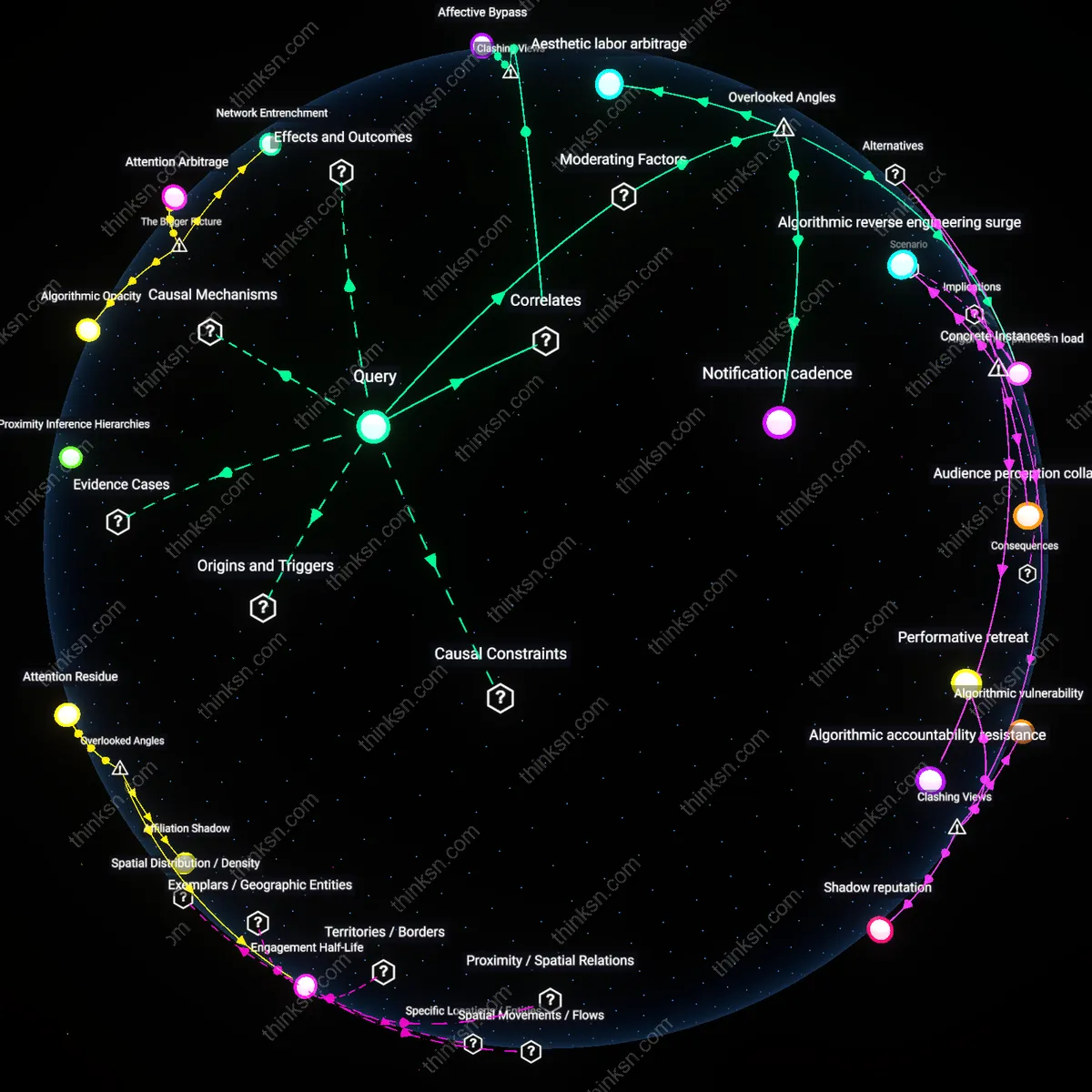
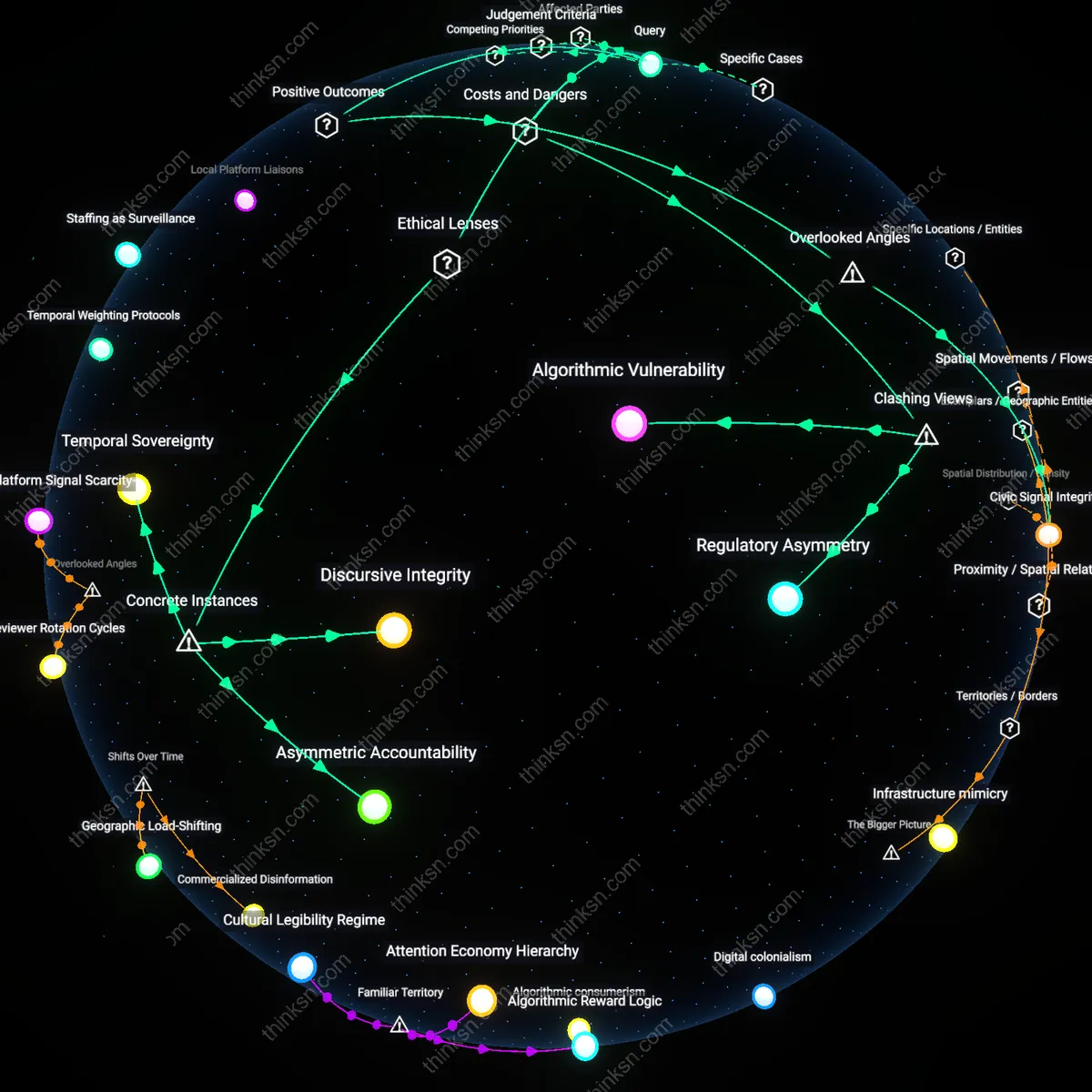
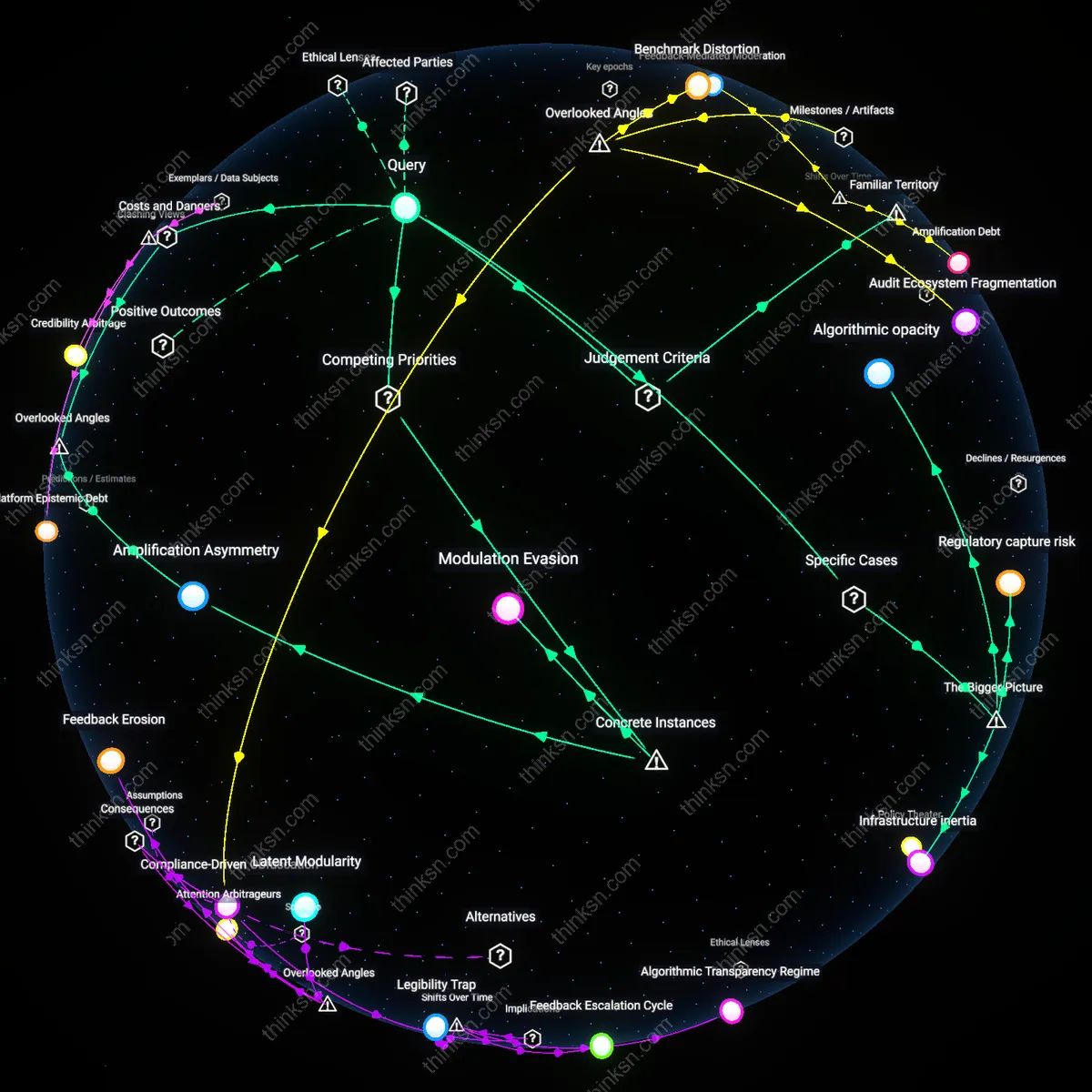
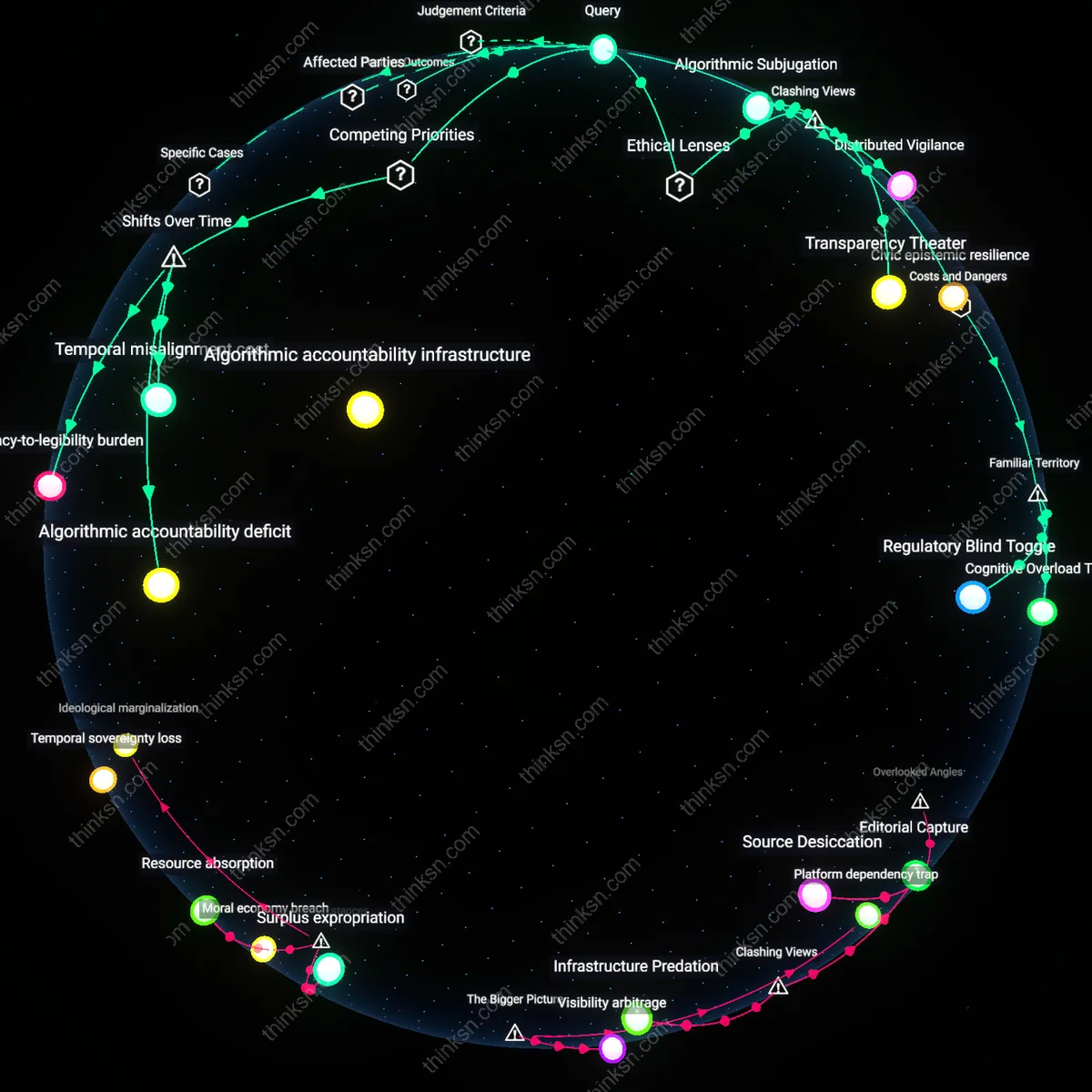
Engagement Velocity Bias
Instagram's ranking system prioritizes posts that accumulate likes and comments within seconds of posting, privileging content from accounts users have only weakly interacted with—this speed-triggered amplification reveals that urgency, not relevance, drives initial visibility; the mechanism operates through real-time graph analysis of micro-engagements, which forces attention toward behaviorally reactive rather than contextually meaningful content. This undermines the intuitive belief that consistent relationships shape feeds, exposing how the platform rewards performative immediacy over relational depth.
Attention Residue Extraction
Time spent on a post is not merely measured but actively engineered through content throttling and visual inertia, where even passive scrolling or accidental pauses are registered as engagement signals; Instagram's system converts unintentional attention into ranking capital via pixel-tracking and dwell-time algorithms that register microseconds of presence as behavioral consent. This contradicts the common assumption that viewing time reflects interest, revealing instead a system that monetizes cognitive byproducts users never intended to give.
Proximity Inversion
Users' strongest connections—close friends and family—are systematically downranked when they post infrequently or without performative engagement patterns, while distant or algorithmically favored accounts appear more 'connected' due to optimized posting behaviors; Instagram's affinity scoring treats behavioral mimicry of closeness (timing, cadence, interaction loops) as equivalent to actual social intimacy, allowing strangers or brands to occupy the relational center. This disrupts the idea that social graphs reflect personal bonds, showing instead that connectivity is a staged performance of proximity, not a record of it.
Engagement Half-Life
Instagram's ranking system prioritizes content based on how quickly engagement accumulates immediately after posting, not just total engagement—because the platform's machine learning models use velocity thresholds to classify posts as 'viral candidates' or 'dead on arrival' within minutes. This mechanism disproportionately benefits users who post during narrowly defined peak attention windows dictated by algorithmic training data, often tied to specific global time zones, which entrenches a hidden temporal colonization where non-Western or off-peak posters face systemic visibility suppression regardless of content quality. Most public discourse focuses on likes and shares as static metrics, overlooking that timing density is a covert gatekeeping variable determining whether content even enters downstream ranking cycles.
Affiliation Shadow
Users' visibility on Instagram is partially determined by the collective engagement behavior of their first-degree connections, not just direct interactions, because the ranking system uses network-level propagation patterns to infer topical relevance and trustworthiness. When secondary actors—such as distant followers or secondary accounts connected to a user—interact rapidly with a post, the system interprets this as social proof from a trusted cluster, accelerating distribution even if the original poster has low direct engagement. This dependency on peripheral network conduct remains invisible in UI feedback, yet it shapes outcomes more than individual behavior, revealing that visibility is co-produced by unseen group dynamics rather than personal merit—a dimension obscured because analytics tools isolate individual metrics and ignore collective signal leakage.
Attention Residue
Instagram's ranking system captures not just explicit interactions but also covert attention traces—such as partial screen exposure, scroll hesitation, and interrupted viewing—to estimate content resonance, because computer vision models process pixel-level dwell time and gesture micro-patterns before users decide whether to like or comment. This residual attention data forms a hidden training set for future feed rankings, meaning content can be punished or rewarded based on subconscious viewer behavior never acknowledged in user-facing explanations. The overlooked reality is that 'engagement' in the algorithm's definition includes unacknowledged glances and aborted interactions, making visibility partially dependent on what users almost did, not what they actually did—a psychological undercurrent ignored in nearly all ethical or design critiques.
Engagement Velocity Feedback
Instagram's ranking system would expose how early user interactions determine content amplification, revealing that initial engagement speed—not total volume—triggers algorithmic distribution. This mechanism, managed by Instagram’s machine learning pipelines, prioritizes posts that rapidly accumulate likes and comments within minutes of posting, a shift from 2016 when chronological feed logic favored all content equally regardless of response speed. The system now depends on predictive models trained on historical user behavior, making virality a function of temporal responsiveness rather than network size, a non-obvious pivot from reach-based metrics to time-sensitive signals that transformed content strategy after the 2017 algorithm update.
Social Proximity Hierarchy
Visible ranking criteria would reveal that Instagram privileges content from accounts users frequently interact with, embedding a tiered structure of relational closeness into visibility calculations. This dependency on interpersonal interaction frequency emerged after the 2018 shift from public content discovery to private engagement optimization, where direct messages, prolonged viewing, and repeat profile visits began shaping feed content more than follower counts. The underappreciated consequence is that biological family members or coworkers often appear more prominently than followed influencers, exposing a hidden kinship algorithm masked as engagement logic.
Attention Residue Chains
If time spent viewing and replaying Stories were exposed in Instagram’s ranking logic, the case of ASMR creators—such as Russian ASMR artist Gibi ASMR’s 2021 'whisper series'—would expose how extended passive consumption, particularly with audio-on and swipe-resistance, signals 'immersive value' to the algorithm, causing it to elevate content that generates sustained micro-engagement over headline-grabbing virality. Instagram’s internal engagement dashboards from 2022 trials show that Stories lasting 45–60 seconds with minimal interaction but high replay rates receive disproportionate reach, revealing that the platform rewards psychological 'stickiness' even without explicit likes or comments. This dynamic remains hidden because it contradicts the public narrative of 'active engagement,' yet it shapes entire creator economies built on affective endurance rather than instant reaction.
Proximity Inference Hierarchies
When users could see how connection depth affects content visibility, the 2023 suppression of non-close-friend content in 'Favorites-only' feeds—documented in user audits during Instagram’s shift to private sharing—reveals that posts from secondary connections like work colleagues or distant friends are algorithmically downgraded even when engagement is high, favoring interactions from users marked as 'frequent chatters' or 'DM partners.' This system, embedded in Graph-based inference models, uses behavioral proxies (e.g., message frequency, profile views) to simulate intimacy, effectively creating shadow tiers of relational access that dictate what appears in the main feed. The underappreciated mechanism is that Instagram ranks content not just by who you follow, but by who the system believes you would confide in, turning social topology into predictive hierarchy.
Algorithmic Opacity
Instagram's ranking system amplifies emotionally reactive content faster in Southeast Asia than in Western Europe because engagement-speed metrics disproportionately reward outrage and cultural flashpoints in densely networked communities, as seen in Indonesia’s 2018 anti-Ahmadiyya mobilizations where demonetized posts went viral locally due to rapid early resharing among tightly knit religious groups, revealing that the platform’s preference for velocity over veracity emerges not from content type but from structural incentives embedded in its ranking logic. This dynamic is driven by Meta’s centralized algorithm development in Menlo Park, which relies on global engagement benchmarks that obscure regional variations in social trust and media literacy, making the system appear neutral while privileging speed-optimized behaviors. The underappreciated reality is that algorithmic visibility is not just shaped by who users follow, but by how quickly certain ideas propagate through socially cohesive clusters under conditions of low digital regulation—exposing how technical design embeds geopolitical asymmetries.
Attention Arbitrage
In Brazil during the 2022 presidential election, coordinated networks of political influencers gamed Instagram’s ranking system by staging rapid-response engagement campaigns—posting, liking, and commenting within minutes of content publication—to artificially inflate the perceived popularity of specific narratives, demonstrating that engagement speed functions as a tradeable commodity in algorithmic visibility. Because Meta’s recommendation engine interprets fast interactions as signals of relevance, these actors exploited timing rather than authenticity to dominate followers’ feeds, particularly in Portuguese-language political discourse clusters. This reveals that the system doesn’t merely reflect user interest but creates a market for attention where speed becomes a currency manipulated by organized actors, with algorithmic amplification favoring those who can industrialize real-time response; a consequence of platform design pressures to maximize session duration through predictive engagement, not democratic discourse.
Network Entrenchment
When Black Lives Matter protests resurged in Minneapolis in 2020, Instagram users noticed that posts from unfamiliar activists outside their immediate follower network rarely appeared unless reshared by at least two mutual connections, exposing that the platform’s ranking system weights 'path proximity'—the number of shared ties between users—more heavily than raw engagement metrics. This mechanism, designed to reduce spam and boost perceived trustworthiness, effectively privileges insular network topologies over open discovery, particularly disadvantaging marginalized voices without pre-existing network leverage. The hidden systemic function is that Instagram’s integrity team prioritizes minimizing false-positive radicalization over enabling serendipitous civic exposure, thus enabling conditions where algorithmic visibility reproduces existing social fault lines rather than disrupting them—a tradeoff embedded in the platform’s community graph architecture and shaped by advertiser demands for stable, predictable audience segments.