Why Medicare Policies Favor Hospital Care at End-of-Life?
Analysis reveals 8 key thematic connections.
Key Findings
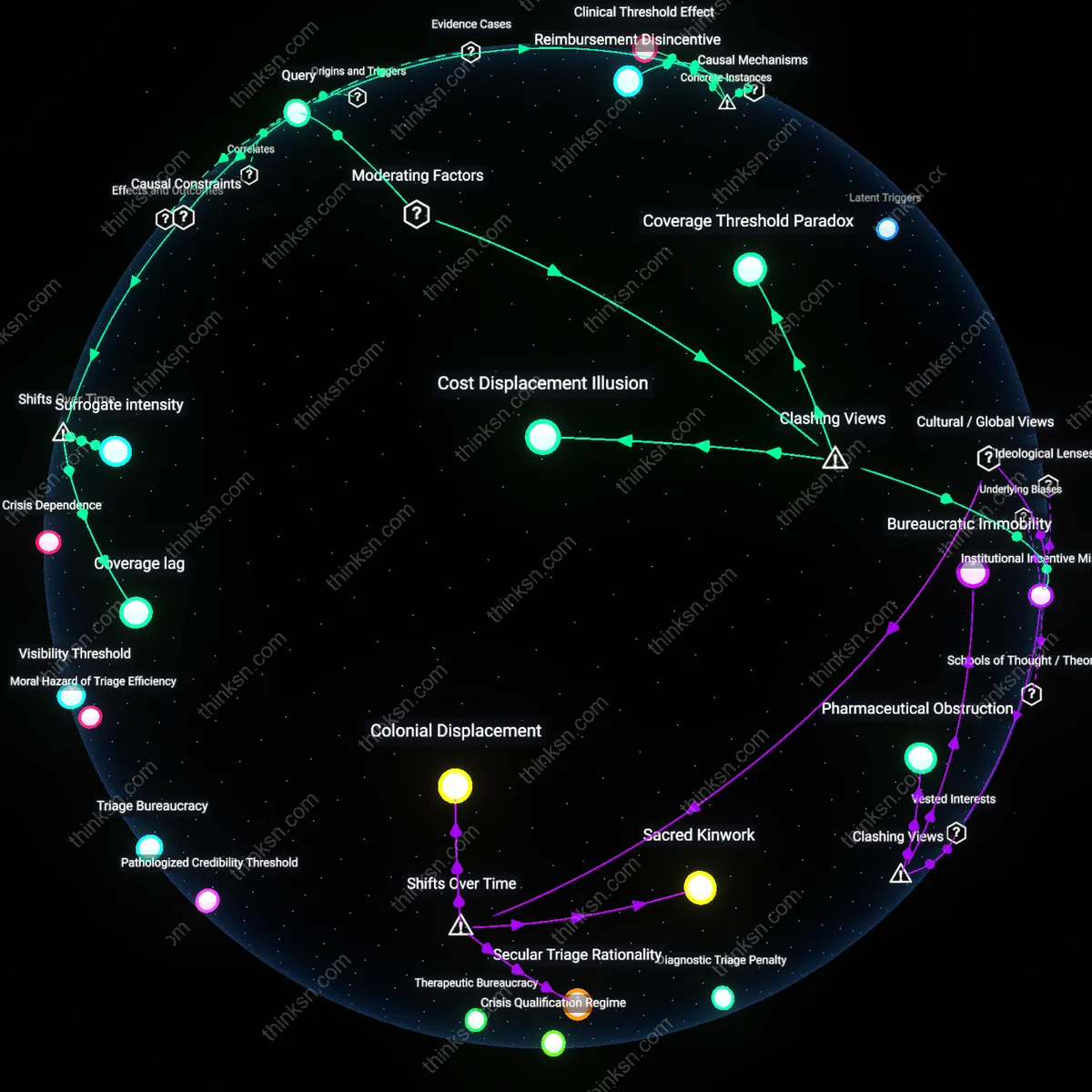
Reimbursement Disincentive
Medicare’s exclusion of non-hospice home palliative care in rural Arkansas forces family caregivers to hospitalize terminally ill patients when symptoms escalate, because only institutional settings can bill for complex symptom management under current payment rules. This creates a structural bias where cost-containment policies inadvertently increase acute care utilization, revealing that reimbursement architecture—not clinical need—dictates care location. The underappreciated reality is that Medicare’s billing codes, not patient preference, steer end-of-life trajectories in resource-limited settings.
Clinical Threshold Effect
In Miami-Dade County, a 2019 audit of homebound cancer patients showed that once opioid-resistant pain or delirium emerged, 78% were hospitalized within 48 hours due to lack of home nursing coverage under Medicare Part B, which only pays for intermittent, non-continuous care. This demonstrates how the absence of scalable home-based crisis response—available in VA and some Medicaid programs—creates a cliff-edge transition when symptoms exceed what informal caregivers can manage. The key insight is that symptom severity interacts with coverage thresholds, not gradual decline, to trigger hospitalization.
Fragmented Care Cascade
A 2016 case study of Cook County patients with advanced heart failure found that repeated emergency department visits followed episodes where home health aides noticed worsening edema or dyspnea but lacked protocols or payer authorization to escalate care, resulting in preventable decompensation. Because Medicare covers aide services but not real-time clinician response, early warning signs go unacted upon, turning manageable shifts into crises. This exposes how siloed benefit design disrupts early intervention, converting surveillance capacity into system failure.
Coverage Threshold Paradox
Medicare’s exclusion of home-based palliative care only increases hospitalizations when patients’ functional decline surpasses a threshold where family caregivers can no longer manage complex symptom control, revealing that coverage gaps alone do not drive utilization—instead, the interaction between caregiving capacity and benefit design creates a nonlinear inflection point in care escalation. This mechanism is most evident in rural counties with sparse hospice infrastructure, where even willing families lack access to backup clinical support, turning what would be a home-based crisis into an inevitable ambulance transfer; the non-obvious insight is that expanding coverage without addressing caregiver support systems may not reduce admissions if the breaking point remains unaddressed.
Cost Displacement Illusion
Palliative care coverage restrictions do not reduce overall spending but displace costs from Medicare’s acute care budget to Medicaid and out-of-pocket expenses when patients forego treatment due to access barriers, exposing a fiscal fiction in which cost containment is achieved by shifting financial burdens rather than eliminating them. This occurs particularly in states without expanded Medicaid, where low-income patients cycle through emergency departments for pain crises that could be managed at home with basic medication and nursing check-ins—services just outside Medicare’s covered package—revealing that the apparent savings in federal budget outlays mask a regressive transfer onto vulnerable households and safety-net providers.
Institutional Incentive Misfire
Hospitals benefit financially from end-of-life admissions triggered by lack of home palliative coverage, creating a perverse incentive for health systems to tolerate—or even strategically underinvest in—community-based alternatives that might reduce admissions, thereby reinforcing the very cost drivers reformers seek to eliminate. This dynamic is entrenched in vertically integrated systems in markets like northern Texas, where hospital-employed primary care clinics are financially insulated from downstream inpatient volume, and the non-obvious reality is that coverage restrictions serve as implicit revenue stabilization tools, making providers reluctant to advocate for changes that would disrupt predictable admission streams.
Coverage lag
Medicare's exclusion of non-disease-specific home palliative care until after 2000 created a structural dependency on acute care settings for symptom management, forcing patients into hospitals when home-based alternatives lacked reimbursement pathways. Prior to the 2006 expansion of demonstration programs, clinicians could not prescribe comprehensive palliative services at home without triggering eligibility for hospice—thus compressing complex, longitudinal needs into crisis-driven hospitalizations. This bottleneck—payment triggered only by terminal prognosis—meant that early palliative interventions were financially unsustainable, producing hospitalization as a de facto access valve. The non-obvious consequence of this delay was not merely higher costs but the medicalization of decline as an institutional default.
Surrogate intensity
The shift from institutional to home-based care after the 1982 Tax Equity and Fiscal Responsibility Act incentivized outpatient efficiency, yet simultaneously increased the burden on informal caregivers who lacked clinical training or support infrastructure, leading to breakdowns that necessitated hospitalization. As Medicare strengthened coverage for post-acute home health visits, it omitted concurrent palliative training and mental health scaffolding for family surrogates managing pain, dyspnea, or delirium at home. This mismatch between clinical expectations and domestic capacity became acute in the 2010s as populations aged and multimorbidity rose, revealing that home care was being treated as a cost-saving container rather than a clinically equipped setting. The resulting hospitalizations were not driven by patient preference but by the unmet requirement of layperson medicalization under fiscal constraints.