Lower Health Premiums: Worth It Without Mental Health Coverage?
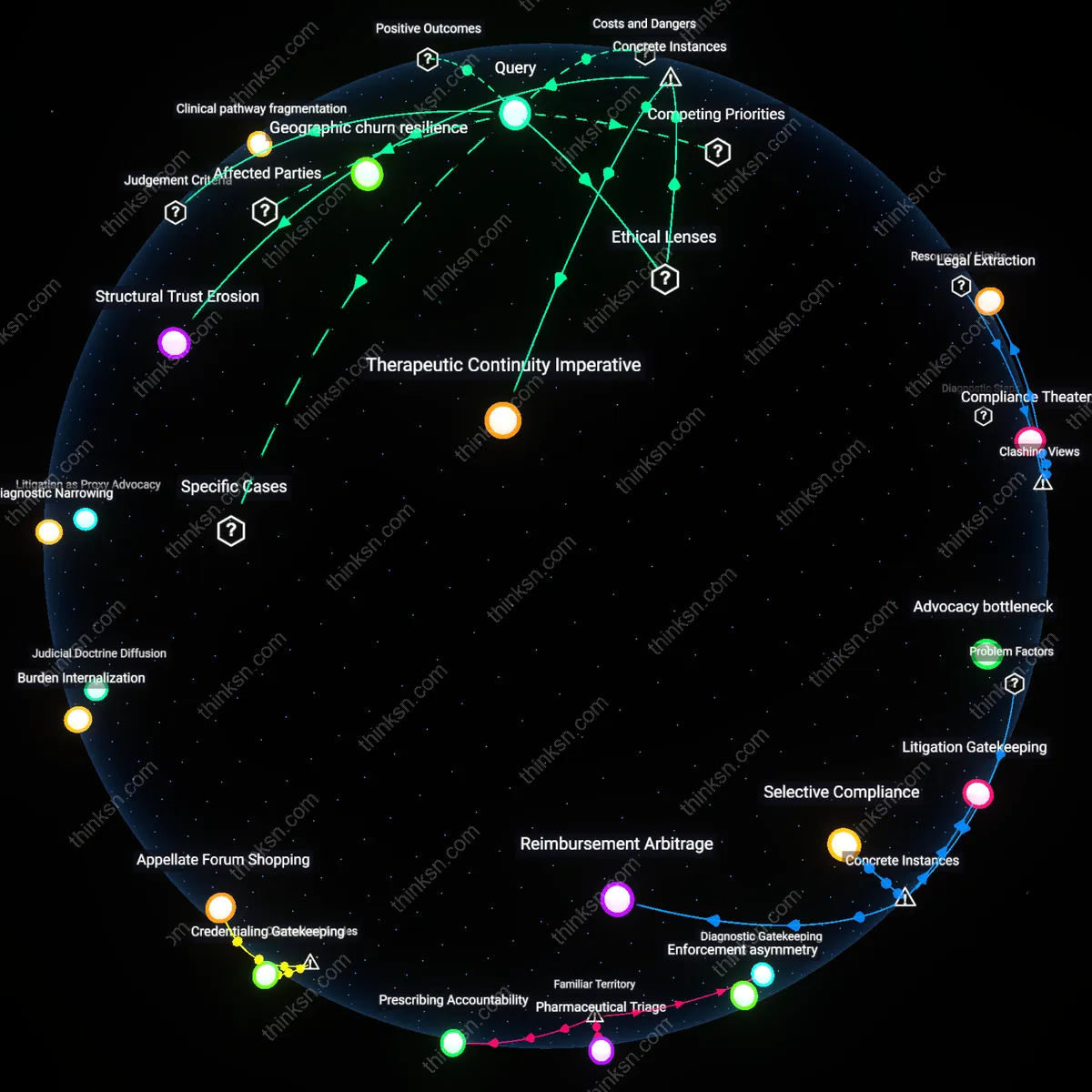
Analysis reveals 9 key thematic connections.
Key Findings
Actuarial subjectivity
Choosing a health plan without mental health coverage constitutes a rational economic judgment under the modern insurance paradigm that prioritizes individual cost-benefit efficiency over collective risk pooling. Since the 1990s, managed care models have redefined enrollees as actuarial agents responsible for predicting their own future health trajectories, shifting from mid-20th century assumptions of employer-based, comprehensive protection. This transition renders the omission of mental health benefits not as negligence but as a rational choice within a system that monetizes psychological risk and treats self-forecasting as a contractual duty. The underappreciated consequence is that sound financial planning now requires anticipating not just expenses, but the moral legitimacy of withholding care from one’s future self.
Therapy-as-preemption
The decision to forgo mental health coverage reflects a historical transformation in how psychological care is temporally framed—from reactive treatment to preemptive life investment—central to neoliberal governance since the 2000s. As workplace wellness programs and cognitive behavioral frameworks gained institutional footholds, emotional resilience became a privatized responsibility, judged economically by the return on therapeutic investment rather than medically by symptom remission. Assessing trade-offs now means weighing premiums against potential forgone productivity, positioning therapy not as a medical service but as a form of human capital optimization. The non-obvious insight is that skimping on coverage may signal not financial prudence but failure to anticipate emotional preemption as the new standard of economic foresight.
Care arbitrage
Opting out of mental health coverage functions as a form of financial calculation that exploits structural asymmetries between immediate premium savings and deferred access costs, a behavior amplified by the post-2008 erosion of public mental health infrastructure. As state-funded clinics closed and providers shifted to private insurance reimbursement, individuals learned to time their care around plan changes, open enrollment periods, or acute crises—effectively treating mental health access as a negotiable, episodic purchase. This shift from continuous care to strategic entry points reveals a survival rationality that prioritizes systemic navigation over clinical consistency. The underappreciated reality is that ‘balancing’ expenses now requires mastering the art of delayed, intermittent care—an informal skill set born of systemic fragmentation.
Deferred Risk Externalization
Choosing a cheaper health insurance plan without mental health coverage transfers immediate financial burden from the individual to public systems during future crisis events, as untreated conditions escalate into emergency interventions managed by hospitals, law enforcement, or social services. This mechanism operates through the fragmentation of care financing in the U.S. insurance model, where plan design incentivizes cost deferral rather than cost reduction, embedding long-term societal liabilities into ostensibly personal choices. The non-obvious reality is that apparent household savings are underwritten by systemic tolerance for later collapse, reframing frugality as a form of risk dumping.
Cognitive Underpricing
Opting out of mental health coverage reflects a miscalibration of cognitive risk assessment, in which individuals systematically undervalue low-probability, high-impact psychological crises due to cultural stigma and the invisibility of mental illness in cost-benefit frameworks. This distortion is produced by actuarial models that treat mental health as an elective benefit rather than a preventive necessity, privileging physical health metrics in coverage design. The dissonance lies in how insurance markets reward ignorance of internal states, rendering emotional fragility an actuarial blind spot rather than a calculable exposure.
Care Arbitrage
Younger, healthier individuals who forgo mental health coverage to lower premiums are engaging in a form of temporal arbitrage, betting against their future selves in a system that decouples current savings from downstream consequences. This dynamic thrives within high-deductible plans and narrow networks that make mental health services deliberately inaccessible, conditioning users to equate low premiums with financial prudence despite rising indirect costs like lost productivity or chronic disability. The underappreciated truth is that the market rewards disconnection from one’s evolving psychological needs, turning self-neglect into a rational choice.
Employer Design Authority
Large employers like Amazon dictate health plan structures for hundreds of thousands of workers, directly shaping mental health coverage breadth by selecting high-deductible plans to cut premium costs, which shifts catastrophic risk onto employees; this power to design plan benefits—often insulated from individual health outcomes—enables systemic underinvestment in mental health infrastructure despite rising clinical need, revealing how corporate cost-containment logic can override preventive care incentives in self-insured plans regulated under ERISA.
Actuarial Invisibility
Insurance actuaries at firms like UnitedHealth exclude depression and anxiety comorbidities from long-term risk projections because mental health claims are siloed and delayed, causing plans tailored to immediate cost savings to appear favorable despite provable downstream spikes in absenteeism and chronic disease; this technical omission reinforces a financial incentive to underfund behavioral coverage, demonstrating how opaque risk modeling perpetuates underinsurance even when population data confirms cost-shifting to emergency and social services.
Medicaid Cliff Effect
Low-income freelancers in states like Texas who earn just above Medicaid thresholds must buy ACA marketplace plans with minimal mental health benefits because federal subsidies don’t scale with service adequacy—this coverage gap forces trade-offs between premium affordability and access to $150/hr therapists, exposing how federal eligibility design produces rational but harmful underinsurance among the precariously working poor, whose future disability risks are privatized and individualized.