Institutional capture
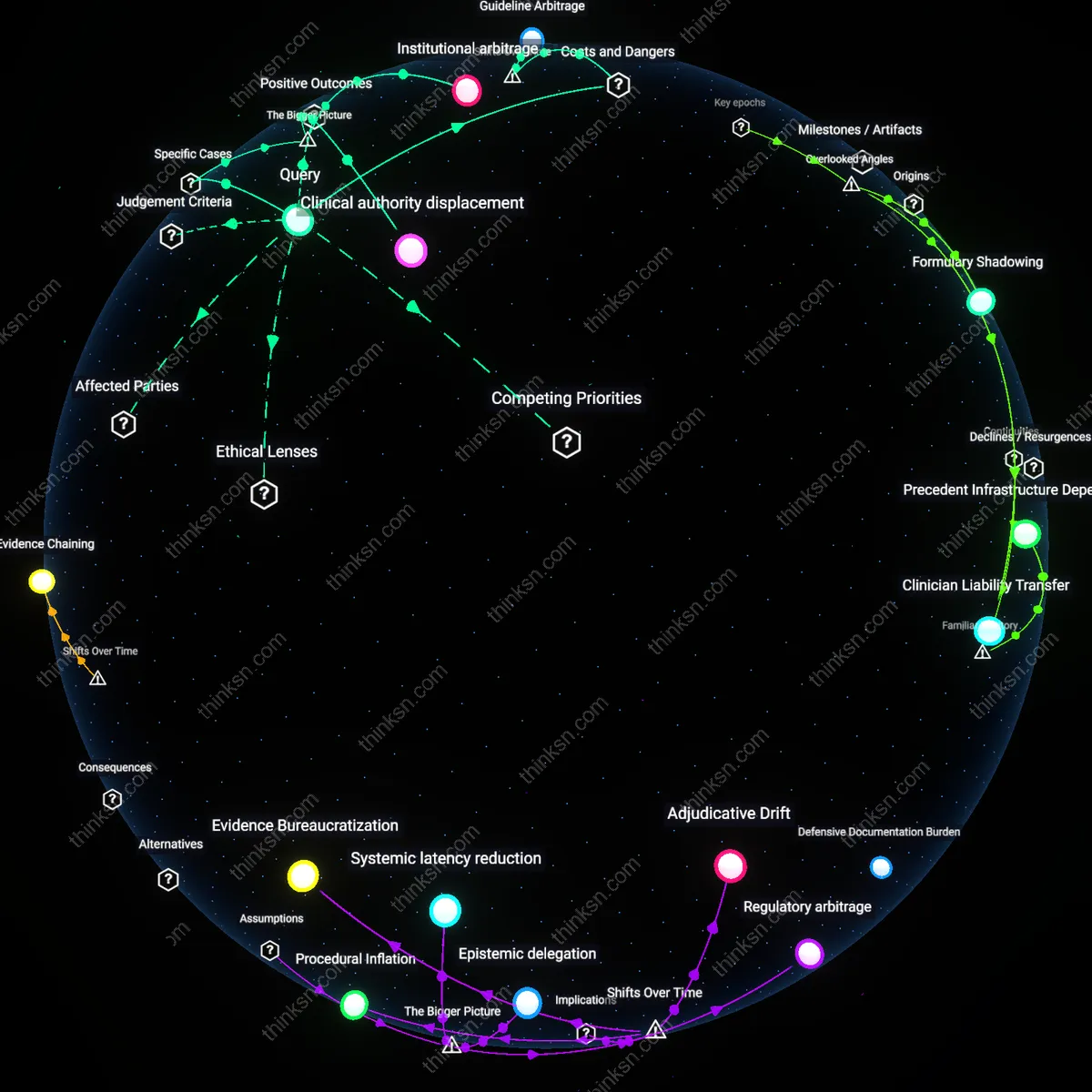
Research institutions and biotech firms benefit most when patient tissue or data leads to profitable medical breakthroughs because they control regulatory navigation and patent infrastructure. These entities possess the legal and bureaucratic capital to secure intellectual property rights, transforming publicly contributed biological material into privatized assets through mechanisms like Material Transfer Agreements and FDA approval pathways. This dynamic is rarely transparent to donors, who retain no claim despite being the source, revealing how institutional gatekeeping—not scientific merit or contribution—determines benefit distribution. The non-obvious core is that profitability hinges not on discovery alone but on access to systems that institutional actors monopolize.
Datafication asymmetry
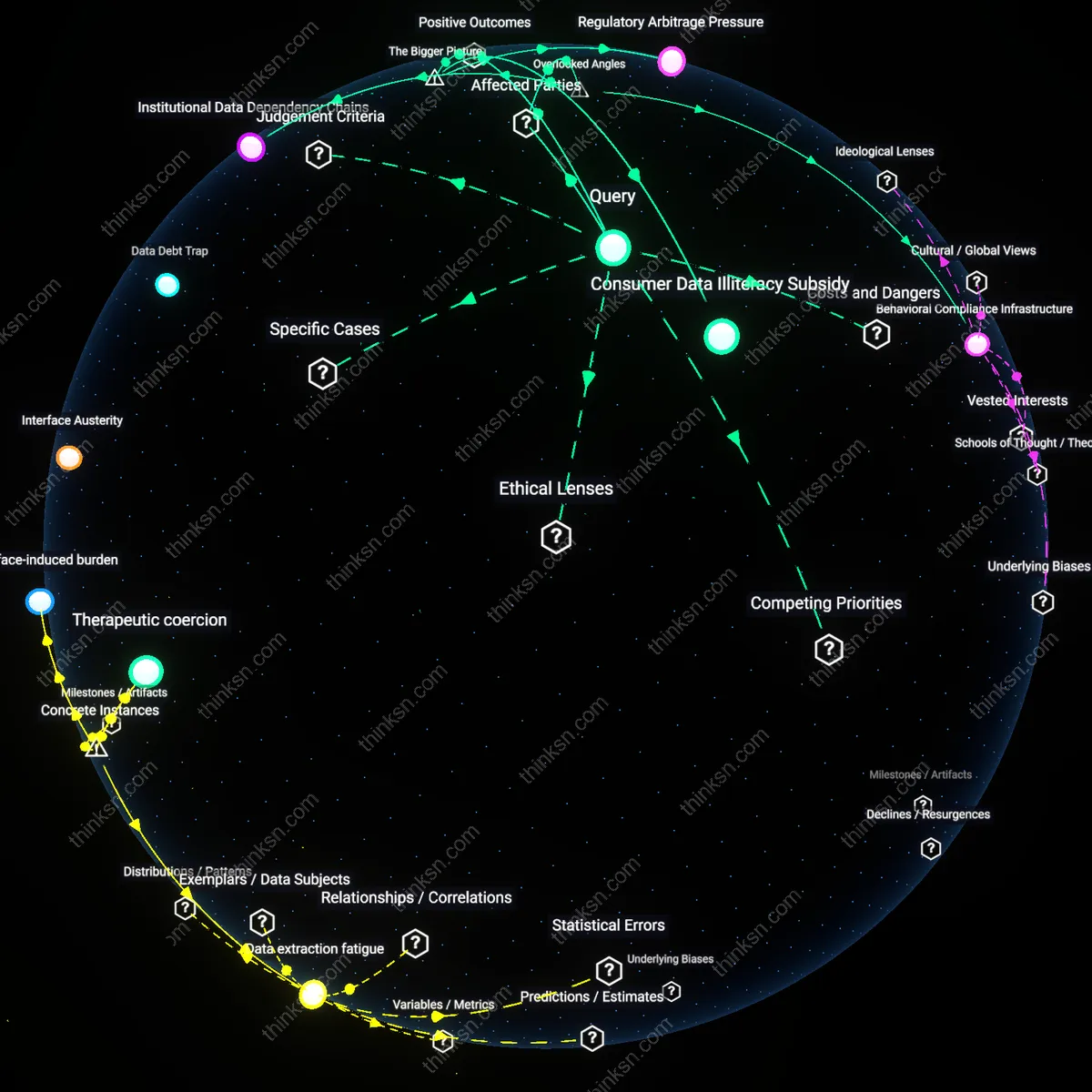
Commercial intermediaries such as electronic health record platforms and AI diagnostics companies benefit disproportionately because they convert patient data into scalable training assets, while patients bear the risk of privacy erosion and unconsented reuse. These firms operate through data aggregation pipelines where individual inputs are de-identified, pooled, and repackaged into predictive models that generate revenue, all under consent frameworks that are broad and irrevocable. The systemic imbalance lies in the fact that data’s value emerges in aggregate form, yet risk remains individually distributed—such as through re-identification breaches or discriminatory algorithmic outcomes. This reveals how the architecture of data reuse systematically disentangles value from source without redistributing exposure.
Funding feedback loop
Public funding agencies and affiliated research hospitals benefit indirectly by serving as early enablers of high-risk discovery, which private firms then de-risk and monetize. Federally funded biorepositories and academic medical centers collect and curate tissue and data with taxpayer support, creating the foundational resource pool that industry later mines—often through public-private partnerships or sponsored research agreements. The key mechanism is the reinvestment of private profits into targeted research agendas, which in turn shapes future public priorities and grant allocations in a self-reinforcing cycle. The underappreciated consequence is that public institutions become structurally dependent on downstream privatization to validate and sustain their own funding, locking in an innovation model that privatizes gains while socializing risks.
Institutional appropriation
The University of California system retains ownership and profits from cell lines like HEK293, originally derived from a fetal tissue sample in the 1970s without consent, while the donor’s family receives nothing. This occurs through standardized research protocols that automatically assign biospecimen rights to institutions upon collection, bypassing informed commercial consent. The non-obvious mechanism here is not corporate exploitation but the embedded legal infrastructure within public research universities that systematically redirects biological value away from individuals and into academic-capital streams.
Data extractivism
In 2018, the UK’s National Health Service transferred 1.6 million patient eye scans to Google’s DeepMind without explicit consent, enabling breakthrough AI diagnostics in diabetic retinopathy—benefiting Alphabet’s healthcare ambitions while UK taxpayers bore privacy risks and data harms. The system at work is a public-private data pipeline where state custodianship is leveraged to feed private algorithmic development, often under the guise of innovation partnerships. What is underappreciated is how public health data, accumulated under trust-based care, becomes raw material for offshore tech capital under minimal oversight.
Benefit deferral
When the U.S. government patented the BRCA1 gene based on samples from patients in Utah’s Mormon population through Myriad Genetics, the commercialized tests priced at over $3,000 limited access even to the originating community, who gained no financial return despite high hereditary risk. The mechanism is the deferral of benefit into future ‘care advancements’ while monopolistic licensing captures immediate value. The non-obvious outcome is that marginalized or genetically distinct populations are both targeted as biologically valuable and excluded from the fruits of that valuation.
Consent Erosion
In the Havasupai Tribe's 1990 genetic research dispute with Arizona State University, tribal members provided blood samples for diabetes research but later discovered their data had been used for schizophrenia and migration studies without specific re-consent, leading to a lawsuit and eventual settlement—this breach occurred not from refusal but from broad initial consent that ignored cultural sovereignty, revealing how unfettered data reuse undermines trust even when legally permitted, and exposing that consent forms can function as mechanisms of delegation rather than protection when asymmetries in interpretation persist.
Value Reallocation
In 2018, the All of Us Research Program under the NIH introduced tiered consent options allowing participants to choose whether their data supports commercial research, grants withdrawal rights, and discloses return-of-results pathways, diverging from traditional all-encompassing forms—this shift enabled participants from underserved communities in Baltimore and Jackson, Mississippi, to exert influence over downstream use, demonstrating that negotiable data rights can redistribute economic and decision-making power from institutions to individuals when infrastructures for ongoing engagement are institutionally resourced.
Regulatory Arbitrage
When 23andMe began licensing aggregated, user-consented genetic data to Genentech in 2015 for Parkinson’s research, it operated under the premise of broad customer agreements rather than clinical trial frameworks, but the arrangement drew scrutiny from the European Data Protection Board due to discrepancies in how granular consent was defined under GDPR versus U.S. norms—this transatlantic tension revealed that negotiable data rights in one jurisdiction can create regulatory friction elsewhere, incentivizing firms to channel data partnerships through permissive legal environments, thus turning consent structures into strategic variables in global research logistics.
Consent Inflection Point
Patients gaining negotiation rights over data use in clinical trials would trigger a Consent Inflection Point, where the standardization of broad consent forms—entrenched since the 1990s expansion of multi-site genomic research—fractures into heterogeneous, context-specific data-sharing agreements. This shift undermines the administrative efficiency that IRBs and pharmaceutical sponsors relied on during the post-Belmont harmonization era, exposing a latent tension between research scalability and individual agency. The move away from one-size-fits-all consent reveals how data governance in biomedicine transitioned from a trust-based model in localized clinics to a transactional one governed by data volume, making renegotiation not just a procedural change but a redefinition of patienthood in research.
Data Stewardship Asymmetry
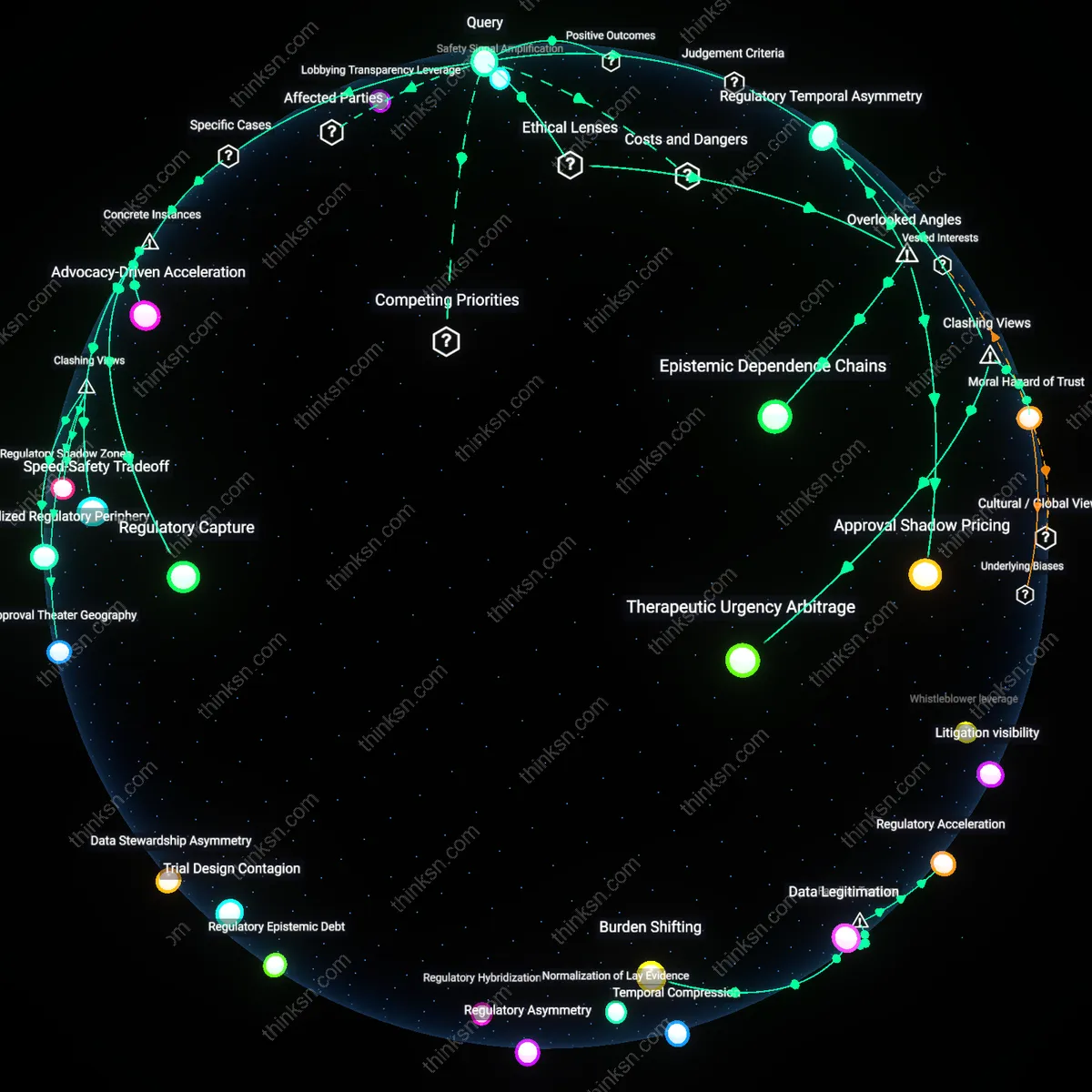
Shifting from broad consent to patient-negotiated data use rights would crystallize a Data Stewardship Asymmetry, exposing a developmental rupture between legacy research institutions built during the NIH-funded biobank boom (1998–2010) and emerging digital health platforms that treat data as personal property. Unlike the mid-2000s, when biobanks secured indefinite data access via public trust narratives, today’s patients—primed by GDPR and wearable tech ownership—approach data as negotiable equity, not donation. This transition reveals that informed consent is no longer an ethical formality but a dynamic access negotiation, fundamentally recalibrating power in the clinical trial value chain from investigator-led to patient-conditional governance.
Consent Infrastructure Strain
Clinical trial data systems would face unsustainable administrative fragmentation because individualized negotiation requires bespoke data-use protocols that disrupt centralized biobanking standards at institutions like the UK Biobank or NIH's All of Us. Each patient’s stipulations—such as prohibiting algorithmic use or demanding profit-sharing—would generate unique data access contracts, overwhelming institutional review boards and data custodians who rely on batch processing of homogeneous consents. This strain exposes how scalability in biomedical research depends not on legal consent alone, but on the standardization of patient data governance into administrative legibility, a prerequisite that individual negotiation dismantles.
Data Provenance Complexity
Pharmaceutical firms developing AI-driven drug discovery pipelines would encounter cascading uncertainty in data lineage, as machine learning models trained on heterogeneous, conditionally permitted data become legally indefensible if specific patient restrictions were violated during training. For example, a model at Pfizer using real-world evidence from patients who later objected to neurocognitive research applications could invalidate regulatory submissions to the FDA when audit trails cannot verify compliance across thousands of differentiated permissions. This complexity reveals that data utility in modern trials is not just about access but about traceable, compliant provenance—a hidden dependency obscured when consent is treated as a one-time event rather than a dynamic governance layer.
Therapeutic Reciprocity Expectations
Patients in oncology trials would begin to demand access to experimental therapies as a condition of data sharing, transforming clinical data from a passive research input into a bargaining chip for treatment privileges at sites like MD Anderson or Dana-Farber. This shift would institutionalize informal quid pro quo arrangements where data contribution is tacitly linked to compassionate use eligibility, subverting formal regulatory pathways and creating ethically fraught parallel access systems. The emergence of such expectations reveals that data autonomy, when operationalized as negotiation, reactivates latent moral economies in medicine—where information is not merely donated but exchanged for care, redefining the patient as a stakeholder with leverage rather than a subject.