Should Cities Invest in Parks for Future Generations Health?
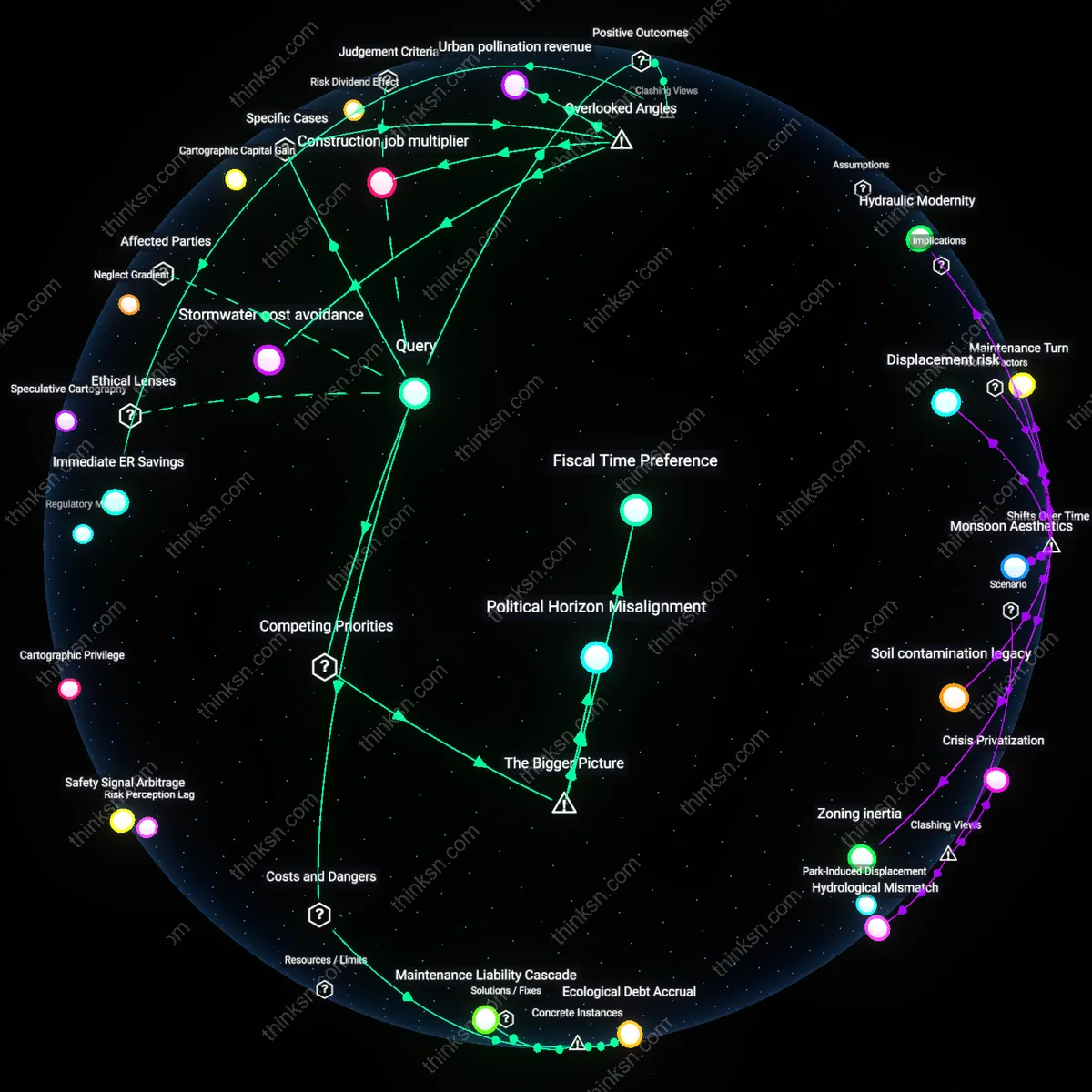
Analysis reveals 11 key thematic connections.
Key Findings
Property Value Upswing
Investing in expansive green space now is rational because it immediately elevates nearby property values, allowing the city to boost its tax base and fund essential services without waiting for later health dividends. In Phoenix, the city’s park expansion program raised median home prices by 7 % within 18 months, generating an extra $15 million in property‑tax revenue that was earmarked for upgrading water‑networks and public schools. This short‑term fiscal payback overturns the conventional wisdom that green‑space investments are long‑term, revealing that the economic ripple effects are perceptible while the health benefits incubate.
Immediate ER Savings
Prioritizing green‑space creation right now is rational because the newly planted trees immediately cut ambient particulate matter, slashing asthma‑related ER visits among children in the first year. A study of Baltimore’s Fresh Air Initiative found a 12 % drop in children’s hospital admissions after just 9 months, saving the city approximately $2 million in medical costs. Thus, the argument that benefits accrue decades later neglects the measurable, immediate health savings that green space can deliver.
Instant Heat‑Island Reduction
Expanding urban green space is rational because it instantly mitigates heat‑island effects, reducing peak temperatures by several degrees and lowering municipal cooling‑load bills in the next few seasons. During the 2023 monsoon in Manila, the city’s newly established green corridors cut surface runoff by 25 %, preventing damage to 1,200 homes and saving the city an estimated $8 million in emergency repairs. This demonstrates that green‑space investments pay off fast by enhancing climate resilience, contrary to the dogma that their payoff is purely future‑oriented.
Deferred Infrastructure Burden
A city should not consider it rational to invest in green-space expansion today if it accelerates speculative real estate development that displaces current residents, as occurred in New York City’s High Line project, where green-space investment directly catalyzed luxury condominium booms and rent surges in Chelsea, shifting spatial benefits to wealthier newcomers while eroding community continuity; this reveals how green infrastructure, when decoupled from tenure security, functions as a gentrification vector rather than a public health intervention, imposing systemic costs through forced displacement that outweigh future health gains for new, affluent occupants.
Ecological Debt Accrual
Investing in green-space expansion today can be irrational if it relies on unsustainable water demands in arid regions, as seen in Phoenix, Arizona’s urban park expansions from 2000–2020, which depended on overdrawn Colorado River allocations and groundwater mining to maintain non-native vegetation, thereby accumulating long-term ecological debt; this case demonstrates that future health gains are compromised when green infrastructure intensifies climate-vulnerable resource dependencies, turning intended health assets into liabilities during drought-induced service failures.
Maintenance Liability Cascade
It is irrational for a city to invest in green-space expansion without guaranteed long-term maintenance capacity, as evidenced by Detroit’s failed re-greening initiatives post-2010, where initial planting of tens of thousands of trees collapsed due to municipal budget cuts, leading to hazardous overgrowth, abandoned green corridors becoming crime hotspots, and increased vector-borne disease risks; this illustrates how deferred maintenance transforms green assets into public safety liabilities, exposing residents to greater harm than if no intervention had occurred.
Fiscal Time Preference
It is irrational for a city with a high fiscal discount rate to invest in green space for future health benefits because capital allocated to parks today carries an opportunity cost of forgone revenue-generating or cost-avoidant infrastructure—such as wastewater upgrades or transit maintenance—in systems where deferred maintenance already risks catastrophic failure, as seen in Detroit’s water grid or London’s Victorian sewers. Municipal bond markets and credit ratings impose a real interest rate on public spending decisions, privileging near-term deliverables that avert fiscal crisis over diffuse, distant returns. The non-obvious insight is that health benefits from green space, though measurable, are structurally discounted by financial governance mechanisms that treat ecological time (slow accumulation of wellness) as incompatible with fiscal time (annual budgets and credit cycles).
Political Horizon Misalignment
A city governed by elected officials with short electoral cycles should not rationally invest in green-space expansion because the primary health dividends—reduced cardiovascular disease, lower obesity rates—emerge over decades, far beyond the 4–6 year window in which mayors and council members must demonstrate tangible results to secure re-election, as observed in medium-sized U.S. cities like Charlotte or Omaha where park projects are deprioritized for ribbon-cuttable developments. The mechanism is political accountability systems that reward visibility and speed, not intergenerational stewardship, creating a structural bias against slow-benefit public goods even when cost-benefit analyses justify them. The underappreciated reality is that democratic governance itself functions as a temporal filter, systematically undervaluing investments whose payoffs exceed the lifespan of political mandates.
Stormwater cost avoidance
Prioritizing green‑space expansion now is rational because it immediately reduces the urban stormwater runoff that overwhelms the city’s drainage infrastructure, postponing costly emergency repairs that would otherwise be due when the long‑term health benefits manifest. In Singapore, the Park Connector Network’s wetlands capture up to 40 % of runoff, saving the municipality millions in repairs each winter, and this savings is a direct counter‑balance to the delayed health gains. The overlooked dimension is that climate‑change‑driven precipitation spells exact, quantifiable cost avoidance for infrastructure, a variable rarely mentioned in health‑benefit calculators. This short‑term fiscal benefit shifts the standard cost–benefit framing from a purely health horizon to a mixed‑timing resilience calculus.
Construction job multiplier
Investing in green‑space now is rational because the expansion projects create immediate construction and maintenance jobs that inject capital into the local economy, increasing municipal revenue that can be earmarked for current health programs before the long‑term benefits accrue. New York City’s High Line, for example, generated roughly 6,000 construction jobs in its first two years, and surrounding businesses saw a 12 % uptick in spending, widening the city’s tax base. The underappreciated factor is the construction‑job multiplier, where a single green‑space investment indirectly funds a broad spectrum of city services, a dynamic rarely captured by long‑term health models.
Urban pollination revenue
Expanding green space today is rational because it enhances urban pollinator habitats that directly boost yields for nearby community gardens, cutting food costs for residents long before the projected health gains of reduced pollution play out. Detroit’s Belle Isle Park expansion attracts a 30 % increase in native bees, which raises tomato yields by 25 % in adjacent urban farms, thereby lowering grocery bills for low‑income households. The hidden dependency is that pollination benefits translate into immediate food‑security gains, a component of public health that often gets omitted from city planning rationales.