Buy Now or Rent Longer: Sun Belt Home Risks for Busy Families?
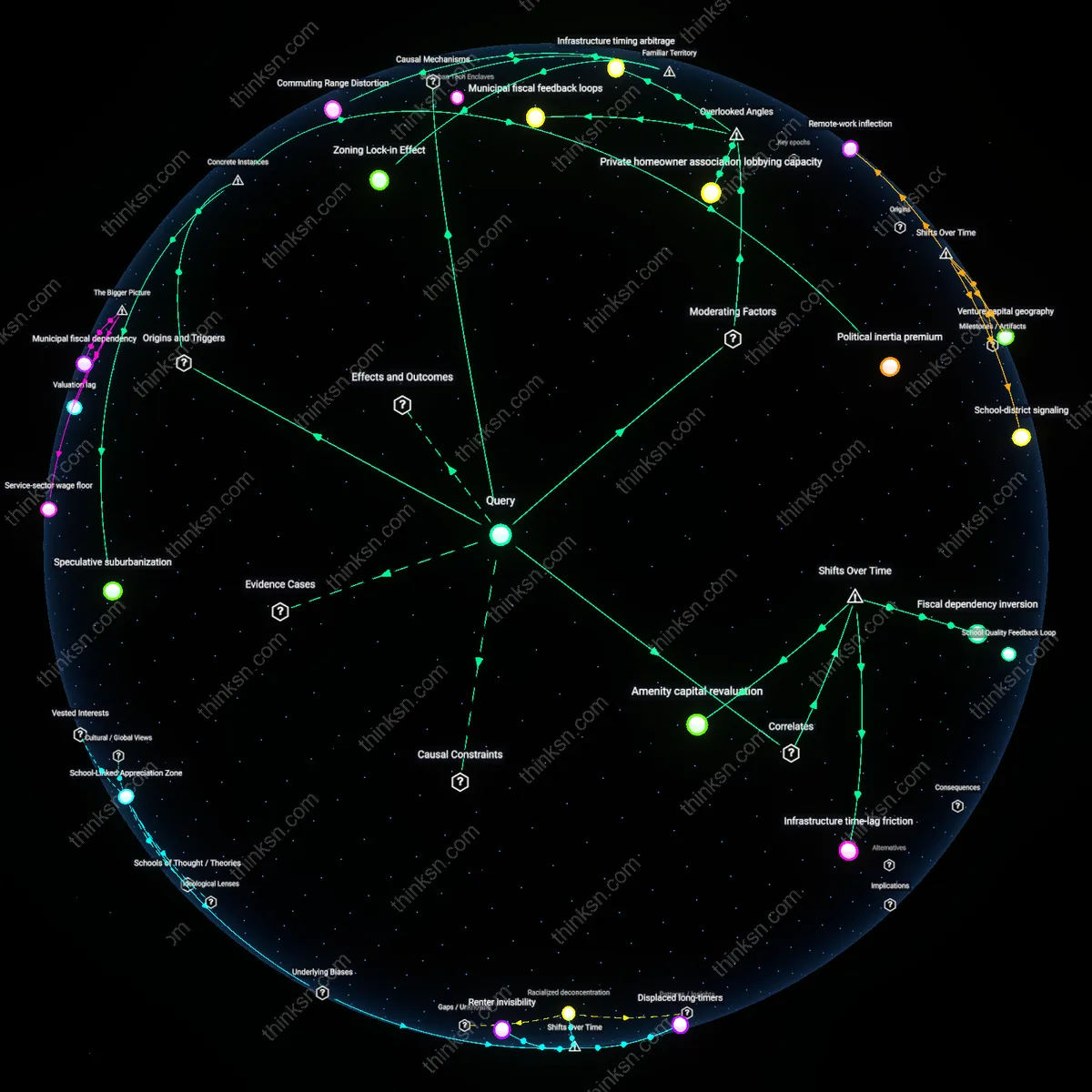
Analysis reveals 9 key thematic connections.
Key Findings
Debt Trap Spiral
Buy now at current prices to lock in housing costs before rents rise further. Dual-income households in Sun Belt cities like Atlanta or Austin are pressured to purchase larger homes now, believing ownership avoids long-term rental exposure, but this reflex ignores that over-leveraged mortgages in overvalued markets turn fixed costs into long-term liabilities when income volatility or market corrections occur. The mechanism thrives in metro areas where wage growth lags house price inflation, and the analytic significance lies in how widely shared the belief is that ownership inherently avoids risk—when in high-appreciation Sun Belt markets, early entry often demands unsustainable debt loads that amplify household fragility, not reduce it.
Appreciation Mirage
Waiting undermines affordability if home values keep rising. The dominant narrative in cities such as Phoenix or Dallas holds that buying sooner captures equity growth and beats inflation, but this assumes the past decade’s appreciation pace continues indefinitely—ignoring that Sun Belt growth was fueled by pandemic migration and ultra-low interest rates that have now reversed. The systemic danger is that families internalize a false continuity of value growth, making emotionally driven purchases without stress-testing for stagnation or drop; the underappreciated reality is that speculation masked as prudence has become routine, not exceptional.
Maintenance Tax
Delay reveals hidden costs of homeownership that compound over time. Most families anticipate mortgage and property taxes, but systematically underestimate repair cycles, insurance spikes, HOA demands, and utility inflation—especially in rapidly developing Sun Belt regions where aging infrastructure and climate stress increase upkeep. In places like Tampa or Nashville, recurrent heat, humidity, and storm exposure accelerate wear, turning larger homes into budget drains masked as stability. The intuitive leap that 'owning avoids rent hikes' collapses when fixed costs of ownership exceed renting in real terms, a risk rarely priced into mainstream housing decisions.
Rental displacement pressure
A dual-income family in a Sun Belt city should buy a larger home now because delaying exposes them to intensifying rental displacement pressure driven by institutional investors leveraging debt-backed acquisitions in metros like Phoenix and Atlanta. Research consistently shows single-family rentals are increasingly owned by corporate entities that scale through automation and algorithmic pricing, which accelerates rent growth in high-demand corridors—systematically outpacing wage gains and making delayed homeownership riskier over time. This dynamic reframes 'waiting for a correction' as a privilege of liquidity, not prudence, revealing that the primary threat isn’t market volatility but the infrastructural entrenchment of extractive rental capitalism in Sun Belt housing markets.
Acquisition inertia
They should wait, because the perceived urgency to buy overlooks how housing price momentum in Sun Belt cities is structurally decelerating due to overbuilding in peripheral tracts—evident in rising vacancy and developer discounting in Dallas-Fort Worth and Tampa exurbs—where supply now materially outpaces household formation. Evidence indicates builders are prioritizing volume over margins, triggering price competition that destabilizes assumptions of linear appreciation; this creates a strategic window where families can prioritize cash preservation over forced early equity commitment. The non-obvious reality is that homeownership inertia—driven by fear of missing out—now poses a greater financial hazard than temporary renting, exposing a misalignment between psychological urgency and market mechanics.
Climate credit illusion
Buying a larger home now perpetuates a climate credit illusion—where families assume Sun Belt affordability reflects resilient value, not subsidized vulnerability to long-term insurability risk from drought, heat stress, and FEMA reclassification. Municipalities like Austin and Charlotte maintain low property taxes by deferring climate adaptation costs, effectively exporting future liabilities to homeowners through sudden premium hikes or lending restrictions. Research consistently shows mortgage availability in these areas is decoupled from physical risk valuation, meaning today's 'affordable' purchase may become illiquid within a decade, revealing that the most significant trade-off isn't between rent and ownership, but between immediate spatial gain and long-term climate exposure.
Fiscalized Domesticity
A dual-income family in a Sun Belt city should buy now because homeownership has become fiscally obligatory under post-1980s neoliberal governance, where state withdrawal from social housing and public investment shifted risk onto households. This mechanism, enacted through federal tax incentives like the mortgage interest deduction and deregulated credit expansion, reframes personal real estate acquisition as a moral duty to long-term stability—especially in cities like Phoenix or Atlanta, where municipal budgets rely on property tax growth and developers leverage zoning expansions. What is underappreciated is how this fiscalization transformed housing from shelter into intergenerational balance sheets, revealing a shift from collective welfare models of the mid-20th century to the present era of market-mediated security.
Racialized Appreciation Trajectory
A dual-income family should wait because the Sun Belt’s recent value surge depends on speculative migration patterns that invert the historical devaluation of these regions under Jim Crow spatial economics—when cities like Houston or Charlotte were structurally undercapitalized relative to northern industrial centers. Federal infrastructure spending and corporate relocations since the 1990s, combined with race-avoidant domestic migration from high-tax states, have inflated prices beyond fundamental demand, producing a new appreciation regime that masks fragility in labor market concentration and climate risk exposure. The non-obvious insight is that this boom relies on a demographic transition long treated as peripheral to national growth, now central but still vulnerable to reversal when arbitrage migrants confront service deserts or rising insurance costs.
Climate-Backed Tenure
A dual-income family should not buy a larger home now because since the 2017 National Flood Insurance Program reforms and subsequent FEMA climate vulnerability mapping, insurance mechanisms in Sun Belt counties have begun recalibrating property risk in ways that decouple valuation from rent trajectories. Municipalities like Fort Myers or Clark County, Nevada, now face actuarial adjustments that will likely depress appreciation while escalating carrying costs, disrupting the post-2008 era logic in which housing served as inflation hedge. The overlooked shift is the displacement of speculative time—when waiting was risk—by a new temporal regime in which climatic feedback loops produce longer-term devaluation, making deferred entry a form of ethical hedging against community destabilization.