Who Wins as Social Media Becomes a Utility? Equity vs. Diversity
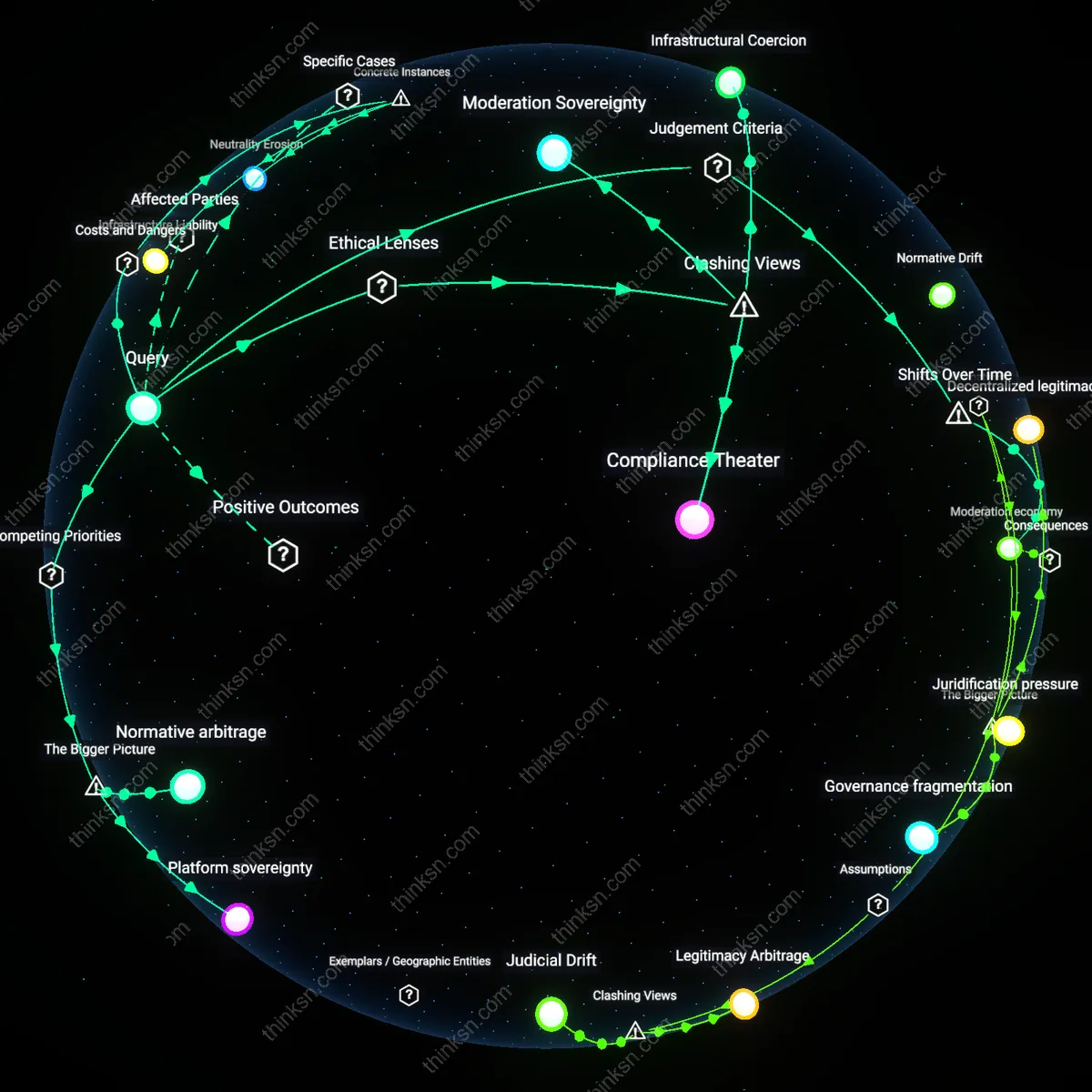
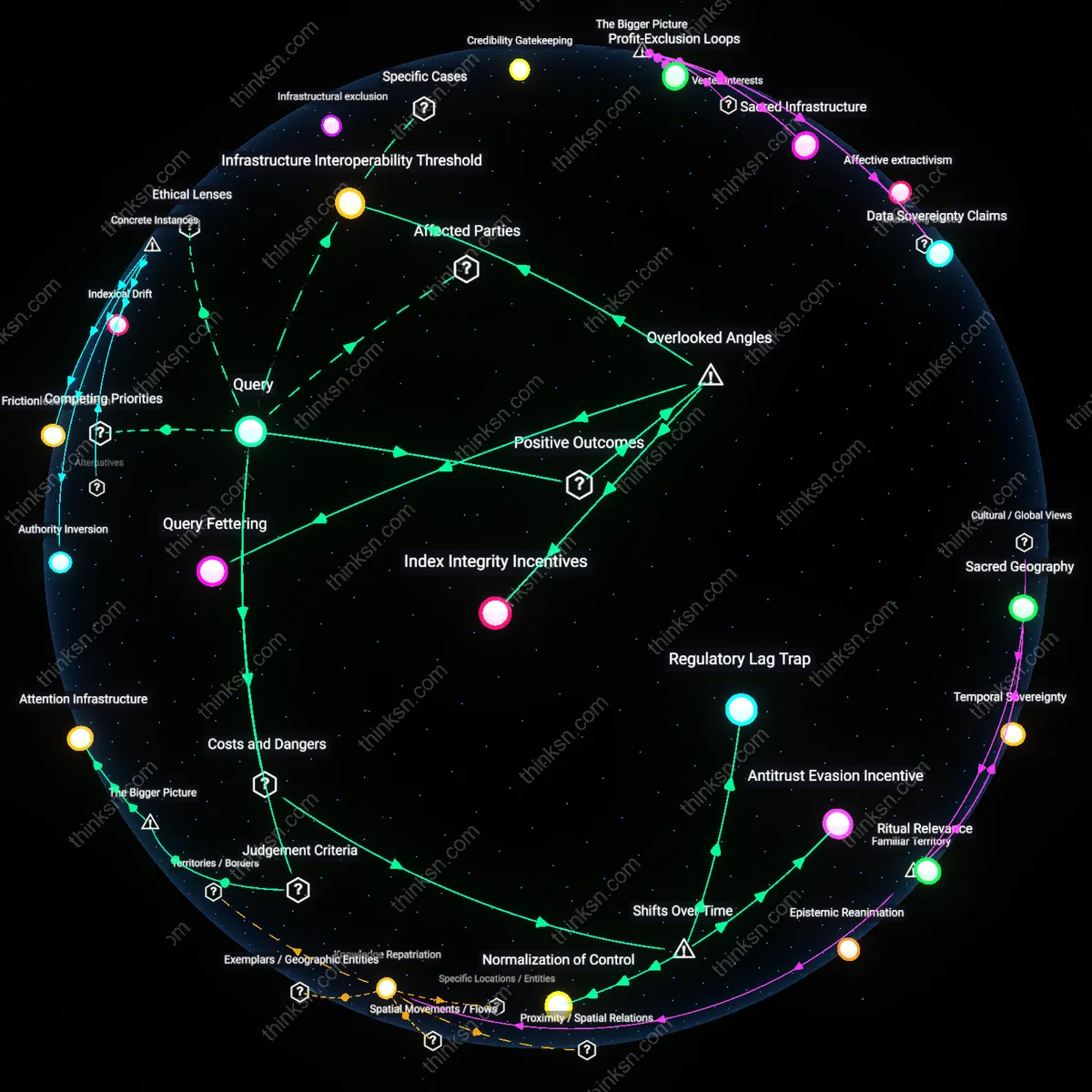
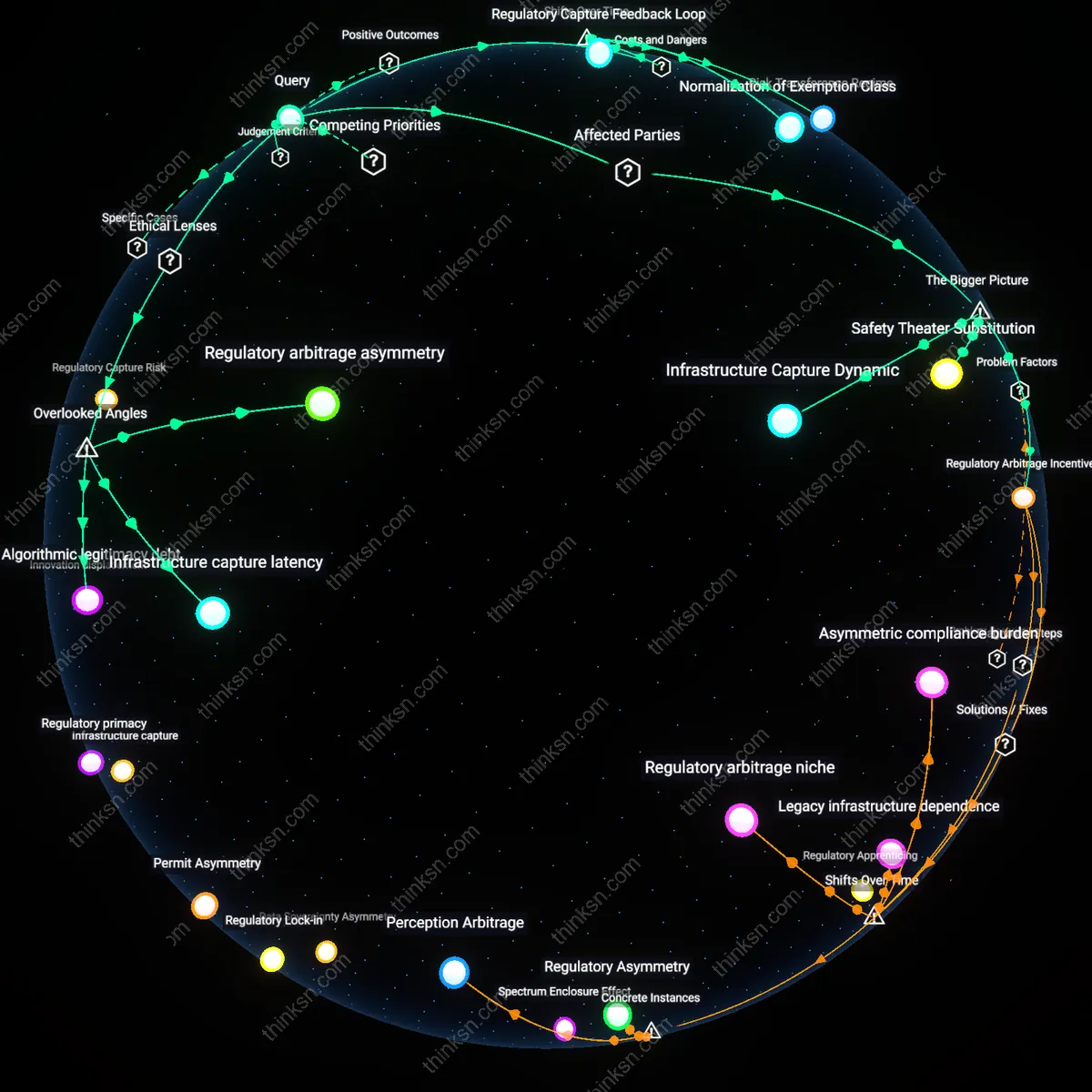
Analysis reveals 9 key thematic connections.
Key Findings
Marginalized Community Leverage
Low-income and rural users benefit most from classifying social media as public utilities because enforceable access mandates would compel platforms to maintain affordable, high-quality service in underserved areas, similar to how utility commissions regulate broadband carriers in Appalachia and the Mississippi Delta. This mechanism shifts bargaining power to populations historically excluded from digital discourse not by choice but by infrastructural neglect, revealing that the primary inequity in social media access is not content visibility but connectivity itself—a condition obscured when policy debates focus on algorithmic bias instead of service provision.
Platform Neutrality Capture
Telecom regulators and legacy infrastructure lobbies gain influence by extending utility frameworks to social media, as this allows them to reposition platforms as transport layers rather than editorial entities, thereby weakening Section 230-based content moderation autonomy. By reframing platforms as passive conduits akin to telephone networks, this move privileges institutional control over distributed speech ecosystems, exposing how 'access equity' can become a Trojan horse for centralized regulatory capture that diminishes decentralized editorial plurality.
Algorithmic Stagnation Risk
Established media incumbents—such as national newspapers and broadcast networks—benefit from utility regulation because constrained platform innovation limits the ability of algorithmic curation to elevate non-traditional voices, effectively freezing content distribution hierarchies at their current state. When regulatory stability becomes the priority, platforms reduce experimentation with recommendation systems to avoid compliance risk, revealing that content diversity often thrives not in equilibrium but through disruptive, unregulated evolution that equity-focused regulation may inadvertently suppress.
Regulatory Capture Risk
The Federal Communications Commission’s 2015 Open Internet Order, which reclassified broadband as a Title II public utility, led to intensified lobbying by incumbent telecom providers like Comcast and AT&T, who exploited regulatory processes to shape enforcement in their favor, revealing that public utility frameworks can incentivize dominant firms to manipulate oversight mechanisms. This dynamic underscores how formal equity guarantees may unintentionally empower well-resourced incumbents to convert public interest mandates into barriers for smaller competitors, thereby centralizing control. The non-obvious consequence is not just slowed innovation but the systemic redirection of equity goals into instruments of market entrenchment.
Moderation Paralysis
When Germany’s Network Enforcement Act (NetzDG) compelled social media platforms to treat user content as a public responsibility by mandating rapid removal of illegal speech, platforms like Facebook responded with overbroad automated takedowns, including suppression of legitimate political satire and activist speech in 2018. This outcome demonstrates that treating platforms as utilities charged with equitable access amplifies compliance pressures, which in turn trigger risk-averse content moderation at scale. The underappreciated effect is that equity mandates, when enforced through liability, can erode discursive pluralism by privileging algorithmic enforcement over contextual judgment.
Infrastructure Homogenization
In Brazil, judicial demands to treat WhatsApp as a public utility during the 2016 election led to a nationwide blockade when it refused to provide decrypted user data, revealing that utility designation can collapse platform-specific architectures into one-size-fits-all regulatory expectations. The state’s insistence on uniform access ignored WhatsApp’s end-to-end encryption as a core operational logic, forcing either systemic compromise or service elimination. This case exposes how utility framing risks erasing technical and cultural heterogeneity in platform design, replacing diversity with enforced standardization that damages niche or privacy-oriented services.
Digital Infrastructure Dependence
Low-income urban residents benefit most from treating social media platforms as public utilities because their access to job markets, government services, and emergency information depends on uninterrupted connectivity through platforms like Facebook and X, which function as default digital infrastructure in cities such as Detroit and Baltimore where municipal broadband is underdeveloped. These users rely on zero-rating programs and mobile-only access, making platform availability a prerequisite for civic participation—yet framing them as utilities could normalize minimal service thresholds that favor broad reach over niche or adversarial content, subtly privileging stability of access over diversity of discourse. The non-obvious consequence is that 'public utility' status may entrench the current dominant platforms by codifying their centrality, reducing pressure to innovate or diversify formats in ways that could better serve marginalized voices.
Platform Moderation Inertia
National regulators in liberal democracies, such as the European Commission enforcing the Digital Services Act, benefit from treating social media as public utilities by gaining expanded oversight to mandate transparent content moderation, thereby increasing accountability on platforms like Instagram and TikTok during election periods. This framing legitimizes state intervention as protection of democratic discourse, but triggers a trade-off where platforms respond with over-enforcement and standardized rules to avoid liability, diluting regional or cultural expressions—e.g., automated suppression of Palestinian Arabic dialects on YouTube. The underappreciated effect is that familiar regulatory tools from older utilities (like telecoms) are misapplied to sociotechnical systems where speech diversity relies on contextual nuance, not just signal delivery.
Algorithmic Neutrality Myth
Large platform incumbents like Meta and Google benefit from public utility classification by leveraging the perception of fairness to resist structural competition, using mandated 'neutral' algorithms as a shield to maintain ad-driven engagement models that reward viral conformity over diverse content discovery on YouTube and Facebook Feed. The mechanism emerges through policy debates in states like California, where proposed utility regulations focus on access parity but ignore how algorithmic distribution shapes visibility, thus preserving the dominance of content that fits platform-optimized formats like short-form video. What goes unnoticed is that 'neutrality' in access does not imply neutrality in exposure—the real bottleneck shifts from connection to curation, which remains unregulated despite its decisive role in content diversity.