Arbitration in EULAs: Freedom or Fetter?
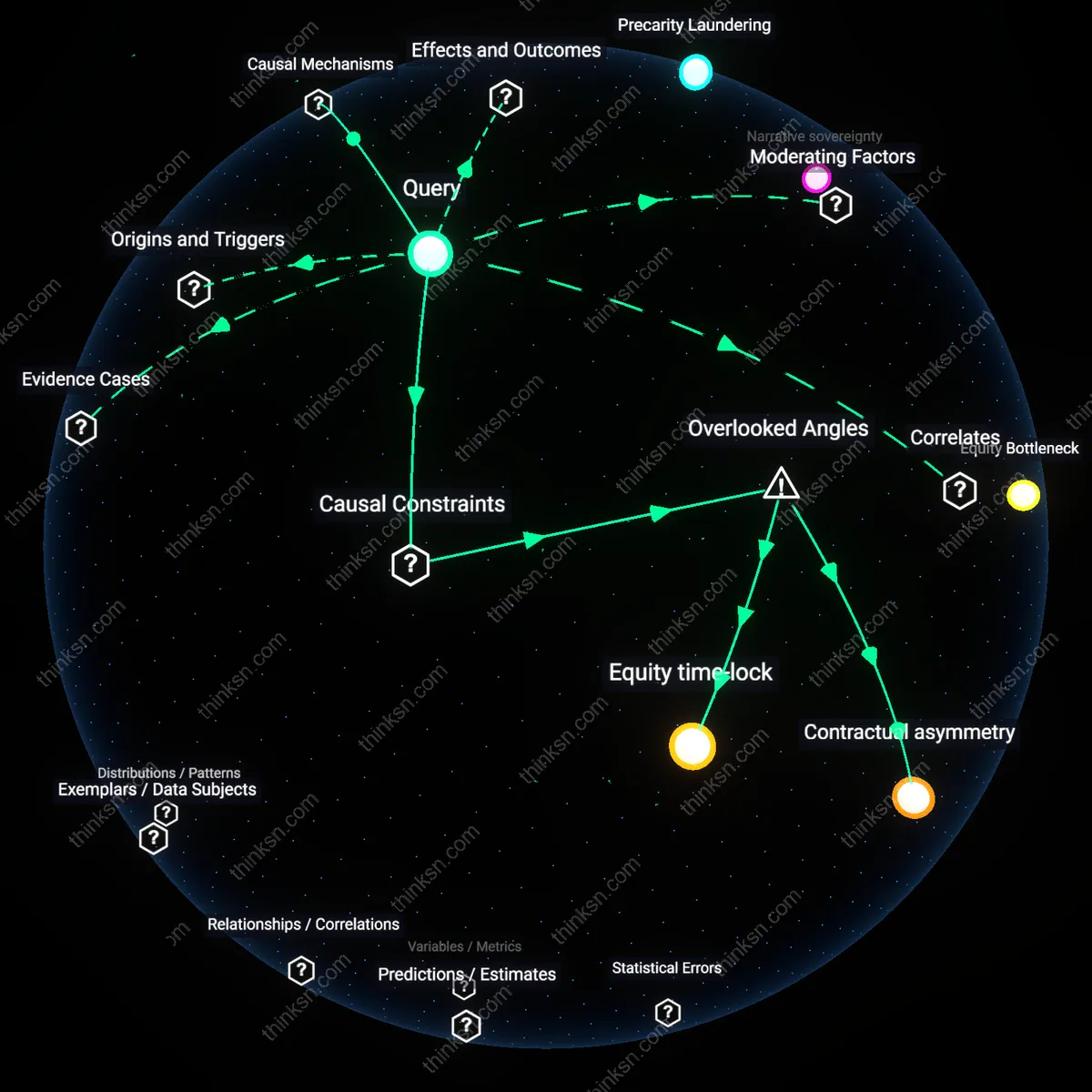
Analysis reveals 10 key thematic connections.
Key Findings
Institutional Asymmetry
The inclusion of mandatory arbitration clauses in Uber’s end-user license agreement demonstrates how platform corporations can unilaterally shape dispute resolution to favor repeat-player legal strategies. By requiring users to resolve disputes through individualized arbitration, Uber avoids class actions and suppresses precedential rulings, a mechanism made enforceable through the Federal Arbitration Act and reinforced by U.S. Supreme Court decisions like AT&T Mobility v. Concepcion. This dynamic reveals the non-obvious imbalance between a tech firm’s scalable legal infrastructure and a consumer’s isolated, cost-prohibitive recourse, illustrating how contractual formality masks systemic power disparity.
Regulatory Abdication
The 2011 Nitro-Lift Technologies case, where employees were forced into arbitration after workplace injuries, exemplifies how arbitration clauses in standard contracts can nullify de facto access to occupational safety enforcement. Despite OSHA’s mandate to protect workers, the courts upheld the arbitration agreement, effectively transferring adjudication of statutory rights from public regulators to private forums. This shift exposes the underappreciated way in which administrative oversight is undermined not by legislative repeal, but by contractual mechanisms that reclassify legal entitlements as waivable terms.
Consumer Invisibilization
The rollout of binding arbitration in Apple’s iOS 13 update rendered millions of users subject to private dispute resolution without affirmative engagement, illustrating how digital consent architectures erase meaningful negotiation. Because the license agreement was presented as a non-negotiable clickwrap contract during device setup, users could neither bargain nor practically comprehend the legal consequences, a condition enabled by courts treating digital assent as equivalent to informed agreement. This case reveals the often-overlooked erasure of consumer agency not through overt coercion, but through interface design that simulates choice while foreclosing it.
Regulatory arbitrage
The widespread use of arbitration clauses in end-user license agreements reflects how corporations exploit jurisdictional fragmentation to override consumer rights under the guise of contractual autonomy. Tech firms and service providers embed these clauses to preempt class-action litigation, leveraging the asymmetry between standardized consumer contracts and the high cost of individual arbitration—a mechanism enabled by the U.S. Federal Arbitration Act and reinforced by Supreme Court rulings like AT&T Mobility v. Concepcion. This represents not just private ordering but a strategic relocation of dispute resolution into forums structurally biased toward repeat-player businesses, revealing how legal forum selection has become a tool for diminishing public regulatory oversight. The non-obvious consequence is that contractual form becomes a weaponized instrument to hollow out statutory protections, turning boilerplate into a mechanism of jurisdictional displacement.
Procedural Asymmetry Capital
The widespread use of arbitration clauses in end-user license agreements reflects not just a conflict between autonomy and rights, but a calculated accumulation of procedural asymmetry capital by firms, wherein legal predictability is privatized while risk is socialized to consumers. Tech corporations and SaaS providers exploit standard-form contracts to institutionalize dispute-resolution mechanisms that favor repeat-player legal teams over isolated users, leveraging jurisdictional arbitrage and cost asymmetries embedded in arbitration rules—conditions rarely transparent at point of consent. This dynamic is ethically significant under Rawlsian fairness principles, which demand that procedural systems not advantage those already holding structural power, yet it remains overlooked because consumer harm is diffuse and individualized, masking systemic extraction. What matters is not merely the waiver of rights, but the steady conversion of procedural inequality into a stable, monetizable asset.
Consent Infrastructure
The embedding of arbitration clauses in end-user agreements indicates that contractual autonomy has been reconceived as a technical achievement of consent infrastructure rather than a juridical ideal, where UX design and onboarding flows are engineered to produce legally sufficient assent with minimal cognitive engagement. Digital platforms operate through interface architectures—timers, scrolljacking, default toggles—that transform passive scrolling into binding agreement, aligning with libertarian paternalism in behavioral economics but undermining Kantian expectations of informed, rational will. This shift is ethically consequential because it relocates the site of contract legitimacy from content comprehension to interaction completion, a dimension missed in doctrinal debates focused on enforceability rather than experiential compliance. The overlooked variable is not whether arbitration is fair, but how digital consent architecture silently redefines autonomy as procedural throughput.
Regulatory Arbitrage Temporality
The normalization of arbitration clauses signals a temporal misalignment between consumer rights enforcement and regulatory arbitrage temporality, where firms exploit the lag between legislative action and doctrinal adaptation to entrench private legal orders. By embedding irreversible procedural choices into rapidly distributed software licenses, companies like Microsoft, Apple, and Adobe lock in dispute mechanisms years before regulators can react, effectively freezing consumer remedies in outdated frameworks—a strategy justified under neoliberal contractualism but incompatible with Habermasian ideals of democratic legal discourse. This time-based displacement is ethically critical because it converts innovation speed into a shield against accountability, a dynamic rarely examined as most analyses focus on spatial jurisdictional conflicts rather than the weaponization of time. The hidden dependency is not power or deception, but the asymmetric velocity of legal embedding versus public oversight.
Procedural Capture
The widespread use of arbitration clauses in end-user license agreements reveals that contractual autonomy functions not as a mutual safeguard but as a mechanism of procedural enclosure that insulates corporations from systemic accountability. In cases like AT&T Mobility v. Concepcion (2011), where the U.S. Supreme Court upheld corporate use of forced arbitration with class action waivers, the legal effect was to dissolve consumers’ collective redress options under the guise of contract freedom—evident in how companies like Google and Microsoft now embed non-negotiable arbitration terms in standard software licenses. This operates through pre-dispute waivers enforced by the Federal Arbitration Act, transforming individual consent into a systemic tool for disabling public enforcement; the non-obvious outcome is that autonomy becomes structural repression when scaled across millions of unequal bargaining relationships.
Consent Ritualization
The inclusion of arbitration clauses in consumer software agreements signals that consent has been ritualized into a performative shield rather than a substantive legal foundation for enforceable terms. When companies like Apple or Adobe deploy clickwrap agreements requiring users to 'accept' lengthy license terms—where arbitration is buried in dense legal text—the mechanism is not informed agreement but procedural theater that legally legitimizes power asymmetry. This functions within a digital compliance architecture where no practical negotiation exists, and refusal means product denial; the underappreciated reality is that these rituals produce legal validity without genuine choice, allowing firms to claim consumer assent while eroding the ethical grounding of contract law.
Jurisdictional Privatization
The systematic insertion of arbitration clauses in mass-market software licenses indicates that jurisdiction itself is being privately allocated by corporations, not consensually delegated by users. Entities like Uber and Intuit design their EULAs to route all disputes into closed, corporate-favorable forums such as the American Arbitration Association, effectively displacing state judicial oversight with privately administered dispute systems. This operates through FAA-enabled preemption of state consumer protection laws, as seen in cases like DIRECTV v. Imburgia (2015), where federal arbitration mandates override local fairness standards; the dissonance lies in framing this as contractual freedom when it is, in practice, a corporate zoning of legal space that extinguishes public adjudication as an option.