Why Hospitals Override Whistleblower Protections to Silence Staff?
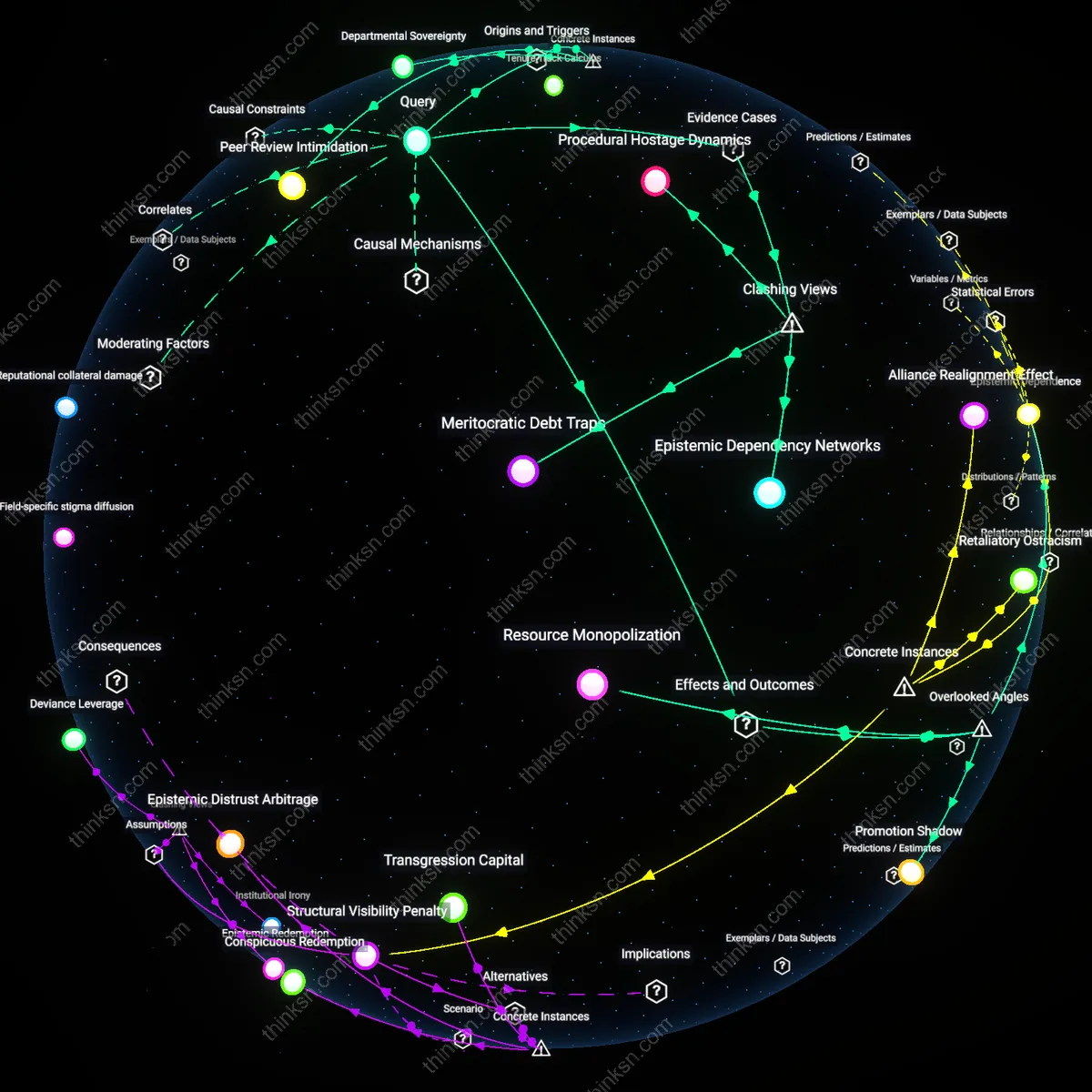
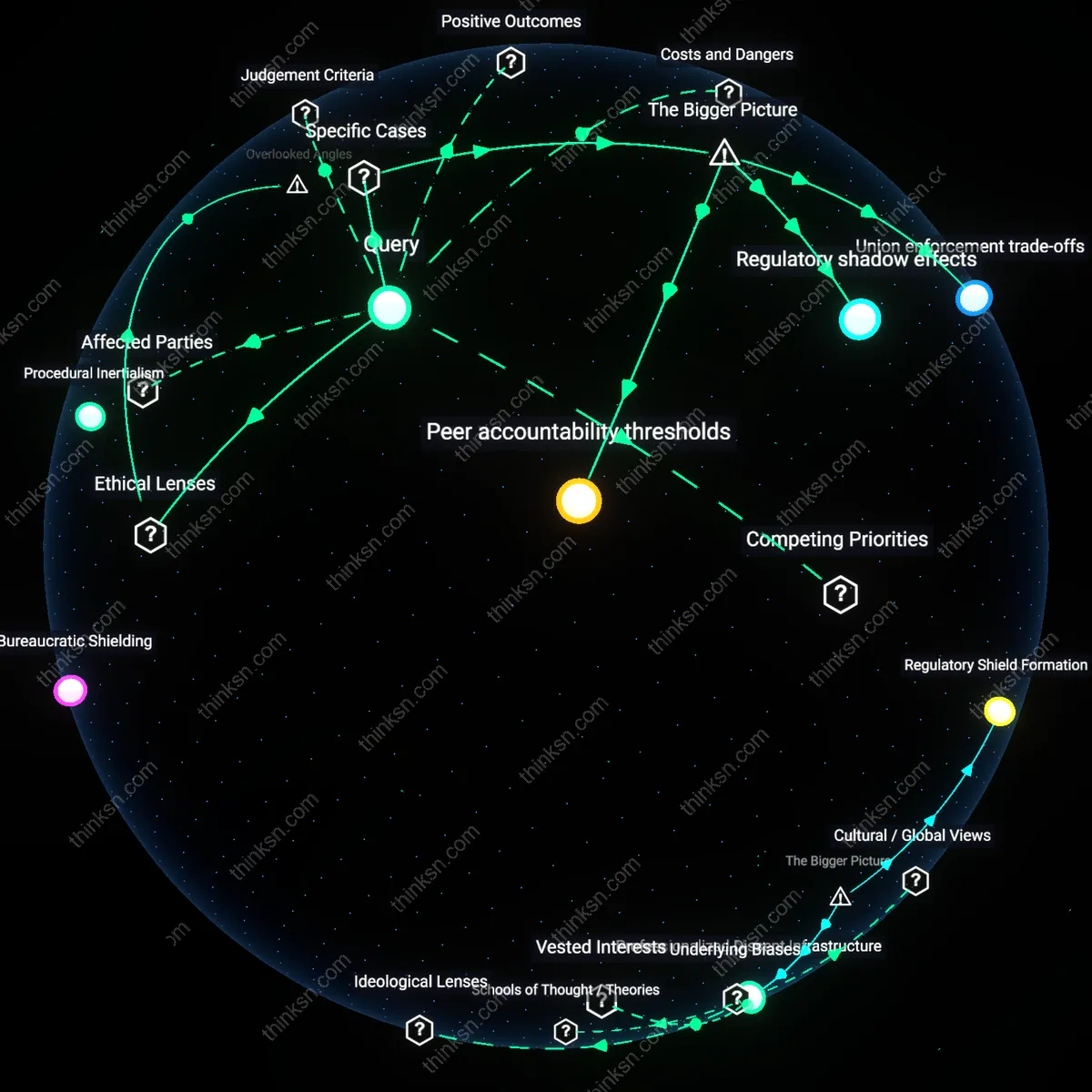
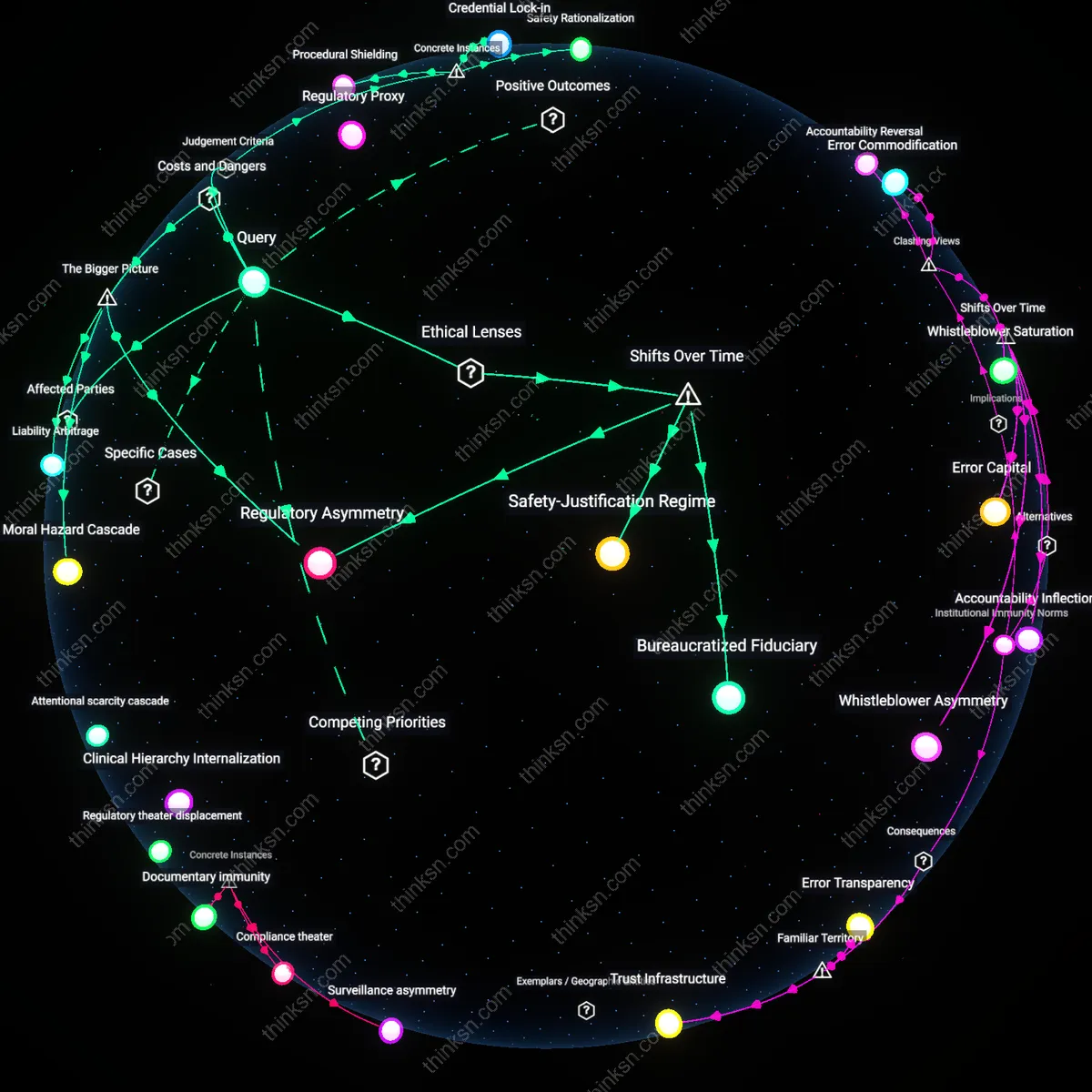
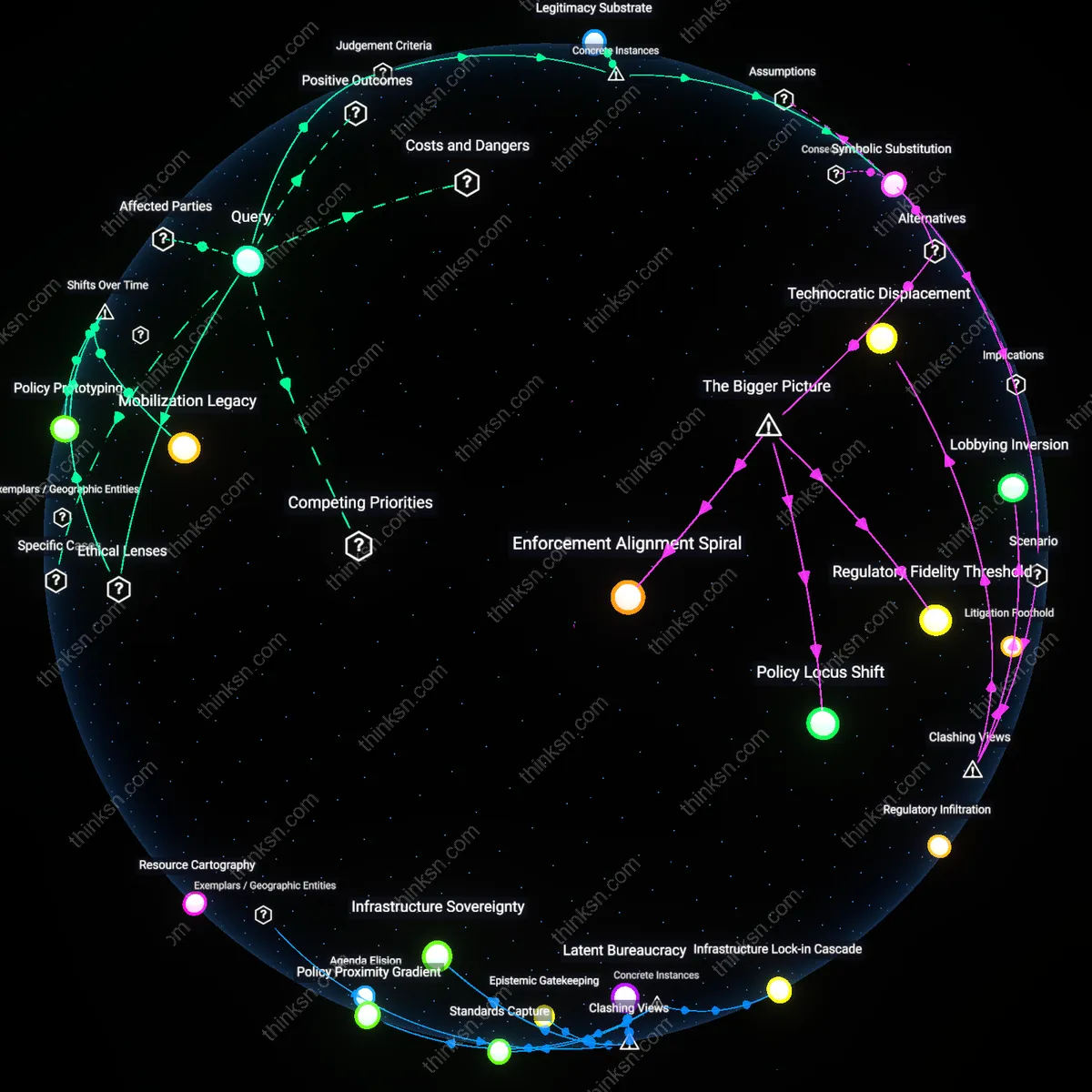
Analysis reveals 8 key thematic connections.
Key Findings
Structural Asymmetry in Oversight
Federal whistleblower protections fail because hospital compliance systems are internally controlled by the same administrative hierarchies where violations originate, enabling retaliation under the guise of performance management. Hospital executives, as both recipients of whistleblower reports and evaluators of employee performance, exploit informal supervision practices—such as reassigning duties or isolating staff—to discipline reporters without triggering formal anti-retaliation investigations. This operates through decentralized human resource protocols that insulate managerial discretion from external scrutiny, making retaliation appear as routine workplace decisions rather than prohibited acts. What is underappreciated is not weak laws but the seamless integration of punitive authority within ostensibly neutral hospital governance structures.
Regulatory Arbitrage via Institutional Complexity
Large hospitals evade accountability by leveraging their status as multi-department, multi-entity systems to fragment responsibility for whistleblower outcomes across divisions, funding streams, and affiliated organizations. When a nurse reports unsafe sterilization practices in a university-affiliated medical center, for example, retaliation may be carried out by a contracted staffing agency or a separate nonprofit auxiliary, placing the act outside the direct scope of federal enforcement agencies like OSHA or HHS. This mechanism functions through the deliberate use of administrative complexity to dissolve clear lines of liability, allowing actors to claim ignorance or jurisdictional mismatch. The non-obvious insight is that institutional bigness is not just logistical but strategic—a shield constructed through legal segmentation rather than mere size.
Cultural Immunization Against Disclosure
Hospital cultures systematically suppress reporting by normalizing hierarchical silence and framing dissent as disloyalty, a process sustained by professional socialization and peer-enforced norms among clinical and administrative staff. In surgical departments or ICU units, for instance, junior staff learn through observation and subtle sanctions that raising concerns—especially about senior physicians—disrupts team cohesion and career advancement, even if formal policies encourage reporting. This dynamic is reinforced by implicit understandings that organizational reputation and operational continuity outweigh individual ethical disclosures, effectively immunizing maladaptive behaviors from external intervention. The critical insight is that federal protections cannot address deeply embedded professional ideologies that equate silence with competence and loyalty.
Regulatory Arbitrage
Strengthening federal whistleblower protections fails because hospitals exploit jurisdictional gaps between state licensing boards and federal oversight to delay, relocate, or reclassify retaliatory actions under non-federal personnel policies. This allows administrators to sanction whistleblowers through seemingly compliant mechanisms like performance reviews or credentialing adjustments—actions shielded from federal enforcement due to decentralized medical governance. The non-obvious reality is that retaliation is often not a violation of law but a calculated use of legal fragmentation, making stronger federal rules ineffective without harmonizing state-level enforcement levers.
Clinical Authority Inversion
Expanding whistleblower reporting channels fails to prevent retaliation because hierarchical clinical culture treats safety disclosures as insubordination when made by lower-status providers—especially nurses or technicians reporting physicians—regardless of factual accuracy. Retaliation manifests not through formal sanctions but through withdrawal of clinical privileges, scheduling isolation, or undermining credibility in rounds, mechanisms invisible to federal monitors focused on overt punishment. The dissonance is that the root issue isn't fear of punishment but the unacknowledged power norm where safety reporting disrupts professional caste hierarchies essential to hospital workflow.
Compliance Theater
Mandating anti-retaliation training and internal review boards fails because hospitals treat these as audit-passing artifacts rather than operational safeguards, designing them to produce evidence of compliance—signed attestations, archived meeting minutes—without altering decision-making in promotion or conflict resolution. Investigators then mistake documentation fidelity for cultural adherence, enabling institutions to retaliate post facto under ostensibly neutral pretexts like 'team cohesion' or 'role realignment.' The critical insight is that the system rewards proof of process over proof of outcome, turning protections into performative infrastructure.
Regulatory Time Lag
OSHA's Whistleblower Protection Program took over 1,000 days to resolve a retaliation case against Mount Sinai Hospital in New York, where a nurse who reported inadequate sterilization procedures was fired within weeks of her complaint. The delay between reporting and enforceable intervention creates a structural window where hospitals face no consequences for retaliation, allowing administrative inertia and internal reprisals to proceed unchecked. This temporal gap reveals that even when protections exist, their real-time ineffectiveness undermines deterrence precisely when it is most needed. The non-obvious insight is that the speed of institutional response, not just its existence, determines protective efficacy.
Budgetary Shielding
After staff anesthesiologists at Hahnemann University Hospital in Philadelphia exposed falsified patient safety data tied to Medicare billing in 2018, they faced demotion and scheduling penalties, but the hospital avoided federal penalties due to underfunded CMS auditing capacity. The Centers for Medicare & Medicaid Services lacked the field inspectors and data analytics infrastructure to proactively verify internal compliance, making reactive whistleblower reports the de facto audit mechanism—yet the hospital’s financial dependencies were structured to absorb legal risks more cheaply than operational reform. This exposes how insufficient enforcement resourcing allows high-cost institutions to treat whistleblower penalties as calculable overhead rather than deterrents.