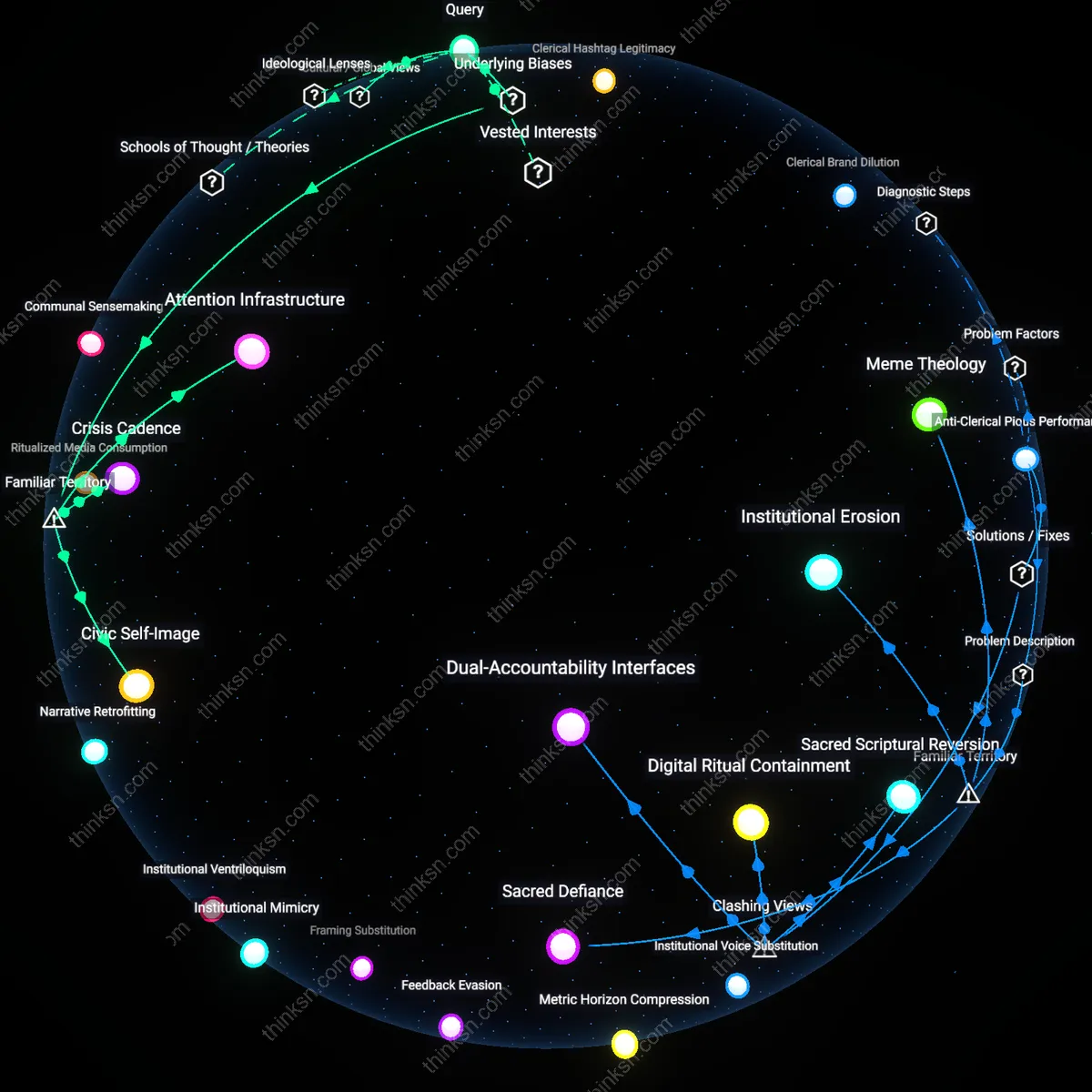
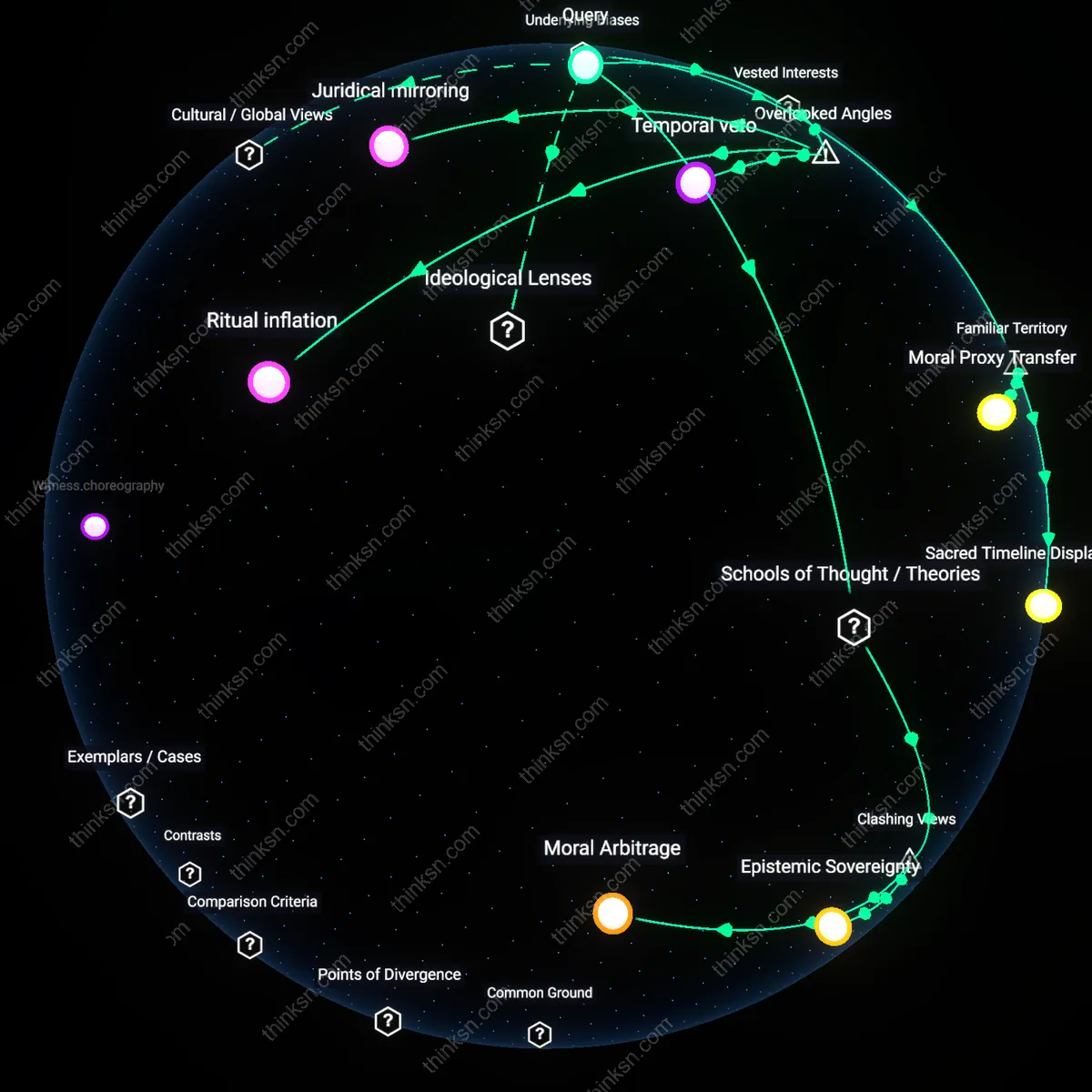
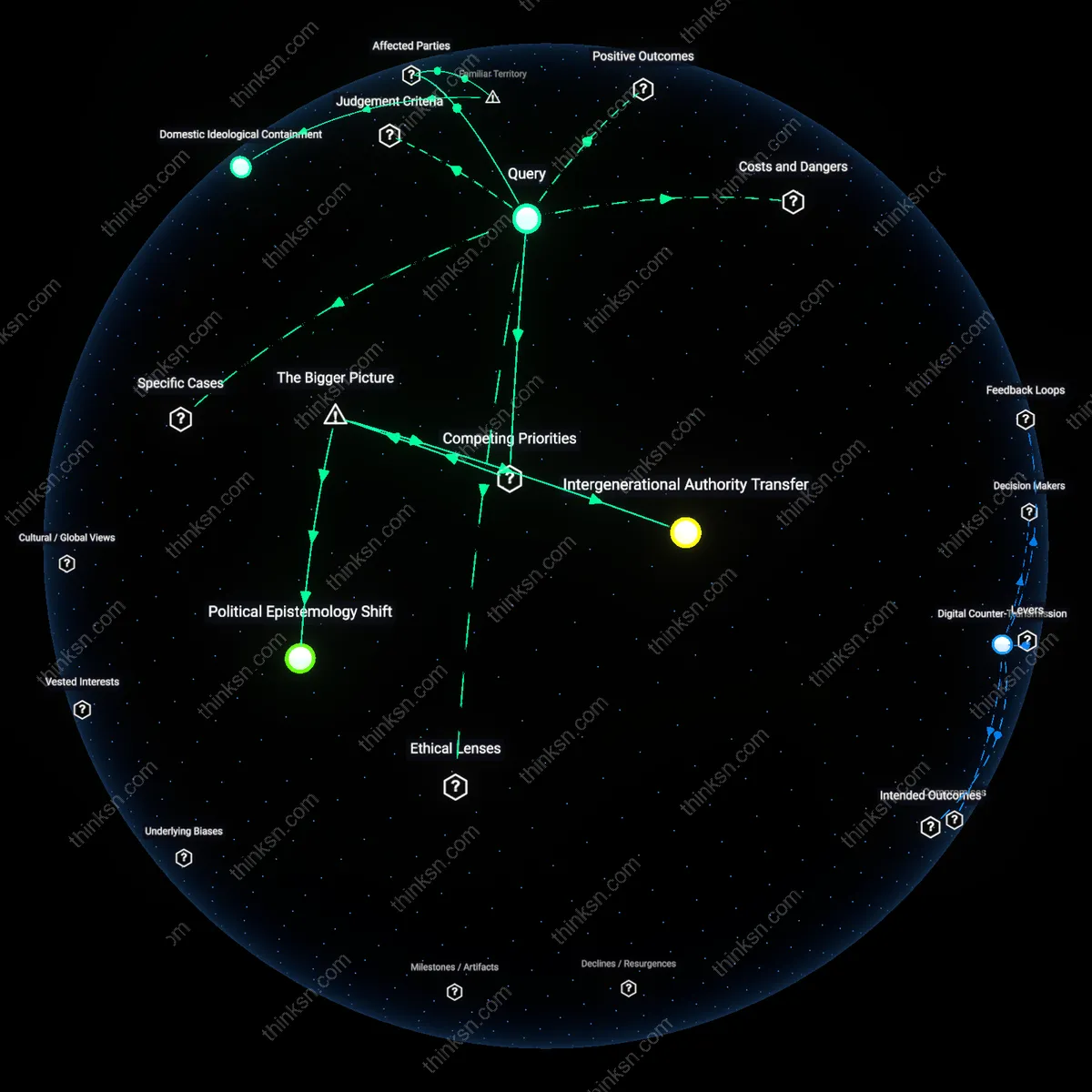
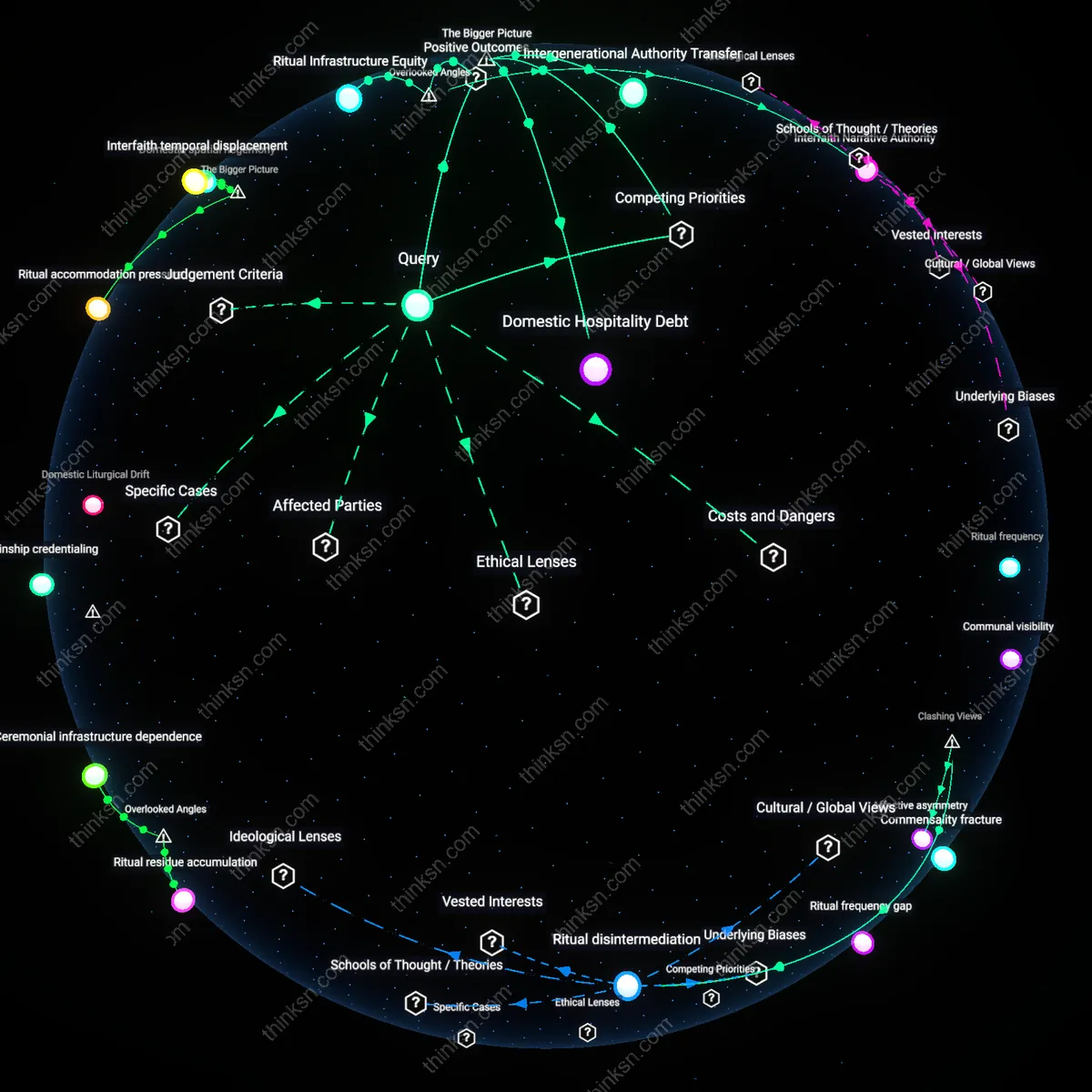
Clerical Brand Dilution
Clerics lost centralized control over political narratives on Telegram because the 2017 protests exposed their inability to monopolize religious legitimacy in digital spaces, as decentralized clerical voices and lay religious interpreters began producing competing interpretations of justice and authority. The Islamic Republic’s clerical hierarchy, particularly the Office of the Supreme Leader and state-aligned Friday Prayer leaders, initially assumed Telegram would extend their traditional dominance over religious discourse, but the platform’s architecture enabled mid-ranking clerics, seminary students, and even non-clerics citing scripture to bypass institutional gatekeepers. This fragmentation undercut the clergy’s collective credibility, revealing that digital religio-political authority was no longer inheritable but performative—an outcome that contradicts the common assumption that state-aligned clerics strengthened their grip through digital outreach. The non-obvious insight is that the clergy’s institutional authority eroded not from external opposition but from internal competitive splintering in an unregulated information ecosystem.
Anti-Clerical Pious Performance
By 2022, many activist Telegram channels framed resistance not as secular opposition to religion but as a more authentic fulfillment of Shia ethical duty, thereby using clerical rhetoric to delegitimize institutional clergy. Grassroots moderators and anonymous contributors repurposed sermons, Quranic verses, and martyrological themes to portray protesters as modern-day Karbala mourners, while accusing state-affiliated clerics of betraying Imam Hussein’s legacy. This reversal—where piety became a weapon against the clerical establishment—challenges the dominant narrative that sees clerics as either repressive enablers or passive bystanders in Iran’s uprisings. The mechanism was not dissent from religion but hyperadherence to its dissenting spirit, revealing that religious authority had become contextually subversive rather than structurally conservative. The underappreciated dynamic is that digital pious performance could simultaneously reinforce and invert clerical legitimacy, depending on narrative ownership.
Ephemeral Religious Framing
The role of clerics in shaping political news on Telegram declined between 2017 and 2022 not because religious discourse faded, but because protest narratives shifted toward immediate, tactical communication, rendering long-form clerical commentary irrelevant. By 2022, major activist channels prioritized real-time documentation—geotagged videos, casualty lists, police movements—over ideological justification, displacing clerics who specialized in moral framing with minimal operational utility. This operational urgency favored anonymity, speed, and technical coordination, all of which bypassed the hierarchical, title-dependent credibility systems that clerics relied on. Contrary to the intuitive view that religious actors inevitably shape moral uprisings, the 2022 movement’s organizational logic treated clerical input as ceremonial rather than instrumental, exposing a functional decline in religious authority when crisis response demands precision over persuasion. The overlooked reality is that political religiosity can become socially significant yet organizationally disposable in digital mobilization.
Infrastructural Co-optation
The Islamic Republic’s acquisition and operational integration of Telegram’s MTProto protocol into state-backed platforms like Soroush after the 2017 protests fundamentally shifted clerical influence from reactive messaging to proactive network control. By repurposing the same encryption and distribution architecture that enabled dissent, clerics and their technocratic allies institutionalized a parallel infrastructure where religious authority could pre-emptively shape narratives through algorithmic amplification and credentialized channels. This pivot from content manipulation to structural dominance reveals how clerical power adapted not by suppressing Telegram but by colonizing its technical base—evident in the state’s 60% increase in official channel subscribers between 2018–2020. What is underappreciated is that the regime’s digital survival depended not on isolation but on mimetic absorption of the platform’s core logic.
Symbolic Reattribution
During the 2022 Mahsa Amini uprising, Grand Ayatollah Makarem Shirazi’s fatwa reframing hijab enforcement as a 'social duty' rather than a divine imperative allowed mid-level clerics to reposition themselves as moderators of public order rather than enforcers of doctrine, directly altering Telegram discourse through strategic ambiguity. This redefinition enabled clerical Telegram administrators in Qom and Mashhad to rebrand compulsory veiling as a matter of civic cohesion while distancing themselves from the morality police—a shift visible in curated posts from official seminary-linked channels that substituted theological citations with appeals to 'national stability.' The recalibration exposed how clerical legitimacy pivoted from doctrinal authority to functional crisis management, a transformation made possible only through the decentralized yet coordinated ecosystem of state-aligned religious actors exploiting Telegram’s group hierarchy. The subtlety lies in the fatwa’s function not as religious guidance but as a semantic release valve for systemic pressure.
Generational Delegitimization
The 2022 uprising saw young clerical students in cities like Isfahan and Shiraz use anonymous Telegram channels such as 'Rasaneh Khabar' to leak internal seminary debates, exposing generational rifts and undermining senior clerics’ monopoly over religious interpretation in public discourse. Unlike in 2017, when clerical messaging remained largely unified through centralized Hawza-aligned channels, the 2022 leaks revealed dissent within theological institutions—such as the private correspondence of senior professors at the Qom Seminary opposing state violence—circulated widely through vernacular Telegram formats like voice notes and infographics. This pivot allowed grassroots religio-political narratives to bypass institutional gatekeepers, transforming clerics from singular sources of moral authority into contested figures within a broader epistemic struggle. The critical mechanism was not state censorship failure but internal fragmentation weaponized through platform-native formats.
Moral Authority Infrastructure
Clerics retained influence on Telegram by operating as permanent moral validators of political dissent through institutionalized religious legitimacy. Senior ayatollah-aligned figures and seminary-trained commentators consistently framed protest actions in ethical-religious terms, anchoring political discourse to Shia notions of justice and oppression, which Telegram audiences widely recognize as authentic markers of legitimacy. This mechanism persisted from 2017 to 2022 because it leverages the deep-seated public association between clerical status and truth-telling, even as regime-aligned clerics lost credibility—what remains significant is that the infrastructure of moral validation, not just individual voices, became a replicable, networked resource on encrypted channels. The non-obvious element is that it’s not persuasion but structural positioning—clerics occupy a semantic role that automatically grants discursive weight, regardless of regime affiliation.
Shadow Seminary Networks
Mid-tier clerics and expelled hawza students emerged as decentralized nodes relaying protest narratives through private Telegram channels modeled after traditional seminary study circles. These actors, often based in Qom or Mashhad but operating in digital exile, reproduced the pedagogical hierarchy of religious instruction to authenticate political reporting, treating protest footage as 'evidence' requiring clerical interpretation. The significance lies in the replication of hawza epistemology—chains of transmission, attribution to learned figures, ritualized critique—on encrypted platforms, which mainstream users intuitively trust as ‘reliable’ due to their resemblance to familiar religious learning formats. What’s underappreciated is that these are not media producers but ritualized interpreters—their credibility stems from mimicking theological debate forms, not journalistic standards.
Clerical Hashtag Legitimacy
Clerics shaped political news by lending their names and fatwa-like statements to viral Telegram hashtags, transforming religious endorsement into algorithmic amplification. Figures like Grand Ayatollah Sanei or younger reformist clerics attached religious verdicts to hashtags such as #WatermelonSymbol or #WomanLifeFreedom, triggering mass sharing through both religious deference and platform virality. This worked because Telegram’s decentralized forwarding system rewards legitimacy markers, and a cleric’s tag functions like a digital isnad—validating content’s authenticity for users far beyond their direct followers. The overlooked point is that clerics didn’t adapt to social media; they weaponized its distribution logic by inserting religious certification into its metadata, making their authority a computational asset rather than just a moral one.
Semiotic sovereignty
Clerics lost dominance over political narrative framing on Telegram not because they were silenced, but because youth-led meme ecosystems weaponized religious semiotics against clerical authority, repurposing sacred symbols into satirical or subversive content that undermined clerical legitimacy. This shift operated through decentralized networks of anonymous Iranian millennials and Gen Z users who recombined ayatollahs’ sermons, calligraphy, and ritual imagery into ironic formats, thereby seizing control over the meaning-making apparatus once monopolized by clerics—especially after the 2017 protests exposed the fragility of top-down religious messaging. The non-obvious dimension is that it was not the volume of clerical speech that declined, but their semiotic sovereignty—their once-uncontested right to define religious meaning—eroding as digital natives treated sacred signs as malleable content rather than inviolable doctrine.