Is Remote Agency Autonomy Undermining Professional Networking?
Analysis reveals 6 key thematic connections.
Key Findings
Spatial dispersion of trust cues
Launching a remote agency fragments the physical co-presence required to cultivate spontaneous trust cues among marketing peers, particularly undermining mid-career professionals who rely on observed consistency in behavior across informal settings to secure referrals and collaborative opportunities. Mid-career marketers historically build influence through repeated in-person interactions at industry events, client offices, and local meetups—contexts where reliability, taste, and judgment are tacitly assessed. The shift to remote operations erases these micro-rituals of credibility, replacing them with curated digital personas that lack the granularity needed for deep professional bonding. What’s overlooked is not just reduced contact frequency, but the loss of ambient, non-transactional observation that enables peers to vouch for one another—an underappreciated precondition for high-stakes networking in reputation-driven fields.
Hierarchy bypass paradox
By positioning themselves as autonomous agents outside traditional firms, mid-career marketers unintentionally forfeit access to layered organizational networks that historically enabled lateral connections through shared superiors or cross-team projects. Remote agency founders often assume that independence increases connectivity, but the reality is that much peer-level networking in marketing occurs vertically—via mutual bosses, agency-client hierarchies, or multi-tiered campaign teams—where affiliation signals safety and opens doors. When marketers detach from these scaffolds, they lose not only access to executives but also the implicit endorsement conveyed by institutional nesting. The overlooked mechanism is that hierarchy in mature industries doesn’t just constrain—it certifies, and its absence forces solo operators into self-verification modes that inhibit organic peer integration.
Temporal misalignment of reciprocity
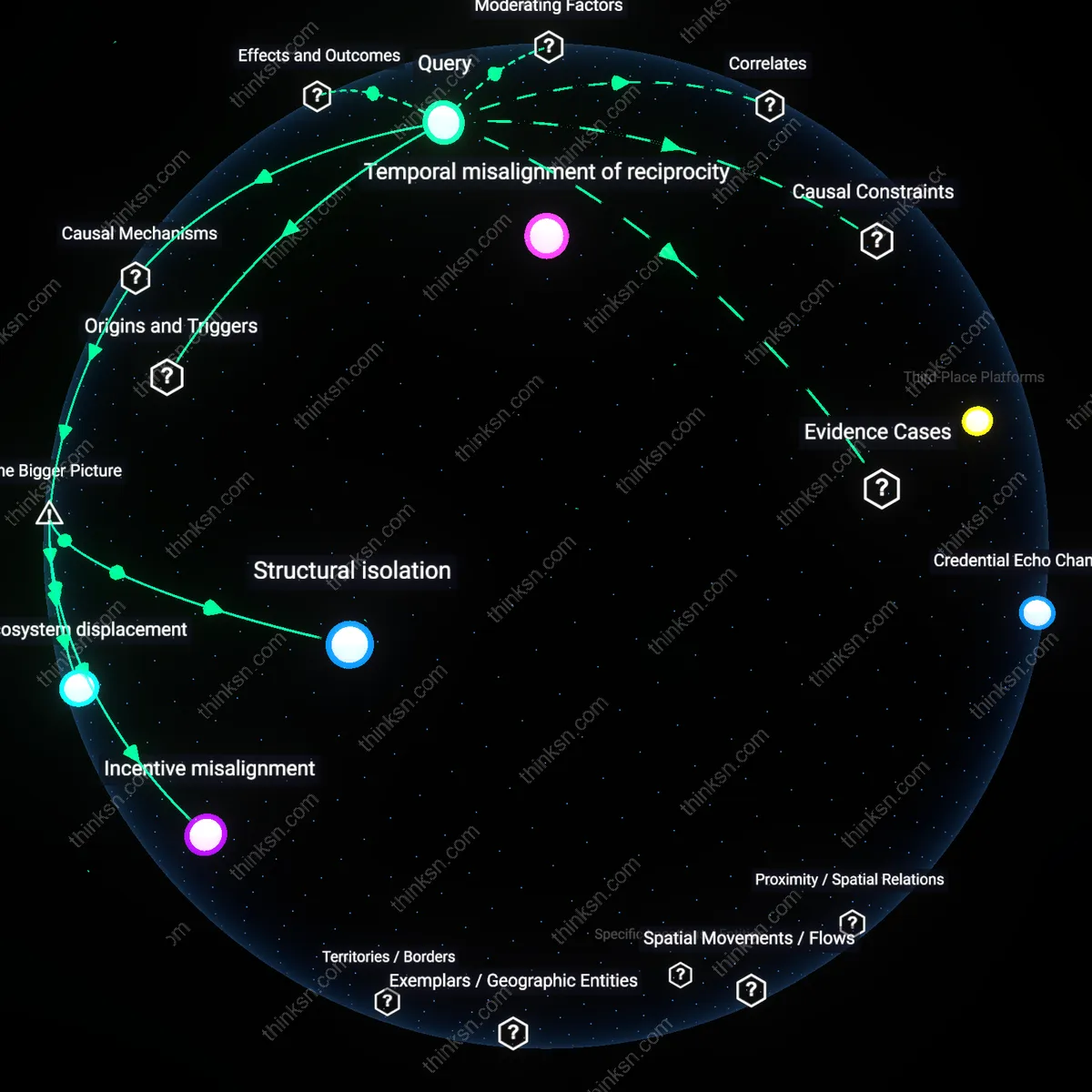
Remote agency founders operate on asynchronous, project-based timelines that conflict with the cyclical, seasonally synchronized rhythm of industry networking events, peer cohorts, and client procurement calendars that dominate mid-career marketing ecosystems. Unlike agency employees whose attendance at Cannes Lions, trade shows, or quarterly pitch cycles is scheduled and funded by employers, independent operators must personally negotiate time and budget for such engagements, often missing critical windows for reciprocal visibility. The underappreciated factor is that networking in marketing is less about raw connections than about mutual presence at predictable intervals—what builds trust is not just interaction, but reliably timed re-engagement. Autonomy disrupts this rhythm, rendering even highly skilled marketers invisible at decision-forming moments.
Structural isolation
Launching a remote agency removes mid-career marketers from geographically concentrated industry hubs, thereby eliminating routine exposure to peer firms, clients, and informal deal-making venues; this structural shift severs access to dense urban professional ecosystems—like those in New York or London—where marketing innovation and client referrals often emerge through unplanned interactions; the non-obvious consequence is not just reduced contact, but the erosion of situational awareness about market shifts, which depends on ambient professional proximity.
Incentive misalignment
The pursuit of autonomy prioritizes client delivery and profit retention over relationship cultivation, causing agency founders to treat networking as a discretionary time cost rather than a strategic input; in this context, mid-career marketers face a systemic trade-off between revenue-generating work and non-billable outreach, mediated by lean operational models that reward short-term output; the underappreciated dynamic is that autonomy creates a local rationality in which networking is structurally disincentivized, even as it weakens long-term growth options.
Ecosystem displacement
Remote agencies often migrate marketing professionals into digital platforms and solo-entrepreneur communities that lack the gatekeeping and credentialing functions of traditional industry associations or corporate ladders; this shift redirects engagement toward fragmented, low-trust networks where reputational capital doesn’t easily transfer; the overlooked systemic effect is that mid-career marketers lose access to institutionalized pathways—such as conference speaker slots or committee appointments—that once served as visible, legitimacy-conferring networking conduits.