Is LinkedIn Worth the Stress of Constant Self-Promotion?
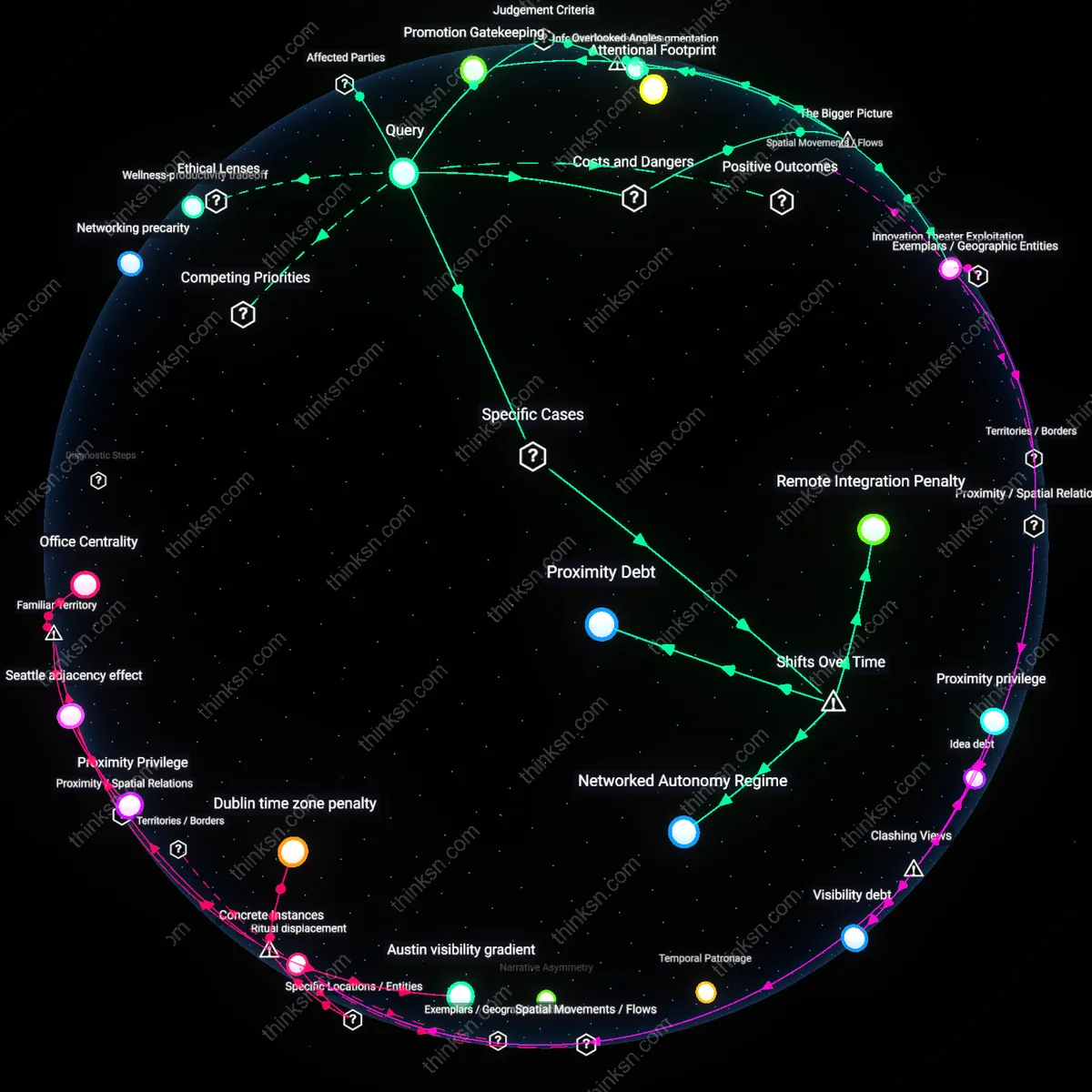
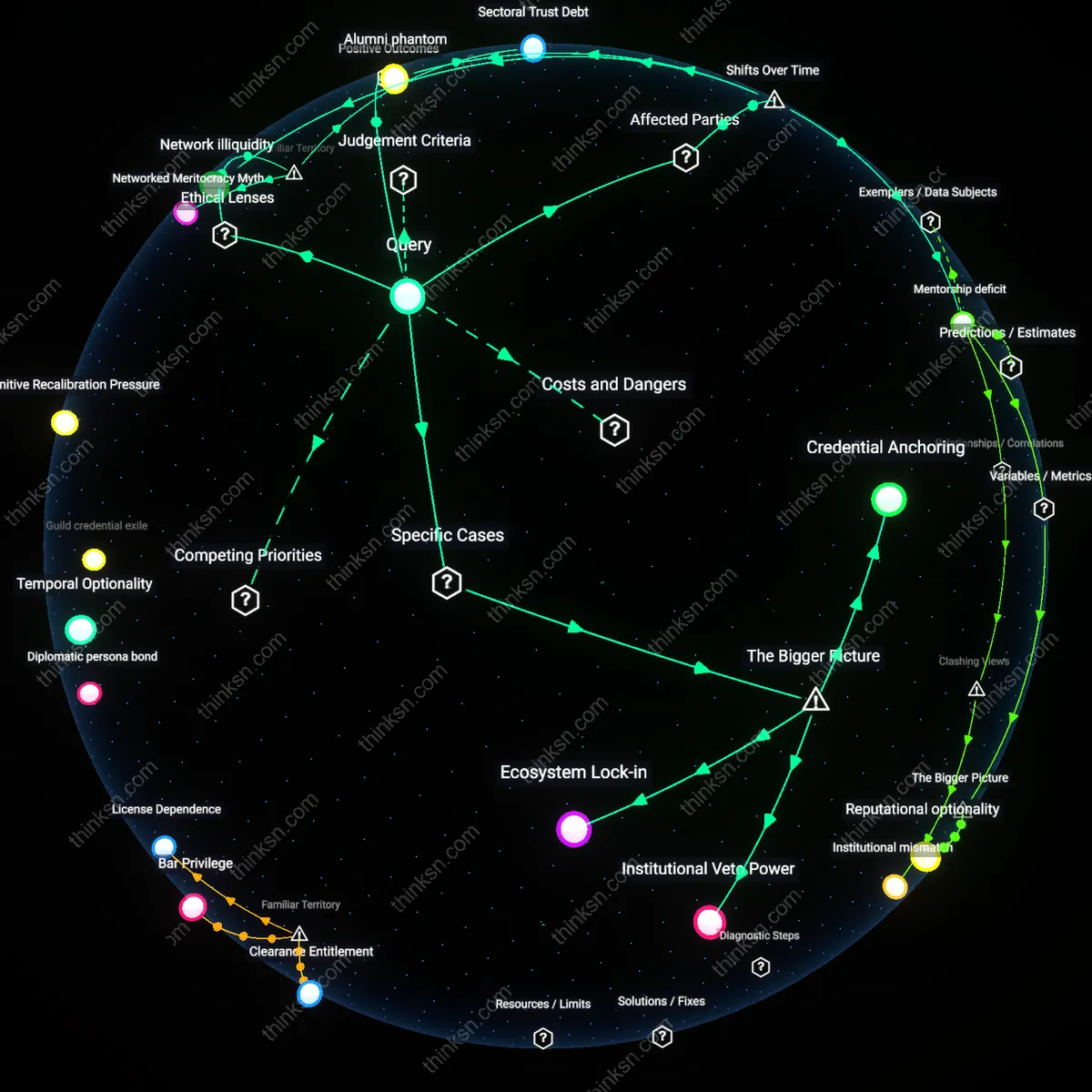
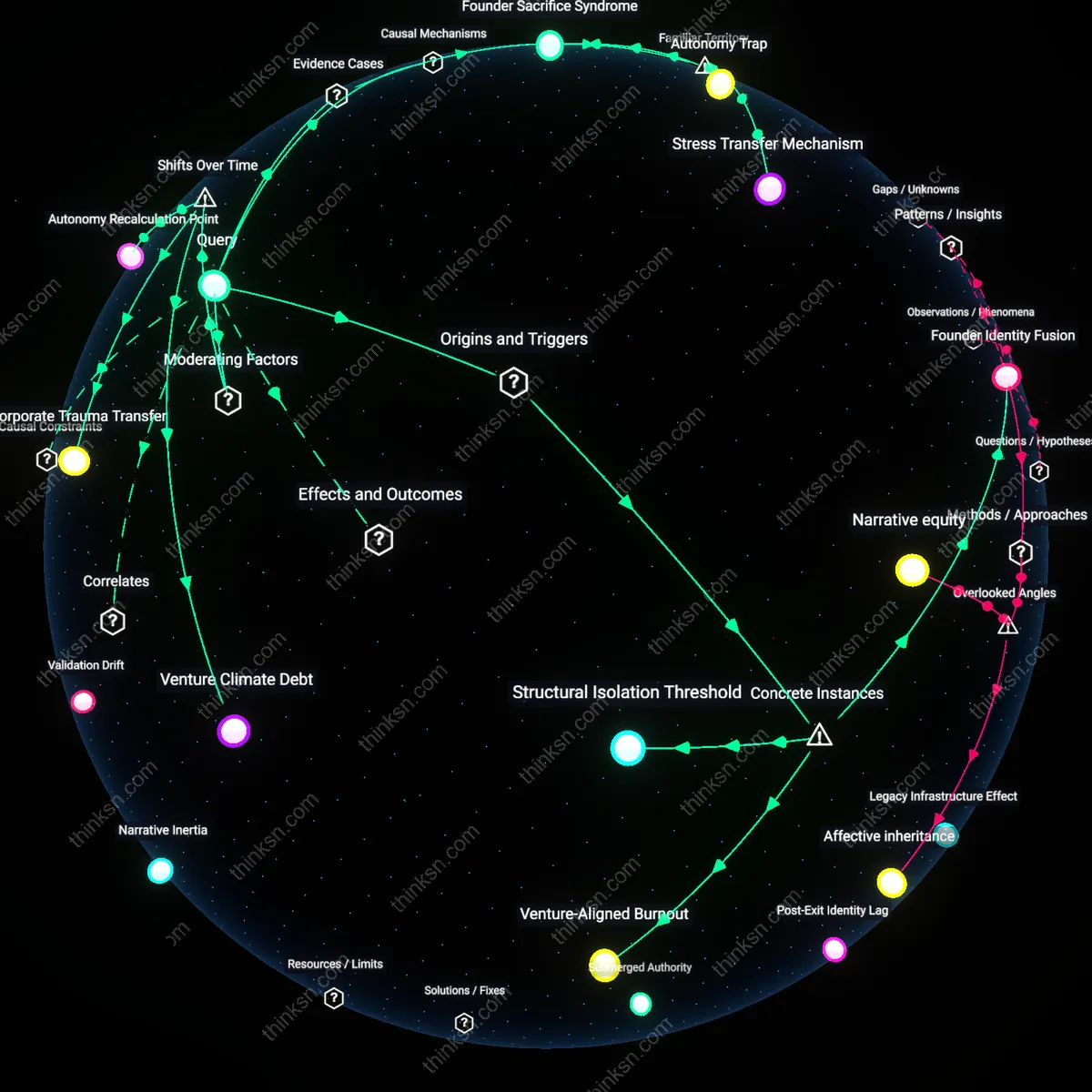
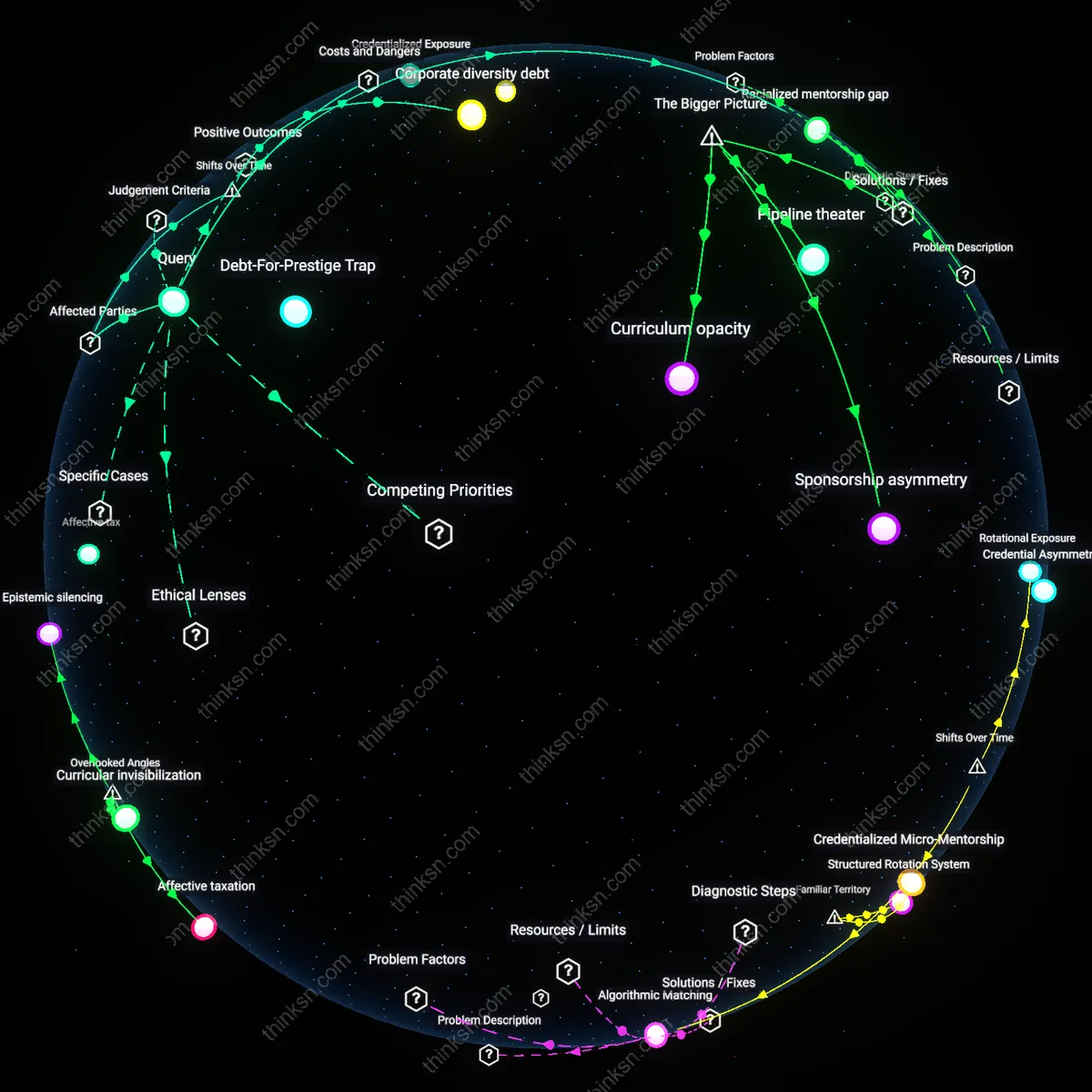
Analysis reveals 8 key thematic connections.
Key Findings
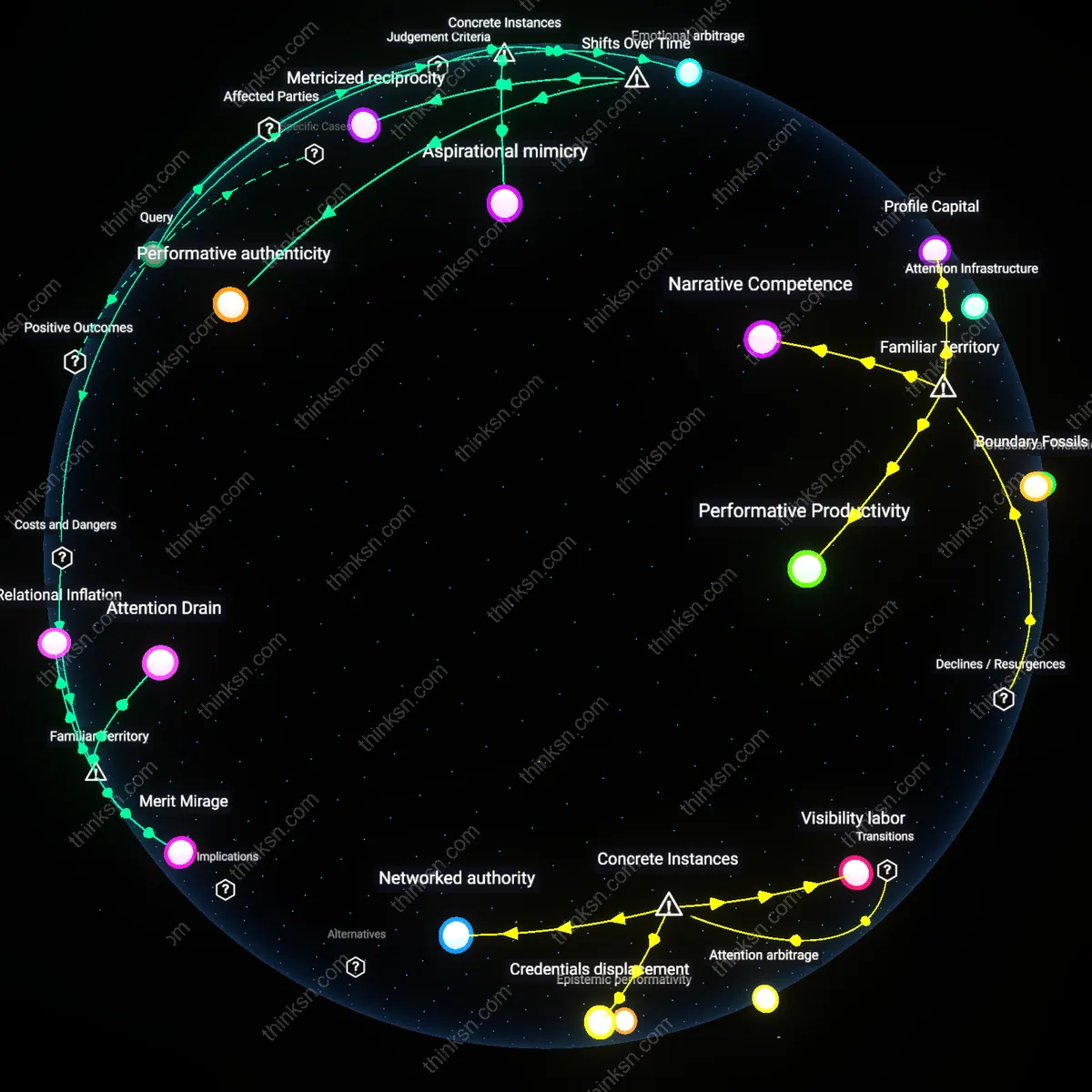
Aspirational mimicry
LinkedIn networking benefits precariously employed graduates from regional universities by enabling them to replicate the profile aesthetics and keyword strategies of elite tech employees at companies like Atlassian, thereby gaining algorithmic visibility in automated hiring systems; this mechanism reveals how self-presentation becomes a tactical compliance with platform-driven norms rather than authentic professional expression, a dynamic rarely acknowledged in discourses centered on personal branding authenticity.
Corporate panopticon
Mid-level managers at firms such as Siemens have reported increased psychological strain from mandatory LinkedIn engagement policies that require regular posts about team achievements and innovation, which are then assessed during performance reviews; this institutionalizes self-surveillance through peer visibility and managerial oversight, exposing how the platform functions as an informal disciplinary apparatus that transforms personal networking into a productivity ritual under digital Taylorism.
Emotional arbitrage
Recruiters based in Nairobi’s tech hubs leverage high-volume connection requests and personalized congratulatory messages on LinkedIn to build trust with West African job seekers aiming for EU remote roles, where the emotional labor of sustained responsiveness offsets the psychological toll of constant comparison among candidates; this illustrates how personal costs of comparison are redistributed and monetized by intermediary actors who profit from managing aspirational distress.
Performative authenticity
The personal benefits of LinkedIn networking outweigh the psychological costs because professional identity has shifted from credential-based validation to continuous narrative performance, a transformation accelerated by the post-2008 gig economy and the erosion of long-term employment. In this context, self-promotion is no longer optional impression management but a necessary labor practice for freelancers, consultants, and precarious workers who must signal reliability and competence in saturated markets. The mechanism—algorithmic visibility governed by user engagement metrics—transforms social comparison into a feedback loop that rewards curated vulnerability and strategic disclosure, making authenticity itself a calculative performance. What is underappreciated is that the psychological cost is not a side effect but the core operational tax of maintaining employability in a system where reputation is both currency and collateral.
Metricized reciprocity
The personal benefits of LinkedIn networking outweigh the psychological costs because the platform has institutionalized a new social contract in which professional advancement depends on quantifiable exchange rather than trust-based affiliation, a shift crystallized during the 2010s as corporate HR increasingly adopted data-driven talent pipelines. Connection requests, endorsements, and post engagement function not as interpersonal gestures but as measurable inputs in promotion algorithms used internally by firms like IBM and Unilever. This system converts reciprocity into a behavioral metric, where the psychological burden of comparison becomes a disciplined, gamified labor of position-maintenance. The non-obvious insight is that users are not passively comparing themselves to peers but actively training organizational decision-making systems through their self-presentation, effectively subsidizing corporate surveillance with emotional labor.
Attention Drain
The personal benefits of LinkedIn networking do not outweigh the psychological costs because the platform’s design coerces professionals into sustained self-presentation that depletes cognitive resources. Workers in knowledge-intensive sectors—such as consultants, tech employees, and freelancers—must continuously craft updates, curate endorsements, and respond to algorithmic cues to remain visible, a process governed by platform-driven engagement loops that erode mental bandwidth. This cost is masked by the familiar framing of 'personal branding' but reflects a non-obvious tax on executive function that accumulates across thousands of micro-decisions, shifting focus from deep work to impression management. The system rewards performative consistency over authentic contribution, making absence or silence misinterpreted as disengagement or decline.
Merit Mirage
The psychological costs of LinkedIn networking exceed its personal benefits because the platform distorts professional validation by equating visibility with competence, triggering chronic social comparison. Mid-career professionals, particularly in competitive fields like finance and startups, experience measurable increases in anxiety and imposter syndrome as they internalize algorithmically amplified success narratives—such as promotions, funding rounds, or speaking engagements—that are selectively showcased and statistically unrepresentative. This dynamic operates through a feedback loop where users mimic hyper-optimized personas to gain social proof, mistaking curated milestones for merit, eroding trust in organic career trajectories. The danger lies not in occasional exaggeration but in the systemic normalization of a success metric that is both inaccessible and misleading, even as it feels universally accepted.
Relational Inflation
LinkedIn networking imposes psychological costs that surpass its benefits by eroding the authenticity and reciprocity essential to meaningful professional relationships. Employees and job seekers who accumulate hundreds of connections through low-friction interactions—like endorsing skills or congratulating strangers—mistake numerical growth for network strength, weakening the value of each tie through dilution. This inflation operates through the platform’s structural push toward connection volume over quality, encouraging transactions that simulate intimacy (e.g., personalized messages generated by templates) while avoiding mutual obligation. The underappreciated risk is that users come to internalize shallow engagement as standard practice, undermining their capacity to build trust-based alliances in real-world settings where reputation depends on consistency and depth.