Is Home Equity Enough to Stay or Rent in Job Uncertainty?
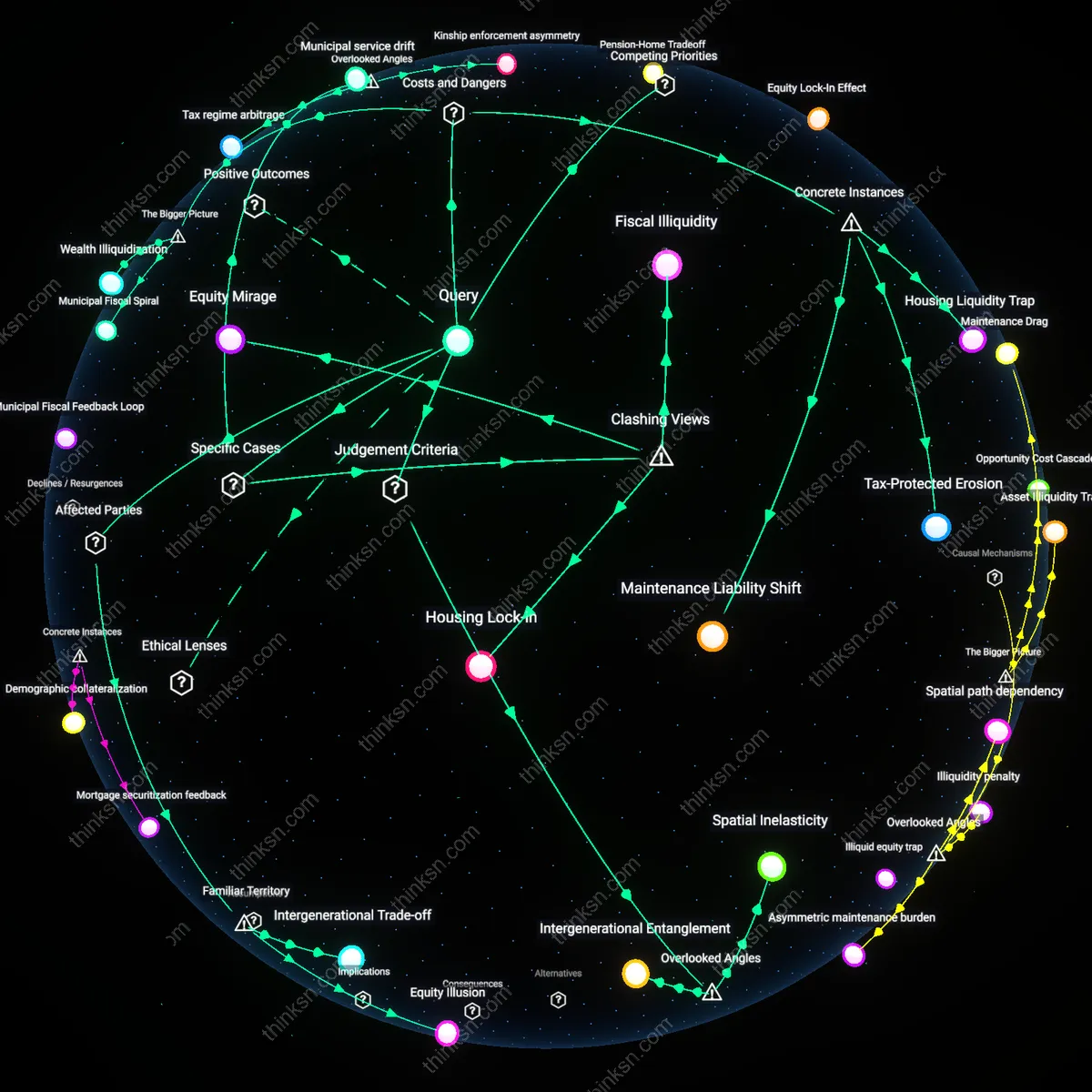
Analysis reveals 8 key thematic connections.
Key Findings
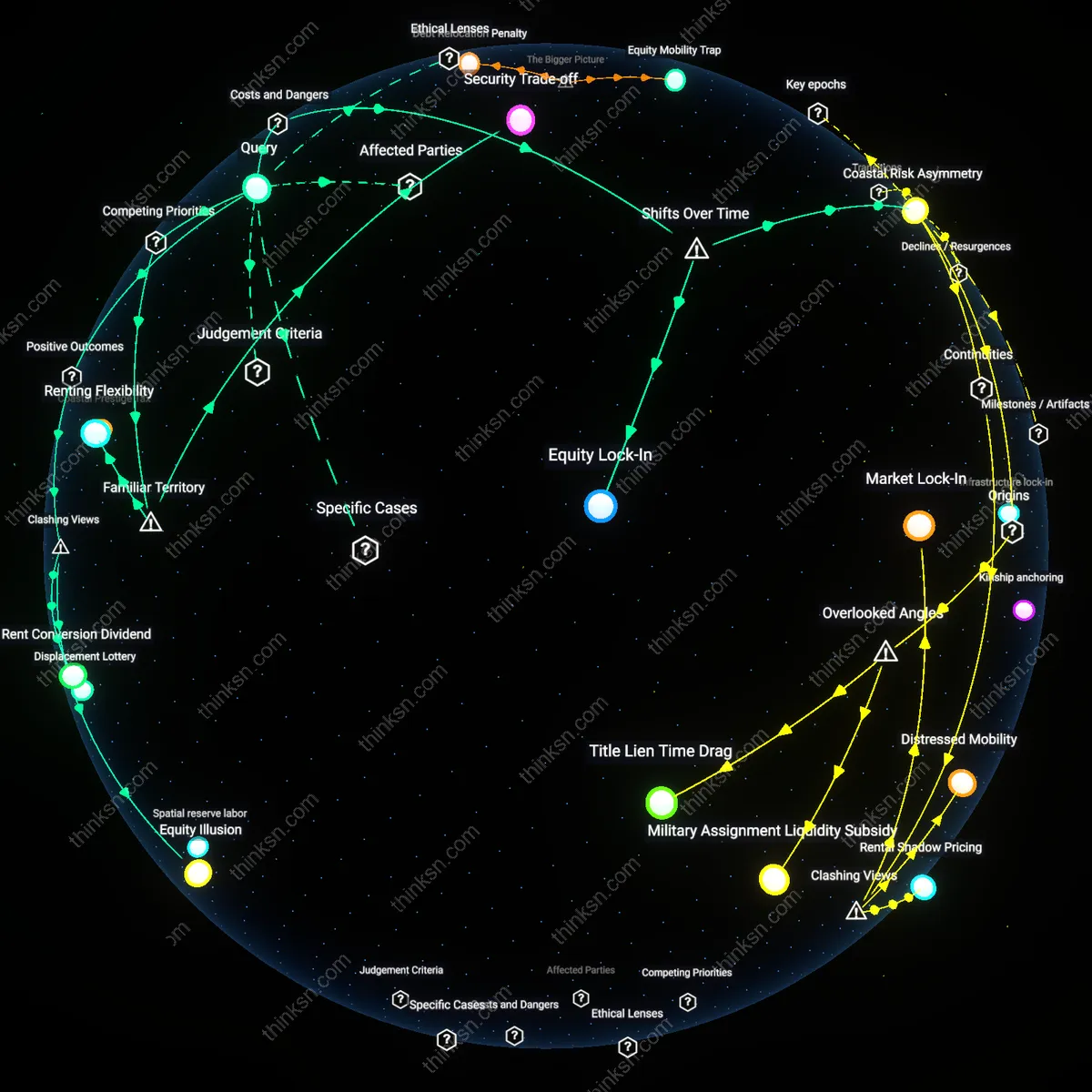
Equity Illusion
Retaining ownership using home equity as a buffer during job loss risks actually reduces financial resilience by anchoring households to illiquid assets that cannot adapt to income shocks. Homeowners in high-cost coastal markets like San Francisco or Miami often rely on paper wealth rather than cash flow, preventing timely relocation to lower-cost regions or quicker job realignment. The mechanism—home equity locked in appreciation-dependent coastal real estate—creates a false sense of security during unemployment, especially when property taxes, maintenance, and insurability costs rise. This reveals the non-obvious reality that perceived wealth in high-cost housing markets hinders mobility and adaptive consumption, contrary to the intuitive belief that ownership insulates against hardship.
Rent Conversion Dividend
Selling a high-cost coastal home and transitioning to renting generates a liquidity shock that materially enhances financial security during job instability, especially for dual-income professionals exposed to sector-specific layoffs. In markets such as Seattle or Boston, converting $1M+ in equity into diversified reserves while reducing fixed expenses unlocks options—retraining, geographic flexibility, or bridge income—unavailable to leveraged homeowners. The dominant narrative frames renting as wasteful, but this overlooks how freed capital activates strategic resilience, particularly when job recovery timelines exceed six months. This exposes a systemic miscalibration in financial planning models that privilege ownership stability over optionality in volatile economies.
Coastal Cost Cascade
Retaining a home in a high-cost coastal area amplifies financial risk during unemployment by exposing households to compounding regional cost feedback loops—property tax increases, forced insurance expenditures, and neighborhood-specific inflation—unmitigated by income flexibility. For example, a laid-off tech worker in Los Angeles continues to bear earthquake insurance premiums, wildfire mitigation costs, and HOA fees even without income, whereas renting would transfer those risks to landlords. The standard view assumes ownership builds equity, but this ignores how the structural burden of coastal ownership turns equity into a liability during income disruption, revealing a hidden spatial tax on middle-class asset holders in climate-vulnerable zones.
Equity Lock-In
Homeowners in high-cost coastal areas should retain their homes during job loss risk because home equity acts as a financial buffer, but this logic emerged only after the 1970s shift from viewing homes as shelter to appreciation assets, when federal deregulation and mortgage securitization transformed housing into a speculative vehicle; as a result, families now over-concentrate wealth in illiquid property that cannot be spent during unemployment, trapping them in high-cost locations despite income shocks—revealing that the perceived safety of equity is a historical artifact of financialization, not an inherent feature of homeownership.
Coastal Risk Asymmetry
Homeowners should not rely on home equity as a buffer because the climate risk acceleration since the 2010s—particularly chronic flooding and repetitive disaster claims in zones like Miami-Dade and Norfolk—has decoupled property values from income resilience, rendering equity a phantom asset that may evaporate just as job loss occurs; unlike in the 20th century, when coastal depreciation was slow and insurable, today’s feedback loop between insurer withdrawals, municipal bond downgrades, and capital flight generates a new form of spatial immobility where equity cannot be monetized when needed most.
Equity Lock-in
A homeowner in a high-cost coastal area should retain their home using equity as a buffer during job loss risk because home equity functions as a forced savings mechanism accessible through refinancing or HELOCs in emergencies. This financial structure benefits salaried professionals in cities like San Francisco or Seattle, where housing appreciation historically outpaces national averages, and the mechanism operates through local real estate market inertia and banking conventions that favor established homeowners. The non-obvious insight beneath this common justification is that the very stability equity provides also traps owners in high-cost locations, preventing relocation for new employment and conflating financial security with geographic immobility.
Renting Flexibility
A homeowner should transition to renting to maintain financial security during job loss risk because liquid assets derived from selling a home enable survival during unemployment without dependency on volatile credit lines. This strategy aligns with mobile knowledge workers in tech or consulting who prioritize geographic agility, operating through the housing-as-optionality framework prevalent in FIRE (Financial Independence, Retire Early) communities in coastal hubs like Santa Monica or Portland. The underappreciated reality is that while renting is often framed as financially immature, it actually embeds a form of systemic agility that sacrifices the symbolic permanence of ownership for resilience in uncertain labor markets.
Security Trade-off
Retaining a home during job risk prioritizes psychological security over financial adaptability, because the emotional stability of staying in a familiar neighborhood with established social ties dampens acute stress during unemployment. This dynamic plays out among dual-income families in places like suburban Boston or San Diego, where school districts and community networks are tied to homeownership, and the mechanism operates through the implicit social contract that equates home stability with family well-being. The overlooked consequence is that this trade-off systematically undervalues economic flexibility, treating real estate not as a portfolio decision but as a container for identity—making financial rationality secondary to perceptual continuity.