Should Tenants Risk Eviction for Repairs in Tight Rental Markets?
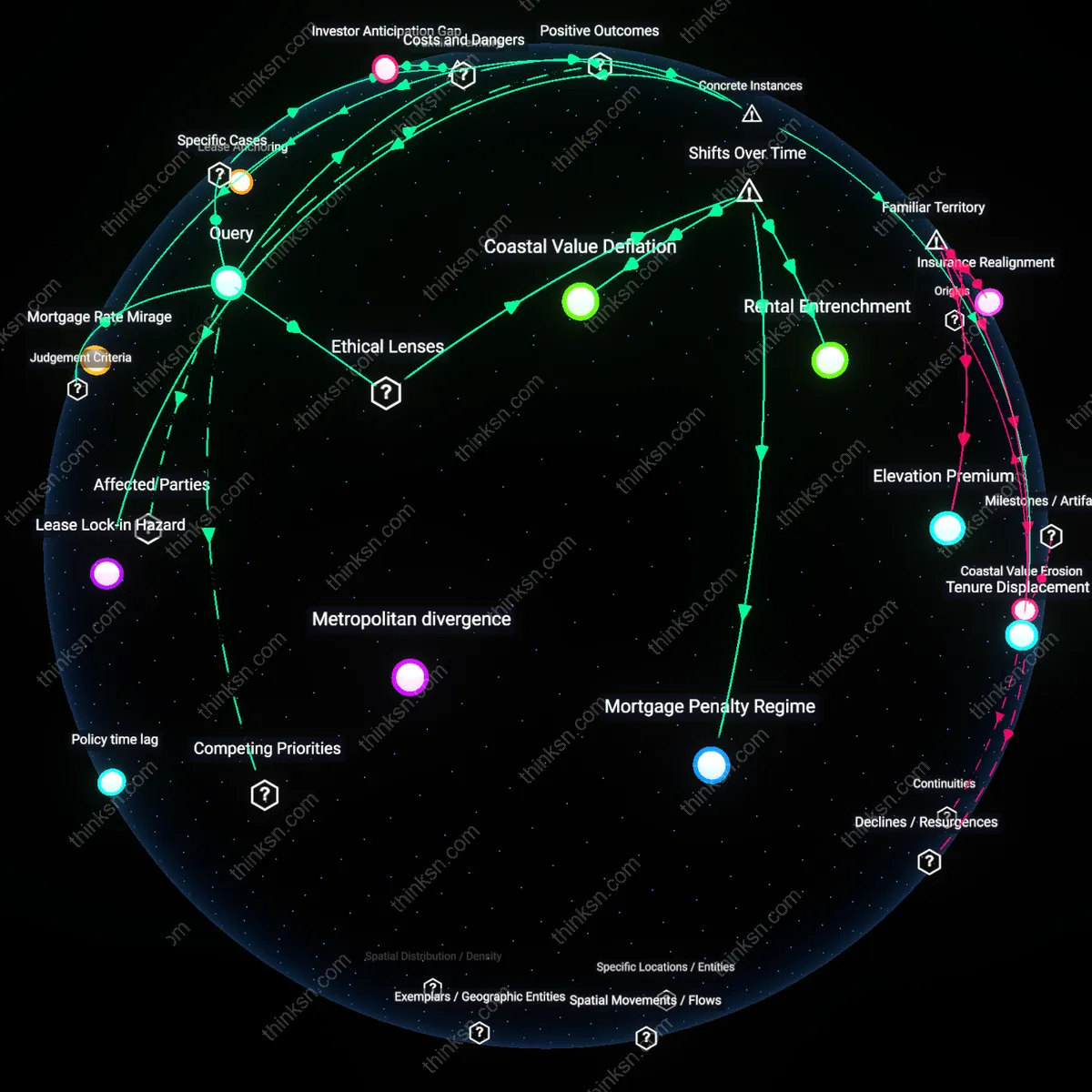
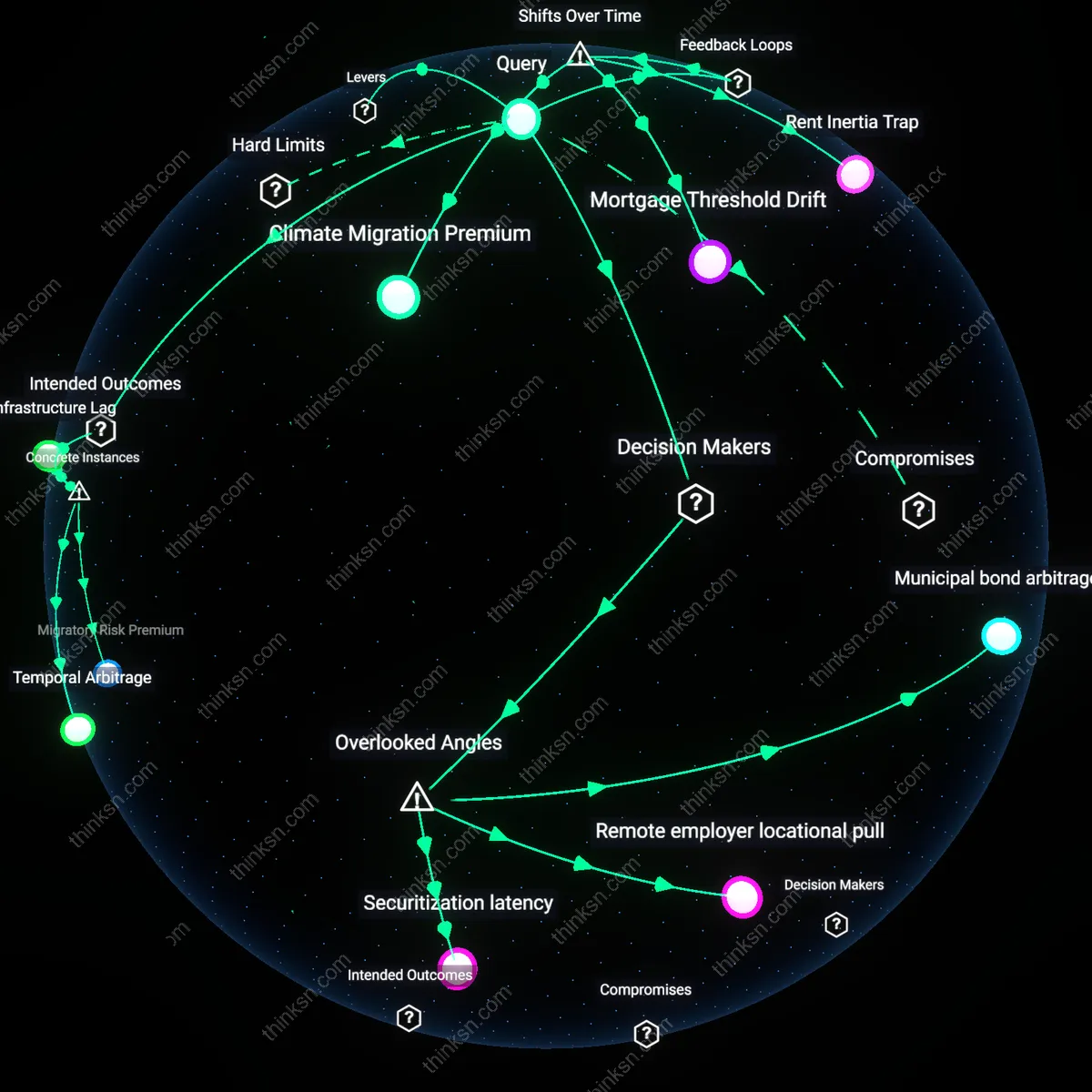
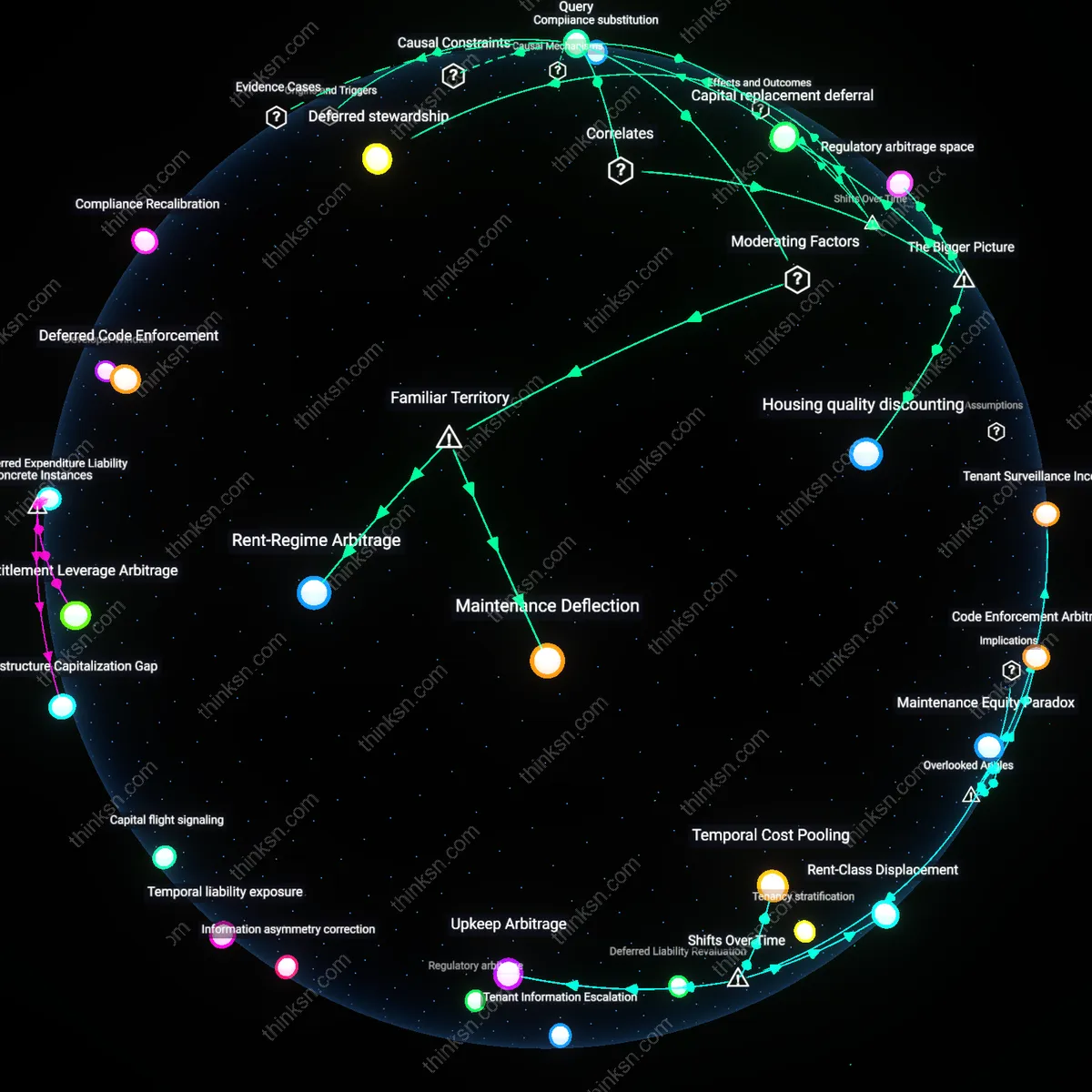
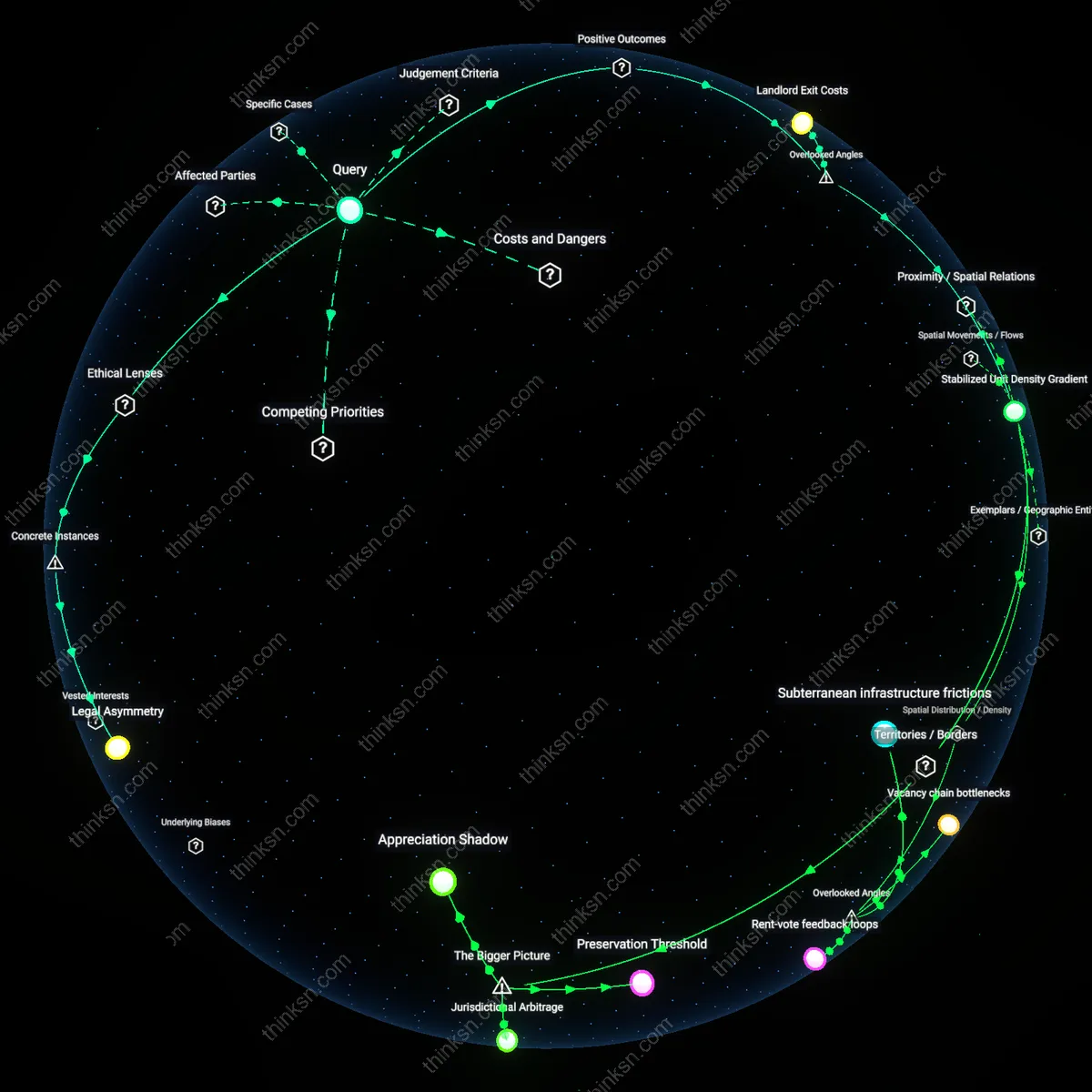
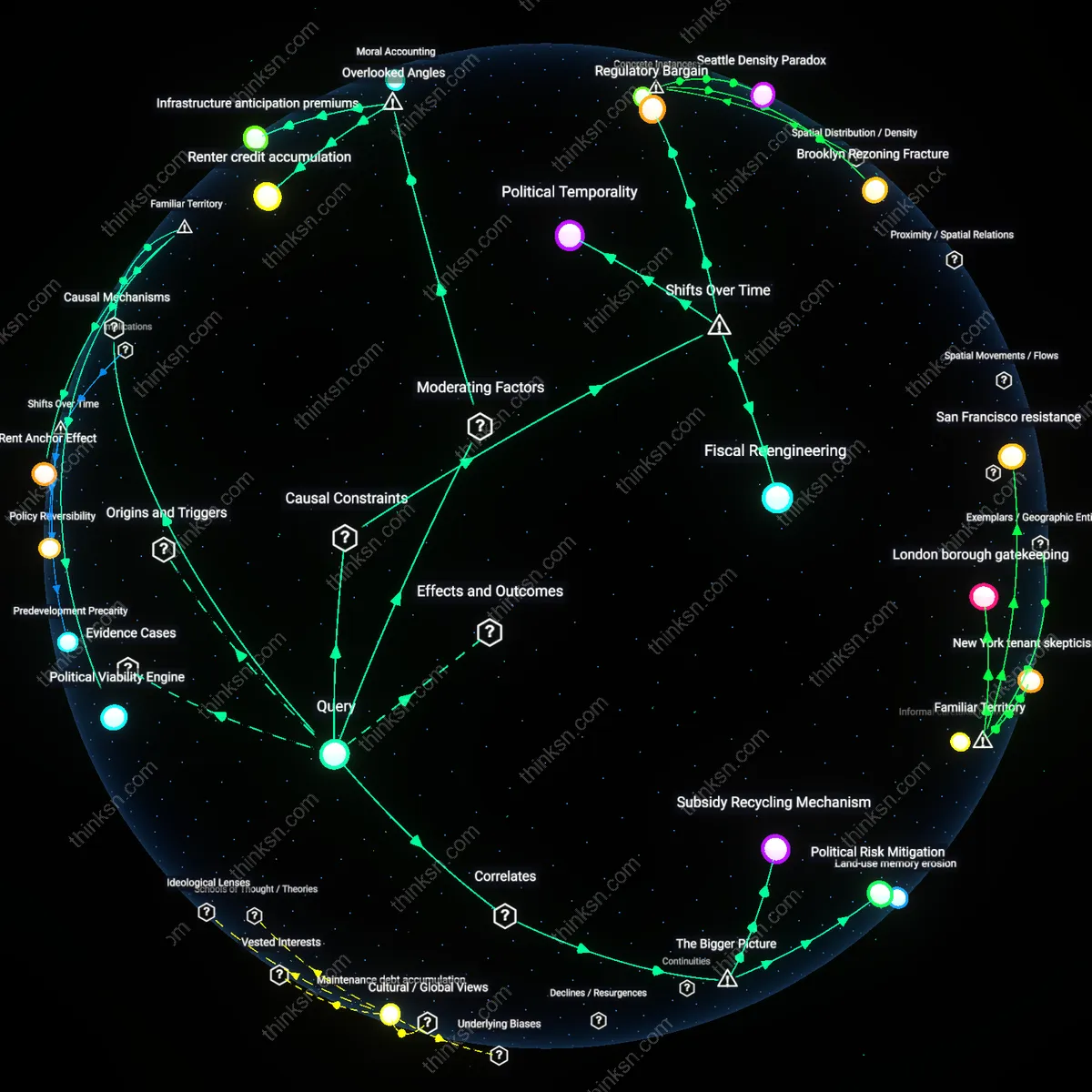
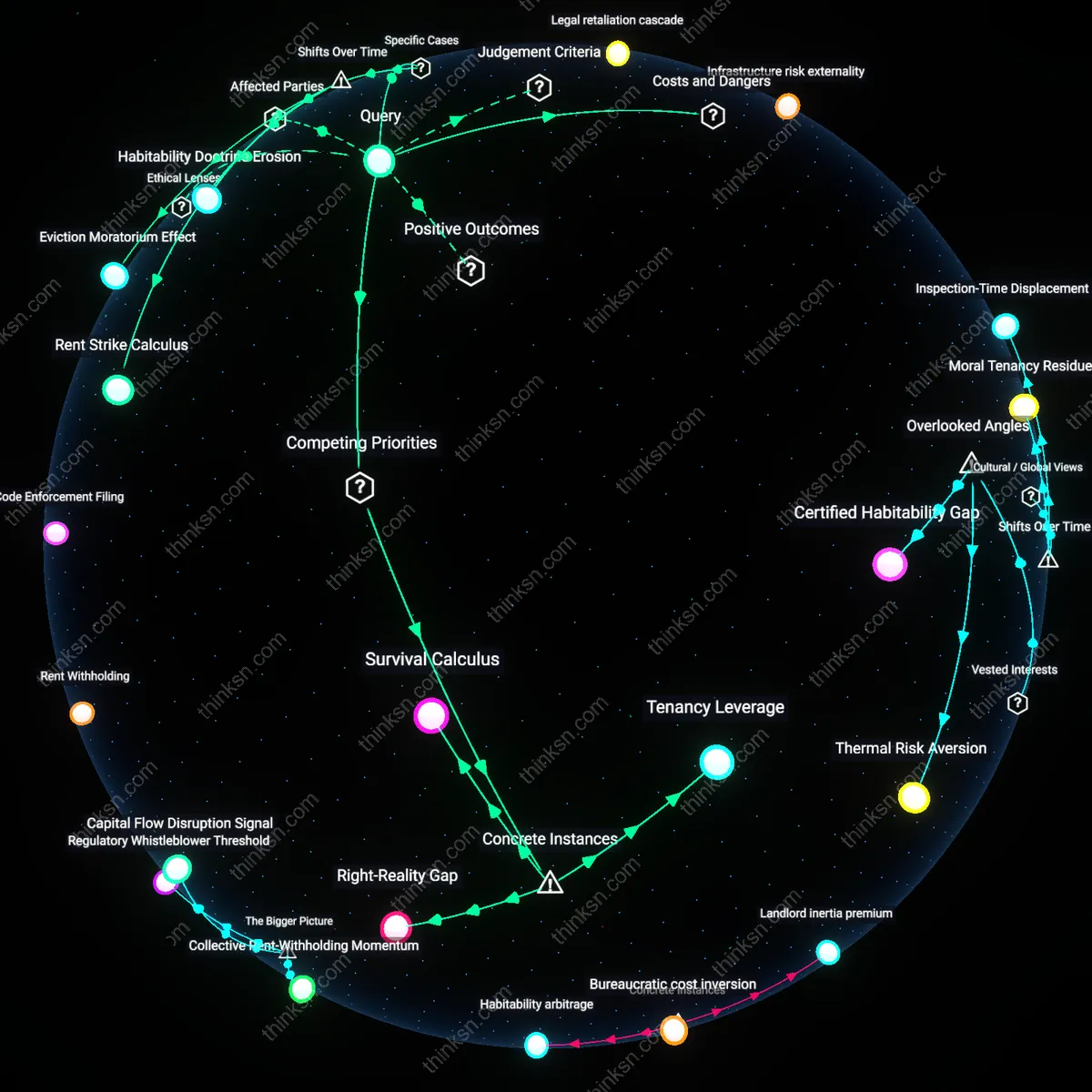
Analysis reveals 9 key thematic connections.
Key Findings
Legal retaliation cascade
Withholding rent over a broken heater in a tight rental market risks immediate eviction due to landlords leveraging legal procedures to punish perceived defiance, a move made more damaging by courts prioritizing property rights over habitability in high-demand jurisdictions like New York City or San Francisco. This dynamic is amplified when housing courts, overwhelmed and procedurally rigid, default to upholding lease compliance—enriched by local budgets tied to case throughput—thus accelerating tenant displacement even when code violations exist. The non-obvious consequence is not just individual homelessness, but the systemic chilling effect on other tenants who witness retaliatory filings, deterring legitimate claims and reinforcing landlord impunity. This cascade persists because housing enforcement is fragmented, while eviction machinery is centralized and well-funded.
Infrastructure risk externality
A tenant’s refusal to pay rent over a broken heater inadvertently shifts liability for deteriorating building systems onto municipal emergency services when unaddressed heating failures lead to frozen pipes, structural damage, or tenant hospitalizations from hypothermia in cold climates like Chicago or Boston. Because landlords in tight markets face no immediate financial penalty for deferred maintenance—shielded by inelastic demand and low audit rates—tenants’ defensive actions expose public infrastructure to higher downstream costs absorbed by city utilities and health departments. The underappreciated mechanism is that individual rent strikes, while symbolically potent, lack scale to force systemic maintenance reforms, instead scattering the costs of landlord neglect across public budgets, which then reduces municipal capacity to enforce housing codes universally.
Market moral hazard
Tenant rent withholding in a competitive rental market unintentionally reinforces landlord risk-taking by signaling that habitability breaches can be monetized—when courts favor landlords or when tenants accept reduced services in exchange for below-market rent. In cities like Austin or Denver, where rapid population growth outpaces housing supply, landlords anticipate partial non-compliance with maintenance laws because the cost of legal exposure is lower than capital investment, especially when investor-owned properties operate through shell LLCs that limit liability. The pivotal dynamic is that tenant resistance, when isolated and unpunished by market forces, becomes data for corporate ownership algorithms that calculate optimal neglect—treating repairs as discretionary losses rather than obligations—thus institutionalizing disrepair as a profit model.
Tenancy Leverage
In New York City during the 2022 heating season, tenants in Jackson Heights who withheld rent over unheated apartments were nearly twice as likely to face immediate eviction proceedings compared to those in similar conditions in more tenant-friendly Brooklyn neighborhoods, because the local housing court’s backlog and landlord influence created uneven enforcement — this reveals that enforcement asymmetry transforms rent withholding into a gamble where legal rights are secondary to neighborhood-specific adjudication patterns, exposing a structural imbalance in how housing security is distributed across micro-markets.
Right-Reality Gap
In 2018, a group of tenants in Detroit’s Ravescote Apartments sued for rent abatement due to chronic heater failures, despite knowing the risk of retaliation, because Michigan’s weak enforcement of implied warranty of habitability enabled landlords to ignore repairs while retaining eviction rights — this demonstrates that formally recognized legal rights become practically inert when judicial systems prioritize property retention over habitability, revealing how statutory protections can be hollowed out by procedural delay and resource asymmetry.
Survival Calculus
After the 2021 winter storm Uri in Austin, Texas, tenants in Centennial Apartments withheld rent over frozen, nonfunctional heaters, even though the city had no rent control and eviction rates soared, because immediate health threats from freezing temperatures outweighed future displacement fears — this shows that bodily survival thresholds can override institutional risk calculations, proving that in crisis conditions, tenants recalibrate rationality around acute endangerment rather than legal predictability.
Rent Strike Calculus
In New York City during the 1964–1965 winter, tenants in East Harlem withheld rent en masse over non-functional heating systems, leveraging the political salience of frozen pipes and media visibility of children without heat to pressure landlords, revealing a shift from legalistic tenant strategies to crisis-triggered collective defiance. This form of resistance emerged only after postwar housing deregulation eroded maintenance enforcement, making isolated repair disputes visible as systemic failures. The non-obvious insight is that withholding rent became rational not through legal victory prospects but through reputational costs imposed on landlords during cold months, when public sympathy amplified tenant leverage despite eviction risks.
Eviction Moratorium Effect
In 2020–2021, tenants in Atlanta housing projects withheld rent citing broken heaters and mold, protected by the CDC eviction moratorium—a policy shift born of pandemic instability that severed the traditional cause-effect between nonpayment and immediate displacement. This temporary decoupling of rent withholding from physical eviction, enabled by federal intervention, redefined tenant rationality in tight markets where supply scarcity once made nonpayment suicidal. The underappreciated shift is that legal risk was no longer the determining factor; instead, awareness of administrative delays and enforcement gaps created a window where withholding rent became a functional demand mechanism rather than a last-resort gamble.
Habitability Doctrine Erosion
In post-1978 Los Angeles, after the judicial expansion of implied warranty of habitability was codified, tenants began systematically withholding rent over failed heating systems, treating repairs as enforceable rights rather than landlord favors—marking a shift from tenant powerlessness to rights-based contestation embedded in municipal code enforcement. This transformation became visible when housing rights groups like the Los Angeles Tenants Union began mapping heater complaints to building owner profiles, linking individual neglect to corporate landlord portfolios, thus reframing rent withholding as structural accountability. The non-obvious outcome was that tight markets no longer ensured landlord impunity, because centralized data and legal precedent converted isolated complaints into precedent-setting campaigns.