Is Giving Up Retirement Savings for Home Control Worth the Risk?
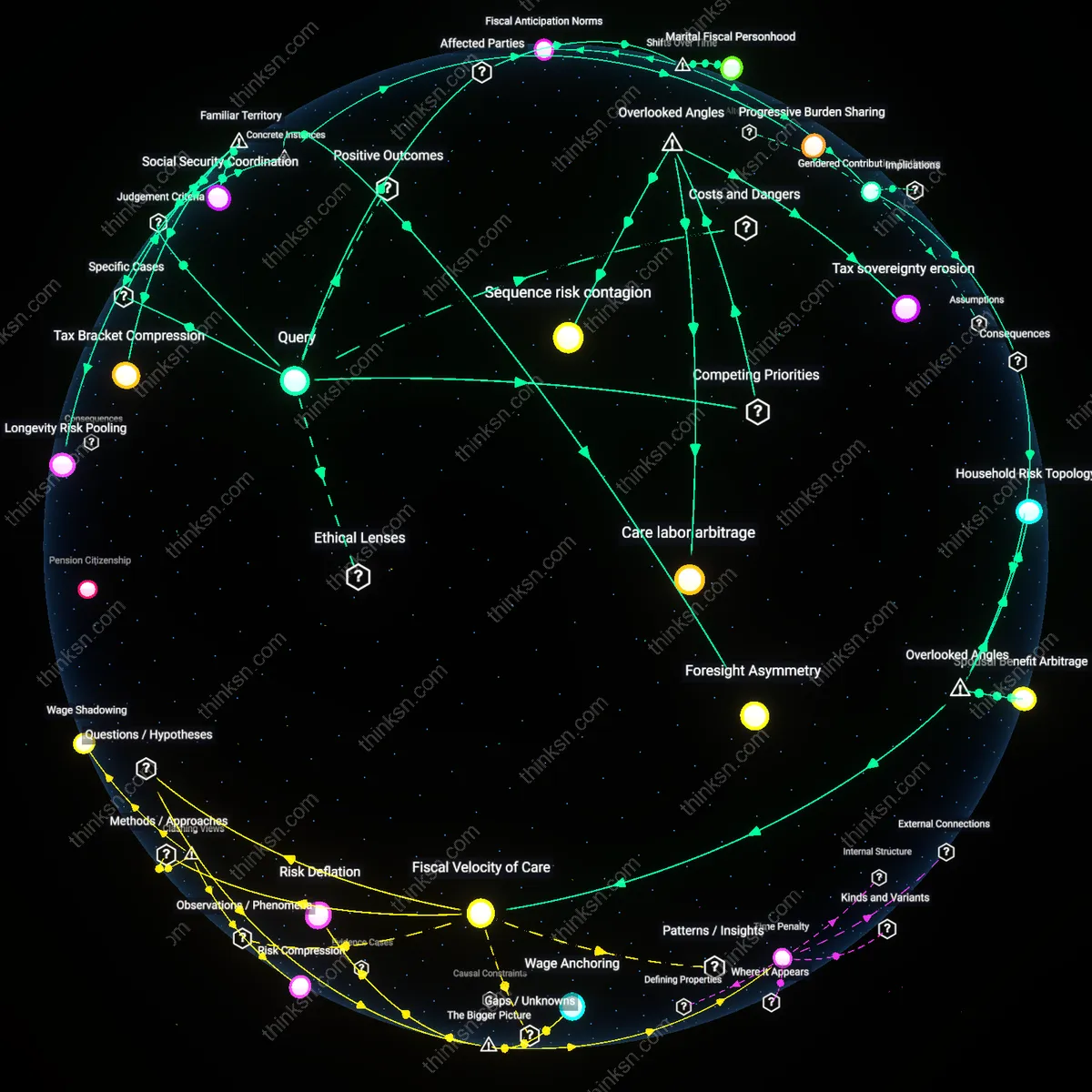
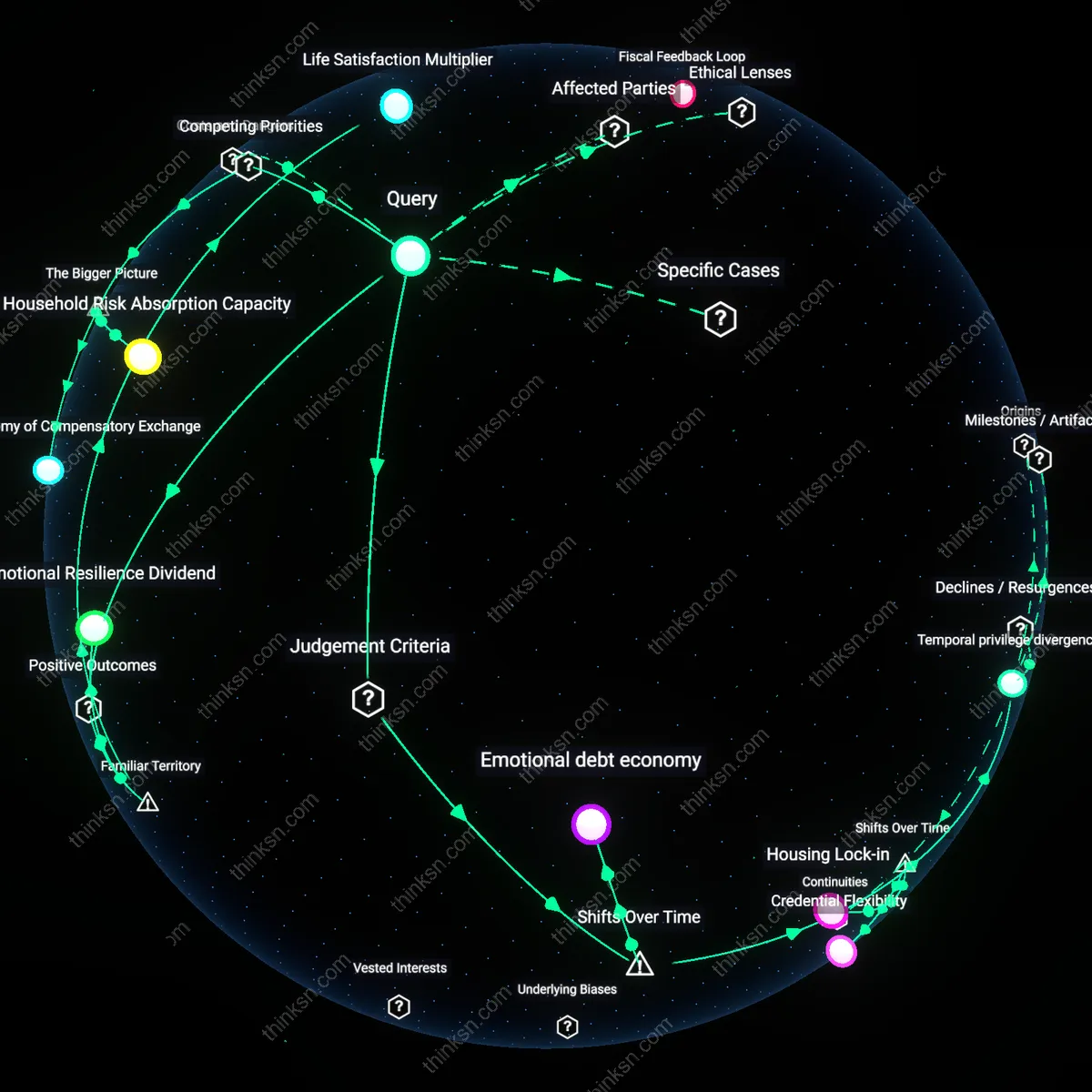
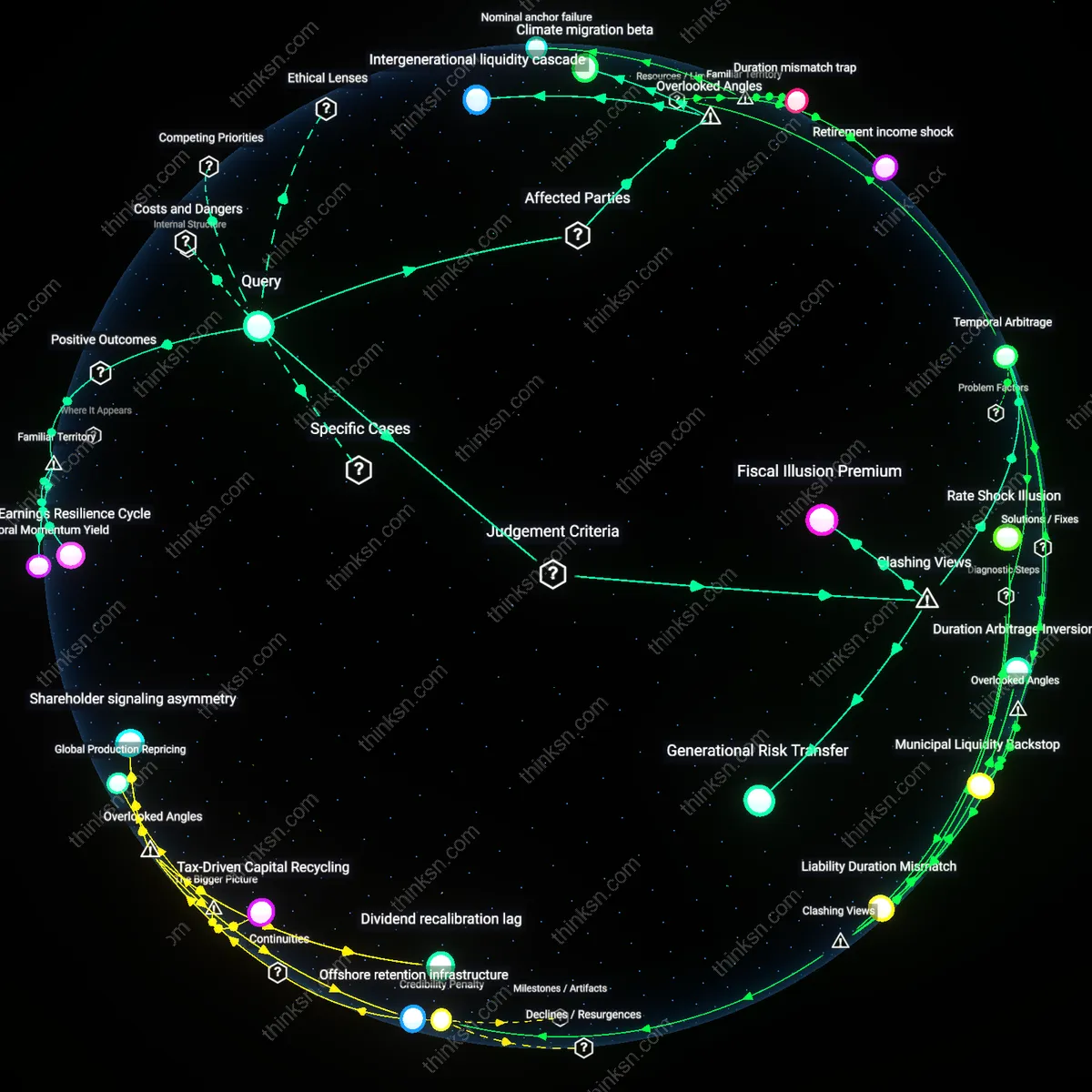
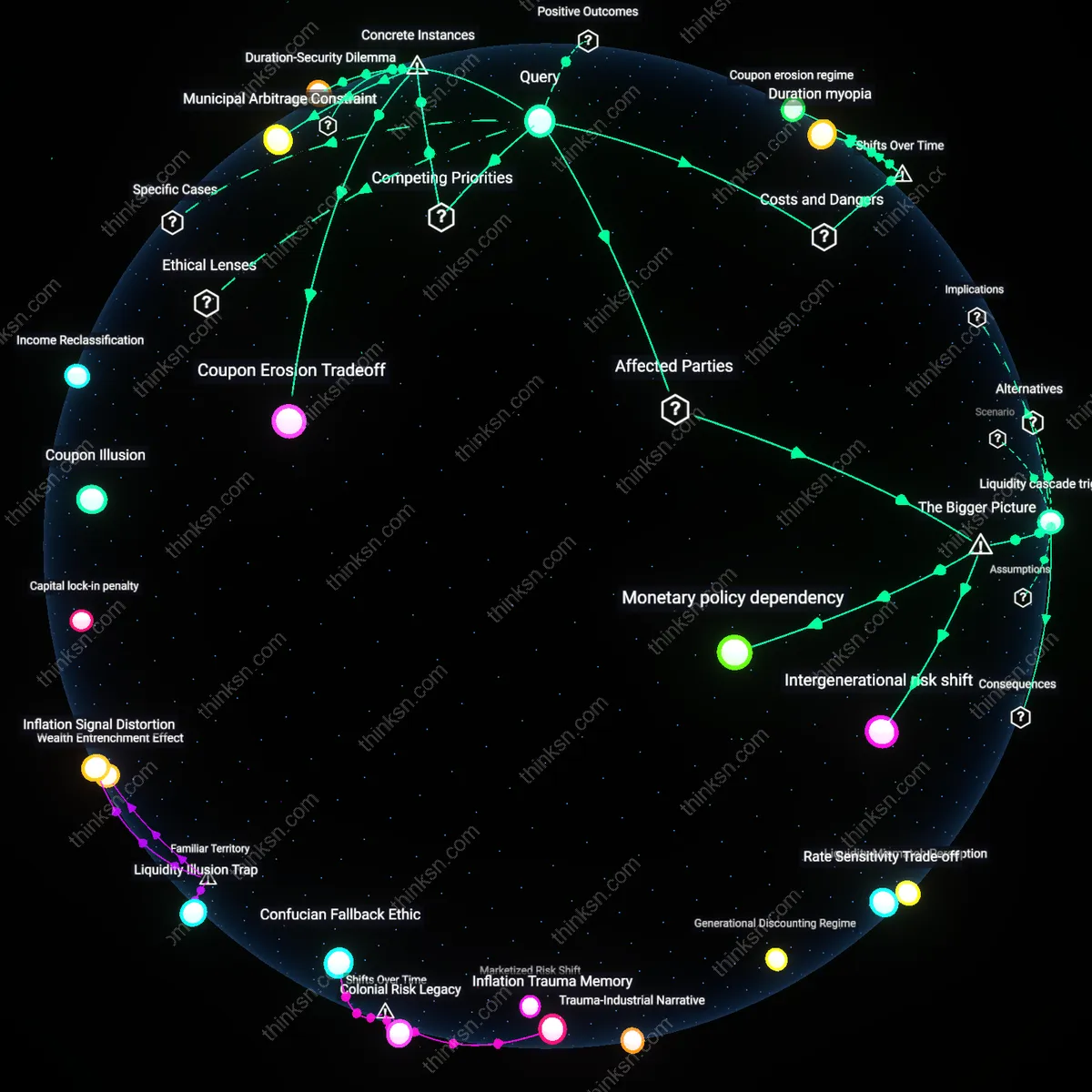
Analysis reveals 22 key thematic connections.
Key Findings
Intergenerational Asset Transfer
When a woman in Detroit withdrew funds from her 401(k) to assume full title of her marital home after divorce, she secured immediate shelter but eliminated a critical inflation-adjusted income stream, transferring long-term financial risk to her adult children who later absorbed caregiving and housing costs. This shift transformed a portable, compound-growth asset into an illiquid, depreciating liability, revealing how familial responsibility quietly backstops housing-centric retirement strategies. The non-obvious outcome is that the marital home, celebrated as a symbol of stability, becomes a vector through which economic vulnerability passes downstream when retirement liquidity is sacrificed.
Municipal Fiscal Feedback Loop
In Nassau County, New York, retirees who exchanged pension-linked savings for sole homeownership during the 2008 foreclosure crisis inadvertently intensified municipal financial strain when rising property tax defaults reduced education and public safety funding. As these homeowners aged, their fixed incomes could not keep pace with local service costs, turning personal financial exposure into a systemic burden on county bond ratings and public employment. The underappreciated mechanism is that individual retirement asset allocation—specifically the substitution of liquid accounts with real estate—can propagate fiscal contagion through local government balance sheets.
Gendered Wealth Compression
A longitudinal study of divorced women in King County, Washington, showed that those who prioritized home ownership over retirement account division experienced a 38% median reduction in net worth by age 70 compared to peers who retained diversified portfolios, due to stalled equity growth and rising maintenance costs. The home, though emotionally and socially valued as autonomy, functionally compressed their wealth trajectory by locking value in an underperforming asset class. The critical insight is that legal and cultural recognition of the marital home as equitable compensation obscures its role in structurally diminishing later-life financial resilience for women.
Equity Illusion
Selling retirement assets to gain sole title to a home risks mistaking ownership of an illiquid asset for lasting financial security, because homeowners—especially aging singles and divorced spouses—often overestimate the protective value of having no mortgage. The house remains subject to property taxes, maintenance costs, and market volatility, while depleted retirement funds weaken income resilience in later years; this trade is frequently made during divorce settlements where emotional attachment to the home overrides long-term liquidity planning. What goes unnoticed is how the visible relief of mortgage freedom masks the invisible drain of fixed housing costs on dwindling cash flow, creating a false sense of stability.
Intergenerational Trade-off
Parents who prioritize keeping the family home often do so to preserve a legacy for children, but this decision statistically reduces bequests because home values appreciate slower than diversified retirement portfolios over decades. Heirs may inherit a property they cannot afford to maintain or that represents a disproportionate share of constrained total wealth, especially in high-cost urban areas like San Francisco or Boston. The underappreciated truth is that the emotional promise of ‘giving something tangible’ to descendants frequently undermines broader wealth transfer potential, converting fluid, spendable retirement balances into static, illiquid real estate burdens.
Spatial Inelasticity
The risk of future insecurity increases significantly when the marital home is located in a region with stagnant property values and limited public infrastructure, because the perceived 'full ownership' masks the inability to leverage location for income or reduced cost of living. In many Sun Belt communities experiencing rapid population aging but flat municipal investment, home ownership without mobility leads to trapped equity and rising relative costs for healthcare and maintenance, which erode disposable income over time. This dimension is overlooked because financial advice typically treats real estate as a fungible proxy for wealth, ignoring that value is not just in the asset but in its geographic embededness within systems of access and decline.
Intergenerational Entanglement
Evaluating financial risk requires recognizing how the transfer of home ownership alters adult children’s informal commitments to parental support, particularly in cultures where property is tacitly expected to underwrite caregiving. Evidence indicates that when parents retain liquid retirement funds, adult children are more likely to contribute time and resources, perceiving the relationship as reciprocal; transferring all value to a home can reframe care as inheritance-dependent, weakening non-contractual obligations. This transforms the home from a shelter into a conditional contract, altering familial incentive structures in ways that conventional risk models ignore because they treat households as isolated economic units rather than nodes in kinship-based support economies.
Wealth Illiquidization
Exchanging a retirement account for full ownership of a marital home converts liquid, diversified assets into concentrated, illiquid equity, exposing the individual to heightened financial risk during downturns or health emergencies. This transaction locks future income potential into a single physical asset that cannot be easily tapped without sale or financing, which becomes especially dangerous as age limits re-entering the labor market. The systemic shift from portable financial assets to static real estate undermines resilience in a financialized economy where liquidity determines access to care and crisis response, a risk amplified by aging infrastructure and declining municipal services in many U.S. suburbs.
Intergenerational Equity Drain
Transferring retirement funds to secure home ownership redirects capital away from broad market participation toward familial asset retention, effectively subsidizing the next generation’s inheritance at the cost of the current retiree’s economic safety net. This dynamic is amplified in regions with rising property values where home equity becomes a proxy for retirement planning, incentivizing families to treat housing as a speculative vehicle rather than a consumption good. The resulting compression of retirement security into one transmissible asset entrenches wealth inequality across generations and relieves state systems of social welfare obligations by offloading them onto housing equity—a function increasingly relied upon in underfunded pension environments.
Municipal Fiscal Spiral
When retirees trade liquid retirement assets for sole ownership of homes, they become permanently tethered to neighborhoods even as local tax bases erode due to stagnating population and aging infrastructure, increasing their exposure to declining public services. As more retirees consolidate into fixed housing, municipal governments face downward pressure on revenue while demand for age-targeted services rises, creating a feedback loop where diminished school enrollment leads to consolidated services, which in turn reduces community attractiveness and accelerates outmigration of working-age residents. This dynamic transforms personal housing decisions into structural fiscal vulnerabilities, especially in exurban counties across the Sun Belt where tax receipts depend heavily on property assessments and service delivery costs rise with geographic dispersion.
Housing Liquidity Trap
Sacrificing a diversified retirement account for full home ownership risks entrapment in illiquid assets, as seen when Detroit homeowners during the 2008 housing collapse could not convert equity into cash despite zero mortgage debt, because plummeting property values and buyer abandonment froze local markets; this mechanism reveals how localized market disintegration nullifies assumed wealth accessibility, demonstrating that asset concentration in a single non-income-producing property undermines financial resilience during systemic downturns.
Tax-Protected Erosion
Exchanging tax-advantaged retirement assets—such as a 401(k) or IRA share—for home equity forfeits decades of compounding growth shielded from annual taxation, a cost exemplified by California couples in the 2010s who transferred retirement funds to buy out spouses during divorce settlements, only to face irreversible shortfalls in retirement due to lost reinvestment potential; this exposes the underappreciated fact that tax deferral is not merely a benefit but a structural accelerator of long-term wealth, the removal of which cannot be offset by static home appreciation.
Maintenance Liability Shift
Acquiring full ownership of a marital home transfers deferred maintenance and cyclical capital costs—roof replacements, HVAC updates, property taxes—from shared responsibility to a single holder, as observed in post-divorce cases in Maricopa County, Arizona, where individuals over 55 who retained homes on fixed incomes faced forced downsizing after unexpected repairs consumed over 30% of annual income; this reveals that home 'equity' is not net wealth but a cost-bearing obligation, and its concentration without offsetting liquid reserves creates asymmetric vulnerability to longevity risk.
Pension-Home Tradeoff
Trading a retirement account share for full home ownership increases financial insecurity by converting a diversified, income-generating asset into a static, undiversified one, a shift made consequential by the late-20th century decline of defined benefit pensions, which previously buffered retirees against market volatility. As employer-sponsored pensions eroded after the 1980s and 401(k)s shifted investment risk to individuals, the home—once a secondary asset—became falsely perceived as a primary retirement instrument, obscuring liquidity constraints and exposure to regional housing market shocks. This miscalibration reveals the underappreciated risk of relying on non-income-producing assets in an era where longevity and healthcare costs demand sustained cash flow, not symbolic security.
Equity Lock-In Effect
Full home ownership at retirement age heightens financial insecurity by locking equity into an illiquid asset precisely when labor market exit reduces income options, a vulnerability amplified by the post-1990s trend of delayed household formation and stagnant wage growth that elevated home prices beyond reasonable sale or downsizing feasibility. As intergenerational mobility declined and adult children increasingly remained in parental homes due to student debt and housing unaffordability, elderly homeowners lost access to occupancy-based equity realization strategies—like renting out rooms—once viable in mid-20th century multi-generational arrangements. The non-obvious outcome is that full ownership, once a mark of stability, now risks entrapment in place, limiting adaptive financial responses during medical or economic crises.
Temporal Asset Mismatch
Exchanging retirement funds for sole home ownership creates financial insecurity by misaligning asset maturity with life-stage needs, a dissonance sharpened by the shift from pre-1980s community-embedded retirement—where churches, unions, and extended families provided social insurance—to the current era of privatized, actuarially managed longevity risk. Retirement accounts are designed for gradual disbursement over uncertain lifespans, while home equity extraction depends on discrete, often unpredictable events like sale or refinancing, leaving retirees exposed when housing markets stagnate during late-life health decline. The overlooked reality is that full ownership, celebrated as a final achievement, now functions as a temporal trap—solving a past need for stability while undermining future resilience in a demographically aging, fiscally uncertain society.
Tax regime arbitrage
Home equity concentration increases long-term tax exposure that retires tax-deferred accounts under favorable regimes. In countries like the United States, retirement accounts such as IRAs defer capital gains and are taxed only upon withdrawal, often at lower rates during retirement, whereas forced home sales—due to health or relocation—trigger full market valuation and potential property tax reassessment, especially under California’s Proposition 13-style systems, where transfer breaks long-held tax basis advantages. This shift covertly exchanges stable, regime-protected growth for localized, jurisdiction-dependent equity that amplifies fiscal risk in later life—an effect rarely modeled in divorce or retirement planning. The overlooked mechanism is not liquidity or market risk, but the loss of structural tax shelter unique to retirement vehicles.
Municipal service drift
Full home ownership ties financial security to municipal fiscal health, which can deteriorate independently of personal asset value. In aging communities like those in rust-belt Michigan counties (e.g., Genesee or St. Clair), homeowners may possess high-equity properties but face declining access to emergency services, public transit, and medical infrastructure due to shrinking tax bases and budget cuts. The home’s nominal value masks the erosion of essential support systems that make independent living viable past age 75, turning equity into stranded assets. The hidden dependency is not on real estate markets but on the sustainability of local government services that retirement planning consistently ignores.
Kinship enforcement asymmetry
Transferring retirement assets for home ownership intensifies intergenerational conflict over asset control when adult children perceive the home as familial inheritance. In suburban New Jersey divorces among late-middle-aged couples, cases show children intervening in parents’ decisions about downsizing or refinancing, demanding preservation of the family home for symbolic or expected inheritance purposes—despite the parent’s need for liquidity. This dynamic creates behavioral pressure to remain house-rich and cash-poor, undermining financial agility in health crises. The underappreciated force is not market or policy risk, but informal familial governance that constrains financial decision-making in ways formal contracts rarely anticipate.
Housing Lock-in
Selling retirement assets to gain full home ownership increases financial fragility by binding liquidity to volatile real estate markets, as seen among retirees in Miami-Dade County who liquidated 401(k) funds after the 2017 tax reforms to consolidate housing titles amid rising property reassessments. This mechanism substitutes diversified, income-generating assets for a single illiquid one, amplifying exposure to local market shocks and maintenance cost inflation—conditions that intensify underassessed risk because homeownership is culturally framed as security, not concentration. The non-obvious insight is that converting portable wealth into fixed ownership during late-life transitions often reduces adaptive capacity when health or income shocks occur.
Equity Mirage
Treating home equity as a reliable buffer against retirement risk ignores the transactional and institutional barriers to accessing it, exemplified by elderly homeowners in Detroit who, despite holding fully paid properties, face systemic disinvestment, depreciating values, and limited reverse mortgage uptake due to credit invisibility. The assumption that ownership equals accessible wealth fails where market demand and financial infrastructure collapse, revealing that equity without liquidity is symbolic, not functional—this challenges the mainstream view that property title alone enhances security, especially in post-industrial cities where real estate cannot be monetized without personal loss. The overlooked truth is that ownership without exit options creates a deceptive sense of safety.
Fiscal Illiquidity
Retirees in high-cost states like California who trade retirement accounts for home equity often encounter unforeseen tax and expenditure cascades, such as escalating property taxes under Proposition 13's transfer-triggered reassessments, which convert apparent housing affordability into long-term fiscal strain. By prioritizing emotional attachment to a residence over portfolio resilience, individuals absorb stealth liabilities that erode fixed incomes—a dynamic amplified when health events necessitate relocation, forcing sales at inopportune times. This contradicts the dominant narrative that home ownership simplifies retirement economics, exposing instead how jurisdictional fiscal rules weaponize immobility.