Do Short Videos Steal Teenagers Capacity for Deep Reading?
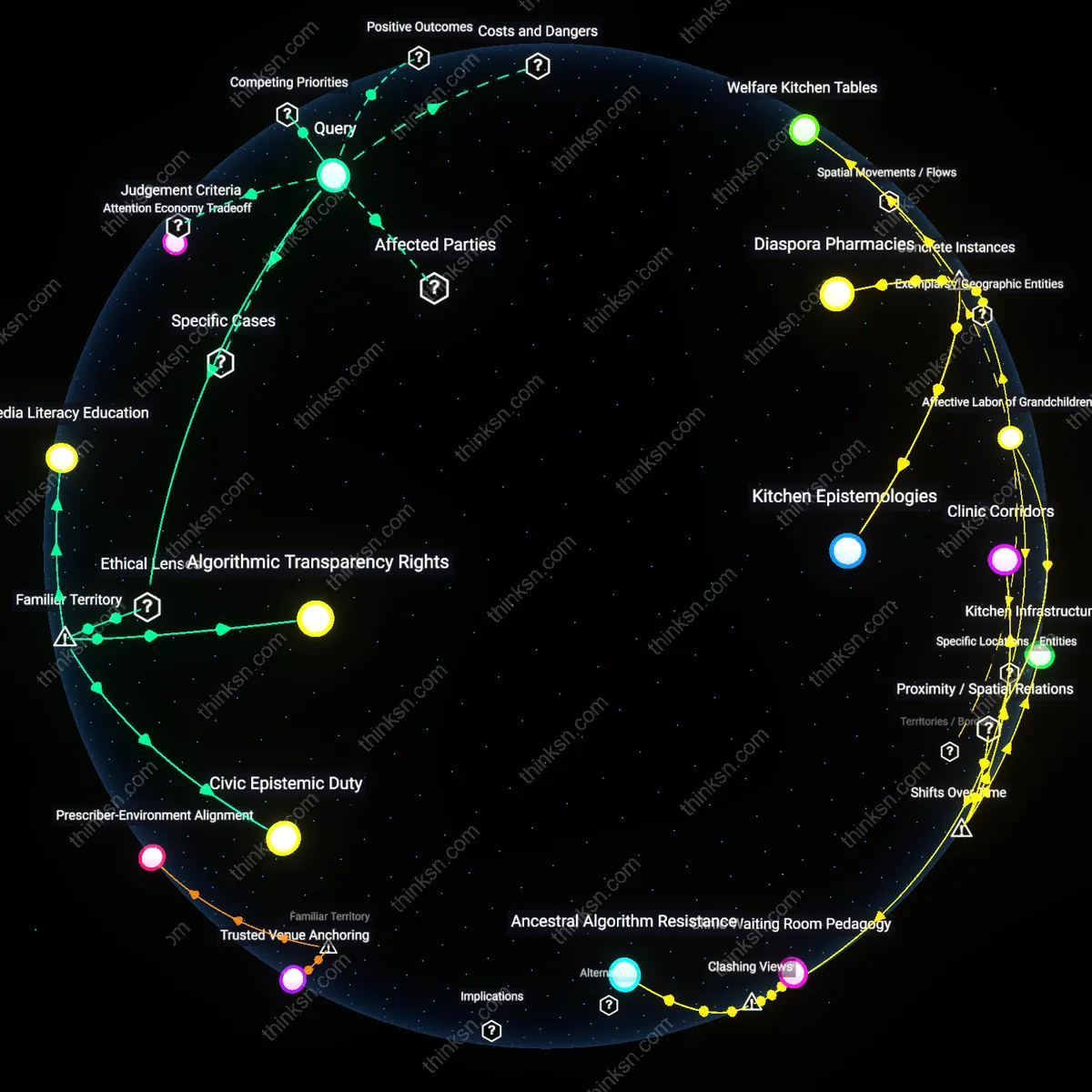
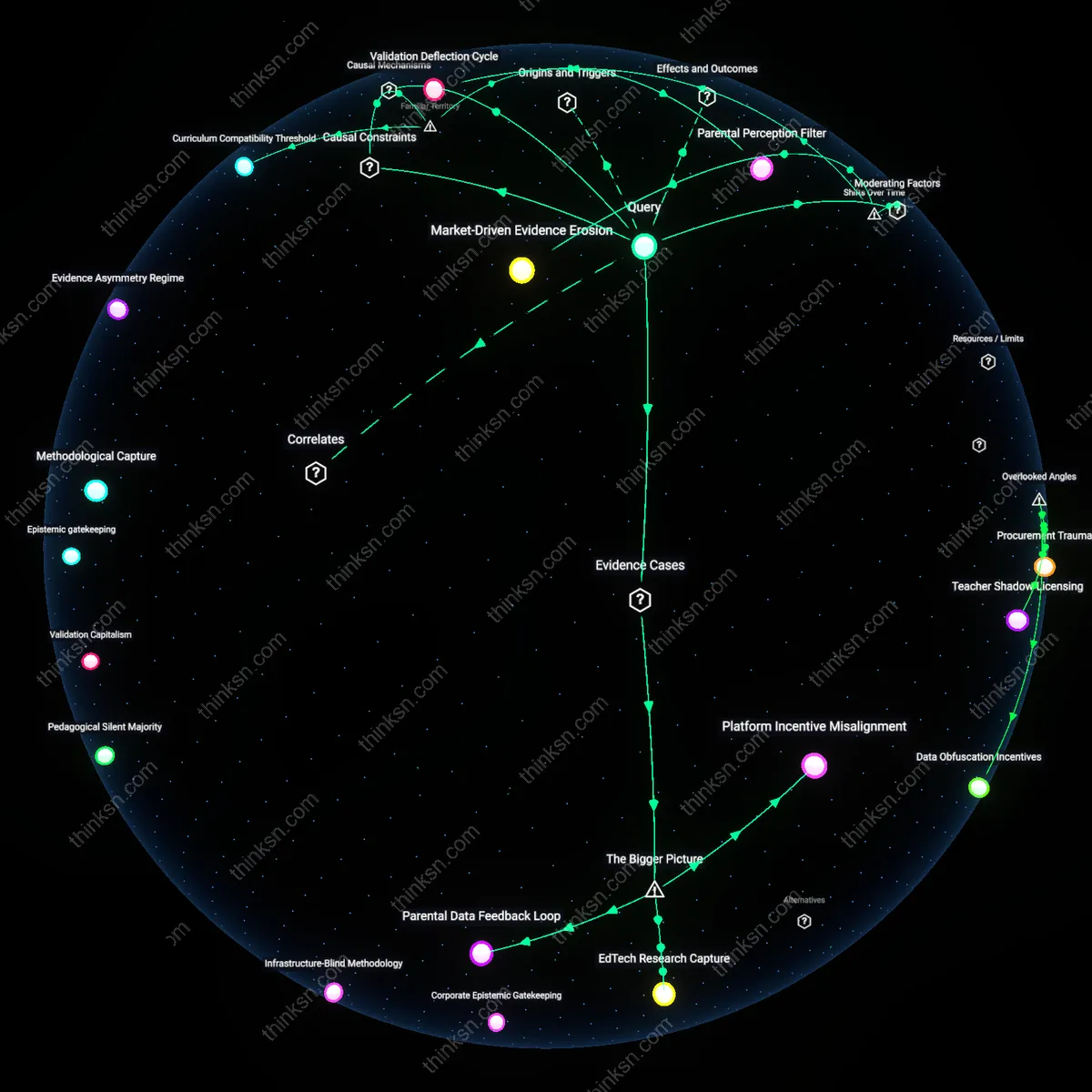
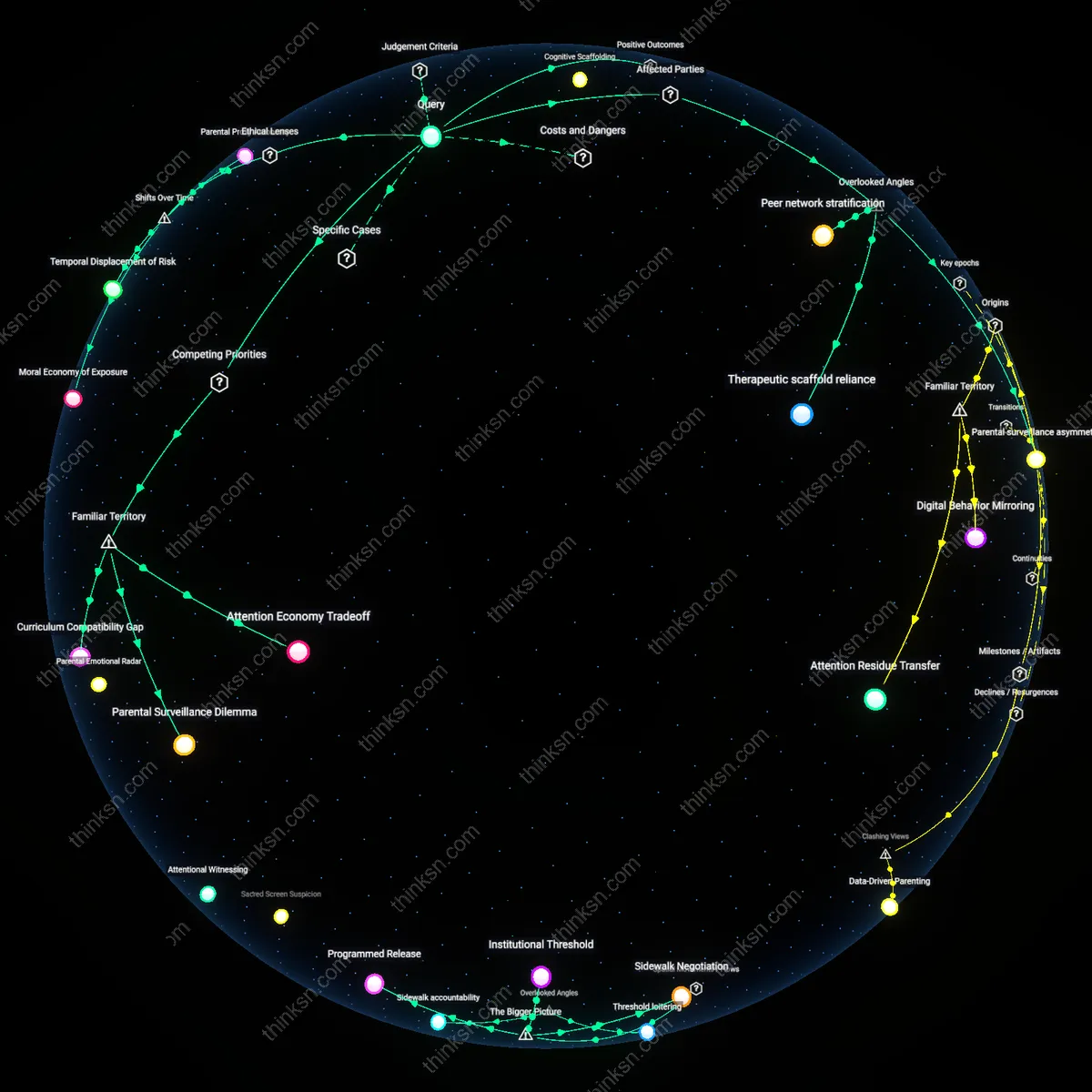
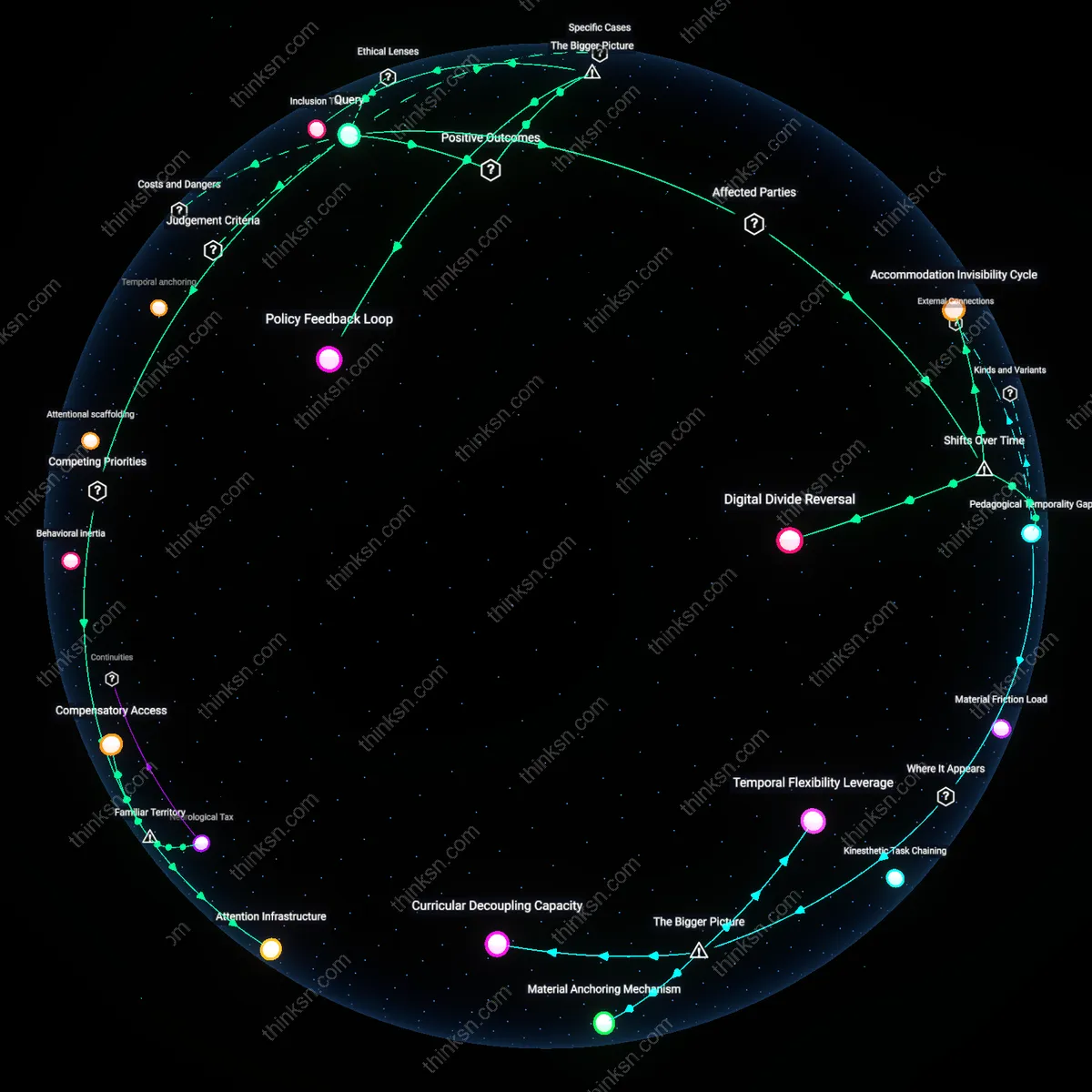
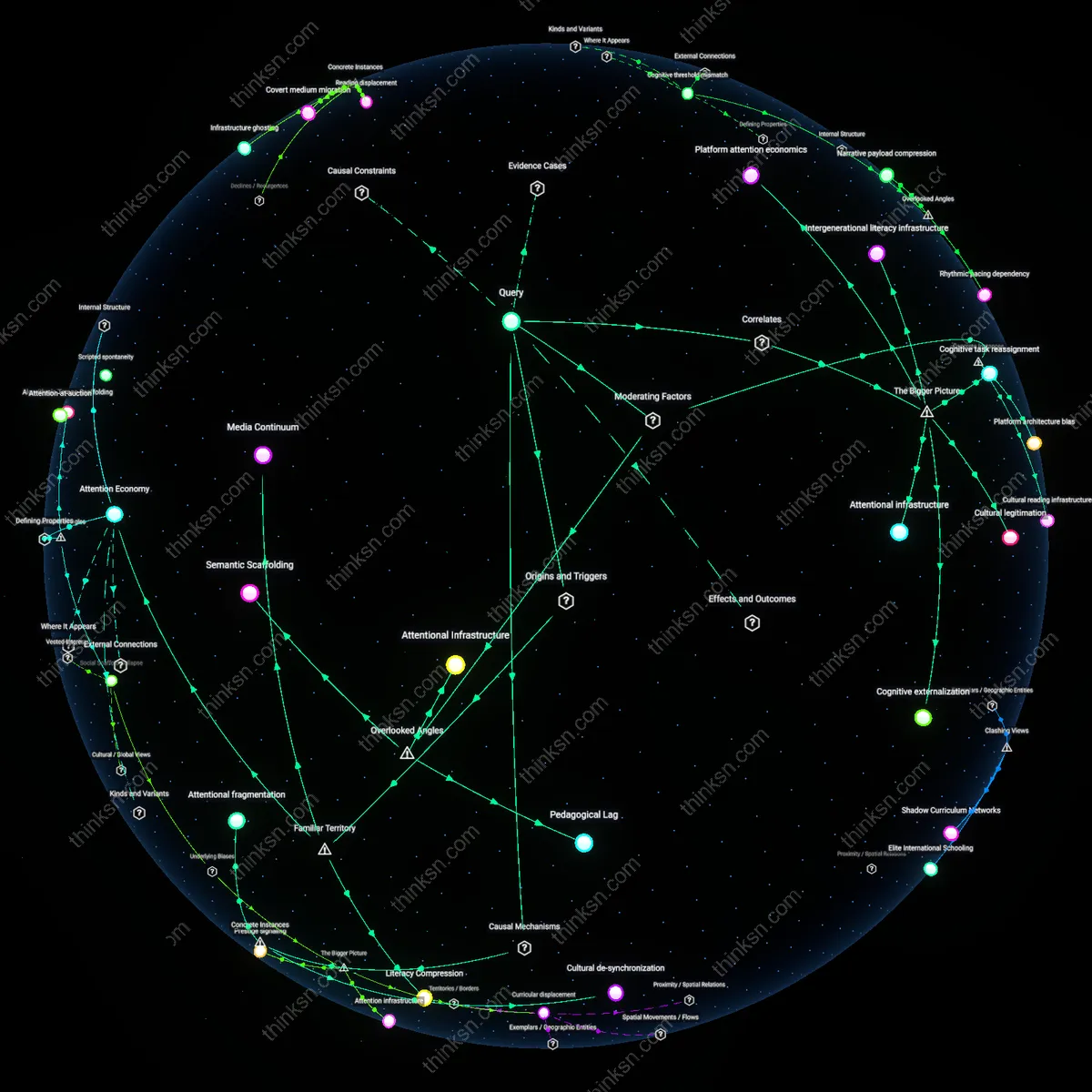
Analysis reveals 18 key thematic connections.
Key Findings
Attention Economy
TikTok’s algorithmic infrastructure systematically displaces deep reading by optimizing for compulsive engagement, not passive consumption. This shifts cognitive load toward rapid affective judgments—triggered by microsecond-level stimuli—within a system designed by Silicon Valley engineers using real-time A/B testing on global youth populations. The non-obvious truth beneath the familiar panic over 'short attention spans' is that the harm isn’t media content but the industrialized reshaping of temporal cognition through feedback loops no individual can opt out of.
Literacy Compression
School systems in G20 nations now treat reading comprehension as a transferable skill applicable to both TikTok captions and novels, falsely equating decoding with interpretation. This institutional misrecognition, driven by standardized testing regimes, obscures how the body reads differently when conditioned by scroll velocity versus sustained textual immersion. Beneath the familiar worry about 'kids not reading books' lies a hidden downgrade in what institutions count as valid literacy, normalizing a shallower cognitive contract with language.
Media Continuum
Each dominant medium from scroll to codex to broadsheet restructured cognition in ways contemporaries decried as civilizational decline, and TikTok merely extends this lineage through accelerated semiotic density. Scribes in 15th-century Europe blamed print for eroding memory, just as 20th-century educators feared television would replace analysis with spectacle—confirming that the familiar narrative of cultural decay recurs with every medium shift. The overlooked constant is not cognitive harm but the persistent moral panic around youth adaptation to new symbolic economies, which in hindsight appear transformative, not traumatic.
Attentional fragmentation
TikTok’s algorithmic feed displaces sustained reading by conditioning users to expect rapid stimulus shifts, as seen in U.S. teens’ declining time-on-task during classroom reading assignments post-2018, a shift not observed in pre-smartphone media transitions like the move from print to television, revealing that the mechanism here is not just content preference but a rewired threshold for cognitive effort allocation.
Epistemic substitution
The rise of TikTok supplants deep reading with narrative microcontent in Indian university students’ research practices, who now use 60-second explainers instead of journal articles to prepare for essays, mirroring but intensifying the 19th-century tabloid press’s replacement of parliamentary reports with summaries, yet differing in that the current shift bypasses textual engagement entirely, exposing a systemic substitution of procedural understanding with affective familiarity.
Cultural de-synchronization
In French secondary schools after 2020, mandatory reading of canonical literature declined in effectiveness not due to student disinterest but because shared reading rhythms—once maintained through broadcast reading hours or school-wide schedules—collapsed under TikTok’s on-demand micro-binging, disrupting the collective temporal structure that once enabled societal cohesion through synchronized narrative absorption, a phenomenon absent during the radio-to-TV transition where programming still imposed linear coordination.
Platform architecture bias
TikTok’s vertically scrolling, algorithmically curated interface intensifies cognitive fragmentation more than prior media shifts because it couples instant gratification with unpredictable content sequencing, as seen in the 2023 Common Sense Media study on U.S. teens’ attention spans declining significantly among those who used TikTok over 90 minutes daily compared to peers using YouTube or Instagram for equal durations; this reveals that the structure of the platform, not just content type, actively erodes sustained attention when algorithmic novelty outweighs narrative continuity.
Educational policy lag
The French national education system’s 2018 ban on mobile phones in schools mitigated attentional decline among middle-school students, as evidenced by a 2021 CNRS study showing improved reading comprehension in banned-device schools versus non-banning Belgian counterparts, demonstrating that institutional interventions can buffer cognitive disruption from short-form media; this instance exposes that the harm attributed to platforms like TikTok is not inevitable but contingent on whether regulatory infrastructures preemptively align with emerging cognitive risks.
Cultural reading infrastructure
Japan’s sustained prevalence of deep reading amid high TikTok usage—evident in the 2022 resurgence of printed bunkobon (pocket paperbacks) among under-25 readers—stems from the symbiotic relationship between physical book culture and literacy rituals maintained by publishers like Shueisha and institutions like municipal lending kiosks, illustrating that cognitive depth persists when material and social supports for reading are actively preserved; this reveals that media evolution does not uniformly degrade cognition when cultural ecosystems reinforce deliberate reading as a normative practice.
Attentional Infrastructure
The decline in deep reading due to TikTok’s dominance is less a cognitive harm in itself than a symptom of eroded attentional infrastructure, which refers to the socio-technical systems—like school schedules, urban noise environments, and algorithmic content throttling—that gate access to sustained attention. Most analyses treat attention as an individual cognitive resource, yet its availability depends heavily on external scaffolds such as quiet public spaces, predictable daily rhythms, and institutional protections against interruption—conditions actively degraded in late-stage urban economies where TikTok thrives. This reframes the issue from personal discipline or platform toxicity to the material depletion of contexts that make deep focus possible, a factor typically omitted in media effects discourse.
Pedagogical Lag
TikTok’s disruption of deep reading persists not because of diminished attention spans per se, but because pedagogical institutions remain structurally unadapted to teaching cognitive translation between fragmented and synthetic forms of comprehension. Schools still assume a sequential pipeline from decoding to interpretation to critical analysis, but TikTok users often arrive at insight through lateral associative jumps across micro-narratives—a mode of synthesis invisible to traditional assessment. The harm arises not from using TikTok, but from the failure to cultivate meta-awareness of how different media formats train different reasoning pathways, leaving learners unable to migrate insights from one representational mode to another. This institutional delay in pedagogical recalibration is rarely acknowledged in debates framed around attention or content quality.
Semantic Scaffolding
The cognitive impact of TikTok’s dominance is modulated not by screen time or content depth, but by the collapse of intergenerational semantic scaffolding—the tacit, verbal elaboration adults historically provided to children when encountering complex ideas through shared reading or conversation. In homes where caregivers are absent or overworked, TikTok becomes the primary source of conceptual framing, but lacks the recursive feedback loops (e.g., questions, rephrasing, elaboration) that build layered understanding. Unlike earlier media shifts, where new formats supplemented, rather than replaced, dialogic sense-making, TikTok often functions as a solitary endpoint, severing a covert but critical transmission mechanism. This loss of linguistic co-construction is invisible in studies that measure only exposure or comprehension outcomes.
Platform attention economics
TikTok’s algorithmic architecture accelerates the displacement of deep reading by optimizing user engagement through rapid content cycling, not because it directly degrades cognition but because its systemic incentive structure favors micro-attention retention over sustained focus. This mechanism operates through behavioral feedback loops engineered by platform designers who respond to competitive pressures in digital advertising, where attention density correlates directly with revenue. The non-obvious insight is that the cognitive shift is a byproduct of profit-driven time extraction, not a direct neurological consequence of short videos themselves.
Intergenerational literacy infrastructure
The decline in deep reading is sustained less by TikTok’s content than by the underfunding and deprioritization of public educational spaces that once cultivated sustained reading habits, such as school libraries and structured curricula, which have eroded due to austerity policies and shifting pedagogical priorities since the 2000s. Municipal education budgets, teacher training standards, and national literacy benchmarks form a systemic scaffold whose weakening enables superficial engagement to go unchallenged. The underappreciated factor is that platform effects are amplified only where institutional counterweights have already been dismantled.
Cognitive task reassignment
Teenagers using TikTok are not losing the capacity for deep reading but are redistributing cognitive labor across platforms, where comprehension is increasingly outsourced to comment summaries, video explainers, and meme-based distillation, effectively redefining 'reading' as a networked, collaborative act. This shift is driven by peer-driven knowledge ecologies on social apps that reward speed and social resonance over solitary interpretation, orchestrated through informal norms rather than top-down design. The overlooked reality is that deep processing hasn’t vanished—it has migrated into different, less visible cognitive formats.
Attentional infrastructure
The decline in deep reading due to TikTok's dominance is not a unique cognitive harm but a structural byproduct of digital economies optimizing for user engagement through rapid content cycling. Platform algorithms, advertising models, and device design converge to shape an attentional infrastructure that rewards short, repetitive stimuli over sustained focus. This system privileges immediate responsiveness over cognitive depth, normalizing fragmented attention across contexts far beyond TikTok—such as news consumption, education, and workplace communication. The underappreciated shift is not in individual behavior but in the engineered environments that now govern how attention is allocated.
Cultural legitimation
TikTok’s impact on reading reflects a continuation of media evolution rather than a distinct cognitive threat because historical shifts—from oral to print, print to broadcast—have consistently triggered elite anxiety about declining intellect. Each transition redistributes cultural capital, and the current devaluation of deep reading gains legitimacy through institutional accommodations, such as shortened academic assignments or multimedia literacy standards. The real dynamic is not cognitive erosion but the re-negotiation of what forms of knowledge and expression are deemed socially valuable. What is obscured is that cognitive practices endure, but their status depends on who holds power to define 'legitimate' thought.
Cognitive externalization
The erosion of deep reading is less a cognitive decline than a systemic shift toward offloading memory and analysis onto networked tools, where understanding is increasingly distributed across platforms rather than retained individually. Search engines, AI assistants, and social verification allow users to access meaning just-in-time, reducing the personal need to engage texts intensively. This dynamic, fueled by time-starved work cultures and information abundance, makes deep reading seem inefficient rather than essential. The overlooked reality is that cognition hasn't diminished—it has been relocated into the architecture of digital ecosystems.