Do Financial App Terms Really Mean You Voluntarily Share Data?
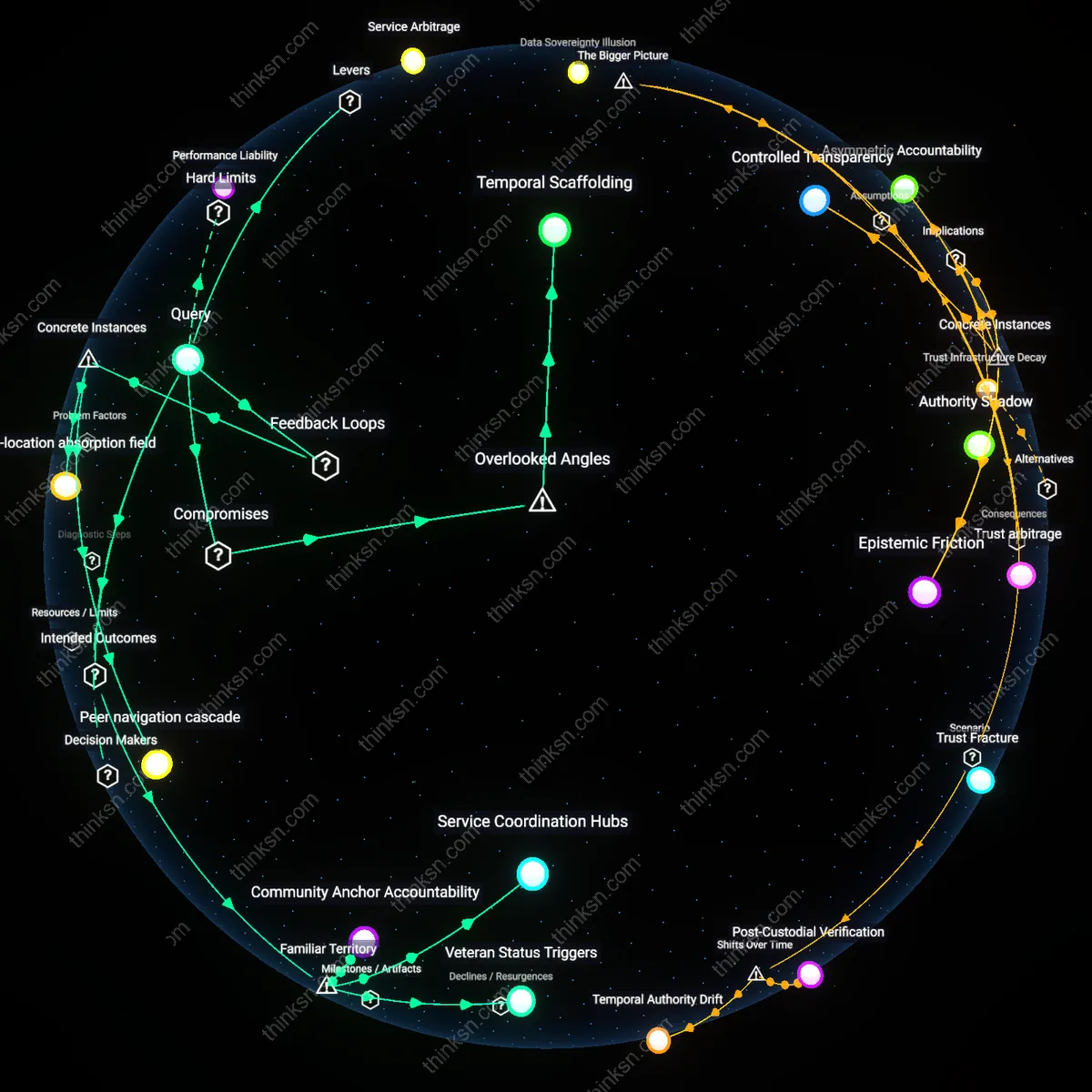
Analysis reveals 4 key thematic connections.
Key Findings
Consent Asymmetry
Notice-and-consent in Venmo’s privacy policy reveals that user data sharing is not voluntary because the interface design and default settings systematically obscure the extent of public data exposure; despite formal opt-in mechanisms, most users remain unaware that transaction memos are publicly visible by default, enabling Venmo to legally share data under the guise of consent while exploiting low user comprehension. This mechanism functions through behavioral nudges and information overload, which reduce informed decision-making—a dynamic that prioritizes legal defensibility over genuine user autonomy, exposing how procedural compliance undermines substantive consent.
Data Extraction Infrastructure
In India’s Aadhaar-linked financial apps, such as Paytm, notice-and-consent frameworks mask the coercive integration of biometric identity systems with private fintech services, where users must accept data sharing to access essential banking functions like receiving wages or subsidies. The mechanism operates through state-backed digital infrastructures that render refusal functionally equivalent to financial exclusion, revealing that voluntariness collapses when consent is conditioned on citizenship-level entitlements rather than free choice—highlighting how economic inclusion becomes leveraged to normalize mass data appropriation.
Consent Seriality
Notice-and-consent in financial apps has shifted from one-time onboarding events to recurring, fragmented disclosures that users encounter across multiple service layers over time, revealing that data sharing is not a free-standing choice but a temporally distributed compliance burden. In apps like Robinhood and Chime, users now face layered consent requests—at sign-up, during feature activation, after algorithmic risk assessments, and post-regulatory updates—each framed as discrete decisions, though cumulatively they normalize continuous data extraction. This shift from static consent forms (circa 2015–2018) to dynamic, event-triggered prompts (post-2020) reflects regulatory arbitrage in response to GDPR and CCPA, where companies reframe repeated acquiescence as ongoing user agency, thereby masking the erosion of meaningful choice over time. The non-obvious consequence is that voluntariness is not undermined by deception but by temporal fragmentation—consent becomes habitual, not considered.
Compliance Drift
The incremental revision of privacy terms by firms like PayPal and Venmo since 2018 reveals that notice-and-consent frameworks have drifted from discrete agreements into ambient, evolving regimes where users never encounter a complete picture of data use, indicating that voluntariness is compromised by temporal obsolescence rather than active deception. Unlike early versions of privacy policies—self-contained documents updated annually—current terms are amended silently, disclosed piecemeal through app notifications or email footers, and often take effect before users can reasonably respond. This shift toward continuous policy mutation, accelerated by regulatory fragmentation and real-time data monetization, means that no single consent act captures the full data lifecycle, rendering initial user agreement functionally meaningless over time. The key insight is that voluntariness collapses not at the moment of choice but in the interstitial periods between notices, where data reuse outpaces user awareness.