How Do Siblings Split Parent Care Costs Without Family Drama?
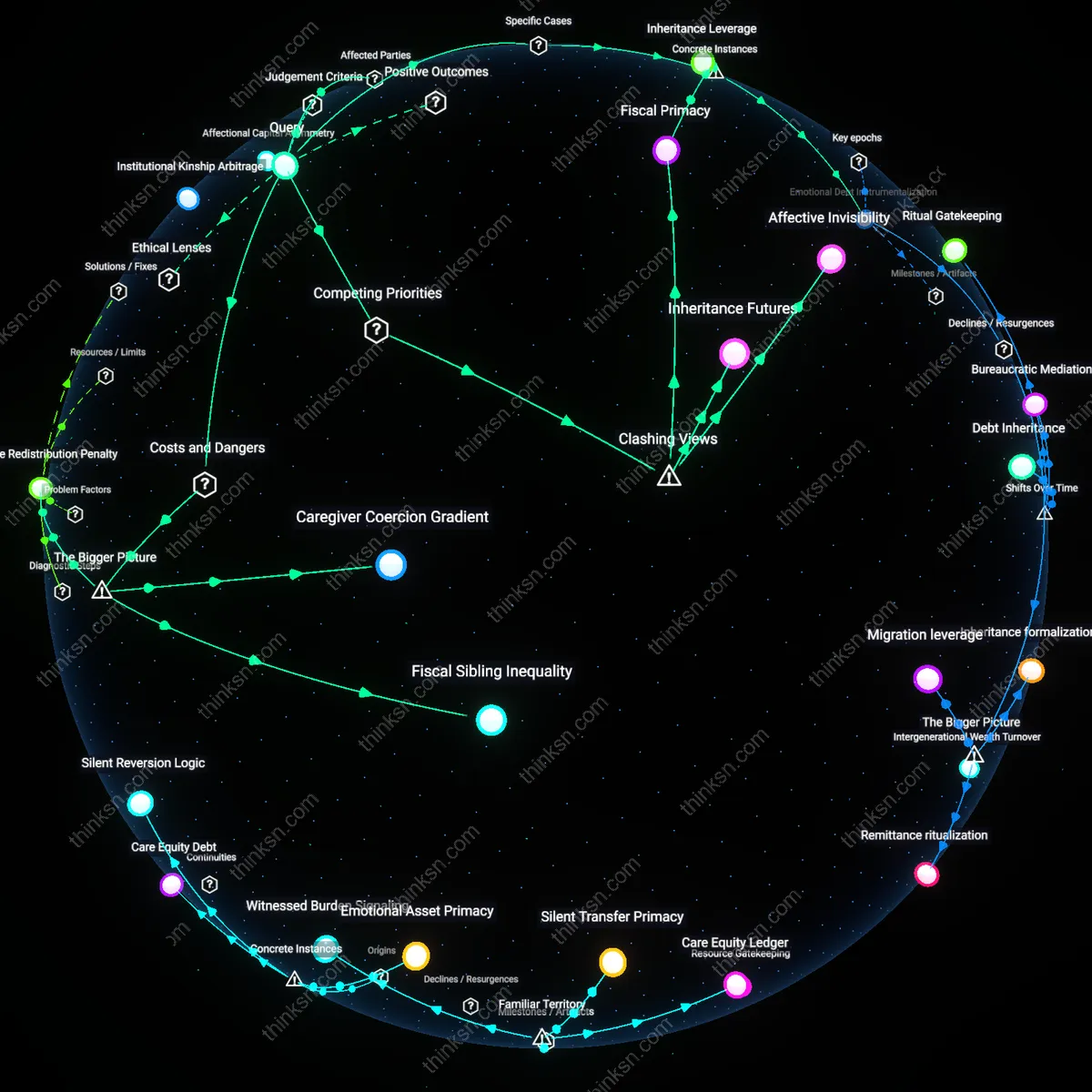
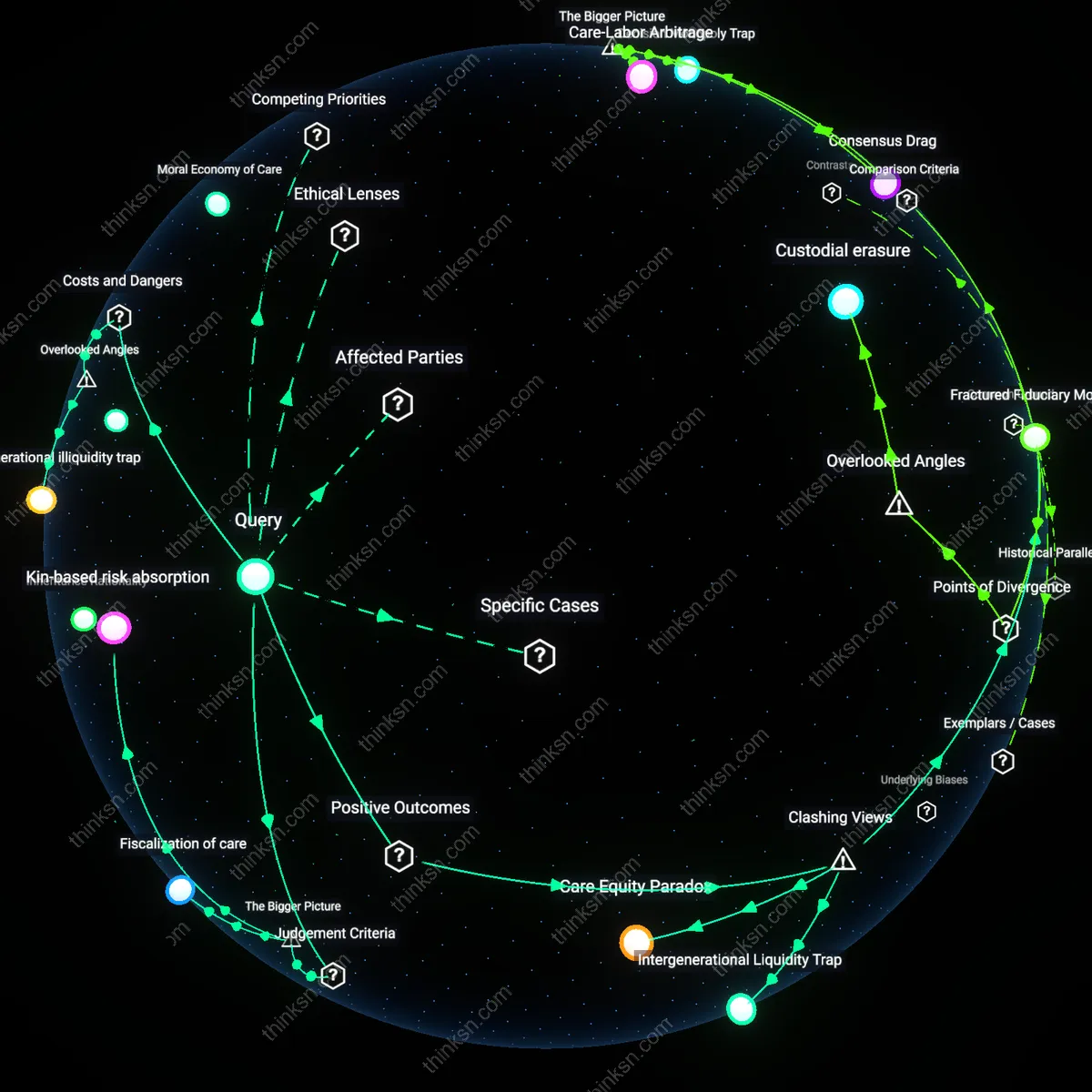
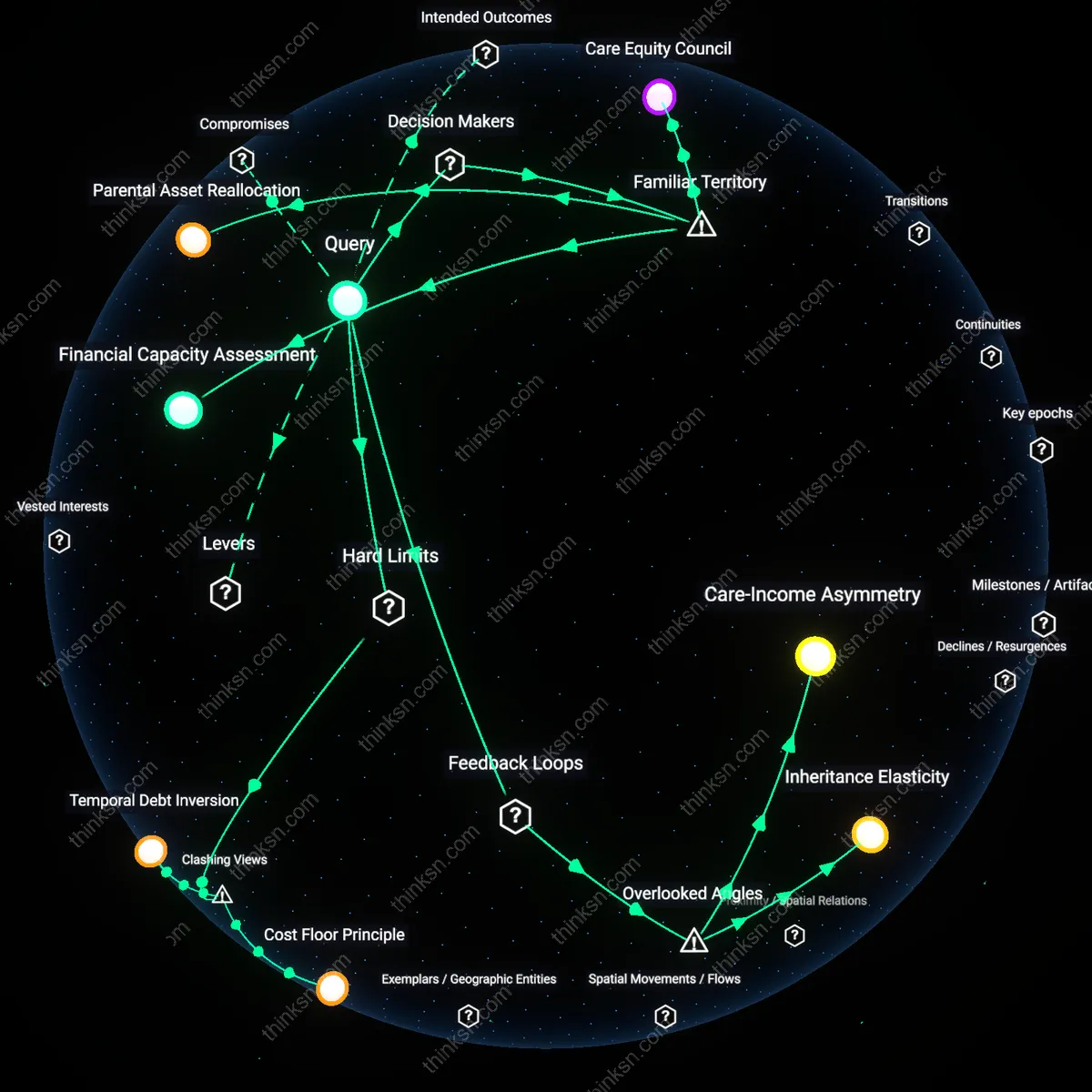
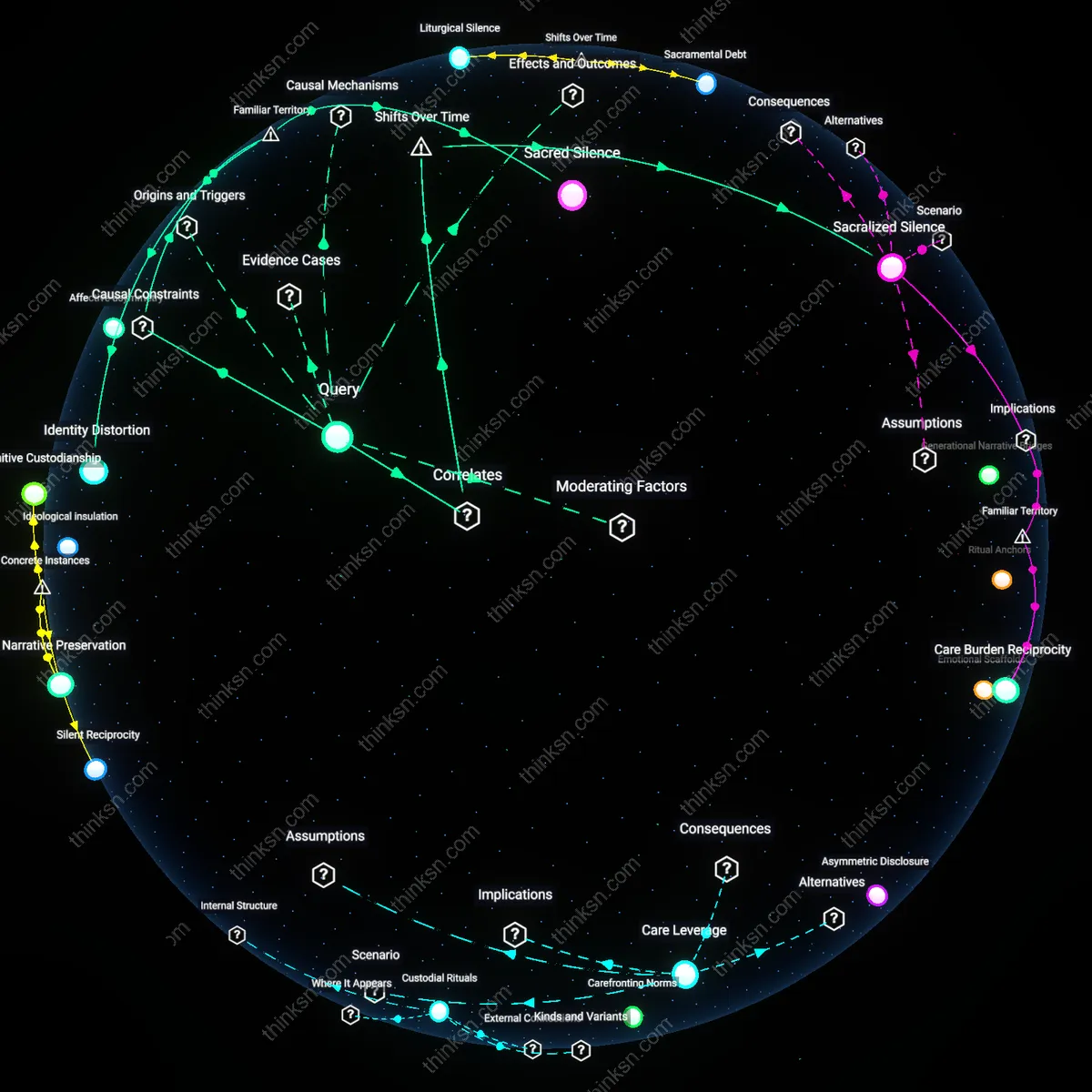
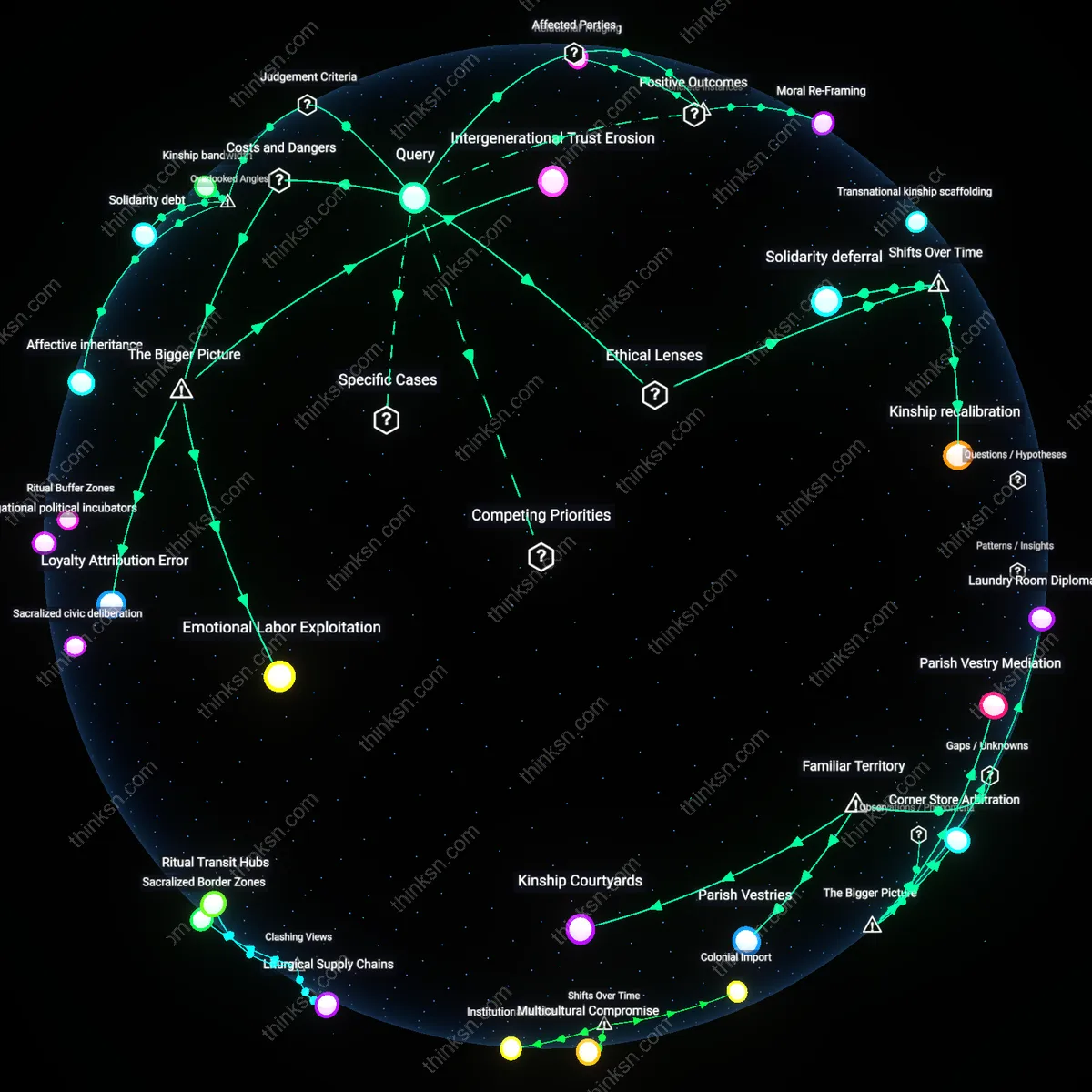
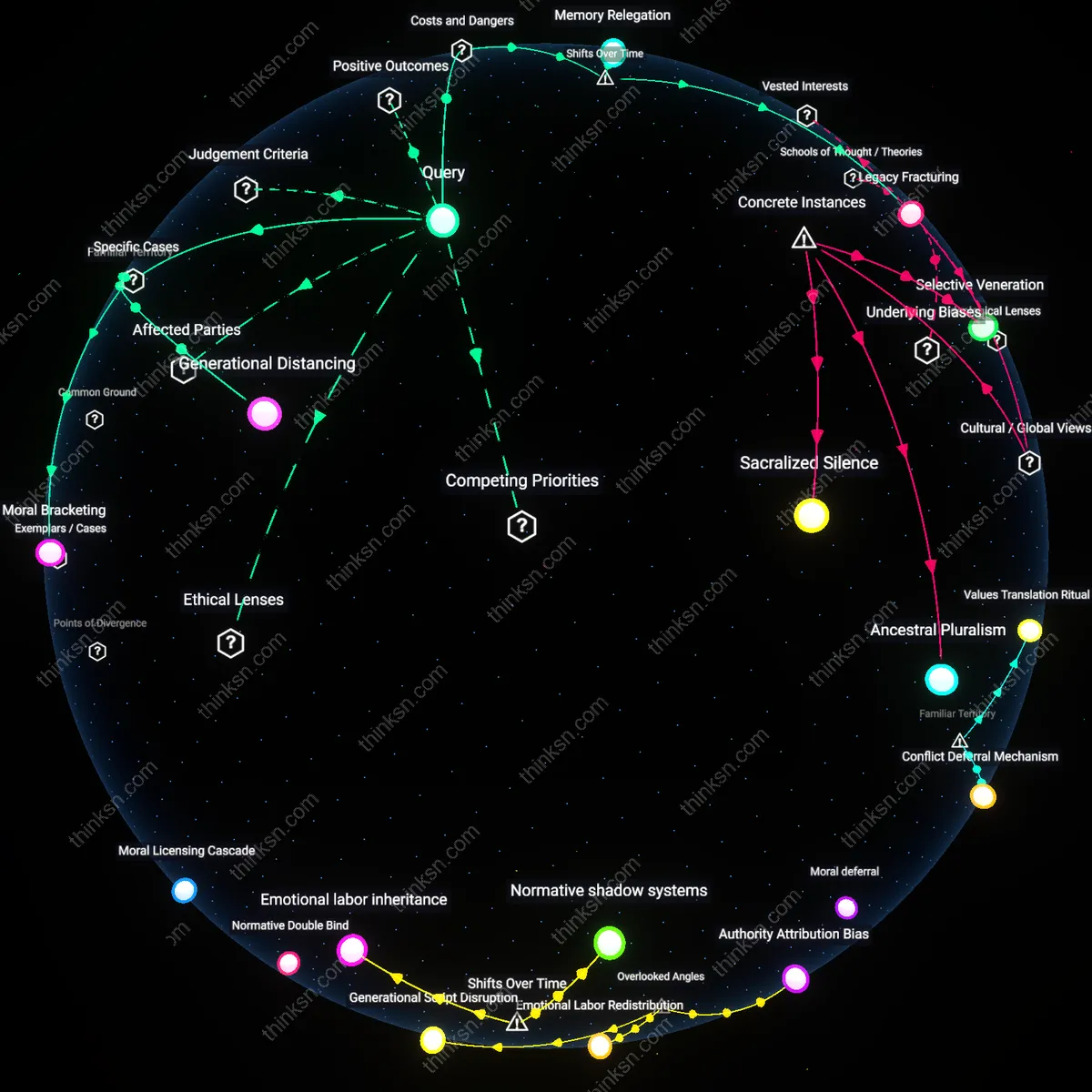
Analysis reveals 11 key thematic connections.
Key Findings
Care Cost Arbitration
Initiate a binding mediation process through a neutral third-party eldercare organization to apportion financial responsibilities relative to siblings’ income brackets. This mechanism leverages formal caregiving institutions—such as Area Agencies on Aging—that have both expertise in family care dynamics and established protocols for equitable cost-sharing assessments; by institutionalizing the negotiation, emotional family dynamics are displaced by procedural fairness, reducing moral resentment. What is underappreciated is that such agencies function not only as service providers but as conflict mediation infrastructures embedded in municipal social policy, where economic asymmetry is treated as a structural, not moral, problem.
Inheritance Leverage
Link contemporary care contributions to future inheritance shares via a transparent, legally documented family agreement drafted by an estate attorney. This works because estate law in most U.S. states permits contractual adjustments to inheritance based on lifetime contributions, thereby aligning long-term self-interest with immediate caregiving equity; the wealthy sibling faces a calculable loss in asset transfer if opting out. The non-obvious insight is that inheritance functions not just as a wealth transfer system but as a behavioral enforcement mechanism—where anticipated future gains can be weaponized to compel present-day cooperation among kin in the absence of legal compulsion.
Care Equity Norming
Publicly reframe caregiving contributions as proportional to means by establishing a household-level social norm validated through extended family consensus—e.g., via a joint letter from uncles, cousins, or religious leaders affirming graduated responsibility. This functions through the extended kinship network’s latent moral authority, which in culturally tight families exerts more pressure than legal or financial incentives; deviation from collectively endorsed norms risks social exclusion rather than mere interpersonal tension. The overlooked dynamic is that familial power structures often distribute not through wealth or law, but through symbolic legitimacy conferred by lineage and community recognition, making peer-moralization a stealth lever of economic behavior.
Asymmetric Burden Recycling
Formalizing care cost contributions through a third-party trust, as seen in the Rockefeller family’s management of elder care under Rockefeller Philanthropy Advisors, stabilizes the system by converting unilateral financial strain into a structured, depersonalized flow that prevents resentment from reinforcing neglect. The mechanism works through a legally binding stewardship framework that anonymizes contributions—allowing the wealthy sibling to fulfill obligations without direct family negotiation—thereby weakening the reinforcing loop where refusal breeds bitterness that further erodes cooperation. This is non-obvious because it treats financial contribution not as a moral appeal but as a systemic input, turning a relational breakdown into an institutional design problem, as demonstrated by the longevity of Rockefeller family governance structures despite internal frictions.
Differential Reciprocity
Assigning non-monetary care responsibilities proportional to financial input, as practiced in the Mitra clan of West Bengal during the 2015 collapse of public eldercare infrastructure, creates a balancing loop where the contributing sibling receives labor relief while the non-contributing sibling assumes daily caregiving duties, thus redistributing burden without direct confrontation. The system stabilizes because each sibling’s output adjusts relative to the other’s—a feedback mechanism observed when the wealthier son refused cash payments but could not refuse physical presence due to cultural norms around filial duty—making avoidance less rewarding. This case reveals that fairness need not be financial symmetry but can emerge from calibrated exchange, a dynamic underappreciated in Western legal models fixated on monetary equity.
Narrative Reanchoring
Publicly reframing the care arrangement through shared storytelling, such as the Kagawa prefecture family mediation councils in post-1990s Japan during the aging tsunami, interrupts the reinforcing cycle of blame by embedding the wealthy sibling’s non-contribution within a broader generational narrative of migration and sacrifice, thus preserving relational integrity. The mechanism operates through community-sanctioned ceremonies where roles are narratively adjusted—e.g., the absent sibling is cast as the ‘economic provider of the past’ while the present caregiver becomes the ‘moral anchor’—which sustains equilibrium by validating both positions without requiring financial change. This is underappreciated because it treats narrative as a structural component of system stability, not mere rhetoric, as evidenced by reduced family litigation rates in regions using these councils.
Legacy Governance
The surviving executor of the parents’ estate plan can enforce cost-sharing by leveraging codicils that condition inheritance on caregiving contributions, a mechanism made binding through probate courts. This capacity emerged after the 1980s shift toward individualized eldercare responsibility, as state funding retreated and family obligations were privatized through legal instruments—revealing how estate law evolved to manage familial duty as a contractual obligation rather than a moral one.
Kinship Arbitration
Mediation committees composed of extended family elders can override a wealthy sibling’s refusal by invoking cultural norms institutionalized during mid-20th century diaspora resettlement, when nuclear family fragmentation necessitated new conflict-resolution rituals. These informal tribunals gained authority precisely as religious and communal institutions waned, exposing how kinship itself became a negotiated jurisdiction in response to uneven economic assimilation.
Care Equity Trust
A healthcare proxy appointed under the Family Medical Leave Act framework can redirect medical billing to a shared trust administered by a neutral fiduciary, a structural solution enabled by post-2008 financial regulation that expanded custodial oversight for medical cost allocation. This reflects a broader transition from familial trust to financial instrumentation in caregiving, where relational risk is managed through asset segregation rather than moral appeal.
Care Equity Gap
Charge the wealthy sibling a legally binding care premium indexed to regional cost-of-living disparities to fund a third-party care trust, because their refusal to contribute stems not from moral failure but from unequal exposure to care logistics—those geographically closer to the parent absorb daily burdens while the distant wealthy sibling mentally discounts responsibility. This mechanism treats financial contribution as compensation for offloaded labor, not charity, exposing the unspoken rule that proximity, not wealth, dictates perceived obligation. The non-obvious truth is that fairness in care isn't about equal shares but about recalibrating for invisible labor arbitrage.
Emotional Debt Swap
Convert the wealthy sibling’s financial obligation into a time-bound commitment to provide emotional labor—hosting family events, maintaining parent-child narratives, managing memorial planning—tasks that disproportionately strain middle-class siblings’ time and psyche. This swap treats financial capital and emotional capital as fungible under familial duty, bypassing resentment by formalizing non-monetary contributions. The dissonance lies in rejecting money as the primary medium of care fairness, showing instead that wealth refusal may signal a deeper rejection of transactional family ethics.