Undocumented Members Impact on Public Housing Eligibility?
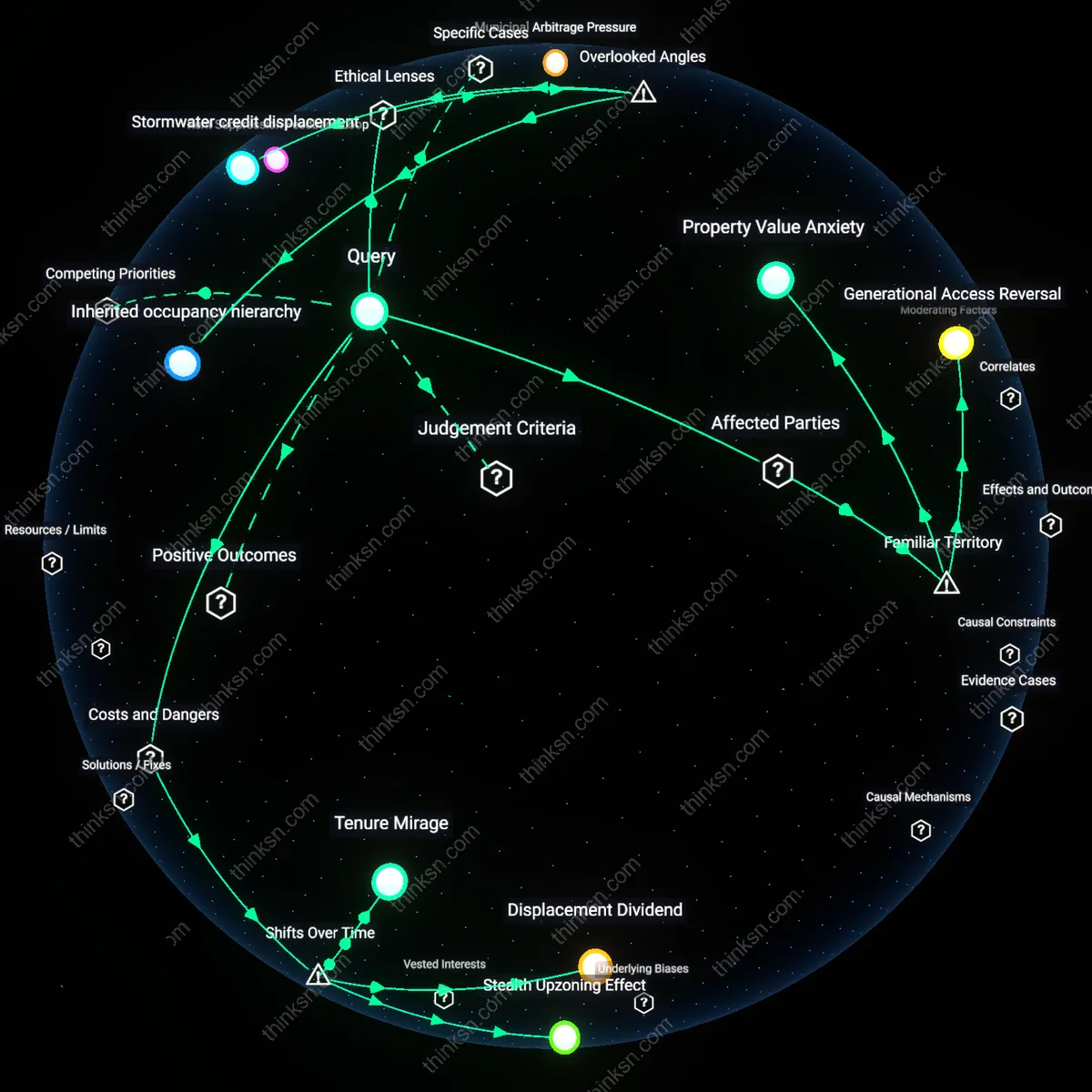
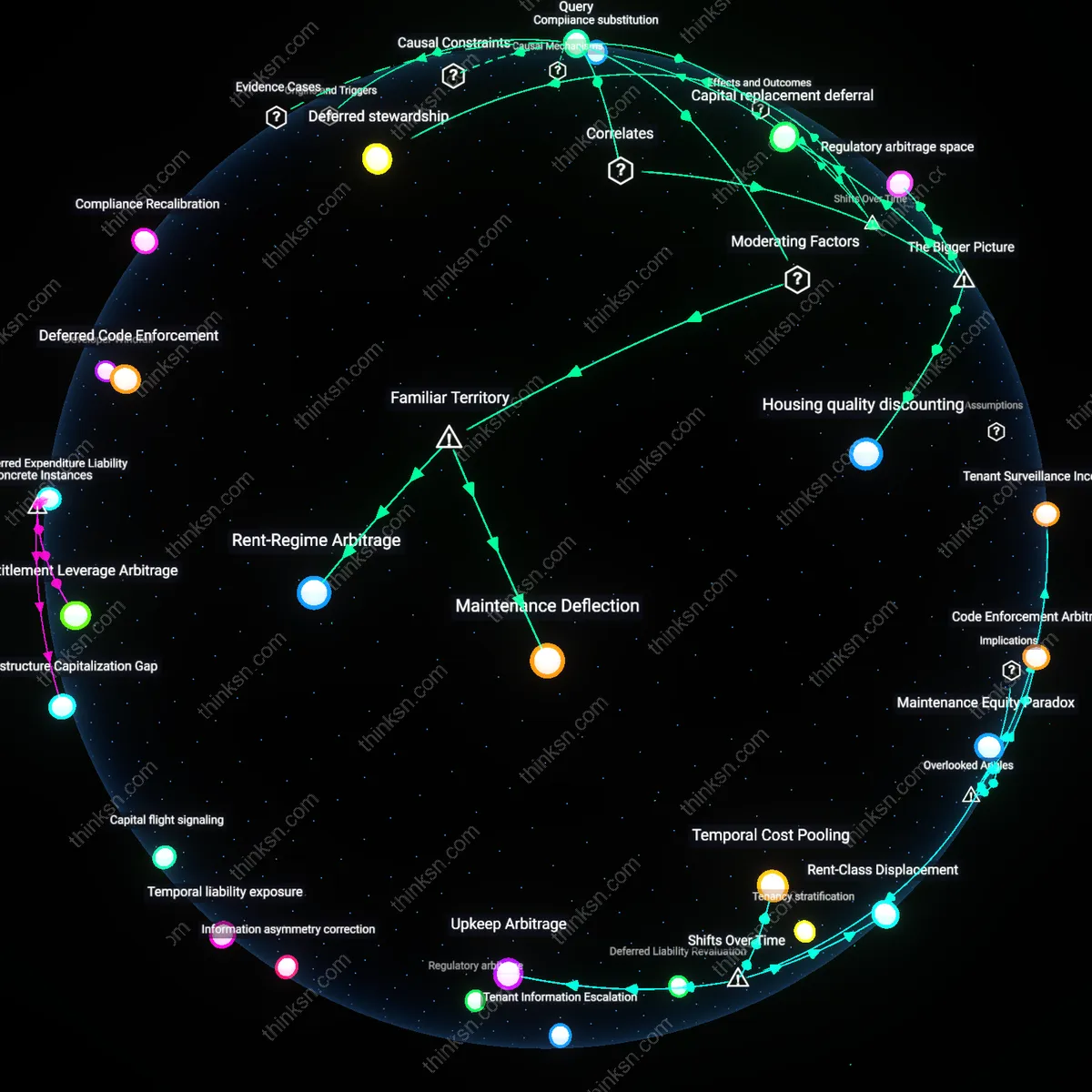
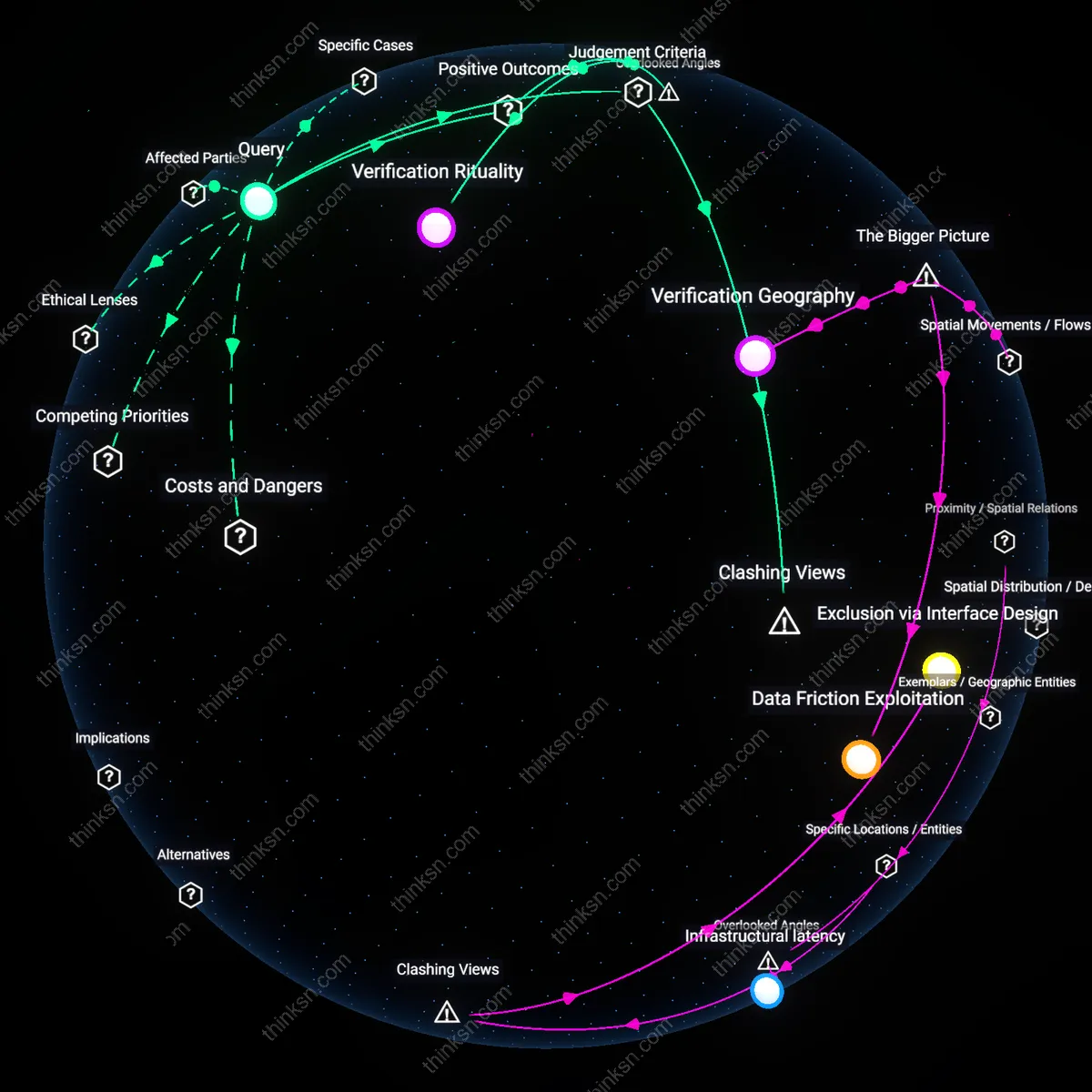
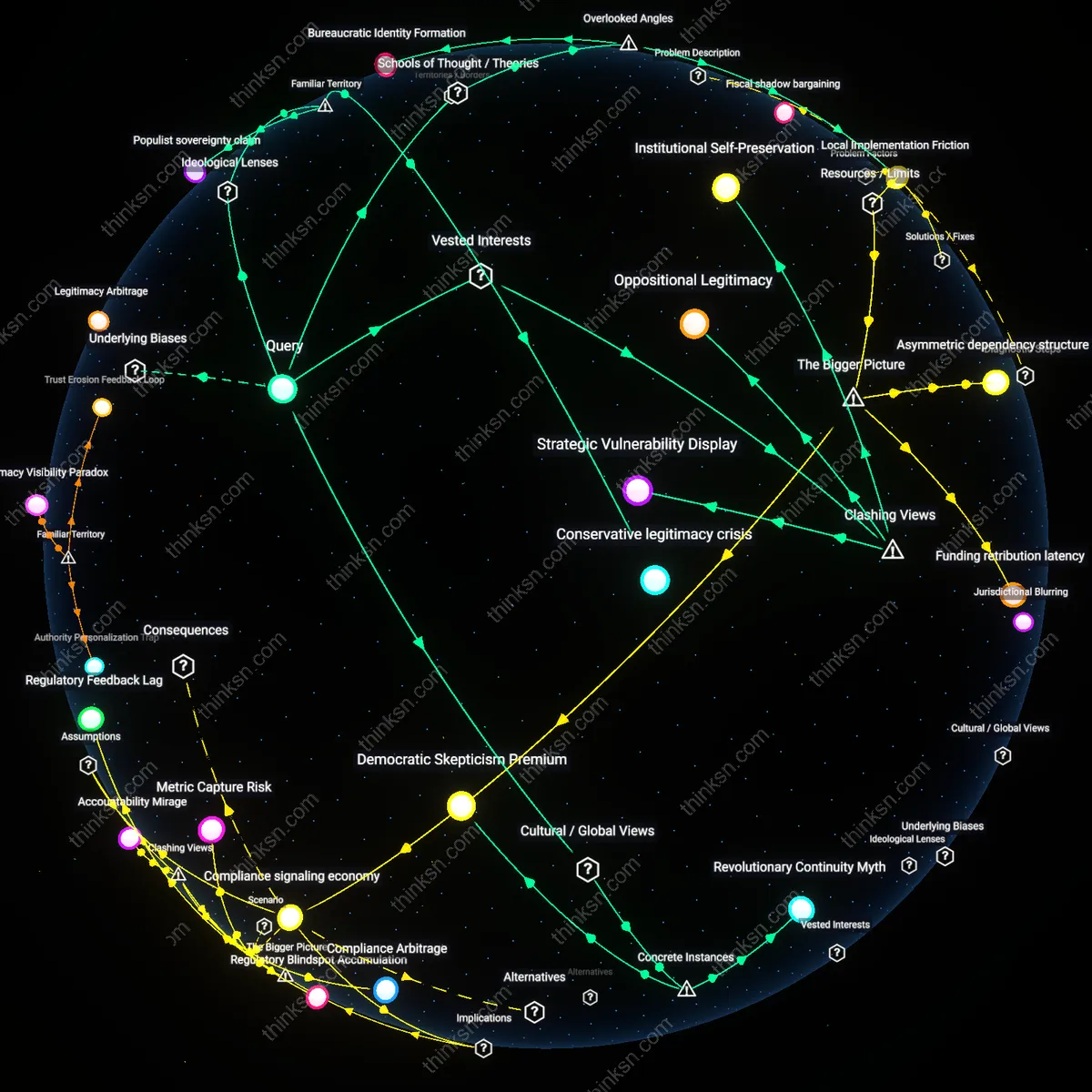
Analysis reveals 9 key thematic connections.
Key Findings
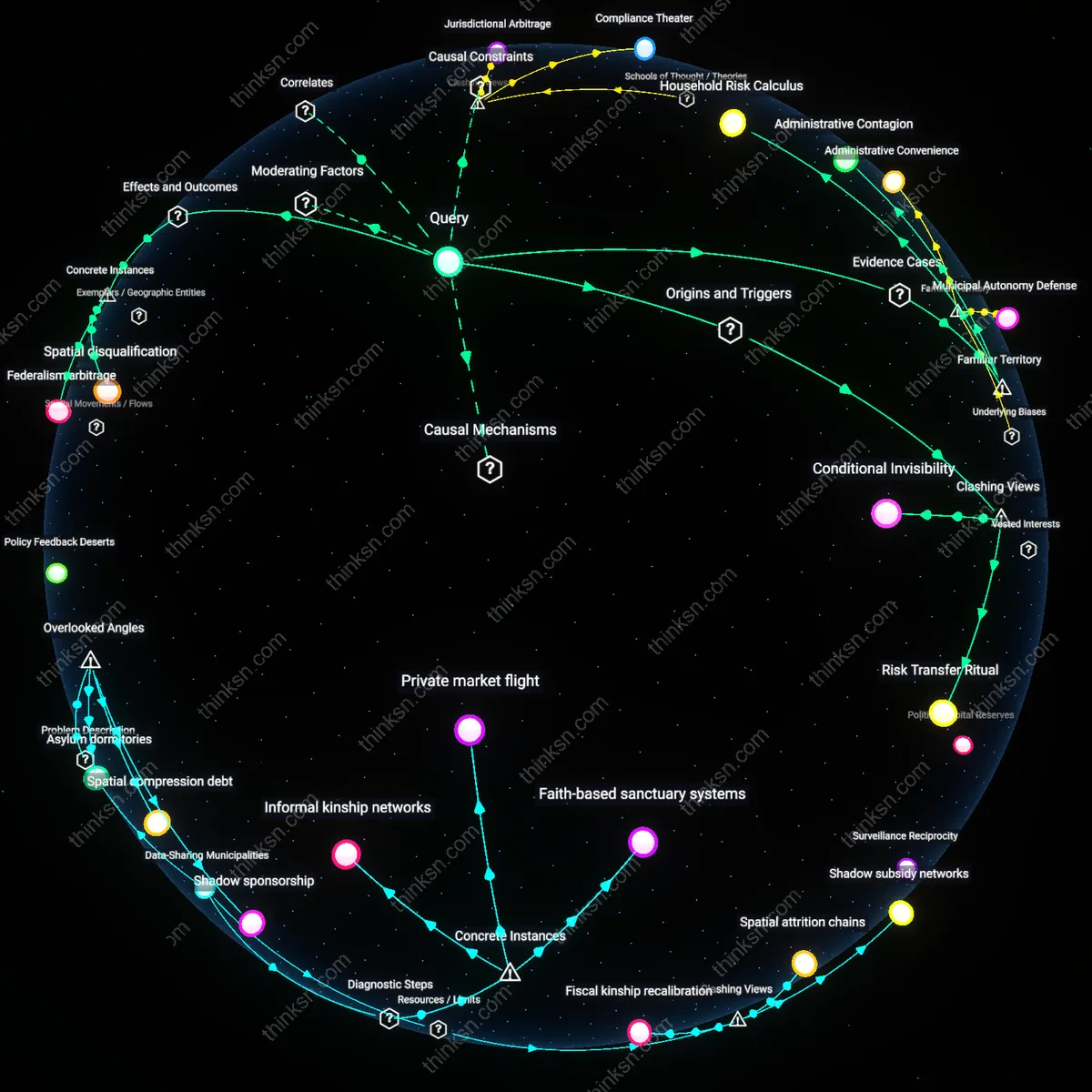
Administrative Collusion
Having an undocumented member does not automatically disqualify a mixed-status household from public housing because local housing authorities often rely on selective enforcement and procedural ambiguity to quietly permit their inclusion, especially in sanctuary cities like New York or Los Angeles, where tenant stability is prioritized over immigration vetting; this creates a de facto tolerance that stems not from policy clarity but from the unwillingness of housing administrators to assume the bureaucratic and reputational risks of triggering immigration enforcement—revealing that official ineligibility is functionally negotiable when frontline agencies resist full compliance with federal immigration agendas.
Conditional Invisibility
Mixed-status households are frequently admitted into public housing under the names of documented or citizen members, effectively rendering the undocumented member administratively 'invisible' within the unit, a practice enabled by HUD’s policy of not requiring immigration status for all occupants—this erasure is not passive neglect but an active regulatory loophole that shelters undocumented individuals as long as they remain non-applicants, thereby transforming household composition into a strategic concealment mechanism that undermines the premise that detection is tied to participation in public programs.
Risk Transfer Ritual
Applying for public housing inadvertently shifts risk from the undocumented member to the documented household members, who must submit identifying information and face potential scrutiny, a dynamic that upends the assumption that detection primarily threatens the undocumented individual—here, the documented relatives become exposure conduits, as their eligibility determination generates data trails that immigration enforcement can exploit through inter-agency data sharing, making citizenship a vector of vulnerability rather than protection.
Bureaucratic contagion
In 2019, when the Trump administration expanded the public charge rule, mixed-status households in Cook County, Illinois, increasingly avoided applying for Section 8 housing assistance—even when citizen children qualified—because housing application forms required disclosure of all resident adults, thereby extending immigration scrutiny beyond the applicant and deterring participation through bureaucratic entanglement. The rule’s design created a spillover effect where the mere presence of an undocumented individual altered household-level decision-making around benefit uptake, despite no direct ineligibility for the child. This reveals how administrative procedures can transform localized immigration status into a household-wide risk calculus, making eligibility functionally irrelevant in the face of perceived exposure. What is underappreciated is that detection risk is often amplified not by enforcement action itself, but by the structure of paperwork and inter-agency data sharing within housing authorities, which become de facto surveillance extensions.
Spatial disqualification
In the colonias of El Paso, Texas, undocumented residents and their families often reside in informal settlements excluded from municipal housing registries, effectively rendering mixed-status households invisible to public housing systems not because of formal ineligibility but due to the absence of utility bills, leases, or property titles required for application—conditions enforced uniformly regardless of citizenship. When HUD funding was reallocated in 2015 based on formal occupancy records, entire neighborhoods were bypassed in housing assistance programs, even where citizen children were present, because documentation standards operated as proxy filters for migration status. This demonstrates how seemingly neutral administrative prerequisites can produce spatial exclusion—where geography becomes an expression of legal vulnerability. The non-obvious insight is that detection risk is embedded not in active investigation but in the banal mismatch between bureaucratic requirements and lived reality.
Federalism arbitrage
After California's 2020 enactment of the Density Bonus Law expansion, which allowed mixed-status families in cities like Fresno to qualify for developer-incentivized affordable housing units without federal background checks, some local housing authorities began creating alternative programs decoupled from HUD eligibility frameworks—allowing undocumented individuals to access units indirectly through relatives or community land trusts. This created a patchwork where access depended less on status than on jurisdictional innovation, illustrating how states leverage regulatory divergence to undercut immigration-based exclusion. The overlooked dynamic is that risk of detection is not monolithic but subject to negotiation through legislative experimentation, turning housing policy into a site of institutional gaming across federal and local levels.
Chilling Effect
Having an undocumented member deters mixed-status households from applying for public housing due to fear of detection, even when eligible. U.S. Citizenship and Immigration Services’ prior attempts to collect immigration data through public benefits applications—such as the 2018 public charge rule expansion—caused measurable enrollment drops in housing and nutrition programs across cities like Los Angeles and Houston, particularly in Latino neighborhoods. The mechanism operates through bureaucratic risk exposure, where any interaction with federal databases heightens the perceived likelihood of immigration enforcement. The non-obvious insight is that the deterrent is not statutory ineligibility but the anticipatory withdrawal shaped by high-profile policy signals that embed immigration surveillance into benefit systems.
Household Risk Calculus
Mixed-status households restrict benefit access for eligible members to avoid exposure of undocumented relatives, treating public housing as a collective decision rather than an individual entitlement. In New York City’s Housing Authority (NYCHA), documented family members often decline unit upgrades or formal leases to minimize scrutiny, even when it disadvantages citizen children. This operates through familial interdependence, where entitlements are filtered through kinship risk management rather than legal eligibility. The underappreciated dimension is that people don’t just navigate policies—they navigate them relationally, prioritizing concealment over optimization, which subverts standard models of benefit uptake based on individual eligibility.
Administrative Contagion
An undocumented household member’s presence triggers documentary demands that extend to all residents, jeopardizing the entire unit’s housing stability. In Section 8 housing administered by local Public Housing Agencies such as Cook County’s, IL, lease renewals require verification of all occupants over 18, creating a cascade where immigration status checks intended for one person retroactively invalidate tenancy for citizen families. This occurs through forms-based gatekeeping embedded in HUD-compliant verification protocols that treat households as administratively indivisible. The non-obvious reality is that housing systems often fail to protect eligible individuals because bureaucratic formats cannot disentangle status at the unit level, making eligibility porous.