Why Do Insurance Plans Frequently Deny Mental Health Claims?
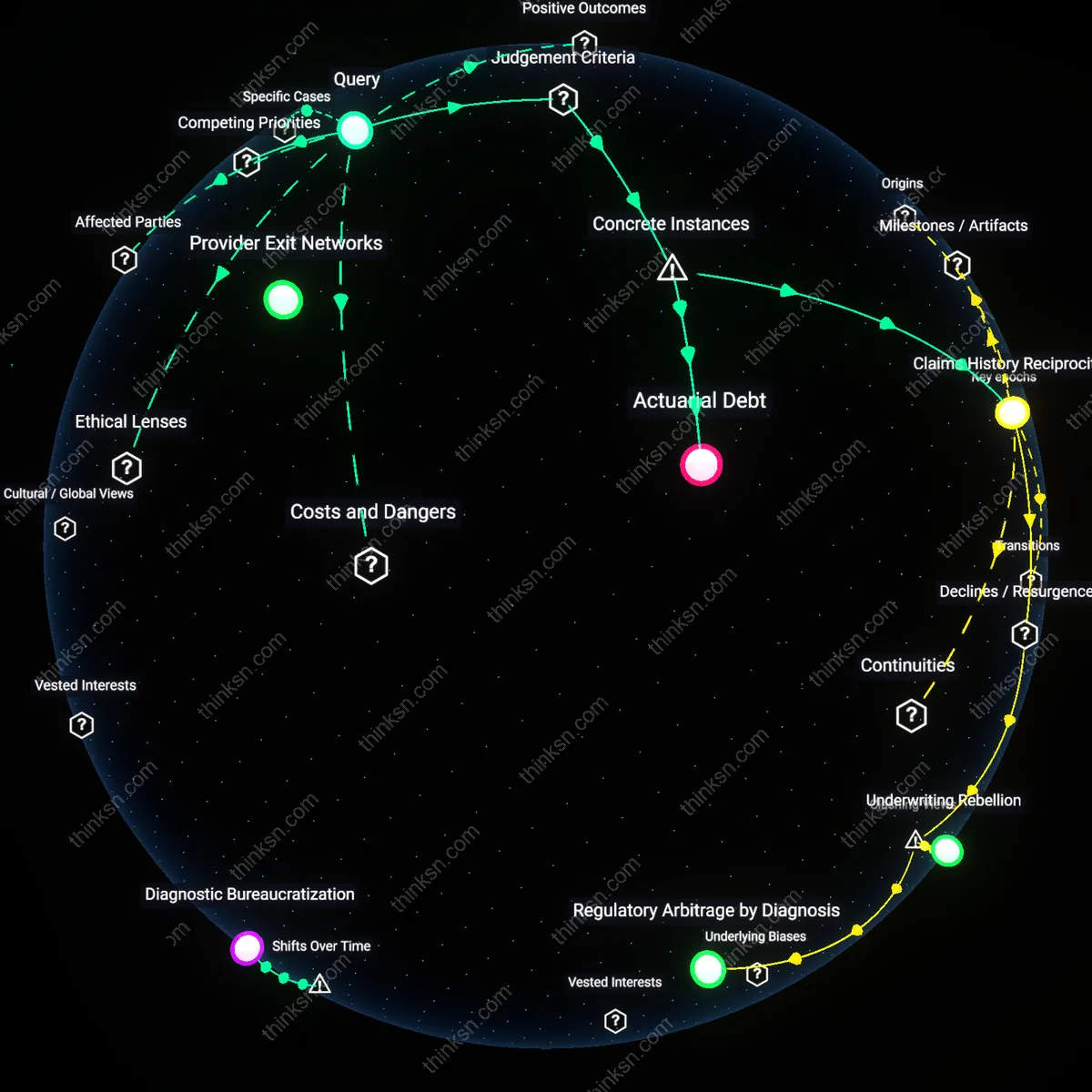
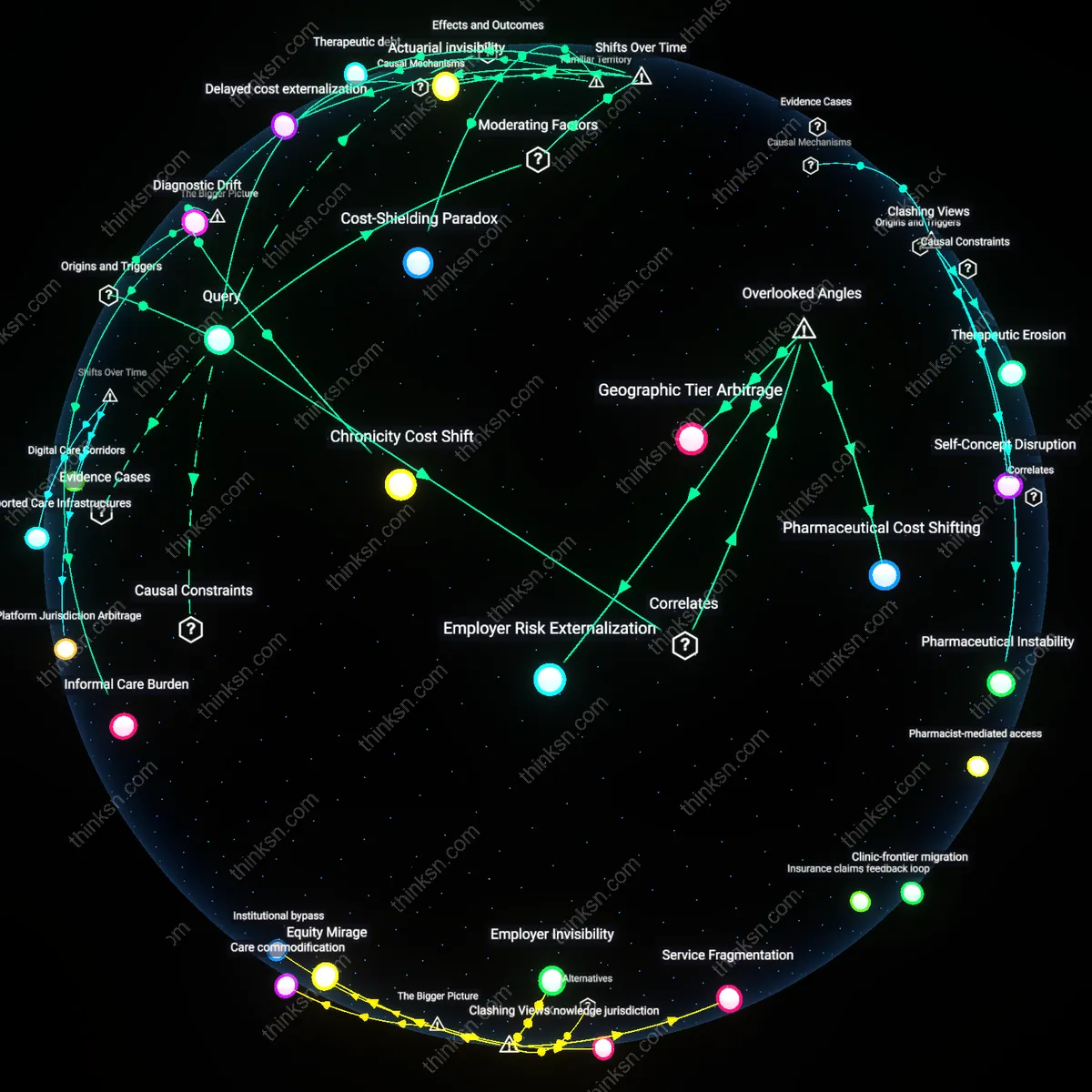
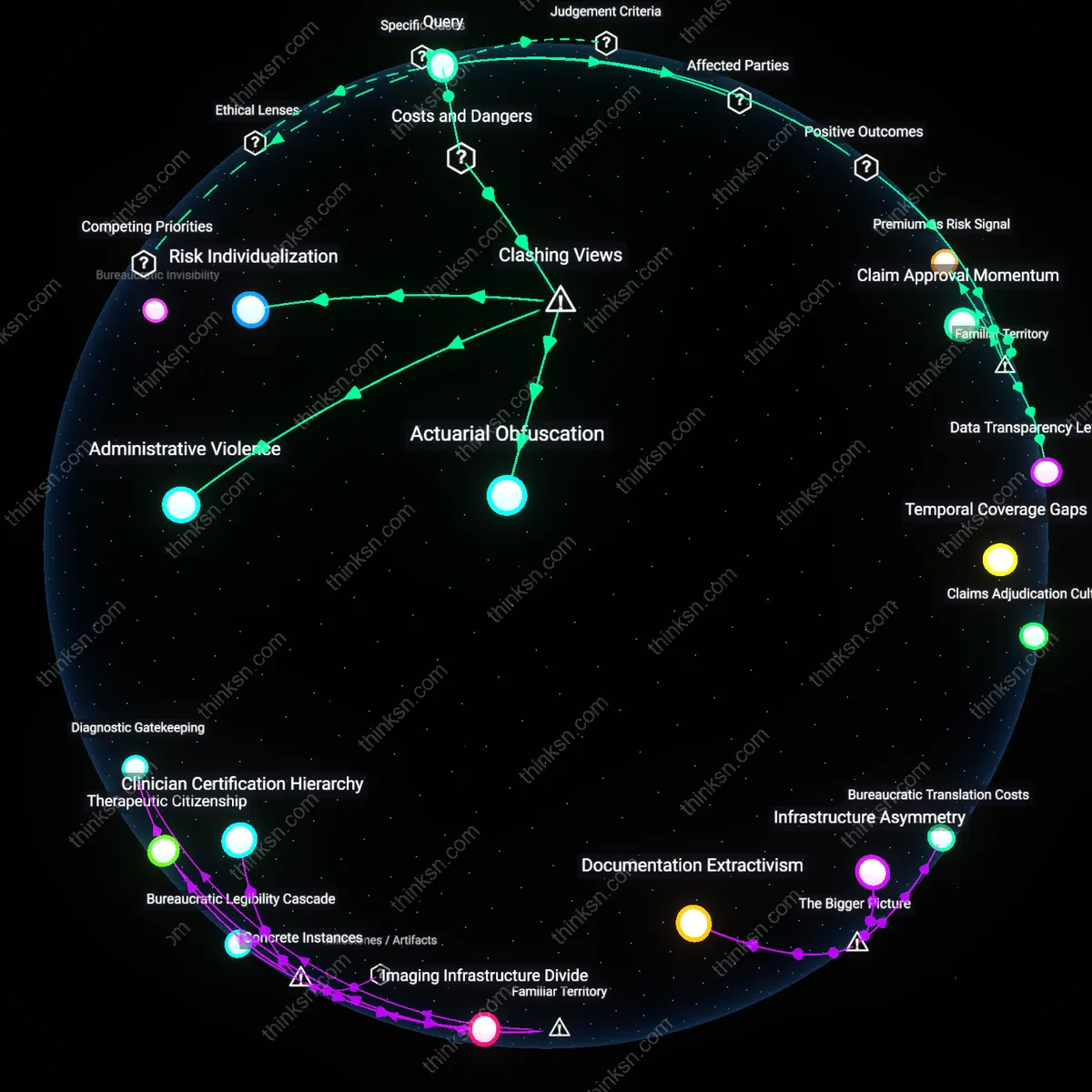
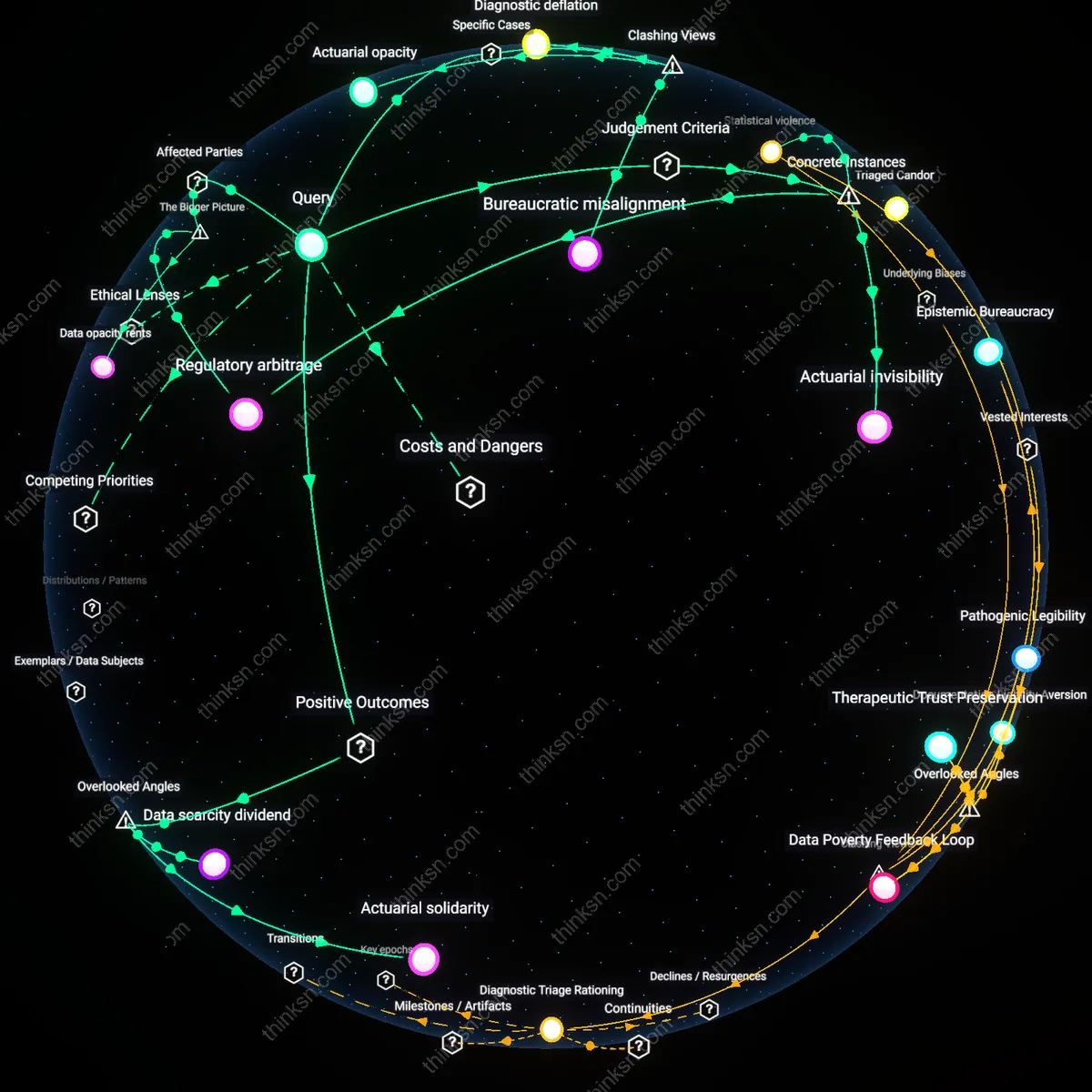
Analysis reveals 8 key thematic connections.
Key Findings
Actuarial Resistance
Frequent clinical exception denials for mental health services reveal that insurance plan designs prioritize financial predictability over therapeutic necessity. Insurers systematically leverage actuarial models that treat mental health variability as a risk to be minimized, not a medical need to be addressed, embedding resistance to clinical discretion within coverage protocols. This mechanism elevates statistical averages over individual patient trajectories, making denials a structural feature, not a procedural failure—highlighting how medical authority is subordinated to financial forecasting in managed care systems.
Diagnostic Bypass
Persistent denials of clinical exceptions indicate that insurance frameworks are optimized to control service access through narrow diagnostic gatekeeping rather than clinical outcomes. By requiring rigid adherence to DSM-based criteria and standardized treatment pathways, plans sideline clinician judgment when it diverges from codified norms, effectively bypassing medical expertise in favor of administrative rule sets. This reveals a hidden architecture where diagnostic precision serves as a cost-control lever, not a care quality tool—contrary to the assumption that evidence-based guidelines inherently support patient benefit.
Temporal Arbitrage
The high rate of clinical exception denials reflects insurers' strategic exploitation of treatment delay as a means to reduce liability without overtly denying coverage. By forcing appeals, documentation burdens, and step-therapy requirements, plans create time-based friction that disproportionately impacts mental health service uptake, leveraging the urgency of psychological crises against the slowness of administrative processes. This dynamic exposes how insurance design profits from temporal misalignment—where care deferral reduces claims even when services are eventually approved—undermining the premise that access barriers are merely bureaucratic inefficiencies.
Actuarial Inheritance
Insurers historically expanded mental health coverage in the 1990s and early 2000s under regulatory pressure, but maintained control through clinical exception protocols that delegate risk assessment to providers—a shift from outright denial to procedural delay. This mechanism embeds outdated actuarial models into current workflows by requiring clinicians to justify care using criteria rooted in pre-DSM-5 cost containment logic, effectively preserving old financial priorities under new regulatory compliance. The non-obvious result is not resistance to parity laws per se, but their co-option through administrative burden, revealing how historical risk calculations persist in operational routines.
Gatekeeping Displacement
Prior to the 2008 Mental Health Parity and Addiction Equity Act, insurers directly excluded mental health services; after its passage, denials shifted to post-authorization clinical exception reviews, relocating gatekeeping from benefit design to utilization management. This transition moved decision authority from plan architects to third-party review firms like Carelon, which operationalize medical necessity through algorithms trained on pre-parity-era claims data. The underappreciated consequence is that parity compliance is technically achieved while reproducing earlier restriction levels through temporally lagged clinical criteria, exposing how oversight mechanisms inherit and repackage prior exclusion regimes.
Formulary Temporal Lag
As evidence-based practices for trauma and mood disorders evolved post-2010, insurance formularies and review protocols failed to update in parallel, causing frequent clinical exception requests for newer therapies like prolonged exposure or DBT—a misalignment between clinical innovation and coverage cycles. This gap emerged when utilization review systems, historically built for pharmaceuticals, were extended to psychotherapy without recalibrating evaluation timelines, resulting in static definitions of 'standard of care' that reflect 1990s treatment consensus. The overlooked artifact is a structural delay that systematically deprioritizes emergent mental health interventions, cementing historical treatment hierarchies under the guise of clinical caution.
Medical Legitimacy Hierarchy
Clinical exception denials signal that insurance designs uphold a tiered model of medical credibility, where mental health services are granted provisional legitimacy only when they mimic the metrics of somatic care. Utilization managers, trained to recognize lab values and imaging over symptom narratives, privilege diagnoses with biomarker correlates and exclude those reliant on self-report, such as PTSD or depression. The underappreciated reality is that the denial mechanism does not merely reflect resource limits but actively constructs which illnesses 'count' as real, reinforcing a cultural assumption that mental suffering is discretionary care unless it mirrors physical disease in form and documentation.
Administrative Burden Allocation
Frequent denials shift the labor of justification from insurers to frontline clinicians and patients, conserving payer resources by externalizing the cost of appeals and documentation. Providers must invest non-reimbursed time compiling treatment histories and justifying care plans, while patients absorb emotional and logistical strain to access covered services. The overlooked function of this friction is that it selectively filters demand—especially among vulnerable populations—making the system appear fiscally restrained not through upfront limits but through the quiet operation of bureaucratic exhaustion, which aligns with public perceptions of 'red tape' as an inevitable, rather than designed, feature of mental healthcare.