Accommodation Debt
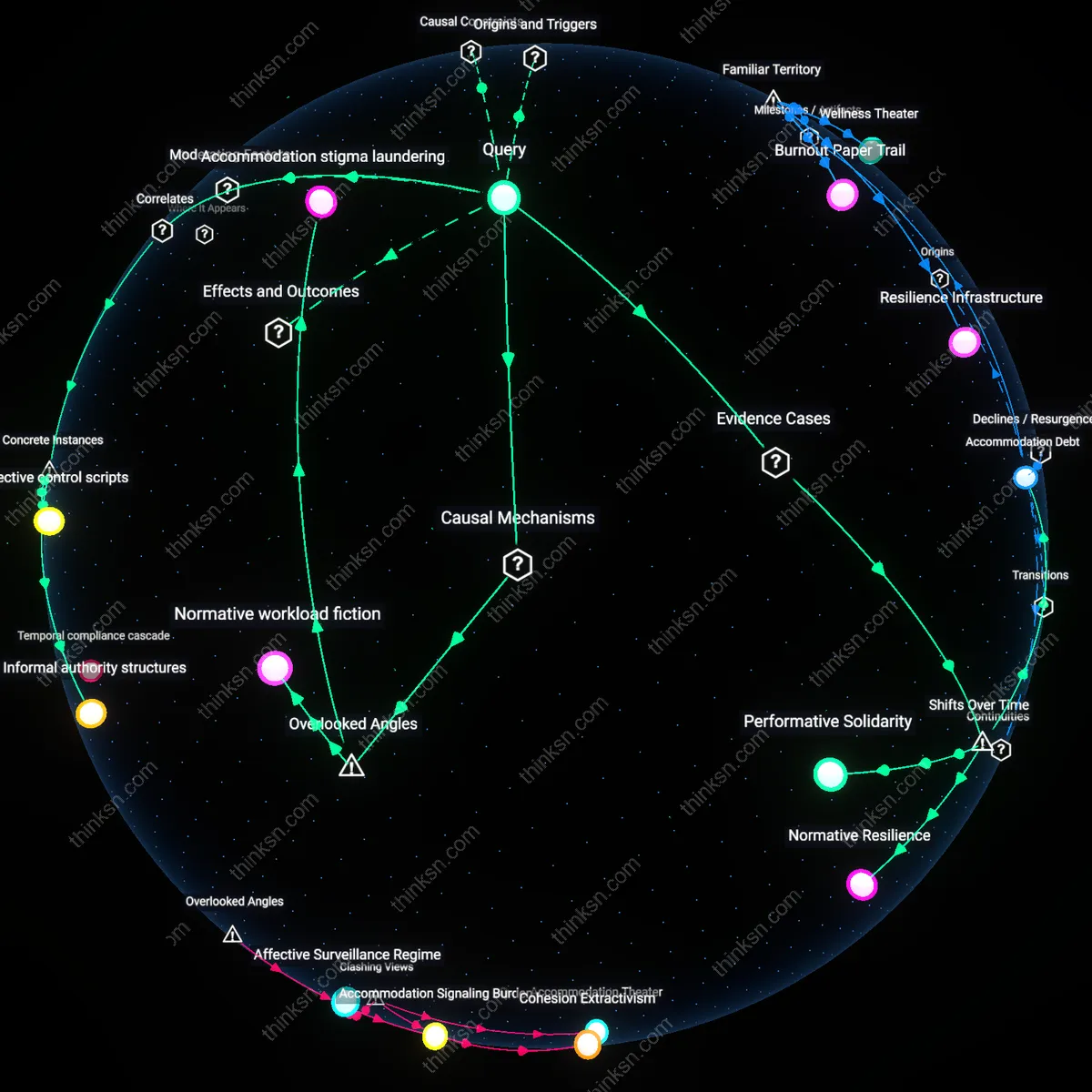
When students disclose mental health struggles primarily to secure accommodations, they incur a deferred burden of unresolved distress if follow-up support fails, because the act of disclosure becomes transactional rather than therapeutic. This dynamic manifests in university disability offices where paperwork is processed efficiently, but clinical referrals, care coordination, or ongoing monitoring remain disconnected, leaving students to navigate worsening symptoms without integrated support. The overlooked mechanism is that institutional compliance with accommodation mandates produces a false equivalence between procedural completion and care delivery, thereby masking systemic underinvestment in mental health infrastructure. What's non-obvious is that the bureaucratic efficiency of granting accommodations can deepen long-term psychological strain by exhausting the student’s willingness to re-engage when further help is needed.
Disclosure Fatigue
Students who disclose mental health conditions strategically to access accommodations experience cumulative exhaustion when post-disclosure services are fragmented or inconsistently delivered, because repeated recounting of trauma to multiple gatekeepers—counselors, professors, disability coordinators—yields diminishing returns. This occurs most acutely in large public universities where interdepartmental data silos prevent shared understanding of student needs, forcing students to re-litigate their struggles at every service boundary. The hidden dynamic is that disclosure, when instrumentalized, requires emotional labor that depletes coping capacity over time, especially when outcomes don’t improve; this reframes disclosure not as empowerment but as a costly currency in a broken support economy. Most analyses assume disclosure is cathartic or simplifying, but fail to account for its compounding toll when institutional responsiveness is episodic.
Compliance Mirage
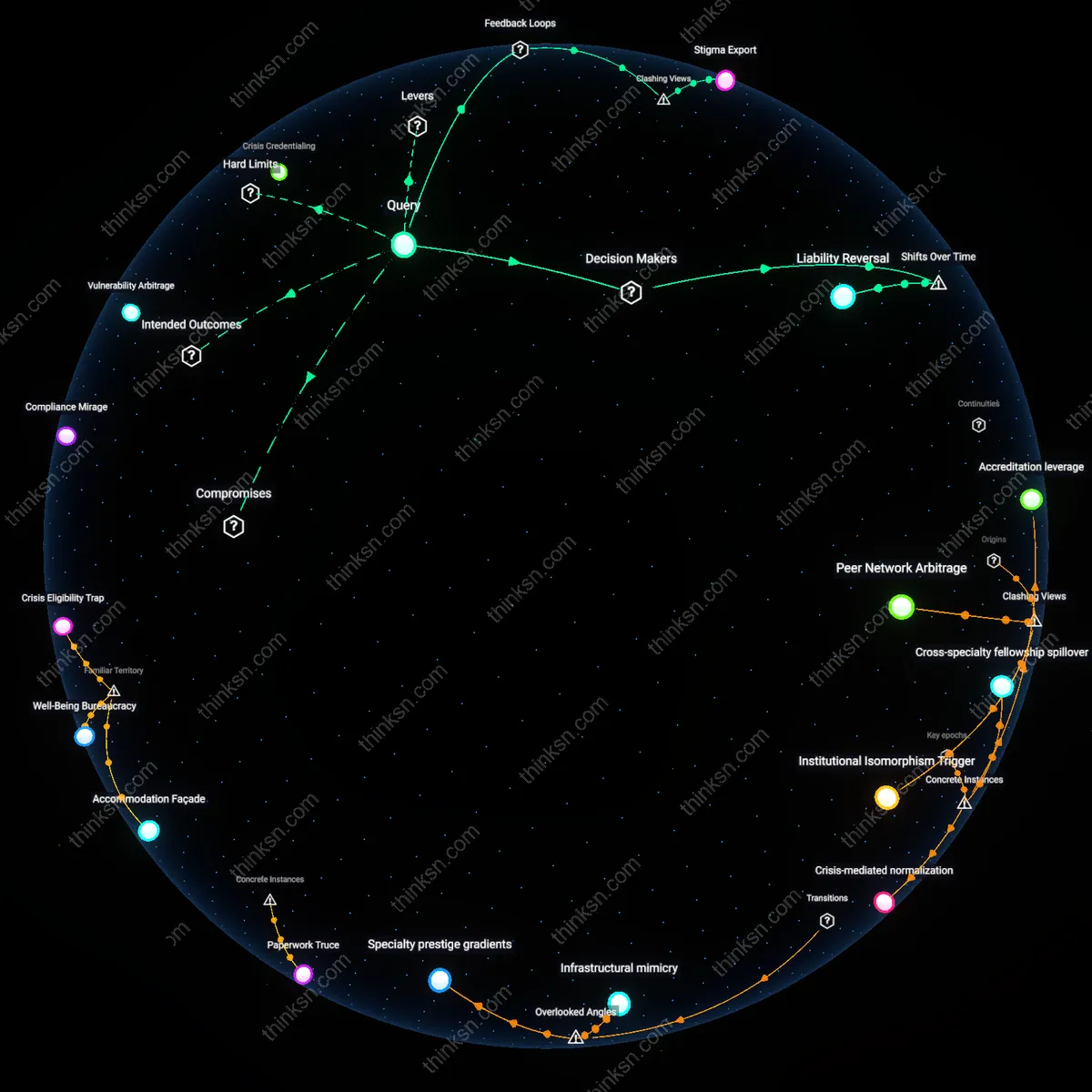
The university system interprets disclosure primarily as a risk management trigger rather than a cry for help, activating rigid procedural responses—prompting paperwork, not people—so that case managers, legal advisors, and accessibility coordinators engage only up to the threshold of documented eligibility. This technical adherence to policy creates the illusion of responsiveness while systematically excluding sustained emotional or pedagogical support, which faculty and counseling services are neither incentivized nor resourced to provide. The non-obvious truth here is that bureaucratic efficiency becomes a substitute for relational care, masking institutional disengagement behind the façade of compliance, making students’ deteriorating conditions invisible once the accommodation file is closed.
Vulnerability Arbitrage
Students have learned to deploy diagnostic language and mental health narratives not to seek healing but to extract concessions—flexible deadlines, reduced course loads, course withdrawals—treating clinical categories as currency within an academic economy that penalizes failure but rewards documented hardship. This shift is driven not by feigned illness but by rational adaptation to a high-pressure academic environment where genuine distress is the only socially legible excuse for falling short. The non-obvious reality is that increased disclosure reflects not destigmatization but the successful instrumentalization of mental health discourse, revealing how students adapt to a system that punishes academic shortfall but legitimizes retreat only through medicalized exit ramps.
Accommodation Façade
Students disclose mental health struggles primarily to access formal accommodations, not due to reduced stigma, because academic systems reward documentation over sustained care, triggering a transactional disclosure culture. This mechanism operates through university disability offices that validate symptoms for eligibility but lack clinical staff to monitor post-approval well-being, creating a gap between administrative compliance and therapeutic continuity. The non-obvious consequence is that the very act of disclosure becomes depersonalized—a procedural necessity rather than a step toward healing—undermining the assumed link between visibility and support in mainstream discourse around mental health progress.
Well-Being Bureaucracy
When students’ mental health disclosures yield only paperwork-based responses without ongoing support, their well-being deteriorates due to procedural exhaustion—the cycle of re-justifying needs without receiving meaningful intervention. This dynamic is managed through decentralized campus systems where counseling, academic advising, and disability services operate in silos, preventing coordinated care despite high visibility of distress signals. The underappreciated reality is that in familiar narratives of expanding mental health resources, the structure of aid is assumed to be inherently therapeutic, when in fact its rigidity can deepen disconnection and erode trust in institutions meant to help.
Crisis Eligibility Trap
Students remain trapped in a cycle where only acute symptoms qualify for support, so ongoing struggles are ignored after initial accommodation approval, making deterioration inevitable once the 'crisis' label expires. This occurs within risk-management frameworks at colleges that prioritize liability reduction over proactive care, leading to interventions that activate only when a student is on the verge of withdrawal or harm. The overlooked flaw in public understanding is that the system does not fail in spite of its responsiveness to disclosures—it functions as designed, filtering students into temporary safety nets that dissolve just as longer-term needs emerge.
Accommodation-Action Gap
Mandate post-disclosure wellness check-ins at public universities in California, where data from the University of California Student Experience in a Digital Age (UC-SEDA) project revealed that 68% of students who received academic accommodations still reported unmet mental health needs within six months—because support ended at paperwork approval, not sustained care; this exposes a procedural void in which accommodations are treated as endpoint rather than entrypoint, revealing that compliance-driven systems bypass longitudinal triage. The solution closes the gap between administrative fulfillment and clinical continuity by institutionalizing mandatory follow-ups, shifting responsibility from disclosure-processing to outcome-monitoring.
Credentialing Paradox
Redirect mental health funding in New York City public schools from individual accommodation approvals to universal classroom supports, following the 2022 audit by the NYC Comptroller which found that special education referrals for anxiety-related impairments increased by 200% district-wide, yet school-based therapist retention remained below 40%, showing that students pursue diagnostic labels not for care but for access to crumbling resources; this overloads clinical pathways while deprioritizing collective well-being. By decoupling resource access from medicalized gatekeeping and instead funding team-taught, trauma-informed instruction across all classrooms, the district can reduce incentive distortions that turn distress into documentation-seeking.
Paperwork Truce
Implement automated accommodation triggers within the UK’s National Health Service-University Partnership pilot in Manchester, where students referred through Student Mental Health Services are now automatically enrolled in a six-month Digital Wellness Track (DWT) on Moodle, delivering psychoeducation, peer check-ins, and provider escalation paths—because internal NHS Digital logs from 2023 showed that 74% of accommodation approvals led to zero subsequent clinical contact, exposing that bureaucratic assent substitutes for care architecture. The intervention treats disclosure not as a formality but as a clinical on-ramp, using technical infrastructure to convert administrative acts into sustained support sequences.
Crisis Credentialing
Students now strategically frame mental health disclosures as necessary credentials to unlock resources, not as acts of vulnerability, marking a shift from the early 2000s norm where disclosure was primarily therapeutic and stigmatized. This transformation emerged during the 2010–2020 expansion of disability services in higher education, when shrinking instructional budgets forced institutions to prioritize low-cost, paperwork-based compliance over cost-intensive, ongoing support systems. The result is a system where the act of documentation becomes the endpoint, not a gateway, revealing how fiscal constraints have reshaped the meaning of disclosure over time.
Therapeutic Bureaucracy
University systems now operate as therapeutic bureaucracies where administrative efficiency in processing mental health accommodations has replaced clinical continuity, especially after the 2016 surge in student demand outpaced state funding for campus mental health infrastructure. Case managers, not clinicians, have become the primary intermediaries, trained to verify eligibility but not to monitor well-being, creating a post-submission void. The unappreciated shift is that between 2008 and 2018, the locus of care migrated from counseling centers to disability offices—systems designed for access, not healing—making the promise of support expire the moment paperwork is approved.